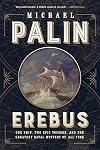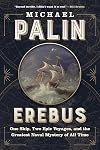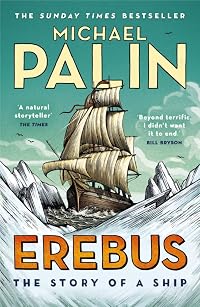
Erebus: The Story of a Ship
by Michael Palin
On This Page
Description
Driven by a passion for travel and history and a love of ships and the sea, former Monty Python stalwart and beloved television globe-trotter Michael Palin explores the world of HMS Erebus, last seen on an ill-fated voyage to chart the Northwest Passage. Michael Palin brings the fascinating story of the Erebus and its occupants to life, from its construction as a bomb vessel in 1826 through the flagship years of James Clark Ross's Antarctic expedition and finally to Sir John Franklin's quest show more for the holy grail of navigation-a route through the Northwest Passage, where the ship disappeared into the depths of the sea for more than 150 years. It was rediscovered under the arctic waters in 2014. Palin travels across the world-from Tasmania to the Falkland Islands and the Canadian Arctic-to offer a firsthand account of the terrain and conditions that would have confronted the Erebus and her doomed final crew. Delving into the research, he describes the intertwined careers of the two men who shared the ship's journeys: Ross, the organizational genius who mapped much of the Antarctic coastline and oversaw some of the earliest scientific experiments to be conducted there; and Franklin, who, at the age of sixty and after a checkered career, commanded the ship on its last disastrous venture. Expertly researched and illustrated with maps, photographs, paintings, and engravings, Erebus is an evocative account of two journeys: one successful and forgotten, the other tragic yet unforgettable. show lessTags
Recommendations


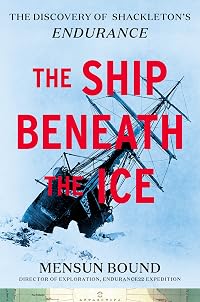
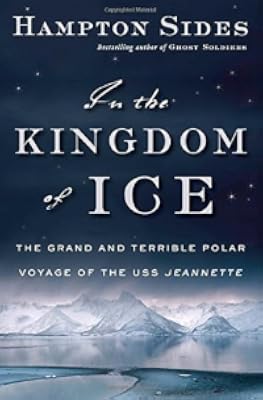
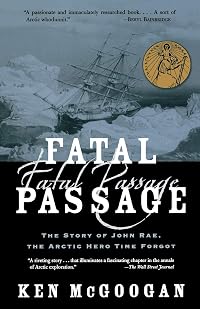
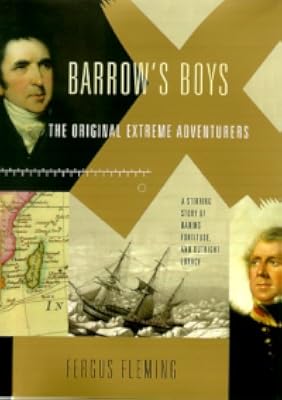








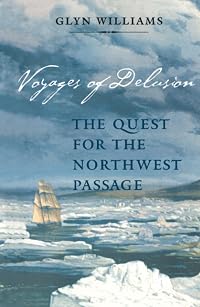




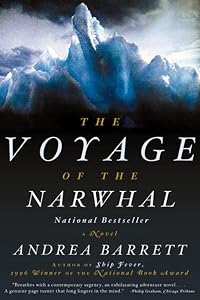
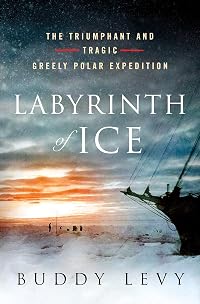


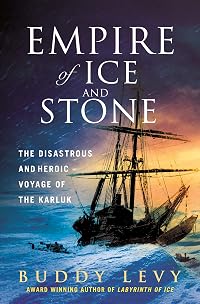









Member Recommendations
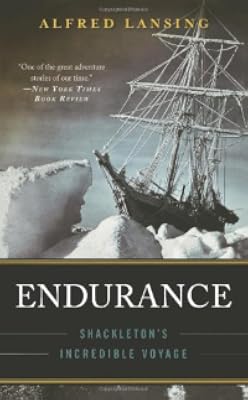
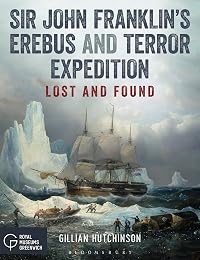
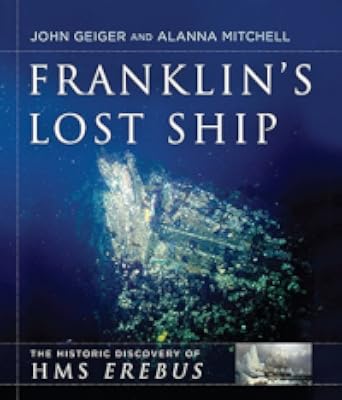
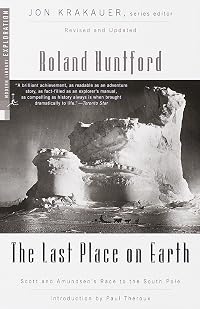
rocks009 Both discuss maritime history, marine archeology and Erebus itself
Member Reviews
When the Erebus and the Terror - under the commands of Capt. James Clark Ross and Capt. Francis Crozier respectfully - left the English Channel on Sept 30 1839, the crew knew they would be heading into purely uncharted waters. Well funded and led by scientific and exploratory veterans, the mission was to reach the South Pole, noting anything of potential profit or exploitation along the way. On the first trip, they reach the Great Southern Barrier, but are forced to turn back to Australia with no way through. During their second attempt, they gained 6 miles more, but to no avail. After the Falklands, they make a third attempt and are nearly crushed when pack ice violently slams the ships into each other. Both ships can take no more, but show more investors must have their due. If the South Pole can't be found then the Northwest Passage will, this time with the renowned Sir John Franklin. They would never return.
Being that this is the "life" story of the Erebus and not just its disappearance, the reader must be patient. There's plenty of drama, but it has a bit of a slow start. Once it gets going though, you won't put it down. The reader becomes very familiar with the crew, checking in with Erebus' accompanying ship, The Terror, when necessary. While I would've liked an equal perspective of the Terror, perhaps Palin didn't want to confuse the reader by jumping back and forth between ships. Furthermore, Palin dutifully includes maps, and constant reminders of the day, month and year, which historians often forget to do. Palin's well-known brand of wit also makes frequent appearances. All appropriately timed of course. Palin has also famously traveled to both Poles, so he offers a unique, modern parallel. It's nonfiction that is written for everyone and I can see why it's so popular. I honestly want to check out his documentary, "Pole to Pole!" show less
Being that this is the "life" story of the Erebus and not just its disappearance, the reader must be patient. There's plenty of drama, but it has a bit of a slow start. Once it gets going though, you won't put it down. The reader becomes very familiar with the crew, checking in with Erebus' accompanying ship, The Terror, when necessary. While I would've liked an equal perspective of the Terror, perhaps Palin didn't want to confuse the reader by jumping back and forth between ships. Furthermore, Palin dutifully includes maps, and constant reminders of the day, month and year, which historians often forget to do. Palin's well-known brand of wit also makes frequent appearances. All appropriately timed of course. Palin has also famously traveled to both Poles, so he offers a unique, modern parallel. It's nonfiction that is written for everyone and I can see why it's so popular. I honestly want to check out his documentary, "Pole to Pole!" show less
Michael Palin first made his name as one of the members of Monty Python's Flying Circus in the 1970s; he later expanded his career to cover acting and has a number of films, both comedy and drama, to his credit. Then, in the 1980s, he gravitated into a career as a professional traveller for tv shows. Starting with one episode of Great Railway Journeys of the World for the BBC in 1981, he fronted a series of shows about worldwide travel - Around the World in Eighty Days, Full Circle and Pole to Pole to name but three. His personable approach made these highly popular and got him a world-wide reputation (though watched now, they do occasionally betray their age); and Palin was able to put his hand to producing the necessary tie-in books show more to go with the tv shows. He was already an accomplished diarist, so this was a natural progression.
Anyone who has read about exploration, especially to the polar regions, will have heard of the Franklin Expedition, an attempt to navigate the fabled North-West Passage from the Atlantic to the Pacific around the north coast of Canada. Sir John Franklin led this expedition, with the ships HMS Erebus and HMS Terror. They sailed from London in May 1845; on 13th July of that year, they left Disko Bay, on the west coast of Greenland, where they had put in for final provisioning. They were never heard from again.
Over the years, many expeditions were launched to uncover the fate of the Franklin expedition; much has since been written about their possible fate, both factual and fictional. The story began to be pieced together as fragmentary remains of both ships and their crews came to light in the decades that followed. Finally, modern underwater survey techniques uncovered the wrecks of Erebus and Terror in 2014 and 2016 respectively.
But Michael Palin has not set out to produce another book on the Franklin expedition. Rather, he has concentrated on HMS Erebus itself, tracing its career from its construction and launch in 1826 as a bomb ship - a specialist vessel intended to carry heavy mortars and to stand off from static targets and bombard them - its mothballing after a very few years as the naval requirements of the time changed, its identification as an ideal vessel of exploration in polar regions, and its expeditions, first to the Antarctic in 1839-43 and then to the Arctic under Franklin. Erebus was not built for speed; but her sturdiness and plain lines, intended to provide a stable gun platform for a very heavy weapon, was ideal for strengthening to withstand the rigours of sailing through ice.
Palin goes into considerable detail about the Antarctic voyages, and also about Tasmania, where the expedition was based between voyages to the south. He also gives a lot of incidental detail about the Royal Navy of the time; how, after the end of the Napoleonic wars, it was searching for a role. Palin depicts well a navy drastically reduced in size with the coming of peace, and starting the transition away from the days of the press gang onto the long road to a thoroughly professional force. The success of the Antarctic expeditions and the qualities of the men who led it were an important part of that transition.
The book is excellently researched and has an easy style, though it helps that the reader is likely to have a fair idea of how the story ends. Palin intersperses the account with his own observations of some of the places mentioned, drawn from his own extensive travels; some have seen this as an unnecessary intrusion, but I felt that these interludes, which are never long, gave a great sense of connection between the past and the present. The book ends, not with the discovery of the wreck of Erebus, but with an account of Palin's visit to the region in 2017 with an organised party on board a Russian icebreaker, made all the more poignant by the fact that the trip ends when the icebreaker has to turn back some considerable distance short of Erebus' final resting place because of ice. The first rescue expedition to attempt to find Franklin's expedition travelled to the region in 1848, when the Franklin party was still alive, trapped by the pack ice; yet they remained undiscovered. Palin's coda shows that even with our modern technology, the forces of nature can still thwart the best laid plans.
The personalities come through well, illustrated with contemporary drawings and some early photographs. In particular, Sir John Franklin himself, an Arctic exploration pioneer, turns up in the story as the Governor General of Tasmania, later to resign under something of a cloud but elevated to lead the North-West Passage expedition, partially by virtue of his determined and energetic wife, Jane. The expeditions that attempted to find Franklin were in a large part due to her refusal to give up on her missing husband. Other members of the ships' crews are brought back to life by extracts from their letters and diaries.
This is a book that is well worth reading if you have any interest at all in accounts of exploration, history, the sea or the wild places of this earth. The UK hardback copy I have is a well-produced book on good paper stock. I was enthralled by the story and found the book absolutely fascinating. show less
Anyone who has read about exploration, especially to the polar regions, will have heard of the Franklin Expedition, an attempt to navigate the fabled North-West Passage from the Atlantic to the Pacific around the north coast of Canada. Sir John Franklin led this expedition, with the ships HMS Erebus and HMS Terror. They sailed from London in May 1845; on 13th July of that year, they left Disko Bay, on the west coast of Greenland, where they had put in for final provisioning. They were never heard from again.
Over the years, many expeditions were launched to uncover the fate of the Franklin expedition; much has since been written about their possible fate, both factual and fictional. The story began to be pieced together as fragmentary remains of both ships and their crews came to light in the decades that followed. Finally, modern underwater survey techniques uncovered the wrecks of Erebus and Terror in 2014 and 2016 respectively.
But Michael Palin has not set out to produce another book on the Franklin expedition. Rather, he has concentrated on HMS Erebus itself, tracing its career from its construction and launch in 1826 as a bomb ship - a specialist vessel intended to carry heavy mortars and to stand off from static targets and bombard them - its mothballing after a very few years as the naval requirements of the time changed, its identification as an ideal vessel of exploration in polar regions, and its expeditions, first to the Antarctic in 1839-43 and then to the Arctic under Franklin. Erebus was not built for speed; but her sturdiness and plain lines, intended to provide a stable gun platform for a very heavy weapon, was ideal for strengthening to withstand the rigours of sailing through ice.
Palin goes into considerable detail about the Antarctic voyages, and also about Tasmania, where the expedition was based between voyages to the south. He also gives a lot of incidental detail about the Royal Navy of the time; how, after the end of the Napoleonic wars, it was searching for a role. Palin depicts well a navy drastically reduced in size with the coming of peace, and starting the transition away from the days of the press gang onto the long road to a thoroughly professional force. The success of the Antarctic expeditions and the qualities of the men who led it were an important part of that transition.
The book is excellently researched and has an easy style, though it helps that the reader is likely to have a fair idea of how the story ends. Palin intersperses the account with his own observations of some of the places mentioned, drawn from his own extensive travels; some have seen this as an unnecessary intrusion, but I felt that these interludes, which are never long, gave a great sense of connection between the past and the present. The book ends, not with the discovery of the wreck of Erebus, but with an account of Palin's visit to the region in 2017 with an organised party on board a Russian icebreaker, made all the more poignant by the fact that the trip ends when the icebreaker has to turn back some considerable distance short of Erebus' final resting place because of ice. The first rescue expedition to attempt to find Franklin's expedition travelled to the region in 1848, when the Franklin party was still alive, trapped by the pack ice; yet they remained undiscovered. Palin's coda shows that even with our modern technology, the forces of nature can still thwart the best laid plans.
The personalities come through well, illustrated with contemporary drawings and some early photographs. In particular, Sir John Franklin himself, an Arctic exploration pioneer, turns up in the story as the Governor General of Tasmania, later to resign under something of a cloud but elevated to lead the North-West Passage expedition, partially by virtue of his determined and energetic wife, Jane. The expeditions that attempted to find Franklin were in a large part due to her refusal to give up on her missing husband. Other members of the ships' crews are brought back to life by extracts from their letters and diaries.
This is a book that is well worth reading if you have any interest at all in accounts of exploration, history, the sea or the wild places of this earth. The UK hardback copy I have is a well-produced book on good paper stock. I was enthralled by the story and found the book absolutely fascinating. show less
I picked up this book because my wife and I watched the first season of the AMC television series "The Terror" which is loosely based on the actual events of the final voyage into the arctic of Erebus and Terror, British naval vessels tasked with finding and navigating the fabled Northwest Passage. That it was told by Michael Palin, one of the Monty Python troupe, was an added bonus.
I enjoyed this exhaustive biography of a ship--the people who serve aboard her, and her sister ship, are all here as well, but Erebus is the subject and star of this monograph. Frankly, I thought there would be a little more humor, but Palin is quite committed and serious in his task which runs through the prior triumphs of Erebus in the Antarctic to the show more mysterious demise at the other end of the globe to the various relief, search, and recovery expeditions from the mid-19th century to the present day. Palin, who has traveled to both polar regions, often offers up his own insights into the sights, sounds, feel, and other challenges his sources describe and would have encountered--which enlivens and enriches the text.
As I was most interested in the known details of the ship's final expedition, everything prior to that was of interest, but not of so great an interest to me. People could just as easily pick up this book for the Ross Expeditions to Antarctica as Franklin's doomed voyage into the Arctic, as they receive roughly equal treatment and consideration here. Readers who want to know more about 19th century polar exploration, and Royal Navy activities in the post-Napoleonic era will surely find much of interest here. show less
I enjoyed this exhaustive biography of a ship--the people who serve aboard her, and her sister ship, are all here as well, but Erebus is the subject and star of this monograph. Frankly, I thought there would be a little more humor, but Palin is quite committed and serious in his task which runs through the prior triumphs of Erebus in the Antarctic to the show more mysterious demise at the other end of the globe to the various relief, search, and recovery expeditions from the mid-19th century to the present day. Palin, who has traveled to both polar regions, often offers up his own insights into the sights, sounds, feel, and other challenges his sources describe and would have encountered--which enlivens and enriches the text.
As I was most interested in the known details of the ship's final expedition, everything prior to that was of interest, but not of so great an interest to me. People could just as easily pick up this book for the Ross Expeditions to Antarctica as Franklin's doomed voyage into the Arctic, as they receive roughly equal treatment and consideration here. Readers who want to know more about 19th century polar exploration, and Royal Navy activities in the post-Napoleonic era will surely find much of interest here. show less
Beautifully written Victorian arctic explorer travelogue with classic understated tongue-in-cheek humour (the man ‘who ate his boots’ turned into the biggest arctic hero Britain ever had). Of course the mystery of the disappearance into a void of the Franklin expedition in the 1850s and the discovery of the ship wrecks of both the Erebus (2014) and Terror (2016) plays an important role in creating suspense. I wonder why Palin decided not to refer to the thriller written about Terror, by Dan Simmons.
Palin uses a mix of historical evidence (letters, biographies, drawings, maps) and present day description of his own visits and interviews about places or events of interest. I learnt a lot about Tasmania, its rule and its people, as show more well as about the things that naturalists, contemporary to Darwin, found interesting. And of course there is a cast of Victorian heroes and villains. The dashing James Clark Ross, the timid, second-in-command Crozier; the aloof John Ross the elder; the plumb John Franklin, turned unknown and unlikely hero (by his vanishing act, after a governorship that ended in disgrace), Lady Franklin, the matron who fought for her husband’s reputation, tooth and nails. The public craving for British heroes resulted in many busts, street names and eulogies, with no evidence whatsoever that Sir Franklin undertook any heroic acts during the last year-months of his life.
Equally remarkable is the whimsical nature of whom to turn into a hero. Of all potential heroes of arctic exploration in the NW Passage region, the most successful early explorer is hardly mentioned (also not by Palin, possibly since he focuses on a ship rather than the cast of explorers). And the hero who went local, McCrae, is initially vilified, because of the suspected cannibalism perpetrated by members of the Franklin mission, whose remains were found. A typical case of prosecuting the messenger. Yet when one would apply objective criteria of heroism, McCrae may be the biggest explorer of all, learning the local vernacular, delving into a different world view, making arctic life his own, without the comforts provided to the members of officially endorsed arctic explorations. McCrae was rehabilitated over a century after his passing, and yet… show less
Palin uses a mix of historical evidence (letters, biographies, drawings, maps) and present day description of his own visits and interviews about places or events of interest. I learnt a lot about Tasmania, its rule and its people, as show more well as about the things that naturalists, contemporary to Darwin, found interesting. And of course there is a cast of Victorian heroes and villains. The dashing James Clark Ross, the timid, second-in-command Crozier; the aloof John Ross the elder; the plumb John Franklin, turned unknown and unlikely hero (by his vanishing act, after a governorship that ended in disgrace), Lady Franklin, the matron who fought for her husband’s reputation, tooth and nails. The public craving for British heroes resulted in many busts, street names and eulogies, with no evidence whatsoever that Sir Franklin undertook any heroic acts during the last year-months of his life.
Equally remarkable is the whimsical nature of whom to turn into a hero. Of all potential heroes of arctic exploration in the NW Passage region, the most successful early explorer is hardly mentioned (also not by Palin, possibly since he focuses on a ship rather than the cast of explorers). And the hero who went local, McCrae, is initially vilified, because of the suspected cannibalism perpetrated by members of the Franklin mission, whose remains were found. A typical case of prosecuting the messenger. Yet when one would apply objective criteria of heroism, McCrae may be the biggest explorer of all, learning the local vernacular, delving into a different world view, making arctic life his own, without the comforts provided to the members of officially endorsed arctic explorations. McCrae was rehabilitated over a century after his passing, and yet… show less
The subtitle says it all, really. This is the story of HMS Erebus and its voyages to both ends of the earth: to the Antarctic with James Clark Ross, and to the Arctic with Sir John Franklin, where it remained incognito until Parks Canada found it in 2014. Throughout the book, Palin weaves in more recent explorations of both poles, including his own cruise through the Northwest Passage after Erebus’s sister ship, the Terror, was found in the appropriately named Terror Bay.
I enjoyed Palin’s writing style very much. The present-day accounts jarred a little bit in the beginning, but they became more seamless very quickly. Despite having read a fair bit about the Franklin expedition, I still learned new things. It helps that the book is show more able to cover both Erebus and Terror being found, especially because the stories of the two ships are so closely linked. Palin provides lots of maps for those who like maps, and there are two sets of colour plates. A content warning: the second set of plates contains a photo of one of the bodies buried (and exhumed briefly) on Beechey Island — the “scary mummified corpse”, as I call it, the one with the tight toothy grimace that appears on some editions of Frozen in Time, by Owen Beattie.
I also have this book to thank for starting me off on a totally different tangent: reading the Royal Commission of Inquiry report into the Air New Zealand crash on Mt. Erebus in 1979. This is the sort of book that will send you off on lovely tangents of learning like that.
Recommended if you like books about maritime history and/or if you like Michael Palin. show less
I enjoyed Palin’s writing style very much. The present-day accounts jarred a little bit in the beginning, but they became more seamless very quickly. Despite having read a fair bit about the Franklin expedition, I still learned new things. It helps that the book is show more able to cover both Erebus and Terror being found, especially because the stories of the two ships are so closely linked. Palin provides lots of maps for those who like maps, and there are two sets of colour plates. A content warning: the second set of plates contains a photo of one of the bodies buried (and exhumed briefly) on Beechey Island — the “scary mummified corpse”, as I call it, the one with the tight toothy grimace that appears on some editions of Frozen in Time, by Owen Beattie.
I also have this book to thank for starting me off on a totally different tangent: reading the Royal Commission of Inquiry report into the Air New Zealand crash on Mt. Erebus in 1979. This is the sort of book that will send you off on lovely tangents of learning like that.
Recommended if you like books about maritime history and/or if you like Michael Palin. show less
Michael Palin’s Erebus: One Ship, Two Epic Voyages, and the Greatest Naval Mystery of All Time recounts in painstaking detail the history of HMS Erebus’ role in the 1839-1843 Ross Expedition in search of the magnetic south pole and the third Franklin Expedition, which departed in 1845 in search of the Northwest Passage. Palin begins in the present, with the discovery of the Erebus wreck in 2014 in Canada before moving to the shipyards, now a ferry launch, where Erebus began her life and career. Built as a bomb vessel in the style of similar craft from the Napoleonic Wars, Erebus instead entered a world with relative peace at sea after Britain’s victory over Napoleon. She served two years in the Mediterranean Sea, only firing her show more guns in salute or practice, before being refitted as an exploration vessel for Antarctic service. With no wars to win, Britain projected its power through feats of exploration, participating in studies of magnetism and oceanography.
Palin follows Erebus, and her sister ship Terror, around the world from the Pembroke Dockyard to the Falkland Islands to Hobart, Tasmania, and on to Canada. He draws upon official Royal Navy records, personal correspondence of the crew, newspaper accounts, personal diaries of crewmembers’ families, scientific publications resulting from the scientific studies of the Ross Expedition, and more in order to recreate as faithfully as possible the period and the people. Palin demonstrates a remarkable ability to find the most interesting, entertaining, or meaningful anecdotes amid this mountain of data, though he also points out how the passage of time renders some of his actors’ behavior peculiar by our standard. He writes, “Nowadays our inclination would be to leave the natural beauty of such islands untouched, but the motive of Ross, and those who commissioned his expedition, was to expand and improve and enlighten. What we might now see as shameless exploitation, they saw as brining, wherever possible, the benefits of science to a savage and benighted world. McCormick shot birds so that he could better understand them. Ross, like Abraham Bristow before him, decided to leave livestock on Auckland Island, because he felt it was his duty to those who would inevitably come after him to begin the process of cultivating wild places, and to continue the process of spreading Western values across the globe” (pgs. 91-92). These criticisms notwithstanding, Palin also captures the romance of the period. According to Palin, “When taking measurements of depth and water temperatures, [the Ross expedition] discovered a coral reef growing out of the seabed, of such an extent that Ross estimated it might ‘in future ages form an island between New South Wales and New Zealand’. It is almost heartbreaking to read of coral growing, when now it seems almost everywhere to be shrinking” (pg. 124). He concludes of the Ross Expedition, “No other sailing ship would ever get as far south as Erebus and Terror did that day [23 February 1842]. In fact no ship of any kind reached that far south for almost sixty years” (pg. 138).
Palin draws upon a wealth of data in reconstructing the final days of Erebus and Terror under the Franklin Expedition, including Lieutenant Hobson’s 1889 report, which history had forgotten and “came to light only recently from Library and Archives Canada” (pg. 254). He also evaluates theories as to the eventual decline of the crews such as those proffered by J.C. Drummond about tainted tinned food (pg. 268), discussions of lead poisoning from William Battersby as well as Peter Carney and Adrian Bowman’s rebuttals to Battersby (pg. 269), Richard Cyriax’s hypothesis of scurvy once the ships’ fresh fruit stores ran out (pg. 270), and studies of the crews’ remains by “Keith Millar, Adrian Bowman and others from the University of Glasgow” (pg. 271). Palin concludes, however, “Ultimately any attempt to find some answer, or some combination of circumstances, that might explain the fate of the expedition is a bit like navigating through the ice. As one lead closes, another opens up…In the end, though, all that can be said for certain is that those who served on the Franklin expedition were simply in the wrong place at the wrong time. They ended up in the least hospitably corner of a remote archipelago at a time that even the local Inuit referred to as ‘the years without summers’” (pg. 272). As to why this story continues to resonate, Palin himself writes, “History abhors a vacuum, and as long as we don’t know, there will always be those who want to know. A disaster of this scale looks for an explanation of equal magnitude. They must not have died in vain” (pg. 274).
Erebus: One Ship, Two Epic Voyages, and the Greatest Naval Mystery of All Time will appeal to all those interested in the history of science or nineteenth century sailing. His skill at recreating the two expeditions’ day-to-day lives recalls Alfred Lansing’s Endurance. The book includes illustrations at the beginning of each chapter, many from publications commemorating the voyages in their own time, and the final version will feature 9 maps depicting various stages of the expeditions (these maps are not in the Advance Reader Copy). show less
Palin follows Erebus, and her sister ship Terror, around the world from the Pembroke Dockyard to the Falkland Islands to Hobart, Tasmania, and on to Canada. He draws upon official Royal Navy records, personal correspondence of the crew, newspaper accounts, personal diaries of crewmembers’ families, scientific publications resulting from the scientific studies of the Ross Expedition, and more in order to recreate as faithfully as possible the period and the people. Palin demonstrates a remarkable ability to find the most interesting, entertaining, or meaningful anecdotes amid this mountain of data, though he also points out how the passage of time renders some of his actors’ behavior peculiar by our standard. He writes, “Nowadays our inclination would be to leave the natural beauty of such islands untouched, but the motive of Ross, and those who commissioned his expedition, was to expand and improve and enlighten. What we might now see as shameless exploitation, they saw as brining, wherever possible, the benefits of science to a savage and benighted world. McCormick shot birds so that he could better understand them. Ross, like Abraham Bristow before him, decided to leave livestock on Auckland Island, because he felt it was his duty to those who would inevitably come after him to begin the process of cultivating wild places, and to continue the process of spreading Western values across the globe” (pgs. 91-92). These criticisms notwithstanding, Palin also captures the romance of the period. According to Palin, “When taking measurements of depth and water temperatures, [the Ross expedition] discovered a coral reef growing out of the seabed, of such an extent that Ross estimated it might ‘in future ages form an island between New South Wales and New Zealand’. It is almost heartbreaking to read of coral growing, when now it seems almost everywhere to be shrinking” (pg. 124). He concludes of the Ross Expedition, “No other sailing ship would ever get as far south as Erebus and Terror did that day [23 February 1842]. In fact no ship of any kind reached that far south for almost sixty years” (pg. 138).
Palin draws upon a wealth of data in reconstructing the final days of Erebus and Terror under the Franklin Expedition, including Lieutenant Hobson’s 1889 report, which history had forgotten and “came to light only recently from Library and Archives Canada” (pg. 254). He also evaluates theories as to the eventual decline of the crews such as those proffered by J.C. Drummond about tainted tinned food (pg. 268), discussions of lead poisoning from William Battersby as well as Peter Carney and Adrian Bowman’s rebuttals to Battersby (pg. 269), Richard Cyriax’s hypothesis of scurvy once the ships’ fresh fruit stores ran out (pg. 270), and studies of the crews’ remains by “Keith Millar, Adrian Bowman and others from the University of Glasgow” (pg. 271). Palin concludes, however, “Ultimately any attempt to find some answer, or some combination of circumstances, that might explain the fate of the expedition is a bit like navigating through the ice. As one lead closes, another opens up…In the end, though, all that can be said for certain is that those who served on the Franklin expedition were simply in the wrong place at the wrong time. They ended up in the least hospitably corner of a remote archipelago at a time that even the local Inuit referred to as ‘the years without summers’” (pg. 272). As to why this story continues to resonate, Palin himself writes, “History abhors a vacuum, and as long as we don’t know, there will always be those who want to know. A disaster of this scale looks for an explanation of equal magnitude. They must not have died in vain” (pg. 274).
Erebus: One Ship, Two Epic Voyages, and the Greatest Naval Mystery of All Time will appeal to all those interested in the history of science or nineteenth century sailing. His skill at recreating the two expeditions’ day-to-day lives recalls Alfred Lansing’s Endurance. The book includes illustrations at the beginning of each chapter, many from publications commemorating the voyages in their own time, and the final version will feature 9 maps depicting various stages of the expeditions (these maps are not in the Advance Reader Copy). show less
 This review was written for LibraryThing Early Reviewers.
H.M.S. Erebus was a ship that explored the farthest reaches of the globe both in the north and the south along with H.M.S. Terror, a slightly smaller ship. In an expedition led by Captain James Clark Ross, the ships explored the coastline of Antarctica during a four-year-long expedition of research on the earth’s magnetism as well as collecting flora and fauna. They then went north, led by Sir John Franklin in search of the Northwest Passage. They disappeared and the mystery of the Franklin Expedition led to multiple rescue and discovery missions that brought more questions than answers at times until just a few years ago when the ships were found.
Michael Palin who has forged a career as a world explorer and travel documentarian show more since his years with Monty Python turned his attention to the Erebus, doing deep research into its history and retracing the path, visiting many of the places the Erebus traveled, even getting near to its final resting place. The result is Erebus, a fascinating history of the ship and the men who sailed her.
Erebus begins at the beginning, the construction of the ship and follows it on its easy first assignments in the Mediterranean before moving on to the heady and often harrowing exploration of Antarctica and the mystery of its disappearance. Palin is a generalist, a sort of Everyman, which makes this such a pleasing history. He has that fascination with personalities and oddities that academics often ignore. He wonders what happened to Franklin’s monkey. A naval historian or other academic might wonder about that kind of trivia as well, but would never admit it. But I wonder what happened, too. Of course, I also read Mrs. Chippy’s Last Expedition.
I have been fascinated by the explorers of the Arctic and Antarctic ever since I read Antarctic Navigation by Elizabeth Arthur back in 1995. That made Erebus an irresistible book for me. I am happy it lived up to my high expectations. The research is scrupulous and careful. Palin offers many explanations of what may have gone wrong, but is fair-minded in explaining why even the best explanations cannot be certain. I appreciate how he keeps himself to the background most of the time, only sharing his impressions when he goes in person to walk in their footsteps, seeing what they saw. I love that he does not deliver definitive answers to the mysteries and keeps asking questions, including the monkey question. Those are the questions that his active and curious intellect chases and it makes for a rich, rewarding history.
I received a copy of Erebus for review from the publisher.
Erebus at Greystone Books
Michael Palin author site
Michael Palin Erebus Page
Palin’s Travels
https://tonstantweaderreviews.wordpress.com/2019/01/12/9781771644419/ show less
Michael Palin who has forged a career as a world explorer and travel documentarian show more since his years with Monty Python turned his attention to the Erebus, doing deep research into its history and retracing the path, visiting many of the places the Erebus traveled, even getting near to its final resting place. The result is Erebus, a fascinating history of the ship and the men who sailed her.
Erebus begins at the beginning, the construction of the ship and follows it on its easy first assignments in the Mediterranean before moving on to the heady and often harrowing exploration of Antarctica and the mystery of its disappearance. Palin is a generalist, a sort of Everyman, which makes this such a pleasing history. He has that fascination with personalities and oddities that academics often ignore. He wonders what happened to Franklin’s monkey. A naval historian or other academic might wonder about that kind of trivia as well, but would never admit it. But I wonder what happened, too. Of course, I also read Mrs. Chippy’s Last Expedition.
I have been fascinated by the explorers of the Arctic and Antarctic ever since I read Antarctic Navigation by Elizabeth Arthur back in 1995. That made Erebus an irresistible book for me. I am happy it lived up to my high expectations. The research is scrupulous and careful. Palin offers many explanations of what may have gone wrong, but is fair-minded in explaining why even the best explanations cannot be certain. I appreciate how he keeps himself to the background most of the time, only sharing his impressions when he goes in person to walk in their footsteps, seeing what they saw. I love that he does not deliver definitive answers to the mysteries and keeps asking questions, including the monkey question. Those are the questions that his active and curious intellect chases and it makes for a rich, rewarding history.
I received a copy of Erebus for review from the publisher.
Erebus at Greystone Books
Michael Palin author site
Michael Palin Erebus Page
Palin’s Travels
https://tonstantweaderreviews.wordpress.com/2019/01/12/9781771644419/ show less
Members
- Recently Added By
Lists

Top Five Books of 2018
802 works; 265 members

al.vick-wishlist-history
70 works; 2 members

Litsy Awards 2018
248 works; 9 members

Books Read in 2019
4,052 works; 110 members

Top Five Books of 2025
954 works; 303 members

Films
217 works; 1 member
Author Information

104+ Works 21,027 Members
Awards and Honors
Distinctions
The Guardian Book of the Day (2018-11-24)
Common Knowledge
- Canonical title*
- Erebus
- Original title
- Erebus: The Story of a Ship
- Original publication date
- 2018
- People/Characters
- Sir John Franklin; James Clark Ross
- Important places
- Northwest Passage
- Important events
- Search for the Northwest Passage; Antarctic expedition of James Clark Ross; Search for the Franklin Expedition
- Epigraph
- And indeed, nothing is easier for a man who has, as the phrase goes, 'followed the sea' with reverence and affection, than to evoke the great spirit of the past upon the lower reaches of the Thames. The tidal current runs to ... (show all)and fro in its unceasing service, crowded with memories of men and ships it had borne to the rest of home, or to the battles of the sea... from the Golden Hind returning with her round flanks full of treasure... to the Erebus and Terror, bound on other conquests -- and that never returned.
Joseph Conrad, Heart of Darkness - Dedication
- For Albert and Rose
- First words
- INTRODUCTION
HOOKER'S STOCKINGS
I've always been fascinated by sea stories. - Quotations
- In Tasmania were many thousands of women and men who had been forcibly removed from their home country, because they were judged to be born, criminals, Marley, unsalvageable, incapable of rehabilitation
Erebus and Terror had achieved something remarkable. Under sail alone, the two ships had successfully negotiated, 134 miles of pack-ice and come out the other side
To this day, there is a pub by the river at Greenhithe, the Sir John Franklin, where you can have a pint of beer and steak and chips and stand at the spot where Franklin‘s family saw him for the last time - Last words
- (Click to show. Warning: May contain spoilers.)And one day, God willing, I'll come back to the north-west passage, this time with a scuba suit, to see my ship for myself.
Tracing one warm line through a land, so wide and savage, and make a north west passage to the sea - Original language
- English
*Some information comes from Common Knowledge in other languages. Click "Edit" for more information.
Classifications
- Genres
- Travel, General Nonfiction, History, Nonfiction
- DDC/MDS
- 919.804 — History & geography Geography & travel Geography of and travel in Australasia, Pacific Ocean islands, Atlantic Ocean islands, Arctic islands, Antarctica and on extraterrestrial worlds Polar regions
- LCC
- G660 .P35 — Geography, Anthropology and Recreation Geography (General) Arctic and Antarctic regions
- BISAC
Statistics
- Members
- 943
- Popularity
- 28,206
- Reviews
- 40
- Rating
- (4.07)
- Languages
- 6 — Czech, Dutch, English, German, Italian, Spanish
- Media
- Paper, Audiobook, Ebook
- ISBNs
- 26
- ASINs
- 11