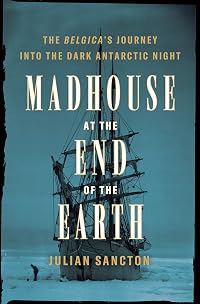
Madhouse at the End of the Earth: The Belgica's Journey into the Dark Antarctic Night
by Julian Sancton
On This Page
Description
NEW YORK TIMES BESTSELLER • The “exquisitely researched and deeply engrossing” (The New York Times) true survival story of an early polar expedition that went terribly awry—with the ship frozen in ice and the crew trapped inside for the entire sunless, Antarctic winter“The energy of the narrative never flags. . . . Sancton has produced a thriller.”—The Wall Street Journal
In August 1897, the young Belgian commandant Adrien de Gerlache set sail for a three-year expedition show more aboard the good ship Belgica with dreams of glory. His destination was the uncharted end of the earth: the icy continent of Antarctica.
But de Gerlache’s plans to be first to the magnetic South Pole would swiftly go awry. After a series of costly setbacks, the commandant faced two bad options: turn back in defeat and spare his men the devastating Antarctic winter, or recklessly chase fame by sailing deeper into the freezing waters. De Gerlache sailed on, and soon the Belgica was stuck fast in the icy hold of the Bellingshausen Sea. When the sun set on the magnificent polar landscape one last time, the ship’s occupants were condemned to months of endless night. In the darkness, plagued by a mysterious illness and besieged by monotony, they descended into madness.
In Madhouse at the End of the Earth, Julian Sancton unfolds an epic story of adventure and horror for the ages. As the Belgica’s men teetered on the brink, de Gerlache relied increasingly on two young officers whose friendship had blossomed in captivity: the expedition’s lone American, Dr. Frederick Cook—half genius, half con man—whose later infamy would overshadow his brilliance on the Belgica; and the ship’s first mate, soon-to-be legendary Roald Amundsen, even in his youth the storybook picture of a sailor. Together, they would plan a last-ditch, nearly certain-to-fail escape from the ice—one that would either etch their names in history or doom them to a terrible fate at the ocean’s bottom.
Drawing on the diaries and journals of the Belgica’s crew and with exclusive access to the ship’s logbook, Sancton brings novelistic flair to a story of human extremes, one so remarkable that even today NASA studies it for research on isolation for future missions to Mars. Equal parts maritime thriller and gothic horror, Madhouse at the End of the Earth is an unforgettable journey into the deep. show less
Tags
Recommendations
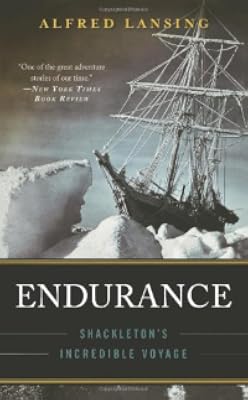
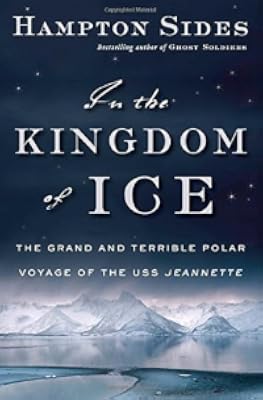
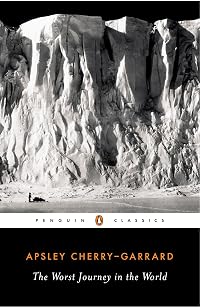
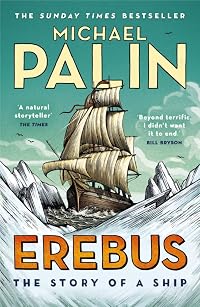
























Member Recommendations
Member Reviews
Narrative non-fiction that tells the story of the Belgica, commanded by Adrien de Gerlache de Gomery, that set off for Antarctica in 1897 in an early attempt to reach the South Pole. Crew members included Norwegian Roald Amundsen, the First Mate, and American Dr. Frederick Cook, the ship’s doctor, whose future exploits would make them famous (or infamous). De Gerlache was seeking fame, adventure, and acclaim for his country, Belgium. He and Captain Lecointe had to decide, as winter closed in, whether to continue their quest or turn back.
“Floes parted and leads opened up, inviting the Belgica in and presenting de Gerlache with a fleeting opportunity to pierce deep into the heart of the Antarctic sea ice. The commandant was forced to show more make a decision. The ship had just passed the 70th parallel, and the newly formed avenues offered him the chance to blaze a southern course and perhaps set a new record. But penetrating this far into the pack this late in the year meant almost certain entrapment, not for hours or days but for months or possibly years.”
They proceeded and became the first ship to over-winter in the Antarctic ice pack. It is a survival story of overcoming significant mental and physical obstacles. These men faced perilous conditions. The ship was at constant risk of getting crushed. Food became scarce. They were beset by a mysterious illness and suffered from a monotonous existence. Several developed alarming mental issues. Two never returned.
“Cook expected a downward turn in the general mood, but he was surprised by the depth to which it fell in the days following the last sunset. The men walked the Belgica’s decks seized by despair—when they could even be roused to walk at all. The primordial gloom that all humans feel in darkness…was here compounded by total isolation and the ever-present fear that the ice could crush the ship or open up beneath one’s feet.”
The author does a brilliant job of transporting the reader back in time, adding appropriate historical context. It offers an example of people pushed to the limits of endurance. It portrays the importance of optimism and creativity in survival situations. The manner in which they finally escaped the ice is amazing. An epilogue provides an account of what happened to these people afterward.
“The Belgica entered the strait under a fairy-tale light. The sun had dipped behind the mountains to the west but was still catching their peaks and illuminating the sparse clouds above, forming a golden canopy that stretched over the darkened valley and reflected against the blue-black water. Icebergs glided silently along, like apparitions.”
I have read many non-fiction books about Arctic and Antarctic explorations but had never before read anything about the Belgica. Sancton has employed primary sources to reconstruct the expedition from long-forgotten diaries and journals kept by the officers and crew. His documentation is thoroughly footnoted. The photos are a wonderful addition, showing the people and the images taken during their journey. Their challenges are described in vivid detail. It is an impressive accomplishment, especially for a first full-length book of non-fiction. show less
“Floes parted and leads opened up, inviting the Belgica in and presenting de Gerlache with a fleeting opportunity to pierce deep into the heart of the Antarctic sea ice. The commandant was forced to show more make a decision. The ship had just passed the 70th parallel, and the newly formed avenues offered him the chance to blaze a southern course and perhaps set a new record. But penetrating this far into the pack this late in the year meant almost certain entrapment, not for hours or days but for months or possibly years.”
They proceeded and became the first ship to over-winter in the Antarctic ice pack. It is a survival story of overcoming significant mental and physical obstacles. These men faced perilous conditions. The ship was at constant risk of getting crushed. Food became scarce. They were beset by a mysterious illness and suffered from a monotonous existence. Several developed alarming mental issues. Two never returned.
“Cook expected a downward turn in the general mood, but he was surprised by the depth to which it fell in the days following the last sunset. The men walked the Belgica’s decks seized by despair—when they could even be roused to walk at all. The primordial gloom that all humans feel in darkness…was here compounded by total isolation and the ever-present fear that the ice could crush the ship or open up beneath one’s feet.”
The author does a brilliant job of transporting the reader back in time, adding appropriate historical context. It offers an example of people pushed to the limits of endurance. It portrays the importance of optimism and creativity in survival situations. The manner in which they finally escaped the ice is amazing. An epilogue provides an account of what happened to these people afterward.
“The Belgica entered the strait under a fairy-tale light. The sun had dipped behind the mountains to the west but was still catching their peaks and illuminating the sparse clouds above, forming a golden canopy that stretched over the darkened valley and reflected against the blue-black water. Icebergs glided silently along, like apparitions.”
I have read many non-fiction books about Arctic and Antarctic explorations but had never before read anything about the Belgica. Sancton has employed primary sources to reconstruct the expedition from long-forgotten diaries and journals kept by the officers and crew. His documentation is thoroughly footnoted. The photos are a wonderful addition, showing the people and the images taken during their journey. Their challenges are described in vivid detail. It is an impressive accomplishment, especially for a first full-length book of non-fiction. show less
Fireless Snow
Read by Vikas Adam
Length: 13 hrs and 28 mins
This book is a narrative account of the Belgian Antarctic Expedition of 1897–99, its “planning”, execution, and aftermath. The expedition was Led by Adrien de Gerlache de Gomery aboard the RV Belgica, and was the first Belgian Antarctic expedition. It is considered to be the first expedition of the Heroic Age of Antarctic Exploration.
Madhouse at the End of the Earth is a well-researched and competently-written book, but for me it failed to convey the claustrophobia and dread that is so often engendered in such sea tales.
There’s a lot of detail of the members of the crew and their quarrels that threatened the success of the expedition, but I just didn’t get the feel of show more the sea and the extreme conditions of Antarctica that I was expecting. There was no fire for me in this book, despite the catchy title.
But perhaps I had unrealistic expectations. One of my earliest memories is of listening to Douglas Stewarts’s play, Fire on the Snow on the radio in Australia. Australians are perhaps more aware than others of Antarctica. Especially those of us from the southern coast. We feel Antarctica’s cold winds in winter. And even travelling by boat from the mainland to Tasmania can be a rough experience. All things considered please take my 3.5 rating with a grain of sand. show less
Read by Vikas Adam
Length: 13 hrs and 28 mins
This book is a narrative account of the Belgian Antarctic Expedition of 1897–99, its “planning”, execution, and aftermath. The expedition was Led by Adrien de Gerlache de Gomery aboard the RV Belgica, and was the first Belgian Antarctic expedition. It is considered to be the first expedition of the Heroic Age of Antarctic Exploration.
Madhouse at the End of the Earth is a well-researched and competently-written book, but for me it failed to convey the claustrophobia and dread that is so often engendered in such sea tales.
There’s a lot of detail of the members of the crew and their quarrels that threatened the success of the expedition, but I just didn’t get the feel of show more the sea and the extreme conditions of Antarctica that I was expecting. There was no fire for me in this book, despite the catchy title.
But perhaps I had unrealistic expectations. One of my earliest memories is of listening to Douglas Stewarts’s play, Fire on the Snow on the radio in Australia. Australians are perhaps more aware than others of Antarctica. Especially those of us from the southern coast. We feel Antarctica’s cold winds in winter. And even travelling by boat from the mainland to Tasmania can be a rough experience. All things considered please take my 3.5 rating with a grain of sand. show less
In 1897, Belgium tried to make history by being the first ship to find the South Magnetic Pole. The author focused on 3 important men on the trek: Commandant Adrien de Gerlache, Norwegian Roald Amundsen, and American Dr Frederick Cook—all heroes in their own right. But the Commandant purposefully took the ship too far onto the continent in the year, causing it to get locked in ice for a long long winter. He thought it’d put him that much closer to his goal once the ice thawed. What he didn’t take into account that it could stay iced in for years. And he told his men they were heading north when in fact they were heading south (the readings were all messed up thanks to their location and the lack of GPS in 1897). Then it became a show more matter of life and death and sanity. The Commandant became so ill from scurvy he rarely made an appearance. Thanks to Amundsen’s leadership and Cook’s ingenuity, very few died or became insane and they were able to escape the ice at the beginning of the next winter—but a harsh existence otherwise. It was the excellent training though for Amundsen to eventually be the first man to reach the South Pole. A few years back I toured the Fram Museum in Oslo, and to see the ship he took to Antarctica, an extraordinary experience. This was an excellent book backed by exhaustive research. show less
This is a nonfiction tale of a polar exploration that began in 1897. Adrien de Gerlache set out to be the first to reach the South Pole. Things go awry, but he decides to sail on rather than turning back, and so dooms his men to a winter stuck fast in the ice. This account brings to life the severe and many hardships suffered by the crew, and the astounding methods they used to survive. The author does a good job of relaying the effect that the severe cold, the lack of supplies, illnesses both physical and mental, and the lack of sunlight had on the crew. The book is quite well researched and detailed. The first couple of chapters are somewhat disjointed with time jumps, but then the book settles down into the voyage. The desperation show more the men experienced is quite evident throughout the book. Warning: There are a few passages relating to deliberate animal cruelty. Perhaps some acts were necessary for survival, but other acts were pure cruelty. show less
In the waning years of the 19th century, when sailors yet ventured across the oceans in wooden ships powered by both sails and steam-driven propellers, and when both arctic and antarctic regions were still unexplored and unmapped, a few hardy (or perhaps foolhardy) adventurers, driven by desires for fame and public acclaim, by fiscal profit, or simply by a longing for adventure, dared to penetrate some of Earth's most hostile and deadly environments. Sancton's Madhouse at the End of the Earth is the tale of one such group of adventurers who sailed the former whaling ship Belgica to Antarctica where she became icebound and was entrapped through the arctic winter. This book, drawn largely from first-person logs and diaries of the men on show more board, is the non-fictional account of the Belgica's entrapment and of the fate of her crew, or at least of her officers since they were the primary keepers of written records.
I plunged into the book with enthusiasm but before long became wary of the author's compositional skill inasmuch as many of his comparisons and metaphors invoked fictional characters and episodes. The works of Edgar Allen Poe and of Jules Verne appear to be Sancton's favorite points of reference at times. Now, I enjoy Poe and Verne probably as much as anyone, but their imaginative creations appear to me as inappropriate for use in a historical, non-fictional text. The greatest shock, however, was yet to come.
On page 65, Sancton states that Earth's poles featured in 19th century literature as emotional magnets, drawing men irresistibly toward them and then driving them mad, being, I suppose, sort of geographical cognates of the Lorelei of Rhine River legend. Perhaps Sancton should have used the German legend for his metaphor rather than choosing Coleridge's poem Rime of the Ancient Mariner for there he came very near to losing me as a reader. Our author claims that the poem is “about a ship that becomes cursed after a sailor takes a potshot at an albatross and finds itself helplessly ensnared in the Antarctic ice.” At that point, any middle school student immediately realizes that Sancton has either never read the poem to which he alludes or else he has thoroughly misunderstood it, losing any pretense of being a serious or believable writer. In reality, the Mariner's ship is ensnared in the ice before the albatross ever appears, and it is the crew's humane treatment of the bird that entices the Fates to release them from the ice. Much later, after the ship has reentered warm waters, far removed from any ice, the Mariner kills the albatross with his crossbow (a far more serious offense than merely taking a “potshot” at it as Sancton naively states), and the Fates/God/Nature impose severe punishment upon the murderous Mariner by becalming his ship under a hot Sun, not by trapping it in the ice.
An admittedly more minor nit I have to pick with Sancton's writing is that every now and then he chooses to throw in an unusual term when a more widely recognized synonym or phrase might be preferable for the general reader. I am certainly not opposed to an extensive vocabulary; in fact, I generally consider writing that expands my own vocabulary a bit to be advantageous. In these instances, though, use of some terminology strikes me as the author's crude attempt to impress the reader with his own erudition. The first such term I encountered was ineluctable followed by etiolation, then deflagrated, then embouchure. This is a very small criticism, if that. Perhaps it is more of a “heads up” notice to the reader to have a dictionary handy when such terms are encountered.
A couple of other nits demand picking as well. On page 173, Sancton writes that de Gerlache “put their chances of surviving the Drake Passage at a hundred to one.” If one has 100 chances of surviving against one chance of perishing, that would be an excellent, almost guaranteed, survival rate. I'm pretty certain that he meant just the opposite, i.e., their chance of survival was only one in a hundred. Another linguistic faux pas appears on page 279 when a crew member is said to have fainted and “sprawled on the ground.” The problem comes when one remembers that this occurs on a yacht floating on the Scheldt River so Van Rysselberghe would have sprawled on the deck, certainly not on the ground!
Let's take a short peek at one final nit. Of all the crew and officers trapped throughout the winter on the frozen Belgica, exactly one appears to have become truly mentally deranged. To refer to the ship as a “madhouse at the end of the Earth” is surely a wondrous example of hyperbole.
As is frequently the case, assigning quality stars to a book as part of a review can be something of a compromise. For the history of the Belgica Expedition, for the insights into the personalities of the adventurers—some of whom became widely known explorers in their own right later on, for its unusual reliance on first-person sources such as personal diaries, and for its depiction of a variety of human natures when confronted with extreme adversity, I'd readily assign this book five stars. For all the nits I had to pick with the author's multiple faux pas, especially his mangled misinterpretation of Coleridge's poem, three stars would be a generous assessment. The compromise, obviously, yields four stars—which also takes into account that writing a book is far more challenging than is reviewing one. show less
I plunged into the book with enthusiasm but before long became wary of the author's compositional skill inasmuch as many of his comparisons and metaphors invoked fictional characters and episodes. The works of Edgar Allen Poe and of Jules Verne appear to be Sancton's favorite points of reference at times. Now, I enjoy Poe and Verne probably as much as anyone, but their imaginative creations appear to me as inappropriate for use in a historical, non-fictional text. The greatest shock, however, was yet to come.
On page 65, Sancton states that Earth's poles featured in 19th century literature as emotional magnets, drawing men irresistibly toward them and then driving them mad, being, I suppose, sort of geographical cognates of the Lorelei of Rhine River legend. Perhaps Sancton should have used the German legend for his metaphor rather than choosing Coleridge's poem Rime of the Ancient Mariner for there he came very near to losing me as a reader. Our author claims that the poem is “about a ship that becomes cursed after a sailor takes a potshot at an albatross and finds itself helplessly ensnared in the Antarctic ice.” At that point, any middle school student immediately realizes that Sancton has either never read the poem to which he alludes or else he has thoroughly misunderstood it, losing any pretense of being a serious or believable writer. In reality, the Mariner's ship is ensnared in the ice before the albatross ever appears, and it is the crew's humane treatment of the bird that entices the Fates to release them from the ice. Much later, after the ship has reentered warm waters, far removed from any ice, the Mariner kills the albatross with his crossbow (a far more serious offense than merely taking a “potshot” at it as Sancton naively states), and the Fates/God/Nature impose severe punishment upon the murderous Mariner by becalming his ship under a hot Sun, not by trapping it in the ice.
An admittedly more minor nit I have to pick with Sancton's writing is that every now and then he chooses to throw in an unusual term when a more widely recognized synonym or phrase might be preferable for the general reader. I am certainly not opposed to an extensive vocabulary; in fact, I generally consider writing that expands my own vocabulary a bit to be advantageous. In these instances, though, use of some terminology strikes me as the author's crude attempt to impress the reader with his own erudition. The first such term I encountered was ineluctable followed by etiolation, then deflagrated, then embouchure. This is a very small criticism, if that. Perhaps it is more of a “heads up” notice to the reader to have a dictionary handy when such terms are encountered.
A couple of other nits demand picking as well. On page 173, Sancton writes that de Gerlache “put their chances of surviving the Drake Passage at a hundred to one.” If one has 100 chances of surviving against one chance of perishing, that would be an excellent, almost guaranteed, survival rate. I'm pretty certain that he meant just the opposite, i.e., their chance of survival was only one in a hundred. Another linguistic faux pas appears on page 279 when a crew member is said to have fainted and “sprawled on the ground.” The problem comes when one remembers that this occurs on a yacht floating on the Scheldt River so Van Rysselberghe would have sprawled on the deck, certainly not on the ground!
Let's take a short peek at one final nit. Of all the crew and officers trapped throughout the winter on the frozen Belgica, exactly one appears to have become truly mentally deranged. To refer to the ship as a “madhouse at the end of the Earth” is surely a wondrous example of hyperbole.
As is frequently the case, assigning quality stars to a book as part of a review can be something of a compromise. For the history of the Belgica Expedition, for the insights into the personalities of the adventurers—some of whom became widely known explorers in their own right later on, for its unusual reliance on first-person sources such as personal diaries, and for its depiction of a variety of human natures when confronted with extreme adversity, I'd readily assign this book five stars. For all the nits I had to pick with the author's multiple faux pas, especially his mangled misinterpretation of Coleridge's poem, three stars would be a generous assessment. The compromise, obviously, yields four stars—which also takes into account that writing a book is far more challenging than is reviewing one. show less
I'm fascinated by journeys on the sea. Give me a good crew with an interesting captain and a few remarkable crew members, and I'm in heaven. Add a daring journey, an almost impossible mission, and the kind of harsh circumstances that would test the human spirit, and I know I've got a recipe for a page-turning read.
MADHOUSE AT THE END OF THE EARTH was fascinating, but the writing left a bit to be desired. It was surprisingly dry for such an engaging topic. Sancton's writing style, described on the cover as having "novelistic flair," is sadly repetitive, monotonous and laborious. As much as I loved reading about de Gerlache and his men, the writing tested my patience. I'm glad I stuck with it, as the story was genuinely harrowing and show more remarkable, but I won't be in a hurry to pick up anything written by this author again. show less
MADHOUSE AT THE END OF THE EARTH was fascinating, but the writing left a bit to be desired. It was surprisingly dry for such an engaging topic. Sancton's writing style, described on the cover as having "novelistic flair," is sadly repetitive, monotonous and laborious. As much as I loved reading about de Gerlache and his men, the writing tested my patience. I'm glad I stuck with it, as the story was genuinely harrowing and show more remarkable, but I won't be in a hurry to pick up anything written by this author again. show less
Really good read. Marred only by the gratuitous description of the frequently-mentioned Sir John Franklin as a “bald and doughy naval officer” (p.56). A as resident of Franklin Road in Claremont Cape Town (close to Cook and Nansen Roads) I take exception to this casual characterisation. I first believed it might be a misprint for “doughty” – but there are no misprints in the book, so “doughy” is the word Julian Sancton meant to use. Franklin visited Cape Town in 1836 on his way to his unlucky posting as Governor of Tasmania. Other sources describe Franklin as “short and stocky”, but “bald, short and stocky” would also be unjust. Franklin was bald, resourceful and unlucky. New research casts doubt on Sancton’s show more view that Franklin refused to eat artic game when trapped in the Northwest Passage in 1845 as he stuck to “Royal Navy Protocols”. Much of his expedition’s tinned food was contaminated with lead, and lead poisoning is now believed as an important factor in the death of the last survivors in the Arctic.
For some reason, we have no Amundsen Road – although artic explorers Nares, Parry, Lockwood, Thomson, Markham and Hall are all recognised – maybe this is because the naming of streets took place in 1904, when Amundsen himself was stuck in the Northwest Passage for 2 years. show less
For some reason, we have no Amundsen Road – although artic explorers Nares, Parry, Lockwood, Thomson, Markham and Hall are all recognised – maybe this is because the naming of streets took place in 1904, when Amundsen himself was stuck in the Northwest Passage for 2 years. show less
Members
- Recently Added By
Lists

Polar exploration
54 works; 4 members

Books Read in 2021
5,361 works; 114 members

Western & Northern Europe
60 works; 1 member
Author Information

2+ Works 963 Members
Awards and Honors
Distinctions
Notable Lists
RUSA CODES Listen List (Listen-Alike – Listen-Alike to “River of the Gods: Genius, Courage, and Betrayal in the Search for the Source of the Nile” by Candice Milla – 2023)
Common Knowledge
- Canonical title
- Madhouse at the End of the Earth: The Belgica’s Journey into the Dark Antarctic Night; Madhouse at the End of the Earth: The Belgica's Journey into the Dark Antarctic Night
- Original title
- Madhouse at the End of the Earth: The Belgica's Journey into the Dark Antarctic Night
- Alternate titles
- Irrenhaus am Ende der Welt: Die Reise der Belgica in die dunkle antarktische Nacht. Die Belgica-Expedition von 1897–1899
- Original publication date
- 2021
- People/Characters
- Adrien de Gerlache; George Lecointe; Roald Amundsen; Henri Somers; Frederick Cook; Henryk Arctowski (show all 23); Émile Danco; Emil Racoviță; Antoni Bolesław Dobrowolski; Jules Melaerts; Max Van Rysselberghe; Louis Michotte; Adam Tollefsen; Ludvig-Hjalmar Johansen; Engebret Knudsen; Gustave-Gaston Dufour; Jan Van Mirlo; Carl August Wiencke; Johan Koren; Josef Duvivier; Frans Dom; Fridtjof Nansen; Leopold II, King of the Belgians
- Important places
- Bellinghausen Sea, Antarctica; Antwerp, Belgium; Leavenworth, Kansas, USA; Ushuaia, Argentina; Punta Arenas, Chile
- Important events
- Belgian Antarctic Expedition (1897 | 1899)
- Dedication
- For Jess, Maya, and Leila (and Suki)
- First words
- (Prologue) The light of a cold gray dawn filtered through the grating that covered the narrow windows of the Leavenworth penitentiary hospital.
The river Scheldt wound languidly from northern France through Belgium, taking a sharp westward turn at the port of Antwerp, where it became deep and wide enough to accommodate oceangoing ships. - Quotations
- Sometimes science is the excuse for exploration. I think it is rarely the reason.
- George Leigh Mallory
But not yet have we solved the incantation of this whiteness, and learned why it appeals with such power to the soul. . . . Is it that by its indefiniteness it shadows forth the heartless voids and immensities of the universe... (show all), and thus stabs us from behind with the thought of annihilation, when beholding the white depths of the milky way? Or is it, that as in essence whiteness is not so much a colour as the visible absence of colour, and at the same time the concrete of all colours; is it for these reasons that there is such a dumb blankness, full of meaning, in a wide landscape of snows - a colourless, all-colour of atheism from which we shrink? - Herman Melville, Moby-Dick - Last words
- (Click to show. Warning: May contain spoilers.)The old man thought of his journeys with his friend and let himself drift, on a floe of memory, to the pack ice of the Bellingshausen Sea.
- Blurbers
- Philbrick, Nathaniel; Isaacson, Walter; Schiff, Stacy; Sides, Hampton; Anderson, Scott; Osborne, Lawrence
- Original language
- English
Classifications
- Genres
- General Nonfiction, Travel, History, Nonfiction, Biography & Memoir
- DDC/MDS
- 919.8904 — History & geography Geography & travel Geography of and travel in Australasia, Pacific Ocean islands, Atlantic Ocean islands, Arctic islands, Antarctica and on extraterrestrial worlds Polar regions Antarctica
- LCC
- G850 — Geography, Anthropology and Recreation Geography (General) Arctic and Antarctic regions
- BISAC
Statistics
- Members
- 886
- Popularity
- 30,491
- Reviews
- 30
- Rating
- (4.15)
- Languages
- 7 — Dutch, English, Finnish, German, Italian, Polish, Spanish
- Media
- Paper, Audiobook, Ebook
- ISBNs
- 20
- ASINs
- 8