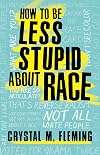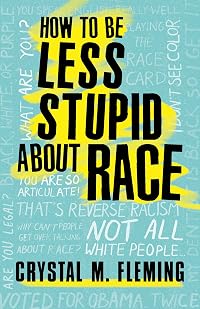
How to Be Less Stupid About Race: On Racism, White Supremacy, and the Racial Divide
by Crystal Marie Fleming
On This Page
Description
A unique and irreverent take on everything that's wrong with our "national conversation about race"—and what to do about itHow to Be Less Stupid About Race is your essential guide to breaking through the half-truths and ridiculous misconceptions that have thoroughly corrupted the way race is represented in the classroom, pop culture, media, and politics. Centuries after our nation was founded on genocide, settler colonialism, and slavery, many Americans are kinda-sorta-maybe waking up to show more the reality that our racial politics are (still) garbage. But in the midst of this reckoning, widespread denial and misunderstandings about race persist, even as white supremacy and racial injustice are more visible than ever before.
Combining no-holds-barred social critique, humorous personal anecdotes, and analysis of the latest interdisciplinary scholarship on systemic racism, sociologist Crystal M. Fleming provides a fresh, accessible, and irreverent take on everything that's wrong with our "national conversation about race." Drawing upon critical race theory, as well as her own experiences as a queer black millennial college professor and researcher, Fleming unveils how systemic racism exposes us all to racial ignorance—and provides a road map for transforming our knowledge into concrete social change.
Searing, sobering, and urgently needed, How to Be Less Stupid About Race is a truth bomb for your racist relative, friend, or boss, and a call to action for everyone who wants to challenge white supremacy and intersectional oppression. If you like Issa Rae, Justin Simien, Angela Davis, and Morgan Jerkins, then this deeply relevant, bold, and incisive book is for you. show less
Tags
Recommendations
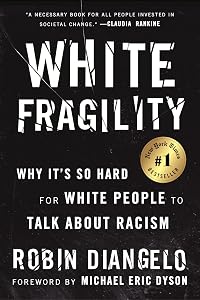
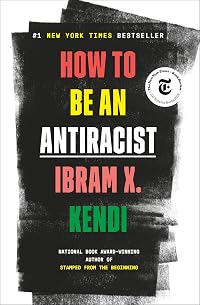

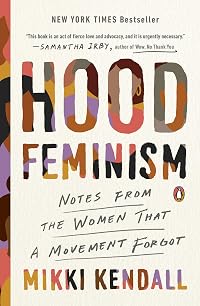
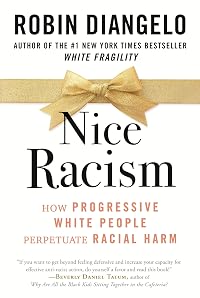
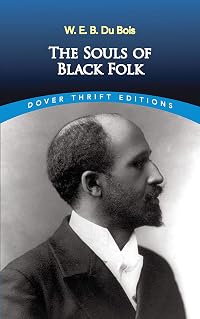



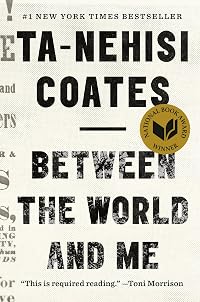




Member Reviews
this whole book is like a truth bomb. whew. the chapter on obama (and the new york times) was especially rough, but necessary. and, holy shit, the information that so many presidential administrations colluded with nazi doctors, having brought them to america?!
this is very readable; her language is often really casual and she inserts herself (and her journey to understanding racism) into the work just enough. (it's also nice that she does that and tells us that she had to learn about racism herself, even as a black woman, so people who may be coming to this information late don't have to feel badly about that.) and fleming is obviously really, really smart but she doesn't write in a way that makes it hard to follow her where she's show more taking you. she covers a lot and i found myself pausing a lot while reading this, and looking up names and incidents. this is an excellent book with so many references to do deeper and more meaningful work to become antiracist.
the cover made me think this would be more about micro aggressions and ways white people make mistakes about race and racism, but this is so much more than that. she does gloss over some more basic concepts, but i feel like this goes past that and into deeper territory, which i really appreciate.
"...living in a racist society socializes us to be stupid about race."
"...living in a racist society exposes us all to absurd and harmful ideas that, in turn, help maintain the racial status quo."
"When social scientists describe racism as 'systemic,' we're referring to collective practices and representations that disadvantage categories of human beings on the basis of their perceived 'race.' The key word here is 'collective.' Much of the racial stupidity we encounter in everyday life derives from the fact that people think of racism as individual prejudice rather than a broader system and structure of power."
"Speaking of prejudice, it's important to understand that individual biases and negative stereotypes (which we all hold) are not the same as systemic racism (a system of power). Though everyone internalizes stereotypes about social groups, we do not all occupy the same position in the racial order. When members of a so-called 'racial' group are able to impose their prejudices in ways that reliably benefit them and disadvantage others, they have managed to successfully institutionalize their racist beliefs and protect their racial privileges. 'Institutional racism' consists of racist ideas and practices embedded within social organizations and institutions (e.g., policies, laws, families, education). The major insight about systemic and institutional racism is that there is no such thing as 'a little bit of racism' or 'pockets of racism' or 'random incidents of racism' isolated from the rest of society. Whether you realize it or not, racism is systemic, pervasive, and embedded within the core of all our major institutions. The consequences of systemic racism are vast - from the burgeoning racial wealth gap, political disenfranchisement, mass incarceration and racist immigration policies to micro-aggressions, racial profiling, racist media imagery, and disparities in health, education, employment, and housing."
"White supremacy is about power. It's about the intersections of racial domination, class domination, gender domination, and other forms of oppression. It's about capitalism. It's about colonialism. The bottom line is that white supremacy is about resources: who gets (and retains) access to them, who gets excluded, whose lives are made to matter, and whose lives are rendered disposable."
"If we are ever to move beyond this racial order, then we will also have to dismantle the system of unearned privilege attached to being socially defined as 'white.' If being racist is about supporting a system of racist domination, then becoming antiracist is about recognizing ad opposing this system."
"Consider Operation Paperclip, the formerly classified program in which the United States violated its own official policy of denying citizenship to Nazis and instead welcomed more than 1,500 German scientists and their family members - including people directly responsible for war crimes during the Holocaust - and hired them to work on government projects in the aftermath of World War II. In addition to hiring Nazis for their expertise, US officials helped whitewash their war crimes, create new identities, and revive their reputations. ...Authorized by Harry Truman, Operation Paperclip stretched from 1945 until at least 1990, meaning that no less than nine presidential administrations were involved in the government's secret partnership with Nazi researchers, engineers, and scientists. Let me say this again: nine different US presidents quite literally facilitated the normalization of Nazis."
"Trump is not some kind of alien creature what came here from outer space. His brand of crude white supremacy resonates with tens of millions of US citizens (as well as white nationalists and neo-Nazis across the globe) because his views align with many of the foundational principles upon which Western colonial expansion broadly, and the United States specifically, were established. And the issue here is not just that our nation's founding principles were explicitly white supremacist, xenophobic, and imperialist. It's that these principles have been actively maintained, institutionalized, and normalized for generations."
this seems obvious to me in reality, but i didn't know that it's backed up by actual studies and data, so that's good to know:
"Decades of empirical data indicate that news depictions regularly exaggerate negative depictions of people of color far beyond statistical realities." show less
this is very readable; her language is often really casual and she inserts herself (and her journey to understanding racism) into the work just enough. (it's also nice that she does that and tells us that she had to learn about racism herself, even as a black woman, so people who may be coming to this information late don't have to feel badly about that.) and fleming is obviously really, really smart but she doesn't write in a way that makes it hard to follow her where she's show more taking you. she covers a lot and i found myself pausing a lot while reading this, and looking up names and incidents. this is an excellent book with so many references to do deeper and more meaningful work to become antiracist.
the cover made me think this would be more about micro aggressions and ways white people make mistakes about race and racism, but this is so much more than that. she does gloss over some more basic concepts, but i feel like this goes past that and into deeper territory, which i really appreciate.
"...living in a racist society socializes us to be stupid about race."
"...living in a racist society exposes us all to absurd and harmful ideas that, in turn, help maintain the racial status quo."
"When social scientists describe racism as 'systemic,' we're referring to collective practices and representations that disadvantage categories of human beings on the basis of their perceived 'race.' The key word here is 'collective.' Much of the racial stupidity we encounter in everyday life derives from the fact that people think of racism as individual prejudice rather than a broader system and structure of power."
"Speaking of prejudice, it's important to understand that individual biases and negative stereotypes (which we all hold) are not the same as systemic racism (a system of power). Though everyone internalizes stereotypes about social groups, we do not all occupy the same position in the racial order. When members of a so-called 'racial' group are able to impose their prejudices in ways that reliably benefit them and disadvantage others, they have managed to successfully institutionalize their racist beliefs and protect their racial privileges. 'Institutional racism' consists of racist ideas and practices embedded within social organizations and institutions (e.g., policies, laws, families, education). The major insight about systemic and institutional racism is that there is no such thing as 'a little bit of racism' or 'pockets of racism' or 'random incidents of racism' isolated from the rest of society. Whether you realize it or not, racism is systemic, pervasive, and embedded within the core of all our major institutions. The consequences of systemic racism are vast - from the burgeoning racial wealth gap, political disenfranchisement, mass incarceration and racist immigration policies to micro-aggressions, racial profiling, racist media imagery, and disparities in health, education, employment, and housing."
"White supremacy is about power. It's about the intersections of racial domination, class domination, gender domination, and other forms of oppression. It's about capitalism. It's about colonialism. The bottom line is that white supremacy is about resources: who gets (and retains) access to them, who gets excluded, whose lives are made to matter, and whose lives are rendered disposable."
"If we are ever to move beyond this racial order, then we will also have to dismantle the system of unearned privilege attached to being socially defined as 'white.' If being racist is about supporting a system of racist domination, then becoming antiracist is about recognizing ad opposing this system."
"Consider Operation Paperclip, the formerly classified program in which the United States violated its own official policy of denying citizenship to Nazis and instead welcomed more than 1,500 German scientists and their family members - including people directly responsible for war crimes during the Holocaust - and hired them to work on government projects in the aftermath of World War II. In addition to hiring Nazis for their expertise, US officials helped whitewash their war crimes, create new identities, and revive their reputations. ...Authorized by Harry Truman, Operation Paperclip stretched from 1945 until at least 1990, meaning that no less than nine presidential administrations were involved in the government's secret partnership with Nazi researchers, engineers, and scientists. Let me say this again: nine different US presidents quite literally facilitated the normalization of Nazis."
"Trump is not some kind of alien creature what came here from outer space. His brand of crude white supremacy resonates with tens of millions of US citizens (as well as white nationalists and neo-Nazis across the globe) because his views align with many of the foundational principles upon which Western colonial expansion broadly, and the United States specifically, were established. And the issue here is not just that our nation's founding principles were explicitly white supremacist, xenophobic, and imperialist. It's that these principles have been actively maintained, institutionalized, and normalized for generations."
this seems obvious to me in reality, but i didn't know that it's backed up by actual studies and data, so that's good to know:
"Decades of empirical data indicate that news depictions regularly exaggerate negative depictions of people of color far beyond statistical realities." show less
Another terrific and thought provoking step on my road to becoming less stupid about race. I found the first couple chapters on critical race theory and intersectionality full of solid information but the book really came alive for me in the Obama chapter where Fleming does an eye-opening critique/takedown of the former president. And it just gets stronger as she rips through the Trump presidency and the culpability of mass media in systemic racism. I like that she opened up about her own experience for the chapter on interracial relationships and closed out the book with some suggestions for next steps.
More than anything, I want to make time in the near future to learn more about Ida B. Wells and the work she did to fight the appalling show more domestic terrorist act of lynching. show less
More than anything, I want to make time in the near future to learn more about Ida B. Wells and the work she did to fight the appalling show more domestic terrorist act of lynching. show less
Edited to add that, after reading other books like White Fragility and How to be an antiRacist, this is one of my favorites, along with Ijeoma Oluo's book. Her tone is unapologetic, and, some might say abrasive, and I think that is a good thing because it de-centers the white reader's desire for comfortably discussions about race.
---
I thought this would be a lot like Ijeoma Oluo’s book, How to Talk About Race, but it wasn’t. It had much more social commentary on current topics, including the Obama era, Trumpism, and the history of racist media. Also a commentary on interracial relationships I haven’t seen before. And, Intersectional commentary on current thought leaders including TeNehasi Coates. Honest and theoretical while also show more ending with a list of what we can do. show less
---
I thought this would be a lot like Ijeoma Oluo’s book, How to Talk About Race, but it wasn’t. It had much more social commentary on current topics, including the Obama era, Trumpism, and the history of racist media. Also a commentary on interracial relationships I haven’t seen before. And, Intersectional commentary on current thought leaders including TeNehasi Coates. Honest and theoretical while also show more ending with a list of what we can do. show less
*I received a free copy of this book from the publisher through NetGalley in exchange for an honest review.*
This is a book that we NEED right now. It’s a no-nonsense look at where we are and how we’re inundated with denial and misunderstandings about what white supremacy is and how it works. For those struggling to understand why things are the way they are and why people seem so brazen about their racism now, this is the book for you! Fleming shows just how deeply entrenched white supremacy is in our culture and explains that things aren’t really any different than they used to be–people are just now being more honest about how things are.
I really appreciated the personal touch this book has; Fleming gives us lessons about race show more by walking us through her own journey to being someone who actively studies, educates, and tries to dismantle the ignorance we live in about race. This is really what makes the book special–it’s super informational, but also a memoir of one amazing woman’s growth and journey to being who she is. What I love most about this book is that Fleming does not take a holier-than-thou approach. She fully admits to her own biases and prejudices, examining them and using them as examples to give a more personal look at exactly what she’s talking about.
For those just delving into learning more about critical race theory and interested in challenging your own complicity in holding up the current power structure, be prepared! It’s a rough journey but one that is so worth it. Fleming is compassionate in her approach to calling us out and cheering us on to do and be better. She also gives some great resources as an addition that can help you learn more about yourself, your biases, and what work you can accomplish to be less ignorant about race. Definitely give this a read! I’m going to be buying this for my friends and family, regardless of whether or not they think they need to read this. Also, give Crystal Marie Fleming a follow on Twitter–her tweets are amazing!
Also posted on Purple People Readers. show less
This is a book that we NEED right now. It’s a no-nonsense look at where we are and how we’re inundated with denial and misunderstandings about what white supremacy is and how it works. For those struggling to understand why things are the way they are and why people seem so brazen about their racism now, this is the book for you! Fleming shows just how deeply entrenched white supremacy is in our culture and explains that things aren’t really any different than they used to be–people are just now being more honest about how things are.
I really appreciated the personal touch this book has; Fleming gives us lessons about race show more by walking us through her own journey to being someone who actively studies, educates, and tries to dismantle the ignorance we live in about race. This is really what makes the book special–it’s super informational, but also a memoir of one amazing woman’s growth and journey to being who she is. What I love most about this book is that Fleming does not take a holier-than-thou approach. She fully admits to her own biases and prejudices, examining them and using them as examples to give a more personal look at exactly what she’s talking about.
For those just delving into learning more about critical race theory and interested in challenging your own complicity in holding up the current power structure, be prepared! It’s a rough journey but one that is so worth it. Fleming is compassionate in her approach to calling us out and cheering us on to do and be better. She also gives some great resources as an addition that can help you learn more about yourself, your biases, and what work you can accomplish to be less ignorant about race. Definitely give this a read! I’m going to be buying this for my friends and family, regardless of whether or not they think they need to read this. Also, give Crystal Marie Fleming a follow on Twitter–her tweets are amazing!
Also posted on Purple People Readers. show less
4.5 stars. I learned so much.
Ratings
Members
- Recently Added By
Lists

BLM
210 works; 1 member

21 Books for a Better You
21 works; 4 members

Youth: BLM
265 works; 1 member

List of Removed Books from Nimitz Library
353 works; 1 member
Author Information

4 Works 388 Members
Crystal Marie Fleming is Assistant Professor of Sociology and Africana Studies at Stony Brook University.
Common Knowledge
- Original publication date
- 2018-09-18
- People/Characters
- Crystal Marie Fleming; Barbara Moore (mother of Crystal Marie Fleming); Ira Silver (professor); Ibram X. Kendi; Mike Ditka; Barack Obama (show all 74); John McWhorter; Cheryl Harris; Kimberlé Crenshaw; Derrick Bell; Charles William Eliot (Harvard president); Charles Mills; Charles Hamilton; Stokely Carmichael; Nina Turner; Jake Tapper; Rick Santorum; Ida B. Wells-Barnett; Salma Hayek; Jessica Williams; Shirley MacLaine; Audre Lorde; Tarana Burke; Angela Davis; CeCe McDonald; Harriet Tubman; Sojourner Truth; Cornel West; Patricia Hill Collins; Moya Bailey; bell hooks; Trayvon Martin; George Zimmerman; Alicia Garza; Opal Tometi; Patrisse Cullors; Hillary Rodham Clinton; Jeremiah Wright; Ta-Nehisi Coates; Donald Trump; Conan O'Brien; Dan Rather; Patty Dwyer; Sarah Huckabee Sanders; Jordan Peele; W. E. B. Du Bois; Eduardo Bonilla-Silva; Soledad O'Brien; Eric Alterman; Maggie Q; Brock Turner; Steve Bannon; Joe Feagin; William Offett; J.C. Underwood; Peggy McIntosh; Tony Hovater; Michael Brown, Jr.; Common; Dylann Roof; Tamir Rice; Eric Garner; John Legend; Jill Scott; Leslie Picca; TaLynn Kel; Meghan Markle; Prince Harry; Brittney Cooper; Martin Luther King, Jr.; Jane Elliott; James Baldwin; Octavia E. Butler; Kei Petersen
- Important places
- Harvard University, Cambridge, Massachusetts, USA; Stony Brook University, Stony Brook, Long Island, New York, USA; Wellesley College, Wellesley, Massachusetts, USA; Paris, France; Washington, D.C., USA
- Epigraph
- It is an aspect of their sense of superiority that the white people of America believe they have so little to learn.
- Dedication
- This book is dedicated to my students, for helping me become less stupid about a whole lotta things.
- First words
- Hundreds of years after establishing a nation on colonial genocide and chattel slavery, people are kinda-sorta-maybe-possibly waking up to the sad reality that our racial politics are (still) garbage.
- Last words
- (Click to show. Warning: May contain spoilers.)We can imagine a less harmful world, one in which white supremacy and heteropatriarchy and class oppression no longer exist, where love and interdependence are valued above power and dominance.The amazing thing about being alive is that we can imagine this world, even if we never live to see it. And we can choose to commit ourselves, moment by moment, day after day, to the always unfinished work of overcoming.
- Blurbers
- Turner, Nina; Golash-Boza, Tanya; Tuttle, Kate; Nunnally, Mya; Kukuk, Christina G.; Treitler, Vilna Bashi (show all 9); Bonilla-Silva, Eduardo; Morris, Aldon; Nissel, Angela
- Original language
- English
Classifications
- Genres
- Sociology, Nonfiction, Anthropology, General Nonfiction, History
- DDC/MDS
- 305.800973 — Society, government, & culture Social sciences, sociology & anthropology Social group - Age, Gender, Ethnicity Ethnic and national groups standard subdivisions / Ethnic and national groups with ethnic origins from more than one continent, of European descent standard subdivisions Biography And History North America United States
- LCC
- E184 .A1 .F576 — History of the United States United States Elements in the population Afro-Americans
- BISAC
Statistics
- Members
- 318
- Popularity
- 100,325
- Reviews
- 6
- Rating
- (3.83)
- Languages
- English
- Media
- Paper, Audiobook, Ebook
- ISBNs
- 10
- ASINs
- 2