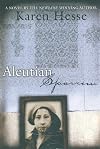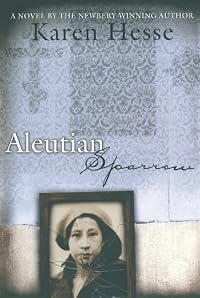
Aleutian Sparrow
by Karen Hesse
On This Page
Description
An Aleutian Islander recounts her suffering during World War II in American internment camps designed to "protect" the population from the invading Japanese.Tags
Recommendations
















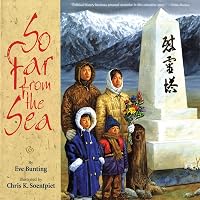
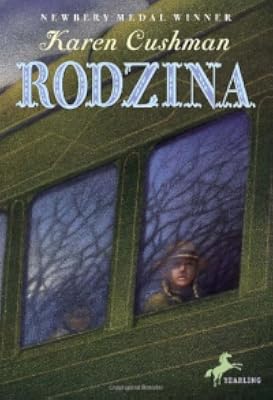
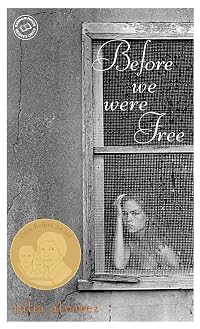


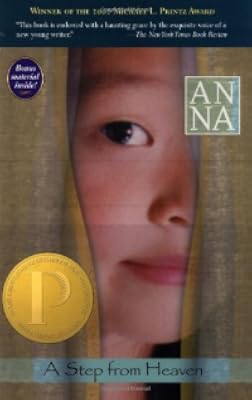


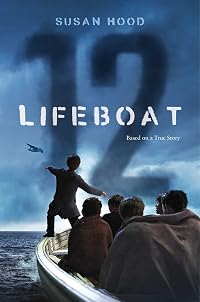
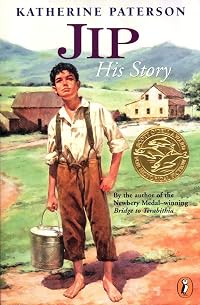

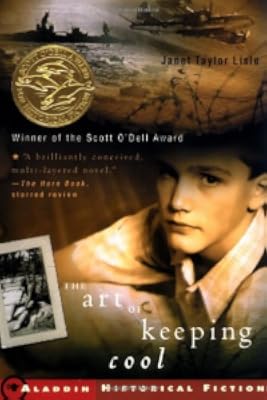




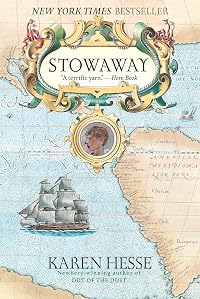










Member Recommendations
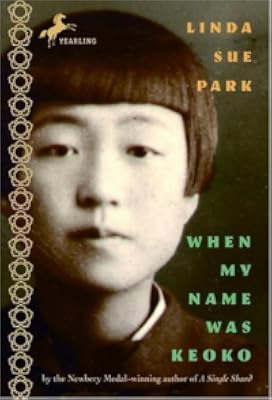
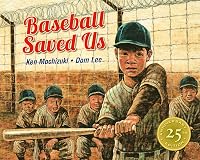
avatiakh another verse novel

Member Reviews
This slim volume, written in luminous free verse, tells the story of the Aleutian Evacuation during WW II.
I had never heard of this episode in the USA’s history. Shortly after the Japanese attacked Attu Island in June 1942 (an attempt to distract the US Navy away from the South Pacific), the government decided that it would be “best” for the Aleutian natives living on the islands to be evacuated “for their protection.” Nearly 900 Aleuts were removed by the US government from nine villages on six islands and forcibly transported to Southeast Alaska “duration camps.” Most were given little more than an hour to collect their necessary belongings, for a trip to an unknown destination, for an unknown length of time. People show more used to a subsistence living, were deposited in old canneries, or mining camps, without adequate shelter, sanitation, water, food, medical care or any means to support themselves. While the Japanese left the islands by 1943, the Aleuts were not allowed to return to their homes for three years. The deplorable conditions they endured resulted in epidemics of TB, pneumonia, whooping cough and other disease; over ten percent of them died during internment. Those who did return to the islands found that their homes had been destroyed and/or ransacked … not by the Japanese, but by American military troops.
I learned all the above by doing some research after reading this novel. But I certainly gathered clues and a feeling of the injustice suffered by the Aleuts during this time.
Hesse’s novel follows one young teen, Vera, and her friends and family as they struggle to make sense of what is happening, to survive the hardships and to adapt to a life none had ever imagined. The beauty of the work is that Hesse can convey so much in so few words. Here is one page…
KETCHIKAN CREEK
When Eva returns from Ketchikan, she says
The creek there is like a woman
Dressed in a filmy green gown,
Her lace pockets spilling with leaping salmon.
Despite the hardships, there is room for love and faith. Babies are born and cherished. Christmas is celebrated. Still, the sense of loss is palpable. I will be thinking about this novel and the Aleutian Evacuation for a long time. show less
I had never heard of this episode in the USA’s history. Shortly after the Japanese attacked Attu Island in June 1942 (an attempt to distract the US Navy away from the South Pacific), the government decided that it would be “best” for the Aleutian natives living on the islands to be evacuated “for their protection.” Nearly 900 Aleuts were removed by the US government from nine villages on six islands and forcibly transported to Southeast Alaska “duration camps.” Most were given little more than an hour to collect their necessary belongings, for a trip to an unknown destination, for an unknown length of time. People show more used to a subsistence living, were deposited in old canneries, or mining camps, without adequate shelter, sanitation, water, food, medical care or any means to support themselves. While the Japanese left the islands by 1943, the Aleuts were not allowed to return to their homes for three years. The deplorable conditions they endured resulted in epidemics of TB, pneumonia, whooping cough and other disease; over ten percent of them died during internment. Those who did return to the islands found that their homes had been destroyed and/or ransacked … not by the Japanese, but by American military troops.
I learned all the above by doing some research after reading this novel. But I certainly gathered clues and a feeling of the injustice suffered by the Aleuts during this time.
Hesse’s novel follows one young teen, Vera, and her friends and family as they struggle to make sense of what is happening, to survive the hardships and to adapt to a life none had ever imagined. The beauty of the work is that Hesse can convey so much in so few words. Here is one page…
KETCHIKAN CREEK
When Eva returns from Ketchikan, she says
The creek there is like a woman
Dressed in a filmy green gown,
Her lace pockets spilling with leaping salmon.
Despite the hardships, there is room for love and faith. Babies are born and cherished. Christmas is celebrated. Still, the sense of loss is palpable. I will be thinking about this novel and the Aleutian Evacuation for a long time. show less
A quick and heartbreaking look into an event that most Americans have never heard of. Before the US entered World War II, Japanese soldiers had invaded a few of the Aleutian Islands and as a result, the American government forced all the Aleutian natives were forced into internment camps for their own "safety" even though the Japanese quickly lost their tiny little foot-hole and the islands became safe. While the Aleutians were crowded into tiny camps with little amenities, bored US soldiers looted the islands destroying the native's homes. This story is told in verse from the perspective of a young girl, and is cheerful and heartbreaking in its tone. There is a dictionary and testimony from a real native girl that lived through the show more whole ordeal. The US government didn't formally apologize until 1988. show less
Beautiful writing. Partial-page free verse provides the images that draw out the story of a young girl whose people have been forced to leave their homes "for security reasons". Their lives are greatly diminished when they can no longer access their hunting and foraging areas and have to leave a lot of their posessions, and the foods & supplies provided by the government are inadequate. On their return, they find that people (soldiers guarding the area?) have pilfered & damaged their homes. Another instance of the disrespect shown to the native peoples of this land.
I love the white-on black illustrations that are on each title-chapter page! This really heart-wrenching story is told from the perspective of a girl named Vera, and it is written in this beautiful prose-poetic-diary sort of style. It is amazing! Vera's mother seems so distant, her father even more so (he left) and then the Japanese come, without warning and all of Vera's people are moved into internment camps on the other side of Alaska. I love Hesse's lines throughout this book. 'But in the endless light of June, the Japanese stung from the sky'. The Aleuts go to Wrangell, and then on to Ketchikan. There is so much sadnes: 'We find not a single leaf we recognize'. There is so much touching hope: 'I put my hand over my eyes so the show more light he makes shine inside me won't leak out.' There is love: When the fierce wind played the grass like a tempest of green violins....I did not know I loved Alfred.' Her best friend Pari dies in a heartbreaking chapter, "Lost". Hesse does not try to patronize the reader by making anything glossier and more glamourous - her achingly true account of the Aleuts relocation paints the sad tale of a culture's destruction. An incredibly beautiful book. show less
Karen Hesse is a genius. Out of the Dust was tragic and hopeful, sad and beautiful. Aleutian Sparrow is no exception. Set in the Aleutian Islands (off the coast of mainland Alaska) during World War II, this book is the story of Vera, a half-Aleutian and half-Caucasian girl, who is forced to move from her home into internment camps. We follow the journey of Vera and her neighbors from home to camp and back.
Artfully written in short free-verse poems similar to Out of the Dust, Aleutian Sparrow is full of bursts of events and emotions. We learn about Vera's father dying at sea, the deforestation of the islands by western interests, and the better conditions of German prisoners of war nearby. The power of Hesse's writing is in her brevity. show more
She brings up topics as heavy as the cruelty of war, the dehumanization of interned Americans, and rebuilding a community. This book is suitable for anyone who would like to learn something new about US involvement in internment camps, such as the one in Farewell to Manzanar. I recommend it for the discussion that it will prompt about ethics and community afterwards. show less
Artfully written in short free-verse poems similar to Out of the Dust, Aleutian Sparrow is full of bursts of events and emotions. We learn about Vera's father dying at sea, the deforestation of the islands by western interests, and the better conditions of German prisoners of war nearby. The power of Hesse's writing is in her brevity. show more
She brings up topics as heavy as the cruelty of war, the dehumanization of interned Americans, and rebuilding a community. This book is suitable for anyone who would like to learn something new about US involvement in internment camps, such as the one in Farewell to Manzanar. I recommend it for the discussion that it will prompt about ethics and community afterwards. show less
I was hesitant to start this book, worried that the short poems might be boring or that it would fail to tell the story. But I loved it, read the whole thing in a day and have such strong emotional attachments to the story and the characters, including the places they loved. This is a piece of history I had never heard about and am so glad that this book exists to try to tell a little bit about how the American government interred people during WWII.
I loved this book. I thought it was well written and touching, and brought a page in history, that I knew nothing about, to life. One of my favorite poems from the book is on page 59. I like it so much because it opens up so many questions about preserving history, identity, colonialism, and respecting one’s ancestors:
While The Little Ones Kicked The Can
Alfred's grandfather says, "Remember, we were once
unparalleled hunters, men of the sea.
We were the elders of the world.
We had our own language, our fierce victories, our
tribal pride.
The Russians ended that.
"We went from ten thousand to eight hundred. Our
grandparents preished. Our parents perished.
And that was before the
Americans came.
How many times can a people lose their show more way
Before they are lost forever?"
A lyrical book that also packs a lot of information into few words, Aleutian Sparrow is a wonderful read that would be a perfect complement to a unit on WWII. show less
While The Little Ones Kicked The Can
Alfred's grandfather says, "Remember, we were once
unparalleled hunters, men of the sea.
We were the elders of the world.
We had our own language, our fierce victories, our
tribal pride.
The Russians ended that.
"We went from ten thousand to eight hundred. Our
grandparents preished. Our parents perished.
And that was before the
Americans came.
How many times can a people lose their show more way
Before they are lost forever?"
A lyrical book that also packs a lot of information into few words, Aleutian Sparrow is a wonderful read that would be a perfect complement to a unit on WWII. show less
Members
- Recently Added By
Author Information

38+ Works 28,881 Members
Karen Hesse (born on August 29, 1952 Baltimore, Maryland) is an American author of children's literature and literature for young adults. She studied theatre at Towson State College, and finished her undergraduate degree at the University of Maryland in English, Psychology, and Anthropology. In 1998 she won the Newbery Medal for her young adult show more novel, Out of the Dust. Hesse lives in Vermont with her husband and two teen-aged daughters. (Bowker Author Biography) show less
Some Editions
Awards and Honors
Awards
Distinctions
Common Knowledge
- Original publication date
- 2003
- Important places
- Alaska, USA; Aleutian Islands, Alaska, USA
- Epigraph
- I noticed a string of strange, bare mountains rising out of the sea along the northern horizon. They resembled heaps of smoking slag: the sun, striking their sides, gave them a greenish cast like verdigris on copper. I ask... (show all)ed a fellow passenger what they were. "Illusions," I thought he said, but now I realize he said they were Aleutians.
--Corey Ford, Where The Sea Breaks Its Back - Dedication
- For the Unangax, the People of the Aleutian and Pribilof Islands
- First words
- The old ones, Alexie and Fekla, they say, "Go, Vera..."
- Last words
- (Click to show. Warning: May contain spoilers.)The wind whips our hair across our faces, the sun breaks through to touch the grasses on the mountainside,
And as Aleuts have always done,
We find the will to begin again.
Classifications
- Genres
- Poetry, Fiction and Literature, Children's Books
- DDC/MDS
- 813.54 — Literature & rhetoric American literature in English American fiction in English 1900-1999 1945-1999
- LCC
- PZ7 .H4364 .A — Language and Literature Fiction and juvenile belles lettres Fiction and juvenile belles lettres Juvenile belles lettres
- BISAC
Statistics
- Members
- 436
- Popularity
- 70,440
- Reviews
- 27
- Rating
- (4.01)
- Languages
- English
- Media
- Paper, Audiobook, Ebook
- ISBNs
- 15
- ASINs
- 1