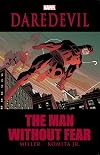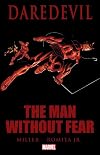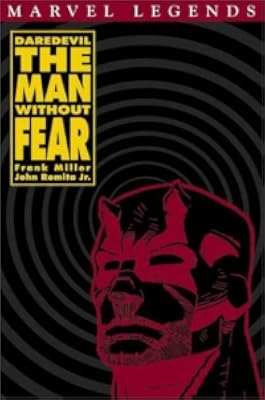
Daredevil: The Man Without Fear
by Frank Miller, John Romita Jr. (Illustrator)
Daredevil: The Man Without Fear (Collections and Selections — 1-5), Daredevil (Origin Story)
On This Page
Description
Matt Murdock was raised by a single father, an over-the-hill prizefighter with one last chance to make it good - a chance that cost him his life. Taunted and tormented by children while growing up, Matt's life was irrevocably altered after he was blinded by radioactive materials while saving the life of an old man. The payoff? An unbreakable will and a keen intelligence, helping focus the super-senses he was blessed with during the accident. His story is one of love, pain, disappointment, show more and strength. show lessTags
Recommendations







Member Recommendations
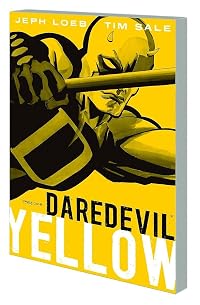
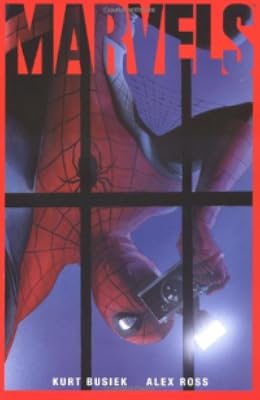
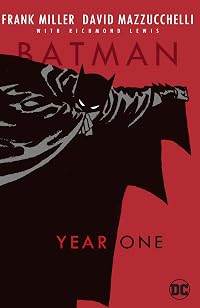
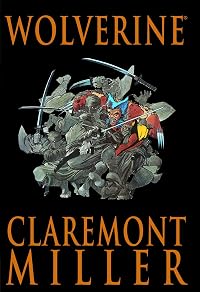
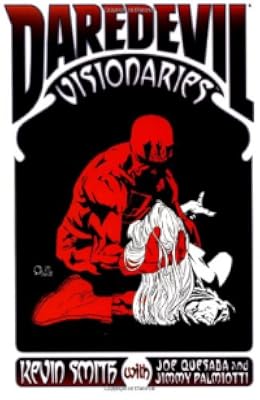
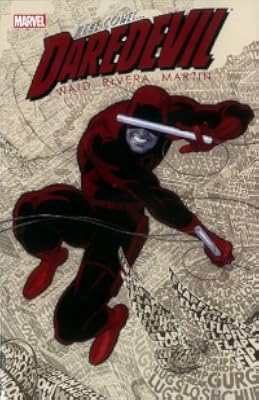
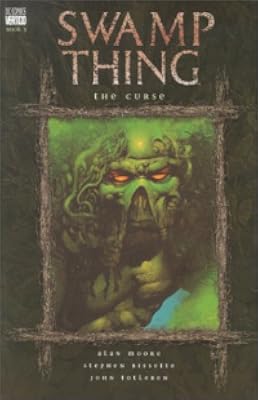
hazzabamboo Frank Miller's origin stories for these two giants have never been bested. The writing, art and imagination in both comics demonstrate what the medium can be.
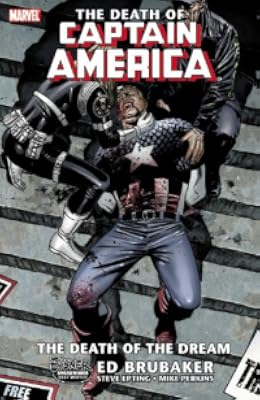
hazzabamboo These are both excellent accounts of Daredevil's origin, itself one of the best superhero genesis stories out there, from two of our best comics writers.
Member Reviews
Apparently I'm in the minority here in that I didn't think this series was all that shit hot.
According to the various notes, this started life as a 64-page graphic novel, that got expanded to 144 pages. Apparently a lot of the expansion was the terrible Elektra section in the middle.
I guess the overarching storyline was the maturation of Matt from broken child to differently-broken adult, but as I read this, it felt more like three vignettes playing out over the original five issues: The death of Matt's father and his revenge on them (where he kills most of them), the appearance and disappearance of Elektra, and the saving of a young teen from the clutches of Kingpin.
Of the three, the only one that really resonated at all was the first show more one, and even that seemed to contradict the tone and feel of the original Stan Lee/Bill Everett run. Especially when the pre-Daredevil Matt happily kills a bunch of goons. Daredevil doesn't kill wherever possible, but he sure as hell has no problem with it here. And even when an innocent woman dies, he agonizes over it for perhaps a couple of panels, then it's forgotten.
The Elektra storyline is simply bonkers, and she's completely psychotic. There's literally no underlying reason they should fall for each other, other than they train together at the same elevated level of physicality. Whatever.
And the last bit with the Kingpin is flat-out unbelievable, even by comic book standards.
This was not that great. And sorry, but John Romita Jr's art is ridiculously overrated. show less
According to the various notes, this started life as a 64-page graphic novel, that got expanded to 144 pages. Apparently a lot of the expansion was the terrible Elektra section in the middle.
I guess the overarching storyline was the maturation of Matt from broken child to differently-broken adult, but as I read this, it felt more like three vignettes playing out over the original five issues: The death of Matt's father and his revenge on them (where he kills most of them), the appearance and disappearance of Elektra, and the saving of a young teen from the clutches of Kingpin.
Of the three, the only one that really resonated at all was the first show more one, and even that seemed to contradict the tone and feel of the original Stan Lee/Bill Everett run. Especially when the pre-Daredevil Matt happily kills a bunch of goons. Daredevil doesn't kill wherever possible, but he sure as hell has no problem with it here. And even when an innocent woman dies, he agonizes over it for perhaps a couple of panels, then it's forgotten.
The Elektra storyline is simply bonkers, and she's completely psychotic. There's literally no underlying reason they should fall for each other, other than they train together at the same elevated level of physicality. Whatever.
And the last bit with the Kingpin is flat-out unbelievable, even by comic book standards.
This was not that great. And sorry, but John Romita Jr's art is ridiculously overrated. show less
I read this 4 years ago. I just read it again. My opinion has evolved. It's late and I'm too tired to explain why, but it's a neglected masterpiece.
I don't have the energy to finish many books these days. I don't know why. Something broken inside of me. But comics? I can read. I can finish. The obvious answer would be that I can finish them because they are silly & dumb. But that can't be right, because I can't finish the dumb ones.
I can still finish the great ones, though. The ones that speak with that quasi-cinematic vocabulary. The comics that are frozen films, with light and sound replaced by drawings and text. Moving without moving, speaking in silence, and all the rest.
I suppose it's a kind of childhood magic. The sort of thing show more that seems so strange as an adult thinking now which was perfectly ordinary back then.
It's not nostalgia. The comics I liked back then, overwhelmingly, tend to disappoint me now. It's more that the juxtaposition of the way I see now and the way I saw then creates it's own aesthetic effect, a kind of anti-nostalgia.
A moment of freedom from the past? A new past? I don't know. I don't know why this works for me now, while so little else does, but it does. And I am grateful. show less
I don't have the energy to finish many books these days. I don't know why. Something broken inside of me. But comics? I can read. I can finish. The obvious answer would be that I can finish them because they are silly & dumb. But that can't be right, because I can't finish the dumb ones.
I can still finish the great ones, though. The ones that speak with that quasi-cinematic vocabulary. The comics that are frozen films, with light and sound replaced by drawings and text. Moving without moving, speaking in silence, and all the rest.
I suppose it's a kind of childhood magic. The sort of thing show more that seems so strange as an adult thinking now which was perfectly ordinary back then.
It's not nostalgia. The comics I liked back then, overwhelmingly, tend to disappoint me now. It's more that the juxtaposition of the way I see now and the way I saw then creates it's own aesthetic effect, a kind of anti-nostalgia.
A moment of freedom from the past? A new past? I don't know. I don't know why this works for me now, while so little else does, but it does. And I am grateful. show less
If only all the superheroes could have such a talent as Frank Miller re-writing their origin story, with a fantastic artist like John Romita Jr. working alongside. This story is classic Miller, and you can easily see hints of his more gritty Sin City series simmering underneath the story of a hard-luck kid brought up blind in Hell's Kitchen. The only thread of the tale that could have used a little more fleshing out would be Kingpin; his empire of crime brings about the main point of conflict but the actual character seems a bit one-dimensional. Otherwise not much to complain about here: a strong origin story with a ton of noir.
I was never really a Daredevil fan until I read Mark Waid's fantastic run (still going). Now I'm starting to go back and read some of the older stories I missed.
I enjoyed this retelling of the Daredevil origin by Frank Miller. Overall, it's a well-written extended take on the original Stan Lee story. It's also quite a bit darker, which I have mixed feelings about.
I appreciated a grittier take on the character, but on the other hand didn't love the characterization of Daredevil as being so willing to kill his enemies. As far as I can remember, he doesn't do that in the Mark Waid run, and I don't think anything is missed.
Regardless, this is a pretty good introduction to the character if you want his origin. Otherwise, I'd think you'd be show more fine to skip to the excellent Mark Waid stories. show less
I enjoyed this retelling of the Daredevil origin by Frank Miller. Overall, it's a well-written extended take on the original Stan Lee story. It's also quite a bit darker, which I have mixed feelings about.
I appreciated a grittier take on the character, but on the other hand didn't love the characterization of Daredevil as being so willing to kill his enemies. As far as I can remember, he doesn't do that in the Mark Waid run, and I don't think anything is missed.
Regardless, this is a pretty good introduction to the character if you want his origin. Otherwise, I'd think you'd be show more fine to skip to the excellent Mark Waid stories. show less
In the early nineties, several years after his long and successful run with the character, Frank Miller returned to writing Daredevil for a special series filling in the details of the character's youth and origins. The result is the graphic novel Daredevil: The Man Without Fear. Oddly, though the content was originally conceived as a graphic novel, due to the fact that marvel had phased out the graphic novel format, it was released as a limited comic book run. The materials from the run were then later collected together and released in its present form as a graphic novel.
Daredevil is one of my favorite marvel characters, possibly because his alter ego Matt Murdock and I share the same profession. The interesting thing about Daredevil show more as a superhero is that his primary "superpower", his enhanced nonvisual senses, serve primarily to offset the fact that he is blind. Granted, his senses are so enhanced that he actually is more aware of his surroundings than a typical sighted person, but for the most part, his superpower is mostly effective in making him not disabled. Daredevil is also interesting insofar as he is one of the few comic book superheroes who has a regular "day job" as his alter ego that is more or less directly connected to the same impulses that drive him to don a mask and hunt villains in the night. Unlike, say Tony Stark, who is a playboy industrialist, or Peter Parker, freelance newspaper photographer, or any number of other heroes who have jobs that are often glamorous or exciting, but have basically nothing to do with their superheroic persona, Matt Murdock is a lawyer who advocates for the same poor and downtrodden people that Daredevil fights to protect. Of course, this means, as Miller notes in his introduction to the book, that Murdock in his persona as Daredevil, is a lawyer who routinely breaks the law, a tension that makes the character even more interesting.
Daredevil: The Man Without Fear is basically a straightforward and linear story. it starts with Murdock as a young boy being raised by a single father in the slums of Hell's Kitchen in New York. His father, a one time boxing champion, is now a boozed up has-been pressured by the mob to work as an enforcer. His father pushes Matt to excel academically, hoping his son will have a life that he was never able to achieve. The younger Murdock grates under this pressure, tormented by bullies on the schoolyard, but forbidden to fight back with his fists. Still, he obeys, building the strong will that is one of the hallmarks of the character. Eventually Matt is blinded in an accident, with radioactive material spilled into his eyes. He is then instructed by a mysterious character named "Stick", who is also blind, in the ways of martial arts, learning to use his other senses to compensate for his lack of sight. This is all very quasi-mystical, as it is made clear in the story that Stick was shadowing Matt before his accident, apparently possessed of foreknowledge that the accident would occur. This version of the Daredevil origin story also deemphasizes the traditional "radioactive materials did it" backstory explanation for Matt's heightened senses, substituting the mystical martial arts training provided by Stick. (This makes one wonder why other blind people do not routinely develop similar radar powers. Apparently they aren't dedicated enough or something).
In one of the pivotal events in Murdock's life, his father refuses to throw a fight for the mob and gets killed as a result, starting Matt's . Matt then goes on a revenge fueled murder spree, killing all the men who participated in killing his father, but killing an innocent woman along the way. This causes Stick to disavow him as heir to the shadowy mystical organization that Stick is part of and sets Murdock free from that potential entanglement. The story then ticks off all the requisite backstory boxes. Murdock goes to college and law school. meets his longtime friend Foggy. Comes across and has an ill-advised and ill-fated romance with the unpredictable and dangerously mercurial Elektra (who is already apparently under the influence of dark forces, hearing disembodied "voices" that drive her to commit unspeakable acts). Matt befriends a young girl named Mickey in Hell's Kitchen who frequents the same abandoned gym that Matt has haunted as a youth, and when she is kidnapped by a minor functionary in the Kingpen's organization he once again takes on organized crime, this time in an effort to save Mickey. This brings him to the attention of the Daredevil's long time nemesis, the Kingpen, and all the pieces of the backstory are in place. The final panel of the novel is Matt's coming out as Daredevil in his familiar red costume with horns.
As an origin story this graphic novel is effective to a certain extent. Unfortunately, the story pretty much assumes that one already knows a great deal about "Daredevil lore", as the connections between various characters are left undrawn, and the significance of some events is left unexplained. For example, though there are oblique references to the organization of which Stick is part of, the significance of this organization is left entirely a mystery. It is implied that Elektra killed her own father at the behest of her inner voices, but whether she actually did, and whether the demons that drive her are anything other than delusions is entirely unexplained in the pages of this book. Those who had read the comic book series in the years before this run was penned will immediately understand who they are, and why they are important, but for someone reading this as an introduction to the Daredevil character, it will be essentially meaningless. The graphic novel has a sort of "fill in the boxes" feel to it as well, checking off the required elements of the backstory one by one like clockwork. As a result, as an introduction to the Daredevil character, this graphic novel is less than effective. As a gift to longtime fans of the series, it is perfect. While I give this a strong recommendation to anyone who is familiar with the Daredevil character (and who, as a result, has probably already read this graphic novel, making this recommendation redundant), for someone just starting to read this particular superhero's tale I can give only a modest recommendation, as much of the material will probably seem confusing and extraneous to the story being told within its pages.
This has also been posted to my blog Dreaming About Other Worlds. show less
Daredevil is one of my favorite marvel characters, possibly because his alter ego Matt Murdock and I share the same profession. The interesting thing about Daredevil show more as a superhero is that his primary "superpower", his enhanced nonvisual senses, serve primarily to offset the fact that he is blind. Granted, his senses are so enhanced that he actually is more aware of his surroundings than a typical sighted person, but for the most part, his superpower is mostly effective in making him not disabled. Daredevil is also interesting insofar as he is one of the few comic book superheroes who has a regular "day job" as his alter ego that is more or less directly connected to the same impulses that drive him to don a mask and hunt villains in the night. Unlike, say Tony Stark, who is a playboy industrialist, or Peter Parker, freelance newspaper photographer, or any number of other heroes who have jobs that are often glamorous or exciting, but have basically nothing to do with their superheroic persona, Matt Murdock is a lawyer who advocates for the same poor and downtrodden people that Daredevil fights to protect. Of course, this means, as Miller notes in his introduction to the book, that Murdock in his persona as Daredevil, is a lawyer who routinely breaks the law, a tension that makes the character even more interesting.
Daredevil: The Man Without Fear is basically a straightforward and linear story. it starts with Murdock as a young boy being raised by a single father in the slums of Hell's Kitchen in New York. His father, a one time boxing champion, is now a boozed up has-been pressured by the mob to work as an enforcer. His father pushes Matt to excel academically, hoping his son will have a life that he was never able to achieve. The younger Murdock grates under this pressure, tormented by bullies on the schoolyard, but forbidden to fight back with his fists. Still, he obeys, building the strong will that is one of the hallmarks of the character. Eventually Matt is blinded in an accident, with radioactive material spilled into his eyes. He is then instructed by a mysterious character named "Stick", who is also blind, in the ways of martial arts, learning to use his other senses to compensate for his lack of sight. This is all very quasi-mystical, as it is made clear in the story that Stick was shadowing Matt before his accident, apparently possessed of foreknowledge that the accident would occur. This version of the Daredevil origin story also deemphasizes the traditional "radioactive materials did it" backstory explanation for Matt's heightened senses, substituting the mystical martial arts training provided by Stick. (This makes one wonder why other blind people do not routinely develop similar radar powers. Apparently they aren't dedicated enough or something).
In one of the pivotal events in Murdock's life, his father refuses to throw a fight for the mob and gets killed as a result, starting Matt's . Matt then goes on a revenge fueled murder spree, killing all the men who participated in killing his father, but killing an innocent woman along the way. This causes Stick to disavow him as heir to the shadowy mystical organization that Stick is part of and sets Murdock free from that potential entanglement. The story then ticks off all the requisite backstory boxes. Murdock goes to college and law school. meets his longtime friend Foggy. Comes across and has an ill-advised and ill-fated romance with the unpredictable and dangerously mercurial Elektra (who is already apparently under the influence of dark forces, hearing disembodied "voices" that drive her to commit unspeakable acts). Matt befriends a young girl named Mickey in Hell's Kitchen who frequents the same abandoned gym that Matt has haunted as a youth, and when she is kidnapped by a minor functionary in the Kingpen's organization he once again takes on organized crime, this time in an effort to save Mickey. This brings him to the attention of the Daredevil's long time nemesis, the Kingpen, and all the pieces of the backstory are in place. The final panel of the novel is Matt's coming out as Daredevil in his familiar red costume with horns.
As an origin story this graphic novel is effective to a certain extent. Unfortunately, the story pretty much assumes that one already knows a great deal about "Daredevil lore", as the connections between various characters are left undrawn, and the significance of some events is left unexplained. For example, though there are oblique references to the organization of which Stick is part of, the significance of this organization is left entirely a mystery. It is implied that Elektra killed her own father at the behest of her inner voices, but whether she actually did, and whether the demons that drive her are anything other than delusions is entirely unexplained in the pages of this book. Those who had read the comic book series in the years before this run was penned will immediately understand who they are, and why they are important, but for someone reading this as an introduction to the Daredevil character, it will be essentially meaningless. The graphic novel has a sort of "fill in the boxes" feel to it as well, checking off the required elements of the backstory one by one like clockwork. As a result, as an introduction to the Daredevil character, this graphic novel is less than effective. As a gift to longtime fans of the series, it is perfect. While I give this a strong recommendation to anyone who is familiar with the Daredevil character (and who, as a result, has probably already read this graphic novel, making this recommendation redundant), for someone just starting to read this particular superhero's tale I can give only a modest recommendation, as much of the material will probably seem confusing and extraneous to the story being told within its pages.
This has also been posted to my blog Dreaming About Other Worlds. show less
Frank Miller is just not an author I like. I dislike how he handles Elektra and the ableism inherent in the way he writes her.
Good but not great. Miller returns to the well, but without as much energy and excitement as some of his other work on Daredevil. This doesn't have the sweep and scale that would make it the novel that Miller wanted it to be. Further, there's not as much at stake as there was in Born Again, which just might be my favorite Miller Daredevil story. Elektra was a necessary, but slightly under-realized element of the story. Romita's pencils are nice. Worthwhile for the Miller fan and good to introduce someone to his work, but it's by no means his best.
Members
- Recently Added By
Lists

Sarah's Wish List
48 works; 1 member
Author Information

577+ Works 40,826 Members
Awards and Honors
Notable Lists
Series

Daredevil: The Man Without Fear
5 works (Collections and Selections — 1-5)

Daredevil
60 works (Origin Story)
Belongs to Publisher Series
Work Relationships
Is contained in
Common Knowledge
- Original title
- Daredevil: The Man Without Fear
- Alternate titles*
- Demolidor - O Homem Sem Medo
- Original publication date
- 2010-06-10
- People/Characters
- Daredevil
*Some information comes from Common Knowledge in other languages. Click "Edit" for more information.
Classifications
Statistics
- Members
- 504
- Popularity
- 59,847
- Reviews
- 18
- Rating
- (3.99)
- Languages
- 7 — Danish, English, French, German, Italian, Portuguese, Spanish
- Media
- Paper, Ebook
- ISBNs
- 20
- UPCs
- 1
- ASINs
- 5