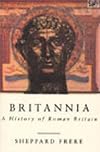
Britannia: A History of Roman Britain
by Sheppard Frere
On This Page
Description
Now in its third edition, this work investigates Roman archaeology in the former Roman province of Britannia - the lands of England, Wales, southern and central Scotland.Tags
Recommendations

















Member Reviews
Wow, it took me a bit of time to finish this great history book, despite its relatively short length. The text was a bit dry and very British in style, but it’s hard to make this subject exciting when there really isn't much hard evidence to go on. The first set of chapters are chronologically themed and focus on concrete evidence to support theories of how the early occupation of Britain proceeded. There are lots of references to coin hordes, pottery shards, and hill forts. There is not a whole lot of narrative or flowery language going on. I wouldn’t say this is an academic book strictly, but I wouldn’t recommend it for the casual reader. Fort occupation theories are bandied about for pages and pages. If you read a lot of show more history books in college and actually enjoyed them though then there is a good deal here for the average reader to learn.
The major idea presented in Britannia that really fascinated me was simply that the Roman Empire occupied Britain for over 400 years. That's a pretty big chunk of time compared to say, US History, which is only a mere 234 years. It astounds me that there were all these people lives going on through this whole time period, this whole culture, and all we know about them is based on some pottery shards and a few references in the Roman commentators who were rarely actually in Britain.
I was also fascinated by how often the ruling roman leadership made the trip out to the island to go campaigning. Traveling from modern day Italy out to Britain was no easy feat. The Caesars would travel for months just to sail over to Britain, this backwater barbarian land. It sounds weird, but I seriously wonder what was going through their heads when actually landed and looked around.
Another fascinating topic brought up is the Roman technological advances discovered by archeologists in Britain. Many of them are fairly surprising, given Britain’s remoteness to civilization during the time period: coin mints, sewers, plumbing, aqueducts, advanced kilns, hot bath houses, gladiator arenas,ect. Some of the structures are still perceivable, such as Hadrian and Antoine’s walls. In fact, a great deal of this book deals with how and why the walls were built and at what points in time were they occupied. A bit of this is somewhat tedious for the casual reader. A lot of discussion goes into Legion movements around the island. I was really hoping for more material on the legend of the Ninth Legion. But he barely spends any time on the subject.
It wasn't until the second to last chapter on the Romanization of Britain did Frere get into the evidence for everyday life in these small Romano/Celtic towns. In these pages, the reader learns about the Roman cults and how they merged with Celtic ideas and symbols. There is some information on Mithra and the Isis cults. There is also some information on the Christian influences in the fifth century. The final chapter regarding the fall of Roman Britain deals heavily with the established Christian communities and also the rebirth of the druidic/Celtic traditions that were repressed by the Romans.
Random Notes: I found myself looking up a great many town and place names. There are lots of different maps relative to the subject matter but not a general map that encompasses the whole island.
I also detected a bit of rivalry going on in the footnotes with other historians who pose more fanciful theories than Frere's conservative estimates and sharp objectivism.
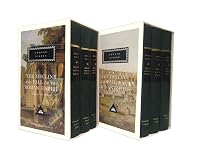
The Folio Society edition of this book is printed on very high quality paper and there is a helpful little introduction by Professor Frere. There are also lots of aerial shots of fort locations that really illustrate some of the main points in the text.
Overall, if you can handle dry historian language than this is great, especially as a companion to reading Rosemary Sutcliff’s delightful young adult series following the Aquila family. I found myself going back to the Eagle of the Ninth and looking up place names and then comparing them to the information in Frere’s book. show less
The major idea presented in Britannia that really fascinated me was simply that the Roman Empire occupied Britain for over 400 years. That's a pretty big chunk of time compared to say, US History, which is only a mere 234 years. It astounds me that there were all these people lives going on through this whole time period, this whole culture, and all we know about them is based on some pottery shards and a few references in the Roman commentators who were rarely actually in Britain.
I was also fascinated by how often the ruling roman leadership made the trip out to the island to go campaigning. Traveling from modern day Italy out to Britain was no easy feat. The Caesars would travel for months just to sail over to Britain, this backwater barbarian land. It sounds weird, but I seriously wonder what was going through their heads when actually landed and looked around.
Another fascinating topic brought up is the Roman technological advances discovered by archeologists in Britain. Many of them are fairly surprising, given Britain’s remoteness to civilization during the time period: coin mints, sewers, plumbing, aqueducts, advanced kilns, hot bath houses, gladiator arenas,ect. Some of the structures are still perceivable, such as Hadrian and Antoine’s walls. In fact, a great deal of this book deals with how and why the walls were built and at what points in time were they occupied. A bit of this is somewhat tedious for the casual reader. A lot of discussion goes into Legion movements around the island. I was really hoping for more material on the legend of the Ninth Legion. But he barely spends any time on the subject.
It wasn't until the second to last chapter on the Romanization of Britain did Frere get into the evidence for everyday life in these small Romano/Celtic towns. In these pages, the reader learns about the Roman cults and how they merged with Celtic ideas and symbols. There is some information on Mithra and the Isis cults. There is also some information on the Christian influences in the fifth century. The final chapter regarding the fall of Roman Britain deals heavily with the established Christian communities and also the rebirth of the druidic/Celtic traditions that were repressed by the Romans.
Random Notes: I found myself looking up a great many town and place names. There are lots of different maps relative to the subject matter but not a general map that encompasses the whole island.
I also detected a bit of rivalry going on in the footnotes with other historians who pose more fanciful theories than Frere's conservative estimates and sharp objectivism.
The Folio Society edition of this book is printed on very high quality paper and there is a helpful little introduction by Professor Frere. There are also lots of aerial shots of fort locations that really illustrate some of the main points in the text.
Overall, if you can handle dry historian language than this is great, especially as a companion to reading Rosemary Sutcliff’s delightful young adult series following the Aquila family. I found myself going back to the Eagle of the Ninth and looking up place names and then comparing them to the information in Frere’s book. show less
Library Catalogued Mixed Books 5
Ratings
Members
- Recently Added By
Author Information

19+ Works 403 Members
Some Editions
Series
Belongs to Publisher Series
Work Relationships
Common Knowledge
- Original title
- Britannia
- Original publication date
- 1967
- Important places
- Britannia, Roman Empire; United Kingdom
- Important events
- Roman occupation of Britain (55 BC-449 AD)
- Dedication
- To B. W. T. Handford who first encouraged my interest in Ancient History and Archaeology
- First words
- The advances made during the last twenty-five series in our knowledge of the history and archaeology of Roman Britain can be best illustrated by the extent to which R. G. Collingwood's great summary of the subject in Roman... (show all) Britain and the English Settlements (1936) is now out of date.
Preface.
The resetting of this book for a paper-back has enabled me to undertake some revision.
Preface to second edition.
The civilisation of Roman Britain was a synthesis of things Roman and Celtic.
I. The background : the earliest British Iron Age. - Last words
- (Click to show. Warning: May contain spoilers.)But though the struggle was long drawn out, two facts are clear. The official connection of Britain with the Roman empire ended in 410 and was not renewed; but the Roman framework and civilisation of the province was in some sense maintained until 442. Thereafter it was Celtic rather than Roman Britain which maintained the struggle, and the history of the dark age that followed is to be pieced together by new disciplines.
- Original language
- English
Classifications
- Genres
- History, Nonfiction, General Nonfiction, Anthropology
- DDC/MDS
- 936.2 — History & geography History of ancient world (to ca. 499) Europe north and west of Italian Peninsula to ca. 499 England to 410 and Wales to 410
- LCC
- DA145 .F8 — History of Europe, Asia, Africa and Oceania Great Britain History of Great Britain England History By period Early and medieval to 1485 Celts. Romans. Saxons. Danes. Normans
Statistics
- Members
- 348
- Popularity
- 90,668
- Reviews
- 2
- Rating
- (3.86)
- Languages
- English, German
- Media
- Paper, Audiobook
- ISBNs
- 7
- UPCs
- 1
- ASINs
- 17