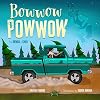
Bowwow Powwow
by Brenda J. Child
On This Page
Description
"When Uncle and Windy Girl attend a powwow, Windy watches the dancers and listens to the singers. She eats tasty food and joins family and friends around the campfire. Later, Windy falls asleep under the stars. Uncle's stories inspire visions in her head: a bowwow powwow, where all the dancers are dogs. In these magical scenes, Windy sees veterans in a Grand Entry, and a visiting drum group, and traditional dancers, grass dancers, and jingle-dress dancers--all with telltale ears and paws and show more tails. All celebrating in song and dance. All attesting to the wonder of the powwow."--Provided by publisher. show lessTags
Recommendations




Member Reviews
Brenda J. Child, a professor of American Studies at the University of Minnesota, and a member of the Red Lake Ojibwe Nation of Minnesota, makes her children's book debut with this bilingual picture-book, which follows the story of a young girl who, attending a powwow with her uncle and her dog, falls asleep and has a dream about a 'Bowwow Powwow' involving all dog characters. Child's English-language text has been translated into Anishinaabemowin by Gordon Jourdain, a member of the Lac La Croix First Nation of Ontario, and a teacher at the Misaabekong Ojibwe Language Immersion program in the Duluth Public Schools. The accompanying artwork is provided by Jonathan Thunder, also a member of the Red Lake Ojibwe Nation.
I found the story here show more interesting, and appreciated the brief author's note at the end, explaining how the concept of the book - a powwow attended entirely by different kinds of dogs - had its roots in a traditional Ojibwe dance in which participants, singing "we are like dogs, we are like dogs," solicited food and gifts at all the nearby houses. This custom reminded me of some western European Christmas traditions, in which groups of singers travel from house to house, likewise asking for food and drink. I also appreciated the fact that the book was presented in both English and Anishinaabemowin, although I was only able to judge the former. The artwork from Thunder was not to my taste - too cartoon-like in style, with odd proportions and perspectives - but leaving that aside, I enjoyed Bowwow Powwow : Bagosenjige-niimi'idim, and would recommend it to anyone looking for picture-books about powwows and/or dreams, or that feature an Ojibwe cultural background. show less
I found the story here show more interesting, and appreciated the brief author's note at the end, explaining how the concept of the book - a powwow attended entirely by different kinds of dogs - had its roots in a traditional Ojibwe dance in which participants, singing "we are like dogs, we are like dogs," solicited food and gifts at all the nearby houses. This custom reminded me of some western European Christmas traditions, in which groups of singers travel from house to house, likewise asking for food and drink. I also appreciated the fact that the book was presented in both English and Anishinaabemowin, although I was only able to judge the former. The artwork from Thunder was not to my taste - too cartoon-like in style, with odd proportions and perspectives - but leaving that aside, I enjoyed Bowwow Powwow : Bagosenjige-niimi'idim, and would recommend it to anyone looking for picture-books about powwows and/or dreams, or that feature an Ojibwe cultural background. show less
Summary: Windy Girl and her dog love to adventure. Some of her favorite times are traveling with her uncle, listening to stories, and going to powwows. One summer day at a powwow, Windy Girl falls asleep and dreams of the silliest thing--a bowwow powwow (a powwow with all dog dancers). She takes the reader through the elements of a powwow and the beauty of the dances and traditions while maintaining authenticity to the event.The story is written in both English and Ojibwemowin side-by-side on the page!
Review: This is my current favorite book. First of all, it is breathtakingly beautiful. From the end pages to the individual illustrations, every page is colorful and alive with the energy of a powwow. The story is told by and Ojibwe show more author and illustrator, and although it pays homage to their home of Red Lake Nation, it is intended for all Native people to find a piece of home within the story. I cannot recommend this book enough. show less
Review: This is my current favorite book. First of all, it is breathtakingly beautiful. From the end pages to the individual illustrations, every page is colorful and alive with the energy of a powwow. The story is told by and Ojibwe show more author and illustrator, and although it pays homage to their home of Red Lake Nation, it is intended for all Native people to find a piece of home within the story. I cannot recommend this book enough. show less
Itchy Boy is Windy Girl’s dog: a lively and loyal companion who barks at everything. The inseparable pair enjoy spending time with Uncle, who drives them in his truck, takes them ice-fishing, and, despite Itchy’s incessant barking, manages to tell Windy stories of his youth. Windy’s favorite is about how the Native American powwow tradition has both survived and changed with the passage of time. One summer evening, a powwow continues late into the night, and the festivities and Itchy’s persistent presence creep into Windy Girl’s dream, where dogs replace humans in the celebration. Readers observe costumed canines marching as war veterans, participating in a drum circle, and dancing in an array of styles: traditional, grass show more dance, and fancy. Created by a Red Lake Ojibwe author and illustrator, this story offers accessible cultural insight, and an appended note adds important details to those provided in Windy’s dream and corrects misconceptions. The story is written in English and Ojibwe, and its crisply colored digital-media illustrations add a contemporary feel. show less
The cartoonish illustrations of this book did not appeal to me. However, the drawings of dancing costumes worn by anthropomorphized dogs of different breeds were intriguing, and a historical note at the end of the book about the costumes would have been quite interesting. Published by Minnesota Historical Society Press with bilingual text in English and Ojibwe, this book was the 2020 American Indian Youth Literature Award Picture Book winner.
This story combines past and present representation of Ojibwe culture through the eyes of a little girl and her dog. During a Powwow, she imagines the history of her people told by her uncle with one little twist; the people are replaced by dogs walking on two legs in traditional clothing with traditional weapons.
Typical representation of Native Americans usually consists of only telling the past from a very straight-forward perspective, but this story combines history with a playful story. It is refreshing to see Native Americans portrayed as they are today rather than only seen as peoples of the past.
Typical representation of Native Americans usually consists of only telling the past from a very straight-forward perspective, but this story combines history with a playful story. It is refreshing to see Native Americans portrayed as they are today rather than only seen as peoples of the past.
This would be a good book for intermediate students to read independently. The little girl's Uncle tells her the story of a powwow, and then she has a dream about what the celebration would look like. Her Uncle does say that Native American people are like dogs, and this could be a harmful stereotype. This is a good way to introduce Native American culture to younger readers, but there should be a discussion about the stereotype.
This book is beautifully written and illustrated with vivid colors and pictures. It's about a little Ojibwe girl who gathers stories from her uncle about traditions from a long time ago, dances, sharing, and thankfulness. Her uncle's stories about the pow-wow ceremony inspire her to dream about a bow-wow pow-wow where all the dancers are dogs. In her dream, she sees traditional dancers, grass dancers, fancy dancers, and jingle dress dancers. She learns the important meaning behind a pow-wow. We celebrate the songs, dances, our people, healing, and history.
Members
- Recently Added By
Lists

Youth: DEI
296 works; 2 members

Indigenous America Reader
145 works; 12 members

NPR Books You Love: 100 Favorite Books For Young Readers
100 works; 1 member
Author Information

8+ Works 612 Members
All Editions
Awards and Honors
Awards
Distinctions
Common Knowledge
- Canonical title
- Bowwow Powwow
Classifications
Statistics
- Members
- 263
- Popularity
- 122,460
- Reviews
- 30
- Rating
- (3.79)
- Languages
- English
- Media
- Paper
- ISBNs
- 3