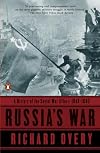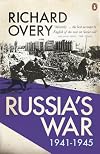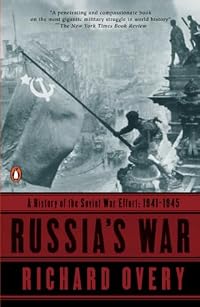
Russia's War: A History of the Soviet Effort: 1941-1945
by Richard Overy
On This Page
Description
The Russian war effort to defeat invading Axis powers, an effort that assembled the largest military force in recorded history and that cost the lives of more than twenty-five million Soviet soldiers and civilians, was the decisive factor for securing an Allied victory. Now with access to the wealth of film archives and interview material from Russia used to produce the ten-hour television documentary Russia's War, Richard Overy tackles the many persuasive questions surrounding this show more conflict. Was Stalin a military genius? Was the defense of Mother Russia a product of something greater than numbers of tanks and planes - of something deep within the Russian soul? show lessTags
Recommendations


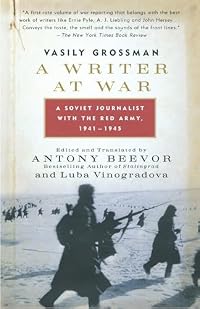
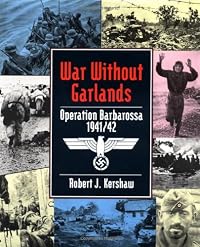
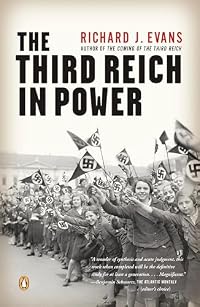
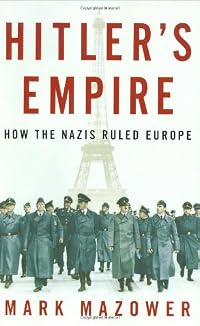



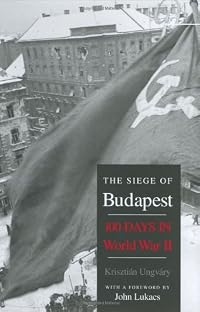
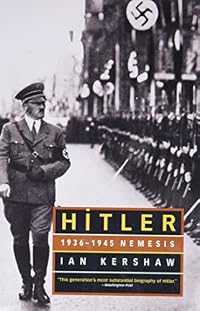
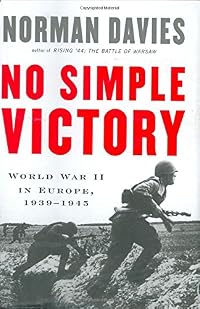
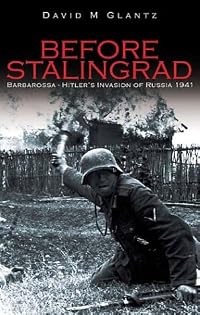
Member Recommendations
Member Reviews
At only 300 and some pages this is quite a concise history of an enormous conflict but what it conveys very strongly, painfully so, is the sheer bloody awfulness of the war in the East. The levels of brutality, for soldiers and civillians alike, arguably more so for civillians, are horrific and Richard Avery does not shy away from spelling out the brutality inflicted on military and civillians alike by both sides. The civillian population left behind in the wake of the Red Army's long retreat Eastward found themselves at the mercy of opposing partisans: cooperate and die; cooperate or die. Atrocities from all directions. Fear. Suspicion. No one to turn to. Nowhere to go. Only endure. Survive. In places it's not at all easy to see to show more read this book.
The regime of the Tsar had taught the Bolshevik's all they needed to know about political terror. The Russian people were used to it. It was a part of the fabric of their lives. It had toughened them. And the other thing that comes very strongly out of this book is that quite apart from the motivation provided by terror the Russians fought and endured and prevailed because they loved their country. The state was one thing and Russia was another; and they loved Russia. The Red Army fought with astonishing courage, the civilian population endured, for Russia.
Resourceful too - when the military/industrial area was about to be overrun they took the factories down, put them and the workers on trains, took everything East, put it back up and carried on.
A lesson from history: don't attack Russia. You'll lose. show less
The regime of the Tsar had taught the Bolshevik's all they needed to know about political terror. The Russian people were used to it. It was a part of the fabric of their lives. It had toughened them. And the other thing that comes very strongly out of this book is that quite apart from the motivation provided by terror the Russians fought and endured and prevailed because they loved their country. The state was one thing and Russia was another; and they loved Russia. The Red Army fought with astonishing courage, the civilian population endured, for Russia.
Resourceful too - when the military/industrial area was about to be overrun they took the factories down, put them and the workers on trains, took everything East, put it back up and carried on.
A lesson from history: don't attack Russia. You'll lose. show less
Richard Overy's Russia's War is an incredible chronicle of one of the most brutal events in human history. The Eastern Front gets comparatively little treatment in the West, but the Russian contribution to defeating the Nazis cannot be overestimated. The book doesn't really break any new ground in terms of research (and Overy admits that from the outset) but this is a great introduction to the topic.
I've read plenty of accounts of this theater of war, but have generally looked at things from the German perspective. Indeed, the vast majority of Western historiography has taken the German perspective. Books like The Myth of the Eastern Front made me realize that my view was skewed by this myth and I had never really looked at things from show more the Soviet end of things.
Reading the book, my perceptions of Russian brutality were more than confirmed, but I also learned a lot more about Soviet ingenuity, commitment, and heroism. The Soviet brutality was forged in the context of Tsarist Russia and the revolutionary years. Soviet brutality cannot thus be contextualized away, but it helps to realize that the practice, for instance, of shooting retreating troops comes from a specific historical context and is not a form of random brutality. I don't think this excuses the Soviets in the least, but it provides perspective. show less
I've read plenty of accounts of this theater of war, but have generally looked at things from the German perspective. Indeed, the vast majority of Western historiography has taken the German perspective. Books like The Myth of the Eastern Front made me realize that my view was skewed by this myth and I had never really looked at things from show more the Soviet end of things.
Reading the book, my perceptions of Russian brutality were more than confirmed, but I also learned a lot more about Soviet ingenuity, commitment, and heroism. The Soviet brutality was forged in the context of Tsarist Russia and the revolutionary years. Soviet brutality cannot thus be contextualized away, but it helps to realize that the practice, for instance, of shooting retreating troops comes from a specific historical context and is not a form of random brutality. I don't think this excuses the Soviets in the least, but it provides perspective. show less
Published in 1997, this is, more or less, the book version of a BBC documentary series about the Eastern Front in World War II. It was one of the, if not the, first to make use of the information that had become available after the end of communist rule in Russia. As such it dispels a lot of myths about the war as well as clarifies many things.
The Eastern Front was brutal, and the fighting was on a scale that dwarfed the Western Front. Germany deployed four to five times as many divisions in the east. We talk about WWII being total war, and no where was that more true in the east, particularly of Russia, for two reasons. First, the ideological stance of the Nazis toward communism, Judaism (there were millions of Jews living in this show more region), and Slavs in general, meant terrible treatment of captured combatants and occupied civilian populations. And this was reciprocated by the Soviets once they had turned the tide. Second, Stalin was in a position to retool his economy and basically enslave his population in the service of that.
The Second World War in Europe was definitely, Russia's. Which is not to say they could have won it without the help of their allies. Without a doubt, the Soviet Union teetered on the brink in '42 and '43. Germany came within mere miles of taking Moscow. The US in particular supplied the Soviet Union with tens of thousands of vehicles of all types. Without these, the mobility of the Red Army, crucial to their defense of Moscow and later and more so, Stalingrad, would have been all but absent.
However, there can be little doubt that the Soviet Union and the Russian people bore the brunt of the war. And, brutal though it was, the transformation of the lackluster pre-war Soviet economy and mediocre armed forces to the total war economy and a fighting force to rival Germany's by mid-war were astounding feats. The fact that, after devastating and humiliating defeats and the loss of a third, the richest, most populated third, of the country, anyone had any willpower to continue fighting is a testament to Russia's people and leaders.
About the Audiobook
I listened to this, and the audio is pretty disappointing. The quality is not good. The volume is uneven and there is frequently background hiss.
David Case's narration is nothing to write home about, but is passable most of the time, though, I can imagine his rather nasal voice grates on some. Where it dips below passable is with the voices used for quotations from various leaders, generals, and soldiers are borderline caricatures -- overdone German and Russian accents. show less
The Eastern Front was brutal, and the fighting was on a scale that dwarfed the Western Front. Germany deployed four to five times as many divisions in the east. We talk about WWII being total war, and no where was that more true in the east, particularly of Russia, for two reasons. First, the ideological stance of the Nazis toward communism, Judaism (there were millions of Jews living in this show more region), and Slavs in general, meant terrible treatment of captured combatants and occupied civilian populations. And this was reciprocated by the Soviets once they had turned the tide. Second, Stalin was in a position to retool his economy and basically enslave his population in the service of that.
The Second World War in Europe was definitely, Russia's. Which is not to say they could have won it without the help of their allies. Without a doubt, the Soviet Union teetered on the brink in '42 and '43. Germany came within mere miles of taking Moscow. The US in particular supplied the Soviet Union with tens of thousands of vehicles of all types. Without these, the mobility of the Red Army, crucial to their defense of Moscow and later and more so, Stalingrad, would have been all but absent.
However, there can be little doubt that the Soviet Union and the Russian people bore the brunt of the war. And, brutal though it was, the transformation of the lackluster pre-war Soviet economy and mediocre armed forces to the total war economy and a fighting force to rival Germany's by mid-war were astounding feats. The fact that, after devastating and humiliating defeats and the loss of a third, the richest, most populated third, of the country, anyone had any willpower to continue fighting is a testament to Russia's people and leaders.
About the Audiobook
I listened to this, and the audio is pretty disappointing. The quality is not good. The volume is uneven and there is frequently background hiss.
David Case's narration is nothing to write home about, but is passable most of the time, though, I can imagine his rather nasal voice grates on some. Where it dips below passable is with the voices used for quotations from various leaders, generals, and soldiers are borderline caricatures -- overdone German and Russian accents. show less
Solid history of Russia's fight during World War II. Weaknesses of the book are that for the most part, it covers very familiar ground, and the last chapter, extending things into the early 50s, isn't really necessary. There are a handful of new items relating to material uncovered during the brief window of openness in Russia; the author does dispute a few bits of received wisdom on the new material, including whether Russia was on the verge of an attack in 1941, as other authors have suggested. Pretty grim reading, and you get a sense Russia's Red Army was running on fumes toward the end.
This book is a well written, concise and thorough account of the horrific war between Germany and the Soviet Union from 1941 to 1945. It lays out the complex machinations of both countries before, during and after the war, detailing strategies and each blood soaked battle. The human toll is vast, incomprehensible; estimates put the total loss of human life at just under 50 million, slightly under 29 million Soviet citizens.
In addition to being slaughtered by the enemy, Soviet citizens were in nearly as much danger of being killed by their own countrymen under the guidance of Stalin. His purges and policies resulted in the death of millions. Yet they rose to the challenge, at a cost that again is hard for us to even imagine; such as the show more seige of Leningrad, which is detailed herein.
Though the Soviet Union was ill prepared and did not have modern war equipment initially, Stalin's focus on production and the extraordinary effort required and put in by all citizens amazingly overcame that situation and they ended up producing what was needed.
Information is included that was only made available after the fall of the Soviet Union, including details of Hitler's death. All told the Soviet Union played a MAJOR role in the defeat of Germany in World War II and was arguably the key to that victory.
This book is a companion piece to a television series documentary by the same name. show less
In addition to being slaughtered by the enemy, Soviet citizens were in nearly as much danger of being killed by their own countrymen under the guidance of Stalin. His purges and policies resulted in the death of millions. Yet they rose to the challenge, at a cost that again is hard for us to even imagine; such as the show more seige of Leningrad, which is detailed herein.
Though the Soviet Union was ill prepared and did not have modern war equipment initially, Stalin's focus on production and the extraordinary effort required and put in by all citizens amazingly overcame that situation and they ended up producing what was needed.
Information is included that was only made available after the fall of the Soviet Union, including details of Hitler's death. All told the Soviet Union played a MAJOR role in the defeat of Germany in World War II and was arguably the key to that victory.
This book is a companion piece to a television series documentary by the same name. show less
Terrific account of the great struggle in the east. I feel that my understanding of World War 2 has been increased immensely by reading this, although it could be so much more. My chief complaint is that the book is far too short, at 330 pages it can hardly discuss all that it attempts to cover. A good starting point, though.
Finally read 17 years after seeing the documentary series, which I preferred. Good overview, didn't hold my attention in parts. Strongest in the Stalingrad and Kursk chapters.
Members
- Recently Added By
Lists

Top Five Books of 2020
982 works; 350 members

r/AskHistorians' Recommended Books
1,068 works; 17 members
Author Information

74+ Works 6,890 Members
Richard Overy is Professor of History at the University of Exeter, UK. He has published more than 25 books on the history of air power, the Second World War and the European dictatorship. He was the winner of the Wolfon Prize for history in 2004 and in 2014 he won a Cundill Award for his book The Bombing War: European 1939-1945. He is a Fellow of show more the British Academy, and a Member of the European Academy for Science and Arts. show less
Awards and Honors
Awards
Common Knowledge
- Original publication date
- 1997
- People/Characters
- Joseph Stalin; Georgi Zhukov; Kliment Voroshilov; Vyacheslav Molotov; Semyon Timoshenko; Mikhail Tukhachevsky (show all 7); Joachim von Ribbentrop
- Important places
- USSR
- Important events
- World War II (1939 | 1945); World War II, Eastern Front (1941-06-22 | 1945-05-05); Operation Barbarossa; Operation Blue; Operation Uranus; Battle of Kursk (show all 9); Battle of Stalingrad; Operation Bagration; Siege of Leningrad
Classifications
- Genres
- History, Nonfiction, General Nonfiction
- DDC/MDS
- 940.54217 — History & geography History of Europe History of Europe 1918- Military history of World War II Campaigns and battles by theatre European theatre Soviet Union
- LCC
- D764 .O94 — History of Europe, Asia, Africa and Oceania History (General) World War II (1939-1945)
- BISAC
Statistics
- Members
- 666
- Popularity
- 43,026
- Reviews
- 8
- Rating
- (4.11)
- Languages
- Dutch, English, German, Italian
- Media
- Paper, Ebook
- ISBNs
- 14
- ASINs
- 9