
Keith Lowe
Author of Savage continent : Europe in the aftermath of World War II
About the Author
Keith Lowe was born in London in 1970. After travelling around the world for several years, he studies English Literature at Manchester University. He now works as a nonfiction editor in a UK publishing house. (Bowker Author Biography)
Works by Keith Lowe
The Fear and the Freedom: How the Second World War Changed Us (2017) — Author — 150 copies, 1 review
Prisoners of History: What Monuments to World War II Tell Us About Our History and Ourselves (2020) 79 copies
Tagged
Common Knowledge
- Birthdate
- 1970
- Gender
- male
- Education
- Manchester University
- Occupations
- historian
novelist - Nationality
- UK
- Birthplace
- London, England, UK
- Places of residence
- Hampstead, London, England, UK
- Associated Place (for map)
- London, England, UK
Members
Reviews
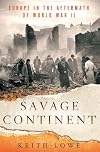
A difficult read, but an important one especially as Europe once again is at war - I write this in March 2022. This book painstakingly lays out the manner in which, for much of Europe, the surrender of Nazi Germany was only the cessation of part of the conflicts between peoples and ideologies. The hatreds and prejudices that helped give rise to fascism, communism, anti semitism, and ultra nationalism did not end with the end of the third reich. Their echoes resulted in almost unimaginable show more suffering for many years after the war and in many ways they are still reverberating today. One must be clear eyed about this - and this book is a good start even if I may have a few moral quibbles here and there. Recommended. show less
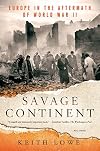
World War II didn't end cleanly in 1945. The defeat of the Nazis occurred piecemeal in liberated territories from 1943 onwards, and stuttered forwards in civil war and internal purges for years after Hitler's death. While the Allied armies settled the key political question that fascism would not rule Europe, everything else was up in the air. So of course, after the war Europe came together as a community to ensure human rights and equality for all.
LOL, Nope. Europe faced massive challenges show more of rebuilding its shattered infrastructure, healing a traumatized population, and re-homing millions of displaced people. The refugee crisis was perhaps the first and largest problem. Most European cities had been wrecked by a combination of the combined bomber offensive and the Red Army. Millions of foreigners had been taken to Germany as forced laborers, and millions had fled their homes to escape the worst of war. Holocaust survivors found that they had no home to return to. Ethnic Germans had to flee areas where they had lived for centuries in Poland and Czechoslovakia. With agriculture and transit destroyed, famine ran rampant. In particularly grim comedy, gangs of orphans played with disused munitions, firing panzerfausts to see the bang. With millions on the move, and the economy and political system smashed, crime was omnipresent. Theft, sexual assault, and murder were so common as to be entirely unremarkable.
Occupied territory had to deal with a legacy of collaboration, and no one managed both a comprehensive and legally valid de-Nazification program. Nazi race laws had made Europeans newly aware of their mixed ethnicities, and particularly in Poland, Ukraine, and Yugoslavia, ethnic militias embarked on new programs of ethnic cleansing. Civil wars between Communists and rightist groups broke out in Greece and Italy, while Stalinist repression crushed Eastern Europe, particularly Romania and the Baltic states.
Lowe's thesis is that pretty much everybody was victim and perpetrator, often simultaneously. National mythmaking has served to cover up the ugly truths that most people collaborated, that ardent resistance fighters carried out crude and often deadly attacks on collaborators after the war, with women who slept with Germans suffering special abuse, and that these resistance fighters were then punished by the new governments as threats to resurgent state power. An accurate count of the dead is impossible, and revisionists on all sides have created outlandish figures of the dead, with right-wing parties who have uneasy ties to 1930s and 1940s fascist movements being at the forefront.
This is a heavy book, and as a continent-wide survey Lowe can't afford to dive too deeply in any moment. But he has a strong analytical frame, and manages to keep the grim material moving quickly. show less
LOL, Nope. Europe faced massive challenges show more of rebuilding its shattered infrastructure, healing a traumatized population, and re-homing millions of displaced people. The refugee crisis was perhaps the first and largest problem. Most European cities had been wrecked by a combination of the combined bomber offensive and the Red Army. Millions of foreigners had been taken to Germany as forced laborers, and millions had fled their homes to escape the worst of war. Holocaust survivors found that they had no home to return to. Ethnic Germans had to flee areas where they had lived for centuries in Poland and Czechoslovakia. With agriculture and transit destroyed, famine ran rampant. In particularly grim comedy, gangs of orphans played with disused munitions, firing panzerfausts to see the bang. With millions on the move, and the economy and political system smashed, crime was omnipresent. Theft, sexual assault, and murder were so common as to be entirely unremarkable.
Occupied territory had to deal with a legacy of collaboration, and no one managed both a comprehensive and legally valid de-Nazification program. Nazi race laws had made Europeans newly aware of their mixed ethnicities, and particularly in Poland, Ukraine, and Yugoslavia, ethnic militias embarked on new programs of ethnic cleansing. Civil wars between Communists and rightist groups broke out in Greece and Italy, while Stalinist repression crushed Eastern Europe, particularly Romania and the Baltic states.
Lowe's thesis is that pretty much everybody was victim and perpetrator, often simultaneously. National mythmaking has served to cover up the ugly truths that most people collaborated, that ardent resistance fighters carried out crude and often deadly attacks on collaborators after the war, with women who slept with Germans suffering special abuse, and that these resistance fighters were then punished by the new governments as threats to resurgent state power. An accurate count of the dead is impossible, and revisionists on all sides have created outlandish figures of the dead, with right-wing parties who have uneasy ties to 1930s and 1940s fascist movements being at the forefront.
This is a heavy book, and as a continent-wide survey Lowe can't afford to dive too deeply in any moment. But he has a strong analytical frame, and manages to keep the grim material moving quickly. show less
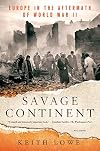
This book should be required reading for serious WWII historians. Lowe deals with a subject that is often glossed over....what happened (and how it has been mythologized) in the immediate aftermath of the war. "The story of Europe in the immediate postwar period is therefore not primarily one of reconstruction and rehabilitation - it is firstly a story of the descent into anarchy." Further, Lowe opens our eyes to how the story was not simply one of a local person supporting their state show more against the Nazi occupiers. That local person could also have been fighting wars against people of different religions, different ethnicities, against the government of the state, against other neighbors who might be of different political persuasions, etc. "The sheer variety of grievances that existed in 1945 demonstrates not only how universal the war had been, but also how inadequate is our traditional way of understanding it." This _IS_ a difficult book to read....both because of the subject matter and keeping track of the particular conflict Lowe is focusing on at the moment, and how that conflict relates to other conflicts. But that doesn't make it unreadable or not worth the time it takes to read it. Can't recommend highly enough. show less
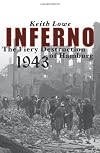
This well told story of the air war over Hamburg Germany in World War II is from every conceivable side and angle. British, American, German war aims with their ministers and generals; British, American, German airmen during battle and afterwards, and the civilians especially the German ones are given their turn to tell their experiences. The firestorm deliberately set by a selected set of bombs on the second full raid is portrayed in all its horrible aspects from the air and most show more dramatically on the ground where at least 35,000 died. Author, Lowe, ends all of this with many questions about the intentional mass killing of civilians starting with World War I and compares it to the American bombing of Tokyo and Hiroshima.
Quotes: (introduction x) “At the end of the war, when things returned to normality, both sides tried to distance themselves from these events. The denial of the past has been most pronounced in Germany, where it seemed that the only way the population could cope with the horrors they had witnessed was to pretend they had never happened. In 1946,Swedish journalist Stig Dagerman described traveling through the moonscape of Hamburg on a train: Despite the massive expanse of ruins not a single other passenger looked out the window. Dagerman was immediately identified as a foreigner precisely because he looked out. The story is an apt metaphor for the way Germans have collectively avoided looking at the ordeal they experienced. Until recently, there have been very few German authors willing to engage emotionally with the subject, because to do so would open too man wounds. The peculiar mix of collective guilt for being part of nation that unleashed war upon the world, and anger at the heartlessness of their own treatment---so that they were simultaneously both perpetrators and victims of atrocity---has made it much easier to turn away and pretend that life continued as normal.”
(pages 183-184) “To understand what happened on the night of Tuesday, July 27, 1943, one needs to know a little about how large fires work......First, because of their sheer size they produce vast quantities of smoke that even those who are far away from the flames can often end up suffocating...Second and more important, the incredible temperatures such fries reach---sometimes as high as 700to 800 degrees Celsius---superheat all the air above and round the fire, causing it to rise rapidly...What happened tonight was in a whole different league. The winds reached speeds of 120 mph, and in some places as high as 170 mph---the same speed as Hurricane Katrina which devastated New Orleans in 2005. To make things worst, the winds were not steady in their force---they swirled and changed direction rapidly from one moment to the next. In a forest firestorm the wind is generally free to take the most direct route to the center of the conflagration, spiraling inward in an anticlockwise direction, just like a cyclone. In a city like Hamburg, by contrast, the winds were forced away from their natural course by all the buildings that stood in the way. Instead they were channeled along streets, sometimes meeting at street junctions---causing eddies and swirls that could easily knock a human being off his feet. There are many reports of 'fire-whirls' at such junctions---miniature tornadoes---that only added misery of the fugitives trying to find safety.”
(page 198) “The firestorm was so strong that it converted streets into jets. Schwabenstrasse, where we lived, was in a good potion, aslant to the suction of the fire. But once you got into a street which was part of the suction, people started to burn like tinder and they had no chance. So we ran close to the walls to escape the storm. I saw how roofs were flying through the air, it was like in the movies, like science fiction, but real. The asphalt was burning and boiling. I saw two women running, a young one and an older one, whose shoes got stuck in the boiling asphalt. They pulled their feet out of the shoes but that wasn't a good idea because they had to step into the boiling asphalt. They fell and didn't get up again. Like flies in the hot wax of a candle,” show less
Quotes: (introduction x) “At the end of the war, when things returned to normality, both sides tried to distance themselves from these events. The denial of the past has been most pronounced in Germany, where it seemed that the only way the population could cope with the horrors they had witnessed was to pretend they had never happened. In 1946,Swedish journalist Stig Dagerman described traveling through the moonscape of Hamburg on a train: Despite the massive expanse of ruins not a single other passenger looked out the window. Dagerman was immediately identified as a foreigner precisely because he looked out. The story is an apt metaphor for the way Germans have collectively avoided looking at the ordeal they experienced. Until recently, there have been very few German authors willing to engage emotionally with the subject, because to do so would open too man wounds. The peculiar mix of collective guilt for being part of nation that unleashed war upon the world, and anger at the heartlessness of their own treatment---so that they were simultaneously both perpetrators and victims of atrocity---has made it much easier to turn away and pretend that life continued as normal.”
(pages 183-184) “To understand what happened on the night of Tuesday, July 27, 1943, one needs to know a little about how large fires work......First, because of their sheer size they produce vast quantities of smoke that even those who are far away from the flames can often end up suffocating...Second and more important, the incredible temperatures such fries reach---sometimes as high as 700to 800 degrees Celsius---superheat all the air above and round the fire, causing it to rise rapidly...What happened tonight was in a whole different league. The winds reached speeds of 120 mph, and in some places as high as 170 mph---the same speed as Hurricane Katrina which devastated New Orleans in 2005. To make things worst, the winds were not steady in their force---they swirled and changed direction rapidly from one moment to the next. In a forest firestorm the wind is generally free to take the most direct route to the center of the conflagration, spiraling inward in an anticlockwise direction, just like a cyclone. In a city like Hamburg, by contrast, the winds were forced away from their natural course by all the buildings that stood in the way. Instead they were channeled along streets, sometimes meeting at street junctions---causing eddies and swirls that could easily knock a human being off his feet. There are many reports of 'fire-whirls' at such junctions---miniature tornadoes---that only added misery of the fugitives trying to find safety.”
(page 198) “The firestorm was so strong that it converted streets into jets. Schwabenstrasse, where we lived, was in a good potion, aslant to the suction of the fire. But once you got into a street which was part of the suction, people started to burn like tinder and they had no chance. So we ran close to the walls to escape the storm. I saw how roofs were flying through the air, it was like in the movies, like science fiction, but real. The asphalt was burning and boiling. I saw two women running, a young one and an older one, whose shoes got stuck in the boiling asphalt. They pulled their feet out of the shoes but that wasn't a good idea because they had to step into the boiling asphalt. They fell and didn't get up again. Like flies in the hot wax of a candle,” show less
Lists
Awards


You May Also Like


Associated Authors
Statistics
- Works
- 17
- Members
- 1,532
- Popularity
- #16,794
- Rating
- 4.0
- Reviews
- 46
- ISBNs
- 91
- Languages
- 13

