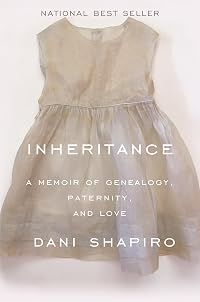
Inheritance: A Memoir of Genealogy, Paternity, and Love
by Dani Shapiro
On This Page
Description
"The acclaimed and beloved author of Hourglass now gives us a new memoir about identity, paternity, and family secrets--a real-time exploration of the staggering discovery she made last year about her father, and her struggle to piece together the hidden the story of her own life"--Tags
Recommendations








Member Recommendations
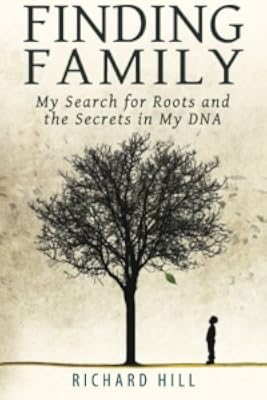
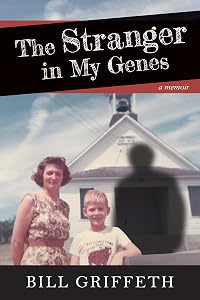
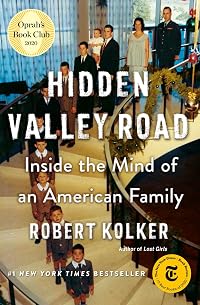
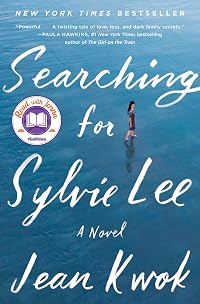
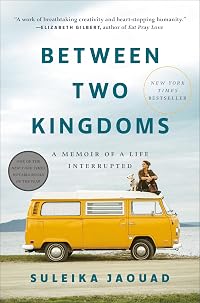
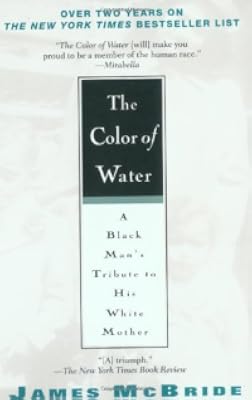
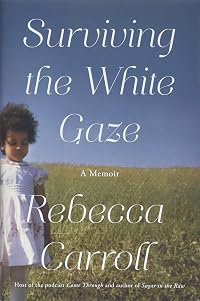
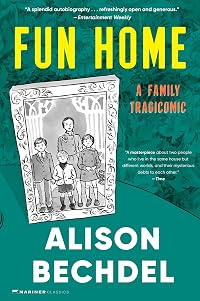
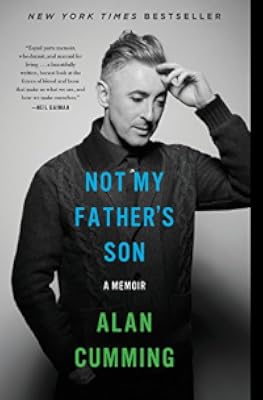
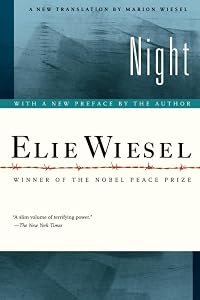
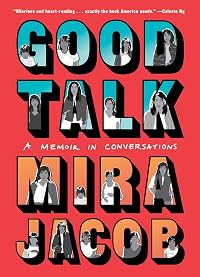
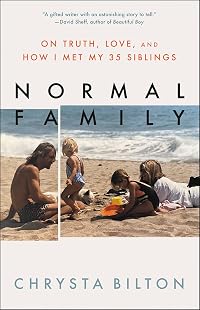
cbl_tn The journalist authors of both memoirs grapple with the same kind of surprise revealed through genealogical DNA testing.
Member Reviews
When author Dani Shapiro learned that her biological father was a stranger rather than the dad she grew up with, there probably was no question that her search for information would end up as a memoir. That’s her genre.
Blonde haired, blue eyed Shapiro grew up in an Orthodox Jewish household as her parents’ only child, with an older half-sister from her father’s first marriage. All her life, she had been defending her Jewish identity when friends and strangers told her that she didn’t look Jewish. She also remembered spending hours in front of a mirror as a child, studying the image reflected there. It seems that, subconsciously, she agreed with those who said she didn’t look Jewish.
When an Ancestry DNA test revealed that she show more was, in fact, only half Jewish, the new knowledge upended her sense of identity. The search for her biological father was only a part of her quest for self-understanding. She also had questions about how much her parents understood about their fertility treatments, whether they knew about the sperm donor, and, if so, how they reached their decision to use a sperm donor and why this knowledge had been withheld from her.
The awkwardness of Shapiro’s connection with her biological father – the man who had donated sperm more than 50 years earlier and forgotten all about it – comes across in her writing. I can only imagine how unsettling it must be to see your physical traits and mannerisms reflected in a total stranger.
This book resonated with me since I read it during a time of year when my father is in my thoughts. I would be celebrating his birthday next week if he were still living. Shapiro was very young when her father died from injuries sustained in an automobile accident (the subject of another memoir). In the process of finding her biological father, she also learned more about the man who raised her and drew his memory closer. show less
Blonde haired, blue eyed Shapiro grew up in an Orthodox Jewish household as her parents’ only child, with an older half-sister from her father’s first marriage. All her life, she had been defending her Jewish identity when friends and strangers told her that she didn’t look Jewish. She also remembered spending hours in front of a mirror as a child, studying the image reflected there. It seems that, subconsciously, she agreed with those who said she didn’t look Jewish.
When an Ancestry DNA test revealed that she show more was, in fact, only half Jewish, the new knowledge upended her sense of identity. The search for her biological father was only a part of her quest for self-understanding. She also had questions about how much her parents understood about their fertility treatments, whether they knew about the sperm donor, and, if so, how they reached their decision to use a sperm donor and why this knowledge had been withheld from her.
The awkwardness of Shapiro’s connection with her biological father – the man who had donated sperm more than 50 years earlier and forgotten all about it – comes across in her writing. I can only imagine how unsettling it must be to see your physical traits and mannerisms reflected in a total stranger.
This book resonated with me since I read it during a time of year when my father is in my thoughts. I would be celebrating his birthday next week if he were still living. Shapiro was very young when her father died from injuries sustained in an automobile accident (the subject of another memoir). In the process of finding her biological father, she also learned more about the man who raised her and drew his memory closer. show less
”What never fail to draw me in, however, are secrets. Secrets within families. Secrets we keep out of shame, or self-protectiveness, or denial. Secrets and their corrosive power. Secrets we keep from one another in the name of love.” (Page 29)
In this age when nobody really has secrets anymore and your life is an open book, where e mails are hacked and stolen and possibly revealed to an exhausted public, where people seem to take pictures of every possible part of their bodies and share them with (supposedly) loved ones only to see them reproduced for that same drained apathetic public, we probably shouldn’t be surprised that something a college student agreed to back in the sixties would come back to haunt him today.
Dani Shapiro show more is a writer and a devout Jew, brought up in New Jersey by her Jewish parents in 1962. She had a close, loving relationship with her devout Jewish father who was killed in a car accident when she was in her early twenties. Dani now has a husband and a teenage son of her own and sees her world turned upside down when she submits her DNA sample to Ancestry.com and blithely opens the e mail that contains some shocking results.
This is a gripping memoir from an accomplished writer who is able to convey her feelings of grief, shock, anger, acceptance and love when she finds that her father is not who she believes him to be. But in the end, maybe that isn’t what’s important.
An important read at a time when we’re all very interested to see where we come from and who we’re related to it made me fairly satisfied that I opted to not see my DNA matches or be listed as a match on Ancestry. Very highly recommended. show less
In this age when nobody really has secrets anymore and your life is an open book, where e mails are hacked and stolen and possibly revealed to an exhausted public, where people seem to take pictures of every possible part of their bodies and share them with (supposedly) loved ones only to see them reproduced for that same drained apathetic public, we probably shouldn’t be surprised that something a college student agreed to back in the sixties would come back to haunt him today.
Dani Shapiro show more is a writer and a devout Jew, brought up in New Jersey by her Jewish parents in 1962. She had a close, loving relationship with her devout Jewish father who was killed in a car accident when she was in her early twenties. Dani now has a husband and a teenage son of her own and sees her world turned upside down when she submits her DNA sample to Ancestry.com and blithely opens the e mail that contains some shocking results.
This is a gripping memoir from an accomplished writer who is able to convey her feelings of grief, shock, anger, acceptance and love when she finds that her father is not who she believes him to be. But in the end, maybe that isn’t what’s important.
An important read at a time when we’re all very interested to see where we come from and who we’re related to it made me fairly satisfied that I opted to not see my DNA matches or be listed as a match on Ancestry. Very highly recommended. show less
Imagine you are deep into middle age, and then, suddenly, your worldview changes in that you find out that almost everyone you considered family was exactly not that, at least biologically. This reality has the potential to blow up your life and tackle some pretty big questions, including: What does being a part of a family mean? What does your family’s religion, which some say puts a premium on hereditary transference, mean to you (and those around you) now? What is it in human beings that we hold on to genes as an important marker of family, and unfortunately sometimes the only marker?
This autobiographical book, which reads like a detective novel, explores the journey Dani Shapiro took starting with the innocent swabbing of her show more cheek for a DNA test to the answering of questions as to how she came to be, and why she never knew the truth of her biological parentage. Along the way we meet her husband, her sister, her aunt, her son, her family’s rabbi, and a whole host of other people that have shaped her life. This is not only a story of nature versus nurture, but also one of humanity and love. A particularly enthralling read. show less
This autobiographical book, which reads like a detective novel, explores the journey Dani Shapiro took starting with the innocent swabbing of her show more cheek for a DNA test to the answering of questions as to how she came to be, and why she never knew the truth of her biological parentage. Along the way we meet her husband, her sister, her aunt, her son, her family’s rabbi, and a whole host of other people that have shaped her life. This is not only a story of nature versus nurture, but also one of humanity and love. A particularly enthralling read. show less
When author Dani Shapiro casually took a DNA test, she never expected to discover that the man she had known as her father wasn't her biological father at all. The discovery set in motion a search not only for her biological father but through the entire landscape of sperm donation, assisted conception, medical ethics, self-awareness, and parental responsibility.
From a childhood obsession with not belonging, to casual remarks about not “looking Jewish”, to a dimly-remembered maternal statement about her conception, Shapiro began digging into family history in an attempt to discover who, in fact, she was.
The book works on a couple of levels. On the personal level is Shapiro’s individual story as she utilizes modern search show more techniques to uncover the history of the vaguely referenced “Institute” where her parents sought help for their infertility. And on a bigger scale, she looks at the ethical implications of sperm (and egg) donations and what it means both to the children so conceived and to the biological parents – whether the act they performed through altruism or for money was thought out; whether the notion that they in fact might have multiple biological children whom they would never know was actually internalized.
There are a lot of interesting questions posed here, many of which have no real answer. One thing Shapiro never does is to compare the psychological issues of donor-conceived children to those of children adopted as infants. Similarly, the drive of infertile couples to create a family unit by any means necessary gets short shrift in what at times is a distressingly self-centered narrative.
Another is the question of where Shapiro’s obsession came from – even after she identified (and ultimately met with) her biological family, she continued compulsively to worry at the moral implications of assisted conception within Jewish religious strictures, and to dig into the industry of assisted conception. In one nearly-surreal chapter, she discusses visiting a facility with a six-story silo filled by thousands of vials of frozen sperm, proudly managed by a reproduction specialist whose name indicates he, too, was Jewish – but apparently unconcerned about the moral dilemma with which Shapiro continued to struggle.
And under it all, as she continues to dig into her own family history, one cannot shake the notion that at least half of Shapiro’s crusade is somehow based on obtaining an ultimate gotcha! aimed at her late mother, with whom Shapiro continued to have unresolved conflicts.
Inheritance is a fascinating read, particularly when it tackles the medical / ethical questions which will inevitably grow ever more thorny as our capacity to mechanically “improve” (or interfere with) natural biological functions outpaces our ability to adjust to the “brave new world” we are creating. show less
From a childhood obsession with not belonging, to casual remarks about not “looking Jewish”, to a dimly-remembered maternal statement about her conception, Shapiro began digging into family history in an attempt to discover who, in fact, she was.
The book works on a couple of levels. On the personal level is Shapiro’s individual story as she utilizes modern search show more techniques to uncover the history of the vaguely referenced “Institute” where her parents sought help for their infertility. And on a bigger scale, she looks at the ethical implications of sperm (and egg) donations and what it means both to the children so conceived and to the biological parents – whether the act they performed through altruism or for money was thought out; whether the notion that they in fact might have multiple biological children whom they would never know was actually internalized.
There are a lot of interesting questions posed here, many of which have no real answer. One thing Shapiro never does is to compare the psychological issues of donor-conceived children to those of children adopted as infants. Similarly, the drive of infertile couples to create a family unit by any means necessary gets short shrift in what at times is a distressingly self-centered narrative.
Another is the question of where Shapiro’s obsession came from – even after she identified (and ultimately met with) her biological family, she continued compulsively to worry at the moral implications of assisted conception within Jewish religious strictures, and to dig into the industry of assisted conception. In one nearly-surreal chapter, she discusses visiting a facility with a six-story silo filled by thousands of vials of frozen sperm, proudly managed by a reproduction specialist whose name indicates he, too, was Jewish – but apparently unconcerned about the moral dilemma with which Shapiro continued to struggle.
And under it all, as she continues to dig into her own family history, one cannot shake the notion that at least half of Shapiro’s crusade is somehow based on obtaining an ultimate gotcha! aimed at her late mother, with whom Shapiro continued to have unresolved conflicts.
Inheritance is a fascinating read, particularly when it tackles the medical / ethical questions which will inevitably grow ever more thorny as our capacity to mechanically “improve” (or interfere with) natural biological functions outpaces our ability to adjust to the “brave new world” we are creating. show less
In 2016, Dani Shapiro was a successful writer, teacher, wife, and mother of a seventeen-year-old son, Jonathan. At times, people wondered aloud why she had blond hair, blue eyes, and fair coloring, since her forbears did not have these traits. Furthermore, Dani always had a feeling that her parents, Paul and Irene, had not been entirely candid with her. She insists, "I was different, an outsider." After taking a DNA test at the age of fifty-four, she learns that her biological father was not Paul Shapiro, the Orthodox Jewish man who helped raise her, and that she was not related to her half-sister, Susie. She could not consult her mother or father about her findings, since both had passed away. Should Dani attempt to locate her show more biological father? Or would it be better for everyone to let sleeping dogs lie?
"Inheritance" is a "memoir of genealogy" in which Shapiro tries to come to terms not only with the circumstances of her birth, but also with the resentment she has long harbored towards her overbearing mother, and the possibility that she has close relatives whom she has never met. Shapiro is an intelligent, lyrical, and thoughtful writer who poignantly shares her feelings of confusion and betrayal. She sets out to uncover the truth about her conception by conducting online research, speaking to her mother's best friend, Charlotte, her dad's sister, ninety-three-year-old Aunt Shirley, and conferring with various friends and acquaintances. Dani spends a great deal of time thinking about what might have been the far-reaching consequences of her parents' inability to conceive a child naturally.
This work of non-fiction raises a number of thought-provoking questions: Are we the products of those who raised us or of those whose DNA we share? Does a person who entered the world via artificial insemination have the right to know the name of a donor who would rather remain anonymous? What are the pros and cons of dredging up the past? In today's high-tech age, when DNA testing is inexpensive and readily available, these issues are timelier than ever. "Inheritance" encourages us to consider the complex dynamics of family relationships; the moral dilemma of parents who decide to withhold vital knowledge from their offspring; and the need that everyone has to feel understood, cherished, and secure. Dani Shapiro's story is deeply affecting, sensitively told, and will resonate with people who are traumatized by unexpected revelations concerning their identity. show less
"Inheritance" is a "memoir of genealogy" in which Shapiro tries to come to terms not only with the circumstances of her birth, but also with the resentment she has long harbored towards her overbearing mother, and the possibility that she has close relatives whom she has never met. Shapiro is an intelligent, lyrical, and thoughtful writer who poignantly shares her feelings of confusion and betrayal. She sets out to uncover the truth about her conception by conducting online research, speaking to her mother's best friend, Charlotte, her dad's sister, ninety-three-year-old Aunt Shirley, and conferring with various friends and acquaintances. Dani spends a great deal of time thinking about what might have been the far-reaching consequences of her parents' inability to conceive a child naturally.
This work of non-fiction raises a number of thought-provoking questions: Are we the products of those who raised us or of those whose DNA we share? Does a person who entered the world via artificial insemination have the right to know the name of a donor who would rather remain anonymous? What are the pros and cons of dredging up the past? In today's high-tech age, when DNA testing is inexpensive and readily available, these issues are timelier than ever. "Inheritance" encourages us to consider the complex dynamics of family relationships; the moral dilemma of parents who decide to withhold vital knowledge from their offspring; and the need that everyone has to feel understood, cherished, and secure. Dani Shapiro's story is deeply affecting, sensitively told, and will resonate with people who are traumatized by unexpected revelations concerning their identity. show less
As a child I listened to spoken memoir without realizing that's what those stories were as they spun out over the dining or kitchen table where my mother sat with one of her sisters. I listened enthralled as one or the other would recall a particular character, a vivid event, even a family secret. I come from a long line of raconteurs.
I'm working on a graduate solo exhibit that I think of as visual memoir pieces. Based on my own childhood, I am making three-dimensional art that reexamine my stories and memories of growing up. Because of this work, I'm drawn to written memoir. Walking each morning or driving to my studio, I looked forward to the sound of Dani Shapiro's voice as she unspooled her story of identity, secrets, and memory.
Two show more or three times I found her account almost lapsed into self-pity, but she quickly recaptured my interest as she moved through those patches that revealed how she felt as she felt it rather than revising her choices in courageous, inspiring frames.
Honesty expressed well, even lyrically. That gets me every time. show less
I'm working on a graduate solo exhibit that I think of as visual memoir pieces. Based on my own childhood, I am making three-dimensional art that reexamine my stories and memories of growing up. Because of this work, I'm drawn to written memoir. Walking each morning or driving to my studio, I looked forward to the sound of Dani Shapiro's voice as she unspooled her story of identity, secrets, and memory.
Two show more or three times I found her account almost lapsed into self-pity, but she quickly recaptured my interest as she moved through those patches that revealed how she felt as she felt it rather than revising her choices in courageous, inspiring frames.
Honesty expressed well, even lyrically. That gets me every time. show less
Dani Shapiro took a DNA test. The man she believed to be her biological father was not. She discovered her parents difficult conceiving a child led them to a clinic where her mother was artificially inseminated not with her father's sperm but with that of a young doctor. A first cousin match led to the man's identity. Correspondence between Shapiro and her biological father took place. The eventually met. While I enjoyed the DNA story, the publication of the memoir revealing the man's identity appears to be a violation of genetic genealogy ethics, particularly when she continually voiced the man's concern for privacy. I received an advance electronic copy of the book from the publisher through NetGalley in exchange for an honest review. show more I hope the final version includes her biological father's consent to be named.
Addition to original review: The final version includes a statement that some names were changed. It does not state all names were changed, but I trust she protected the privacy of her biological father and other close relatives. show less
Addition to original review: The final version includes a statement that some names were changed. It does not state all names were changed, but I trust she protected the privacy of her biological father and other close relatives. show less
Members
- Recently Added By
Lists

Best Biographies, Autobiographies and Memoirs
465 works; 160 members

Favorite Memoirs and Biographies
4 works; 1 member

Top Five Books of 2019
5 works; 1 member

Top Five Books of 2019
387 works; 111 members

Julie's Read in 2020
18 works; 1 member

Favorite Books from the 2010s
75 works; 3 members
Club Read's Recommended Nonfiction Written by Women
618 works; 30 members

Best Audiobooks
240 works; 114 members

Books Read in 2020
4,379 works; 124 members

Books We Couldn't Put Down
443 works; 197 members
Author Information

14+ Works 3,603 Members
Dani Shapiro was born on April 10,1962 in New Jersey. She attended Sarah Lawrence College where she studied under Grace Paley. She began writing fo rthe screen and adapted Oscar Wilde's "The Happy Prince" for HBO. She has also been a professor of creative writing at Wesleyan University and an instructor at Columbia University. She has since show more written five novels and 3 memoirs. Her novels include: Playing with Fire, Fugitive Blue, Picturing the Wreck, Family History and Black and White. Her memoirs are Hourglass, Slow Motion, Devotion, and Inheritance. (Bowker Author Biography) show less
Awards and Honors
Awards
Distinctions
Notable Lists
Common Knowledge
- Original title
- Inheritance: A Memoir of Genealogy, Paternity, and Love
- Original publication date
- 2019-01-15
- People/Characters
- Dani Shapiro; Paul Shapiro; Irene Shapiro; Susie; Michael Maren; Jacob Maren (show all 10); Shirley Feuerstein; Dr. Benjamin Walden; Pilar Walden; Emily Walden
- Important places
- Litchfield County, Connecticut, USA; Portland, Oregon, USA; Philadelphia, Pennsylvania, USA
- Epigraph
- I shall never get you to put together entirely,
Pieced, glued, and properly jointed.
---Sylvia Plath, "The Colossus"
If you want to keep a secret, you must also hide it from yourself.
---George Orwell, 1984 - Dedication
- This book is for my father.
- First words
- When I was a girl I would sneak down the hall late at night once my parents were asleep.
- Quotations
- Secrets, particularly the most deeply held ones, have a way of leeching into everything surrounding them. (227)
I was not who I thought I had been. But I was who I had always been. (78) - Last words
- (Click to show. Warning: May contain spoilers.)And I say it to my father, again and again. Hineni. I am here. All of me.
- Blurbers
- Egan, Jennifer; Wolitzer, Meg; Doerr, Anthony; Aciman, André; Schwalbe, Will
- Original language
- English
Classifications
Statistics
- Members
- 1,106
- Popularity
- 22,937
- Reviews
- 66
- Rating
- (3.86)
- Languages
- English
- Media
- Paper, Audiobook, Ebook
- ISBNs
- 9
- ASINs
- 4