On This Page
Description
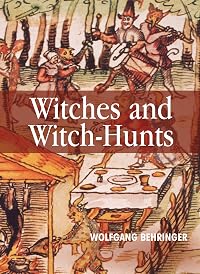
In this major new book, Wolfgang Behringer surveys the phenomenon of witchcraft past and present. Drawing on the latest historical and anthropological findings, Behringer sheds new light on the history of European witchcraft, while demonstrating that witch-hunts are not simply part of the European past. Although witch-hunts have long since been outlawed in Europe, other societies have struggled with the idea that witchcraft does not exist. As Behringer shows, witch-hunts continue to pose a show more major problem in Africa and among tribal people in America, Asia and Australia. The belief that certain people are able to cause harm by supernatural powers endures throughout the world today. Wolfgang Behringer explores the idea of witchcraft as an anthropological phenomenon with a historical dimension, aiming to outline and to understand the meaning of large-scale witchcraft persecutions in early modern Europe and in present-day Africa. He deals systematically with the belief in witchcraft and the persecution of witches, as well as with the process of outlawing witch-hunts. He examines the impact of anti-witch-hunt legislation in Europe, and discusses the problems caused in societies where European law was imposed in colonial times. In conclusion, the relationship between witches old and new is assessed. This book will make essential reading for all those interested in the history and anthropology of witchcraft and magic. show lessTags
Recommendations












Member Reviews
By itself, "witchcraft beliefs do not automatically generate persecutions." There’s always a triggering factor involved. There was a centuries long construction of the concept of witchcraft, emerging as a singular crime only around 1400. Religious minorities were arrested for heresy first and then magical crimes were added. The word "synagogue" with its "heretical" origin, was used to describe the gatherings of Waldensians, and later any religious minority eventually settling on "sabbath" or "sabbat." It’s no coincidence, Behring argues, that the mass persecutions coincide with the most religiously turbulent, politically unstable and environmentally challenging period in European history. The Reformation, Religious Wars, Thirty show more Years’ War, Little Ice Age, Plague…Scapegoating a witch provided a solution for an otherwise uncontrollable situation, and most trials originated in the lower classes and secular courts. These illegal trials were either shut down by higher authority, or encouraged to deflect blame.
Behring also explains a lot of misconceptions: i.e. 1) The idea that "up to 9 million witches" were executed has its origins in Nazi propaganda. 2) 80% of the victims being female is due to location. In Northern Europe the distribution is reversed. Also, women accused other women because of their social sphere, contributing to the number. 3) The Malleus Maleficarum was not backed by any higher authority originally and was rare in it's pointed attack on women. Behring also points out that the neglected research of contemporary women's psychology and witchcraft among slaves in the New World.
Behringer's "Witches and Witch-Hunts" contains impressive research and countless examples of witch trials, but does focus mainly on Central Europe, which should’ve been stated outright. It's also dense at times and the timeline could've been cleaner for easier reading. Highly recommend though! show less
Behring also explains a lot of misconceptions: i.e. 1) The idea that "up to 9 million witches" were executed has its origins in Nazi propaganda. 2) 80% of the victims being female is due to location. In Northern Europe the distribution is reversed. Also, women accused other women because of their social sphere, contributing to the number. 3) The Malleus Maleficarum was not backed by any higher authority originally and was rare in it's pointed attack on women. Behring also points out that the neglected research of contemporary women's psychology and witchcraft among slaves in the New World.
Behringer's "Witches and Witch-Hunts" contains impressive research and countless examples of witch trials, but does focus mainly on Central Europe, which should’ve been stated outright. It's also dense at times and the timeline could've been cleaner for easier reading. Highly recommend though! show less
Ratings
Members
- Recently Added By
Author Information

23+ Works 364 Members
Wolfgang Behringer is Professor of History and Chair of Early Modern History at Saarland University, Germany
Series

Common Knowledge
- Canonical title*
- Witches and Witch-hunts : A Global History
- People/Characters
- Emperor Constantius II; Priscillian; King Charles II; Nicolas Eymerich; Alexander Roberts; King Esarhaddon (show all 52); John of Kerneslaw; Harald of Denmark; Abu Hamid al-Gharnati; Alice Kyteler; Petronilla of Meath; Duke Amadeus VIII; Hans Frund; Uldry de Torrente; Claude Tholosan; St. Bernadino of Siena; Heinrich Kramer; Simon Unferdorben; Jacob Sprenger; Anna Rentzin; Thomas Kirchmeyer; Johannes Brenz; Johann Weyer; Jean Bodin; Peter Binsfield; Dr. Dietrich Flade; James VI and I, King of Scots and King of England; Martin Antoine Delrio; Pierre de Lancre; Johann Adam von Bicken; Johann Schweikhard von Cronberg; George Friedrich von Greiffenlau; Balthasar von Dernbach; Balthasar Nuss; Dr. Georg Haan; Agnes Sampson; Nils Hemmingsen; Count Ferdinand Carl Franz von Hohenems; Matthew Hopkins; Jacob Koller; Gottfried Christian Voigt; Nicolaus of Cusa; Erasmus of Rotterdam; Andrea Alciati; Nicolaus Savini; Veronica Zerritschin; Hermann Witekind; Reginald Scot; Freidrich Spee; Jean Minard; Jane Wenham; Veronica Zerritschin
- Important places
- Savoy, Western Alps, Europe; Val Leventina, Ticino, Switzerland; Munster, North Rhine-Westphalia, Germany; Munich, Upper Bavaria, Bavaria, Germany; Trier, Rhineland-Palatinate, Germany; Mainz, Rhineland-Palatinate, Germany (show all 9); Lancashire, England, UK; Innsbruck, Tyrol, Austria; Duchy of Savoy
- Important events
- Synod of Saragossa (380); Religious Peace of Augsburg (1555); French Wars of Religion (1562 | 1598); St. Bartholomew's Day Massacre (1572); Thirty Years War (1618 | 1648); Riot Act (1714) (show all 8); South African Witchcraft Suppression Act (1895); Tambora Freeze (1816)
- Epigraph
- "So what do you think Madumo means when he says his life is cursed?" I asked as I returned to the table with Mamfete's tea. "Do you think there really is something happening with his ancestors? Or could it be that he has been... (show all) bewitched?"" You don't believe in witches do you?" she asked, chuckling, - Adam Ashforth, Madumo, 2000
- First words
- Witchcraft is a controversial subject and offers multiple opportunities for misunderstandings.
- Last words
- (Click to show. Warning: May contain spoilers.)And since the belief in witchcraft potentially generates persecutions, whether we like the idea or not, there will be a continuing concern with witches and witch-hunts.
*Some information comes from Common Knowledge in other languages. Click "Edit" for more information.
Classifications
- Genres
- Nonfiction, Religion & Spirituality, History, Hunting and Fishing, Sports and Leisure, General Nonfiction
- DDC/MDS
- 306.4 — Society, government, & culture Social sciences, sociology & anthropology Social Behavior - Dating, Marriage, Divorce Specific aspects of culture
- LCC
- GN475.5 .B45 — Geography, Anthropology and Recreation Anthropology Anthropology Ethnology. Social and cultural anthropology Cultural traits, customs, and institutions Intellectual life
- BISAC
Statistics
- Members
- 30
- Popularity
- 925,227
- Reviews
- 1
- Rating
- (4.50)
- Languages
- English, German
- Media
- Paper
- ISBNs
- 2