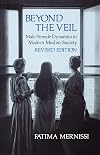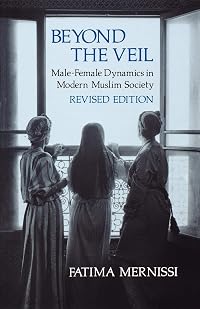
Beyond the Veil, Revised Edition: Male-Female Dynamics in Modern Muslim Society
by Fatima Mernissi
On This Page
Description
From the writing of her first book, Beyond the Veil: Male-Female Dynamics in Modern Muslim Society in 1975, Mernissi has sought to reclaim the ideological discourse on women and sexuality from the stranglehold of patriarchy. She critically examines the classical corpus of religious-juristic texts, including the Hadith, and reinterprets them from a feminist perspective. In her view, the Muslim ideal of the silent, passive, obedient woman has nothing to do with the authentic message of Islam. show more Rather, it is a construction of the 'ulama', the male jurists-theologians who manipulated and distorted the religious texts in order to preserve the patriarchal system. Mernissi's work explores the relationship between sexual ideology, gender identity, sociopolitical organization, and the status of women in Islam; her special focus, however, is Moroccan society and culture. As a feminist, her work represents an attempt to undermine the ideological and political systems that silence and oppress Muslim women. show lessTags
Recommendations


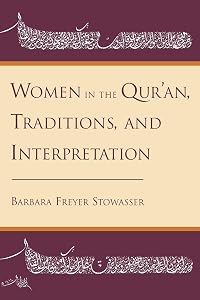
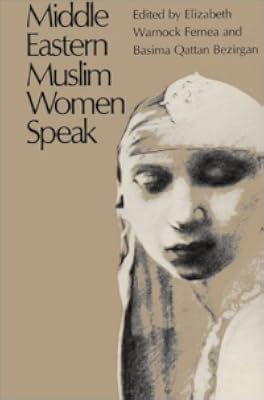

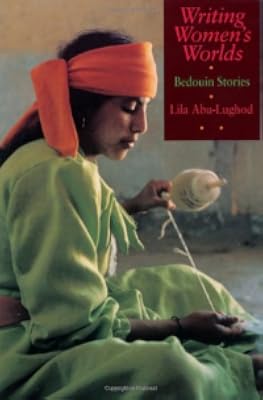
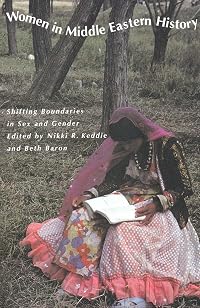





Member Recommendations

Member Reviews
Crucial ideas: Islam has codified and imposed a system of slavery on women for about 14 centuries. In this system men possess women, women are not constituted as human beings who belong to themselves, but as human beings belonging to men. The Muslim umma, then, the community of believers, properly refers to men and the male brotherhood, who own the female portion of the population.
The subjugation has a religious basis and justification. "Allah does not speak to women"--the Koran addresses itself to the male subject, posits the male as the subject, and the male mediates between god and the woman and informs her of her duties and rights.
Islam as a "sacred basis of society" is not only accepted by the traditionalists but generally speaking show more by the "modernisers" as well, because (as far as I can tell) anything else is a non-starter. There is no way to dispense with understanding the Koran as the word of God and that human society should be based on the word of God--one can only hope to negotiate about the interpretation of that word.
"...the Muslim message, in spite of its beauty, considers humanity to be constituted by males only. Women are considered not only outside of humanity but a threat to it as well."
Concerning that threat, Mernissi sees one of the differences between the West and Islam in the respective understanding of female sexuality. The West, she says, sees women as biologically inferior and sexually passive; in Islam, there is no insistence as such that women are biologically inferior and they are seen as sexually active.
"What stimulates the greater control and domination of women in Islam is a fear of unregulated, free, self-determining, self-actualising female sexuality."
Mernissi illustrates this with a comparison of Freud's ideas and those of the 11th century theologian Gazali.
In some ways Islam has a healthier view of sex--sexuality isn't pathologised, men and women's sexual instincts are seen as basically the same, lovemaking is appreciated as both a necessity and pleasure, and women's sexual satisfaction is very important (or at least taught to be important).
However, the actual social arrangements of heterosexual relations belie these theoretical levelling ideas. Muslim marriage squarely favours the master, not the slave, and it does so to the extremes where practically any kind of abuse is possible without repercussions for the man, up to and including killing the woman.
Mernissi introduced me to the idea that what Islam fears and condemns above all, and does everything to destroy, is heterosexual love. This is how she puts it and I must admit this angle is new and strange to me, although I'd have no trouble recognising the obstacles Islam places to heterosexual relations.
The destabilisation, the prevention of conjugal love is achieved through the institutions of polygamy and repudiation, both a sole male prerogative. Polygamy is widely consciously understood as humiliating and debasing to woman, and used precisely to debase her and facilitate her exploitation. But it also reinforces the tensions and the fear of women who, remember, are seen as sexually active and threatening, yet through polygamy are rendered even more sexually frustrated, and therefore even more of a danger to social order. (Justifying even more control etc.)
Repudiation breaks the marital bond so easily that it further reinforces woman's insignificance. The point of all of this is to cement a woman's unimportance to the man as an individual, being only a means to satisfy his sexual and procreative needs. Finally, asserting paternity as sole ownership of children also works to diminish the woman, as not even her role as the mother of a man's children is given any value.
In such conditions it's no wonder heterosexual love has little opportunity to develop, and less meaning.
Another thing I wasn't quite aware of until Mernissi is just how Prophet Muhammad's sexual behaviour shaped Islam and the destiny of Muslim women. I knew it did, but not all the details.
The details are sordid.
After the death of his first wife Khadija when he was fifty, Muhammad married twelve more times, and besides indulged in some unspecified number of relations with concubines and other women he didn't marry. Three of the marriages were not consummated because the women changed their minds and left (all three were relatively more "free" tribal women who seem to have had second thoughts about sharing a husband). One was, notoriously, to a girl so young she was not yet eighteen when he died at sixty-two. Mernissi also brings up two incidents that paint a regrettable picture of Muhammad and his sexual legacy. He is said to have said to his favourite grandson Hassan "you resemble me physically and morally", when Hassan boasted of having 200 wives, or rather having had 200 wives, as he was wont to marry and divorce them in fours at a time, moving on to new stock all the time.
And, Muhammad once got excited by the sight of his adopted son's wife, whereupon the adopted son offered to divorce her so that prophet could marry her, never mind the dozen or so wives back home already.
How different might Islam have been if Muhammad hadn't acted the randy old goat after his wife died? If he'd remained a widower or married just the one woman again? It seems certain that the women's condition within it would have been quite different.
Another point I wish to note is that according to Mernissi there is a wealth of data on pre-Islamic practice but very little analysis of it (presumably up to date at least). This reminded me of similar remarks elsewhere regarding Muslim data and sources on slavery. It points to a widespread problem of repression of scholarship that may (rightly or wrongly supposed) challenge Islamic doctrine (or politics).
The fourth part of the book deals with the specific situation in Morocco (data from 1971) but equally sheds light much wider. It saddened me to compare Mernissi's hopes with recent reports from the country by Leila Slimani. No doubt there has been change, quantitatively. But qualitatively? So little. show less
The subjugation has a religious basis and justification. "Allah does not speak to women"--the Koran addresses itself to the male subject, posits the male as the subject, and the male mediates between god and the woman and informs her of her duties and rights.
Islam as a "sacred basis of society" is not only accepted by the traditionalists but generally speaking show more by the "modernisers" as well, because (as far as I can tell) anything else is a non-starter. There is no way to dispense with understanding the Koran as the word of God and that human society should be based on the word of God--one can only hope to negotiate about the interpretation of that word.
"...the Muslim message, in spite of its beauty, considers humanity to be constituted by males only. Women are considered not only outside of humanity but a threat to it as well."
Concerning that threat, Mernissi sees one of the differences between the West and Islam in the respective understanding of female sexuality. The West, she says, sees women as biologically inferior and sexually passive; in Islam, there is no insistence as such that women are biologically inferior and they are seen as sexually active.
"What stimulates the greater control and domination of women in Islam is a fear of unregulated, free, self-determining, self-actualising female sexuality."
Mernissi illustrates this with a comparison of Freud's ideas and those of the 11th century theologian Gazali.
In some ways Islam has a healthier view of sex--sexuality isn't pathologised, men and women's sexual instincts are seen as basically the same, lovemaking is appreciated as both a necessity and pleasure, and women's sexual satisfaction is very important (or at least taught to be important).
However, the actual social arrangements of heterosexual relations belie these theoretical levelling ideas. Muslim marriage squarely favours the master, not the slave, and it does so to the extremes where practically any kind of abuse is possible without repercussions for the man, up to and including killing the woman.
Mernissi introduced me to the idea that what Islam fears and condemns above all, and does everything to destroy, is heterosexual love. This is how she puts it and I must admit this angle is new and strange to me, although I'd have no trouble recognising the obstacles Islam places to heterosexual relations.
The destabilisation, the prevention of conjugal love is achieved through the institutions of polygamy and repudiation, both a sole male prerogative. Polygamy is widely consciously understood as humiliating and debasing to woman, and used precisely to debase her and facilitate her exploitation. But it also reinforces the tensions and the fear of women who, remember, are seen as sexually active and threatening, yet through polygamy are rendered even more sexually frustrated, and therefore even more of a danger to social order. (Justifying even more control etc.)
Repudiation breaks the marital bond so easily that it further reinforces woman's insignificance. The point of all of this is to cement a woman's unimportance to the man as an individual, being only a means to satisfy his sexual and procreative needs. Finally, asserting paternity as sole ownership of children also works to diminish the woman, as not even her role as the mother of a man's children is given any value.
In such conditions it's no wonder heterosexual love has little opportunity to develop, and less meaning.
Another thing I wasn't quite aware of until Mernissi is just how Prophet Muhammad's sexual behaviour shaped Islam and the destiny of Muslim women. I knew it did, but not all the details.
The details are sordid.
After the death of his first wife Khadija when he was fifty, Muhammad married twelve more times, and besides indulged in some unspecified number of relations with concubines and other women he didn't marry. Three of the marriages were not consummated because the women changed their minds and left (all three were relatively more "free" tribal women who seem to have had second thoughts about sharing a husband). One was, notoriously, to a girl so young she was not yet eighteen when he died at sixty-two. Mernissi also brings up two incidents that paint a regrettable picture of Muhammad and his sexual legacy. He is said to have said to his favourite grandson Hassan "you resemble me physically and morally", when Hassan boasted of having 200 wives, or rather having had 200 wives, as he was wont to marry and divorce them in fours at a time, moving on to new stock all the time.
And, Muhammad once got excited by the sight of his adopted son's wife, whereupon the adopted son offered to divorce her so that prophet could marry her, never mind the dozen or so wives back home already.
How different might Islam have been if Muhammad hadn't acted the randy old goat after his wife died? If he'd remained a widower or married just the one woman again? It seems certain that the women's condition within it would have been quite different.
Another point I wish to note is that according to Mernissi there is a wealth of data on pre-Islamic practice but very little analysis of it (presumably up to date at least). This reminded me of similar remarks elsewhere regarding Muslim data and sources on slavery. It points to a widespread problem of repression of scholarship that may (rightly or wrongly supposed) challenge Islamic doctrine (or politics).
The fourth part of the book deals with the specific situation in Morocco (data from 1971) but equally sheds light much wider. It saddened me to compare Mernissi's hopes with recent reports from the country by Leila Slimani. No doubt there has been change, quantitatively. But qualitatively? So little. show less
This is a remarkably accessible book, for the western reader who is interested in understanding (or beginning to understand) the dynamics of modern Muslim society - it is written from within, but with the western reader in mind.
Wetenschappelijke verhandeling over de islamitische visie op de vrouw, haar seksualiteit en haar aantrekkingskracht aan de hand van zowel uitspraken van islamitische geleerden en dichters als van onderzoeksresultaten in het huidige Marokko.
Ratings
Members
- Recently Added By
Lists

The Emergence of the Modern Middle East
289 works; 13 members

Women in Islam
120 works; 8 members

Universtiy of Toronto - NMC473/2173H - Intellectuals of the Arab World
91 works; 2 members
Author Information

47+ Works 2,410 Members
Fatema Mernissi is an Islamic feminist whose books have been published in 22 countries & have been bestsellers in many. (Bowker Author Biography)
Series
Belongs to Publisher Series
Common Knowledge
- Canonical title*
- Geschlecht, Ideologie, Islam
- Original title
- Beyond the Veil: Male-Female Dynamics in a Modern Muslim Society
- Alternate titles*
- Sexe idéologie islam. - Paris
- Original publication date
- 1975
*Some information comes from Common Knowledge in other languages. Click "Edit" for more information.
Classifications
- Genres
- Nonfiction, Religion & Spirituality, Sexuality and Gender Studies, General Nonfiction, History
- DDC/MDS
- 305.4862971 — Society, government, & culture Social sciences, sociology & anthropology Social group - Age, Gender, Ethnicity Women Specific groups of women Women and religion
- LCC
- HQ1170 .M46 — Social sciences The family. Marriage, Women and Sexuality The Family. Marriage. Women Women. Feminism
- BISAC
Statistics
- Members
- 314
- Popularity
- 101,917
- Reviews
- 3
- Rating
- (3.61)
- Languages
- Dutch, English, French, German
- Media
- Paper, Ebook
- ISBNs
- 17
- ASINs
- 4