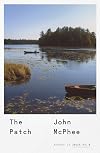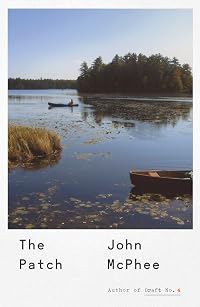
The Patch
by John McPhee
On This Page
Description
"An "album quilt," an artful assortment of nonfiction writings by John McPhee that have not previously appeared in any book" -- "The Patch is the seventh collection of essays by the nonfiction master John McPhee, all of them published by Farrar, Straus and Giroux. It is divided into two parts. The first, 'The Sporting Scene,' offers previously uncollected pieces on fishing, football, golf and lacrosse, among other topics. They range from fly-casting for chain pickerel in the fall in New show more Hampshire to walking the linksland of St. Andrews at a British Open championship. The second part, 'An Album Quilt,' weaves together fragments of varying length that were written across the years and have never appeared in book form--occasional pieces, memorial pieces, reflections, reminiscences, and short items in various magazines, including The New Yorker. They include visits to the Hershey chocolate factory and to Denali, and encounters with Oscar Hammerstein and Joan Baez. The author's emphatic purpose was not merely to preserve things but to choose passages that might entertain contemporary readers. Starting with 250,000 words, he gradually threw out 75 percent of them, and randomly sequenced the remaining fragments into an assemblage that is also, among other things, a covert memoir."--Dust jacket. show lessTags
Recommendations













Member Reviews
This was a wonderful essay collection (his seventh), and as usual with McPhee’s work, most of them were previously published in New Yorker magazine, but none of them have been seen in a book before. His wildly varied essays have been gracing the pages of New Yorker since 1963. This book’s essays are separated into two section, “The Sporting Scene,” yeah, on sports of all sorts, and “An Album Quilt,” which was about just about everything else under the sun. That second section would make an excellent primer for someone new to McPhee, as a way to introduce them to the wide scope and joy of his writing. There are so many pieces in the Quilt, and a number of them have been edited down to quite short pieces. It was such a show more curiosity to see this deviation from standard McPhee stylings, though I also realized that everything was still under his studied control.
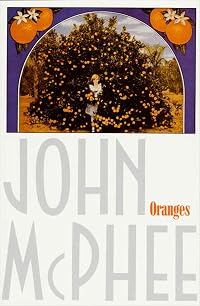
That said, I found myself growing weary of hearing about an N.C.A.A. lacrosse game, wishing that the piece had been edited much more. I felt some kinship upon finding a New York Times review in which they also found the lacrosse essay the weakest of the bunch. Other than this piece on this sport which I’ve enjoyed watching for decades, I’ve hardly ever found my interest lagging while reading his more than thirty books. As most every bookstore customer or friend that I’ve ever spoken to about McPhee’s books will attest to, I always cited his book Oranges as an example of him holding a reader’s interest in the palm of his hand about (almost) any topic.
Reading an old review of this book in the National Review the other day, I read a couple of lines from Nick Ripatrazone that sounded spot-on. “One of McPhee’s talents is noticing something and nudging it toward an essay.” There was another line that reflected perfectly on McPhee’s age and style. “More writers of McPhee’s age could learn from his example: find a subject and story, pick up a notebook, and then listen, watch, and wait.”
John McPhee is now 90, and I always fear that I may not be graced with that many more essays by this master, but I promise to be thrilled to have any of them … even if he takes another shot at lacrosse. show less
That said, I found myself growing weary of hearing about an N.C.A.A. lacrosse game, wishing that the piece had been edited much more. I felt some kinship upon finding a New York Times review in which they also found the lacrosse essay the weakest of the bunch. Other than this piece on this sport which I’ve enjoyed watching for decades, I’ve hardly ever found my interest lagging while reading his more than thirty books. As most every bookstore customer or friend that I’ve ever spoken to about McPhee’s books will attest to, I always cited his book Oranges as an example of him holding a reader’s interest in the palm of his hand about (almost) any topic.
Reading an old review of this book in the National Review the other day, I read a couple of lines from Nick Ripatrazone that sounded spot-on. “One of McPhee’s talents is noticing something and nudging it toward an essay.” There was another line that reflected perfectly on McPhee’s age and style. “More writers of McPhee’s age could learn from his example: find a subject and story, pick up a notebook, and then listen, watch, and wait.”
John McPhee is now 90, and I always fear that I may not be graced with that many more essays by this master, but I promise to be thrilled to have any of them … even if he takes another shot at lacrosse. show less
Magic. That's the best way I can describe McPhee's style and output. Yeah, yeah: I know writing is hard; he tells us so:
"A professional writer, by definition, is a person clothed in self-denial who each and almost every day will plead with eloquent lamentation that he has a brutal burden on his mind and soul, will summon deep reserves of "discipline" as seriatim antidotes to any domestic chore, and, drawing the long sad face of the pale poet, will rise above his dread of his dreaded working chamber, excuse himself from the idle crowd, go into his writing sanctum, shut the door, shoot the bolt, and in lonely sacrifice turn on the Mets game." (137)
He makes it seem so easy to us readers, his prose, his descriptions rewarding us beyond the show more everyday. We learn about, uh, things. And, lo, we are amazed. Not to mention entertained. Such as the schematic or diagram of the famous loop of holes on The Old Course. (64) "It is a sequence of holes so hallowed in the game that Amen Corner, at Augusta National, has been compared with it, but while the Loop is far more complex geometrically, as golf goes it is less difficult. Birdies are to be made, just lying there for the taking, unless the wind is blowing hard, which it nearly always is. The prow of the linksland is much like the bow of a ship in the winter North Atlantic."
This book was worth the money and the time to read for his cheat sheet on the male tennis standouts of the 70s. (149-151) For the chance to meet Marion Davies (152) and Jenny Lind (167). And for the slightly longer section of quilt about Bob Bingham and birding. (200-206) I had read much of this content before in The New Yorker, but once, twice, then yet again, I find I can never read him too much. There's always something there still.
Must be the magic. show less
"A professional writer, by definition, is a person clothed in self-denial who each and almost every day will plead with eloquent lamentation that he has a brutal burden on his mind and soul, will summon deep reserves of "discipline" as seriatim antidotes to any domestic chore, and, drawing the long sad face of the pale poet, will rise above his dread of his dreaded working chamber, excuse himself from the idle crowd, go into his writing sanctum, shut the door, shoot the bolt, and in lonely sacrifice turn on the Mets game." (137)
He makes it seem so easy to us readers, his prose, his descriptions rewarding us beyond the show more everyday. We learn about, uh, things. And, lo, we are amazed. Not to mention entertained. Such as the schematic or diagram of the famous loop of holes on The Old Course. (64) "It is a sequence of holes so hallowed in the game that Amen Corner, at Augusta National, has been compared with it, but while the Loop is far more complex geometrically, as golf goes it is less difficult. Birdies are to be made, just lying there for the taking, unless the wind is blowing hard, which it nearly always is. The prow of the linksland is much like the bow of a ship in the winter North Atlantic."
This book was worth the money and the time to read for his cheat sheet on the male tennis standouts of the 70s. (149-151) For the chance to meet Marion Davies (152) and Jenny Lind (167). And for the slightly longer section of quilt about Bob Bingham and birding. (200-206) I had read much of this content before in The New Yorker, but once, twice, then yet again, I find I can never read him too much. There's always something there still.
Must be the magic. show less
Delightful as ever. On the greatly improbable chance that someone is only now hearing about John McPhee and wondering if this is the place to start: sure, start here. Anywhere will work. McPhee is, in my mind, a master of the conversational non-fiction tone and a first-ballot hall of famer. This loose, hodge-podge collection passes through subjects as swiftly and lightly as a canoe. A joy to read as always. Worth it for any of the pieces.
A collection of essays by the great nonfiction writer John McPhee. He is such a wonderful writer that almost every subject he tackles is made interesting. I started with the entertaining album section, thinking I would skip the first part of the book devoted to sports. But from fishing to Lacrosse all those selections proved worth reading also.
Ratings
Members
- Recently Added By
Author Information

59+ Works 21,095 Members
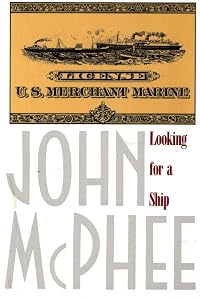
McPhee was born in Princeton, New Jersey, and educated at Princeton University and Cambridge University. His writing career began at Time magazine and led to his long association with the New Yorker, where he has been a staff writer since 1965. That same year he published his first book, A Sense of Where You Are, with FSG, and soon followed with show more The Headmaster (1966), Oranges (1967), The Pine Barrens (1968), A Roomful of Hovings and Other Profiles (collection, 1969), The Crofter and the Laird (1969), Levels of the Game (1970), Encounters with the Archdruid (1972), The Deltoid Pumpkin Seed (1973), The Curve of Binding Energy (1974), Pieces of the Frame (collection, 1975), and The Survival of the Bark Canoe (1975). Both Encounters with the Archdruid and The Curve of Binding Energy were nominated for National Book Awards in the category of science Since 1977, the year in which McPhee received the Award in Literature from the American Academy of Arts and Letters and The John McPhee Reader and the bestselling Coming into the Country appeared in print, Farrar, Straus and Giroux has published Giving Good Weight (collection, 1979), Basin and Range (1981), In Suspect Terrain (1983), La Place de la Concorde Suisse (1984), Table of Contents (collection, 1985), Rising from the Plains (1986), Heirs of General Practice (in a paperback edition, 1986), The Control of Nature (1989), Looking for a Ship (1990), Assembling California (1993), The Ransom of Russian Art (1994), The Second John McPhee Reader (1996), and Irons in the Fire (1997). Annals of the Former World was published in 1998 and was awarded the Pulitzer Prize in 1999. McPhee has taught at Princeton as Ferris Professor since 1975. (Bowker Author Biography) show less
Classifications
- Genres
- Nonfiction, General Nonfiction
- DDC/MDS
- 080 — Computer science, information & general works Anthologies and Quotations General collections
- LCC
- AC8 .M267 — General Works Collections. Series. Collected works Collections. Series. Collected works Collections of monographs, essays, etc. American and English
- BISAC
Statistics
- Members
- 179
- Popularity
- 181,808
- Reviews
- 4
- Rating
- (4.25)
- Languages
- English
- Media
- Paper, Ebook
- ISBNs
- 9
- ASINs
- 1