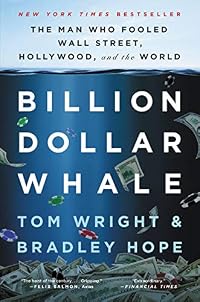
Billion Dollar Whale: The Man Who Fooled Wall Street, Hollywood, and the World
by Tom Wright (Author), Bradley Hope (Author)
On This Page
Description
BILLION DOLLAR WHALE is "an epic tale of white-collar crime on a global scale" (Publishers Weekly, starred review), revealing how a young social climber from Malaysia pulled off one of the biggest heists in history. In 2009, a chubby, mild-mannered graduate of the University of Pennsylvania's Wharton School of Business named Jho Low set in motion a fraud of unprecedented gall and magnitude--one that would come to symbolize the next great threat to the global financial system. Over a decade, show more Low, with the aid of Goldman Sachs and others, siphoned billions of dollars from an investment fund--right under the nose of global financial industry watchdogs. Low used the money to finance elections, purchase luxury real estate, throw champagne-drenched parties, and even to finance Hollywood films like The Wolf of Wall Street. By early 2019, with his yacht and private jet reportedly seized by authorities and facing criminal charges in Malaysia and in the United States, Low had become an international fugitive, even as the U.S. Department of Justice continued its investigation. BILLION DOLLAR WHALE has joined the ranks of Liar's Poker, Den of Thieves, and Bad Blood as a classic harrowing parable of hubris and greed in the financial world. show lessTags
Recommendations
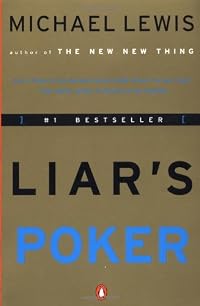

Member Reviews
An eye-watering story digging into the fraud behind the 1MDB scandal, in which hundred of millions of US$ were stolen from an account supposedly set up to finance infrastructure and other development projects in Malaysia.
The Whale of the title (a reference to what clubs and casinos call their big spenders) is a young Malaysian man called Jho Low, who from an early age loved to host lavish parties and throw lots of money around. On one occasion described in the book, while hanging out with Paris Hilton, Low spent €2m on champagne in a single night (needless to say, this bought more champagne than the whole club-ful of people could drink). But the authors are just as critical of the supposedly reputable banks, auditors and other show more institutions who were happy to accept and facilitate very dubious-looking deals, as long as a cut of the profits was rolling in their direction.
It's a well-written book, which helps to explain the financial flows just as well as it characterises Low's big-spending habits. One thing I found very curious was the way that Low managed to attract some genuine A-list celebrities to hang out with him. I mean, it's easy to imagine Hilton and the other Z-listers in the book making as much money as possible while they can. But Alicia Keys? Jamie Foxx? The authors explain how Leonardo di Caprio and Martin Scorsese were happy to work with Low because they got complete creative control of their work. (Low's company famously financed The Wolf of Wall Street, which it turns out Warner Bros were not willing to support because they didn't think an R rated film would make its money back. This meant that Scorsese got to crash a real Lamborghini in the opening scene - Warner Bros would have demanded he use a replica. One fascinating snippet is that one of the people who saw through Low very quickly was Jordan Belfort, the subject of Wolf of Wall Street, who after one of Low's parties apparently said "This is a fucking scam ... You wouldn't spend money you'd worked for like that.").
In a strange way, Low is a vacuum at the heart of the book. Other than wanting to be seen and to throw parties, it's hard to know what drove him. Perhaps if he ever stops being a fugitive from justice and comes to trial, we will be able to find out more. show less
The Whale of the title (a reference to what clubs and casinos call their big spenders) is a young Malaysian man called Jho Low, who from an early age loved to host lavish parties and throw lots of money around. On one occasion described in the book, while hanging out with Paris Hilton, Low spent €2m on champagne in a single night (needless to say, this bought more champagne than the whole club-ful of people could drink). But the authors are just as critical of the supposedly reputable banks, auditors and other show more institutions who were happy to accept and facilitate very dubious-looking deals, as long as a cut of the profits was rolling in their direction.
It's a well-written book, which helps to explain the financial flows just as well as it characterises Low's big-spending habits. One thing I found very curious was the way that Low managed to attract some genuine A-list celebrities to hang out with him. I mean, it's easy to imagine Hilton and the other Z-listers in the book making as much money as possible while they can. But Alicia Keys? Jamie Foxx? The authors explain how Leonardo di Caprio and Martin Scorsese were happy to work with Low because they got complete creative control of their work. (Low's company famously financed The Wolf of Wall Street, which it turns out Warner Bros were not willing to support because they didn't think an R rated film would make its money back. This meant that Scorsese got to crash a real Lamborghini in the opening scene - Warner Bros would have demanded he use a replica. One fascinating snippet is that one of the people who saw through Low very quickly was Jordan Belfort, the subject of Wolf of Wall Street, who after one of Low's parties apparently said "This is a fucking scam ... You wouldn't spend money you'd worked for like that.").
In a strange way, Low is a vacuum at the heart of the book. Other than wanting to be seen and to throw parties, it's hard to know what drove him. Perhaps if he ever stops being a fugitive from justice and comes to trial, we will be able to find out more. show less
The details of international banking flew over my head, but overall an extremely compelling read. The amount of research that went into this book must have been staggering, good on the authors and their research teams. Loved learning about the greed and hollywood celebrities and hopeful Jho Low and others are held accountable for this ridiculous amount of corruption and greed.
If anybody ever reads this to our current president (DJT), he is going to be more than a bit furious that there was this much better of a grifter operating at the same time as him, and on a much bigger scale, and with much happier an ending.
The subtext, of course, is that banks operating with a motive to assist in crime will, um, crime, and that maybe we should look at that some day. But the authors seem as skeptical of that ever actually happening as I am.
It's not the best book by Wall Street Journal reporters released in 2018, but if one is looking to understand how somebody could exploit corruption and gullibility in equal measure, than this is crucial. And if one is interested in the lives of certain callow, kind of awful, show more Oscar-winning actors, this will give insight into some of that also. show less
The subtext, of course, is that banks operating with a motive to assist in crime will, um, crime, and that maybe we should look at that some day. But the authors seem as skeptical of that ever actually happening as I am.
It's not the best book by Wall Street Journal reporters released in 2018, but if one is looking to understand how somebody could exploit corruption and gullibility in equal measure, than this is crucial. And if one is interested in the lives of certain callow, kind of awful, show more Oscar-winning actors, this will give insight into some of that also. show less
An ambitious young Malaysian, Jho Low, graduated from Penn with connections to other members of the global elites now sending their children to Ivies, including a contact with access to Gulf money. After a few false starts, he managed to convince Malaysia’s prime minister to start a sovereign wealth fund, and promptly stole hundreds of millions of dollars from it. Notable bits: (1) Just how pointless and dumb the resulting spending was—millions on champagne, on gambling, on paying models to hang out at his party, on gifts to Paris Hilton and other celebrities including Leonardo DiCaprio. (2) Low helped disguise his money laundering by giving his fake entities names reminiscent of well-known financial institutions like the Saudi show more sovereign wealth fund. (3) The discussion at the end that assumes, without explaining, that there is no alternative for Malaysia but to pay this money back. This may well be true because of the way that the debt instruments were written, but that fact itself deserved more discussion. show less
For more reviews and bookish post visit: https://www.ManOfLaBook.com
Billion Dollar Whale: The Man Who Fooled Wall Street, Hollywood, and the World by Tom Wright and Bradley Hope tells of one of the biggest financial heists in history. Misters Wright and Hope are Pulitzer-finalist Wall Street Journal, reporters.
Jho Low, a Malaysian businessman, and Wharton graduate, who has been accused of stealing $4.5 billion from the Malaysian state development fund. Mr. Low has managed to fool not only public and
Low is now a fugitive sought after by Interpol. He has been charged with offenses relating to money laundering in the US and Malaysia.
This book impeccably researched the scandal instigated by Malaysian businessman Jho Low in connection with show more the 1Malaysia Development Berhad (1MDB). The book describes how Low, together with ex-Malaysian Prime Minister Najib Razak created a sovereign wealth fund that raised $10 billion. Eventually, half of the fund disappeared.
Billion Dollar Whale by Tom Wright and Bradley Hope tells of the scam, the scandal, and the tax oversights which allowed Low to take huge amounts of money and live the life many can only dream of. Ironically, while throwing a huge party celebrating the movie The Wolf of Wall Street, its protagonist Jordan Belfort, told his girlfriend that the only people who spend money so frivolously are those who stole it.
On second thought – maybe not ironic at all.
The most fascinating aspect of the book, for me, was how all the financial safeguards either failed or were ignored due to greed and the large amounts involved. It seems that all were blinded by Low’s audacity, and the celebrities he surrounded himself with (many paid to show up).
However, the book could be repetitive with many details which are retold several times. That is fine but seems to be overdone. The authors also tried to artificially insert a cliffhanger into the end of every chapter. That’s great if you’re doing a weekly series but there’s no need to do so in a book such as this. show less
Billion Dollar Whale: The Man Who Fooled Wall Street, Hollywood, and the World by Tom Wright and Bradley Hope tells of one of the biggest financial heists in history. Misters Wright and Hope are Pulitzer-finalist Wall Street Journal, reporters.
Jho Low, a Malaysian businessman, and Wharton graduate, who has been accused of stealing $4.5 billion from the Malaysian state development fund. Mr. Low has managed to fool not only public and
Low is now a fugitive sought after by Interpol. He has been charged with offenses relating to money laundering in the US and Malaysia.
This book impeccably researched the scandal instigated by Malaysian businessman Jho Low in connection with show more the 1Malaysia Development Berhad (1MDB). The book describes how Low, together with ex-Malaysian Prime Minister Najib Razak created a sovereign wealth fund that raised $10 billion. Eventually, half of the fund disappeared.
Billion Dollar Whale by Tom Wright and Bradley Hope tells of the scam, the scandal, and the tax oversights which allowed Low to take huge amounts of money and live the life many can only dream of. Ironically, while throwing a huge party celebrating the movie The Wolf of Wall Street, its protagonist Jordan Belfort, told his girlfriend that the only people who spend money so frivolously are those who stole it.
On second thought – maybe not ironic at all.
The most fascinating aspect of the book, for me, was how all the financial safeguards either failed or were ignored due to greed and the large amounts involved. It seems that all were blinded by Low’s audacity, and the celebrities he surrounded himself with (many paid to show up).
However, the book could be repetitive with many details which are retold several times. That is fine but seems to be overdone. The authors also tried to artificially insert a cliffhanger into the end of every chapter. That’s great if you’re doing a weekly series but there’s no need to do so in a book such as this. show less
Extraordinary story about a Malaysian financier Jho Low who stole billions of dollars and threw staggering high profile parties with Leonardo Di Caprio and Paris Hilton. The money came from a Malaysian sovereign wealth fund sanctioned by the Malaysian kleptocrat Prime Minister Najib Razak and his wife Rosmah who bought millions of dollars of jewellery at a time. All of this was enabled by Goldman Sachs earning vast fees and turning a blind eye.
I found this in a charity shop and the blurb on the back instantly grabbed me. In early 2009, after finishing Wharton School of Business a young Malaysian called Jho Low manages to get up a government investment fund in his native country, funded by the Malaysian government. Over the course of the next 10 years he goes from being a quiet unassuming young man to hosting huge lavish parties frequented by the rich an famous in a variety of entertainment industries. Is this wealth and extravagance a product of his investment vehicle performing well?
As it turns out, it's a huge con involving the Malaysian prime minister, rich Arabian governments, and financial institutions such as Goldman Sachs.
This book is very interesting if a little bit show more repetitive in places. It is well written but some of the finanical tools used are not particularly well explained and this is a bit of a let down as I had to find out how they work in other places. show less
As it turns out, it's a huge con involving the Malaysian prime minister, rich Arabian governments, and financial institutions such as Goldman Sachs.
This book is very interesting if a little bit show more repetitive in places. It is well written but some of the finanical tools used are not particularly well explained and this is a bit of a let down as I had to find out how they work in other places. show less
Members
- Recently Added By
Lists

Corruption
29 works; 1 member
Author Information

Tom Wright is a an author who is a New York Times Book review Editor's Choice Recipient, Crime Writer's Association Dagger - New Writer Category Award Winner and Wall Street Jornal Article - making the Inside the Beltway List. He won the Nick Enright Prize for Playwriting 2015 with his title BlackDiggers. The award comes with a monetary prize of show more $30,000. (Bowker Author Biography) show less

Awards and Honors
Common Knowledge
- Canonical DDC/MDS
- 364.163092
- Canonical LCC
- HV6692.L68
Classifications
- Genres
- Business, Nonfiction, General Nonfiction, Biography & Memoir
- DDC/MDS
- 364.163092 — Society, Government, and Culture Social problems and social services Crime Criminal offenses Crimes of property Fraud
- LCC
- HV6692 .L68 — Social sciences Social pathology. Social and public welfare. Criminology Social pathology. Social and public welfare. Criminology Crimes and offenses
- BISAC
Statistics
- Members
- 633
- Popularity
- 45,657
- Reviews
- 16
- Rating
- (3.75)
- Languages
- Chinese, English, Portuguese, Spanish
- Media
- Paper, Audiobook, Ebook
- ISBNs
- 18
- ASINs
- 3