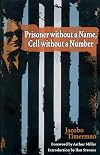
Prisoner without a Name, Cell without a Number
by Jacobo Timerman
On This Page
Description
An Argentine newspaper publisher who dared to criticize his government's policy of cruel repression tells the story of his arrest, imprisonment, and torture.Tags
Recommendations






































Member Reviews
This is the most chilling book that I have read in many years. Perhaps, had I not read this book within the first week of the election of Donald Trump to the office of president of the United States, it might not have had the same impact on me. I've always been curious about the "disappeared" Jews of Argentina since the years 1972-1973 when I met young Argentine dissidents when I was a volunteer nurse in Israel. Years afterward, I was horrified by Nathan Englander's novel about this subject, "A Ministry for Special Cases" because I never really stopped to ponder what could have happened to the "disappeared".
The author of this memoir, Jacobo Timerman, was a Soviet-born Jewish long-time journalist and publisher of the Argentine newspaper show more La Opinion. With the overthrow of power by a military junta in Argentina, the government swung from extreme Left to extreme Right. Timerman was taken prisoner without knowledge of why he had been arrested, tortured repeatedly and kept in prison for two years before he was stripped of his Argentine citizenship and expelled from that country.
There were so many lines in this memoir that shook me up that, by the time I had recorded them all for myself, it seemed as if I had written down half of the book. Timerman deals with many questions about totalitarianism. He talks about the repression of news, the use of torture, the extreme hatred concentrated on prisoners who are Jewish, the false idea of a Jewish "global conspiracy", the silence of fellow Jews, the hatred directed at Jews through acts of anti-Semitism (my own grandson's Jewish preschool at our local Jewish Community Center had a bomb threat this month), the fear of Zionism and Israel (my dearest family are kibbutz members), and eliminating the "enemy".
Maybe I would not feel so threatened by this had I not lost my maternal grandparents in the crematoria of Nazi Europe. However, what happened in Argentina did not take place in the 1930's. It took place less than fifty years ago, during my own lifetime, in yet another country with a large Jewish population, that of Argentina. Come 2017, and my own country, the United States of America, now has a president who is preaching hatred and the fear of others. I am truly terrified.
"The ideology motivating the Argentine military stems more from a notion of the world they reject than from a world they would like to attain. They would be unable to pinpoint or outline the reality they care to see materialize in Argentina, but could quickly describe what it is they hate. If asked what they want, their answer will be: A decent country, respectful of family life and patriotism. But ask them what they don't want, and then you'll be able to understand their view of the world and the difficulties they encounter when they must govern in accordance with such hatreds. On the other hand, as in every totalitarian mind, hatreds are transformed into fantasies and conform to a view of the world that matches these fantasies, and these very fantasies lead to the development of their operational tactics."
"For a totalitarian mind, there are no existing contradictions to justify a pluralistic, tolerant society. Nothing exists but enemies or friends."
"They could never explain what it was they wished to construct, but were always categorical in terms of what they wished to annihilate."
"Everything that happened once can happen again." show less
The author of this memoir, Jacobo Timerman, was a Soviet-born Jewish long-time journalist and publisher of the Argentine newspaper show more La Opinion. With the overthrow of power by a military junta in Argentina, the government swung from extreme Left to extreme Right. Timerman was taken prisoner without knowledge of why he had been arrested, tortured repeatedly and kept in prison for two years before he was stripped of his Argentine citizenship and expelled from that country.
There were so many lines in this memoir that shook me up that, by the time I had recorded them all for myself, it seemed as if I had written down half of the book. Timerman deals with many questions about totalitarianism. He talks about the repression of news, the use of torture, the extreme hatred concentrated on prisoners who are Jewish, the false idea of a Jewish "global conspiracy", the silence of fellow Jews, the hatred directed at Jews through acts of anti-Semitism (my own grandson's Jewish preschool at our local Jewish Community Center had a bomb threat this month), the fear of Zionism and Israel (my dearest family are kibbutz members), and eliminating the "enemy".
Maybe I would not feel so threatened by this had I not lost my maternal grandparents in the crematoria of Nazi Europe. However, what happened in Argentina did not take place in the 1930's. It took place less than fifty years ago, during my own lifetime, in yet another country with a large Jewish population, that of Argentina. Come 2017, and my own country, the United States of America, now has a president who is preaching hatred and the fear of others. I am truly terrified.
"The ideology motivating the Argentine military stems more from a notion of the world they reject than from a world they would like to attain. They would be unable to pinpoint or outline the reality they care to see materialize in Argentina, but could quickly describe what it is they hate. If asked what they want, their answer will be: A decent country, respectful of family life and patriotism. But ask them what they don't want, and then you'll be able to understand their view of the world and the difficulties they encounter when they must govern in accordance with such hatreds. On the other hand, as in every totalitarian mind, hatreds are transformed into fantasies and conform to a view of the world that matches these fantasies, and these very fantasies lead to the development of their operational tactics."
"For a totalitarian mind, there are no existing contradictions to justify a pluralistic, tolerant society. Nothing exists but enemies or friends."
"They could never explain what it was they wished to construct, but were always categorical in terms of what they wished to annihilate."
"Everything that happened once can happen again." show less
This is unlike any other political prisoner's memoir I've ever read -- not that I've read many, perhaps five -- in that Timerman was an actual political activist and not just an ordinary person who got swept up in the ever-rising tide of persecution. The setting is Argentina but, as Timerman himself pointed out, his story could just as easily have taken place in Soviet Russia or Nazi Germany or any of scores of other countries.
I enjoyed this and it really made me think, but it's not for everyone. It's not written in chronological order; Timerman skipped around quite a lot, at times describing the tortures he went through, at times talking about the anti-fascist newspaper he founded which lead to his imprisonment, at times reflecting on show more the state of Argentina and what leads an entire country to behave this way. Timerman was Jewish and believed he was imprisoned in large part because of that, so he spent many pages talking about anti-Semitism in Argentina.
I think this would be a good book for people wanting to learn recent Argentine history, as that is a topic examined at length. I really admired Timerman for taking a stand, knowing full well just what he was getting into, but doing it anyway because someone had to. But if you're simply looking for a book on what it's like to be a political prisoner, there are better ones out there for that. show less
I enjoyed this and it really made me think, but it's not for everyone. It's not written in chronological order; Timerman skipped around quite a lot, at times describing the tortures he went through, at times talking about the anti-fascist newspaper he founded which lead to his imprisonment, at times reflecting on show more the state of Argentina and what leads an entire country to behave this way. Timerman was Jewish and believed he was imprisoned in large part because of that, so he spent many pages talking about anti-Semitism in Argentina.
I think this would be a good book for people wanting to learn recent Argentine history, as that is a topic examined at length. I really admired Timerman for taking a stand, knowing full well just what he was getting into, but doing it anyway because someone had to. But if you're simply looking for a book on what it's like to be a political prisoner, there are better ones out there for that. show less
I read this book for the Global Reading theme of writers at risk. Timerman was a journalist in Argentina during the 70's and was imprisoned and tortured during the dirty war. He is a good writer, and the descriptions of his experiences are harrowing. He intersperses descriptions of his imprisonment with political critique, is critical of extremists on both the right and the left, and also of the moderates who didn't stand up to terror. It's pretty horrible to read about the imprisonment and torture and realize that these are still going on in various parts of the world, and, as in the case in Guantanamo, happening in our name.
He also talks about anti-semitism and how as a Jew and Zionist, he was singled out and given worse treatment, show more and how, for a variety of political reasons, the Jewish community in Argentina and in Israel did not address this. Some interesting thoughts about internalized oppression. "...the Holocaust teaches us the need to understand the Jewish silence and the Jewish incapacity to defend itself; it lies in the Jewish incapacity to confront the world with its own insanity, and with the significance of anti-Semitic insanity. The Holocaust will be understood not so much for the number of victims as for the magnitude of the silence. And what obsesses me most is the repetition of silence rather than the possibility of another Holocaust." show less
He also talks about anti-semitism and how as a Jew and Zionist, he was singled out and given worse treatment, show more and how, for a variety of political reasons, the Jewish community in Argentina and in Israel did not address this. Some interesting thoughts about internalized oppression. "...the Holocaust teaches us the need to understand the Jewish silence and the Jewish incapacity to defend itself; it lies in the Jewish incapacity to confront the world with its own insanity, and with the significance of anti-Semitic insanity. The Holocaust will be understood not so much for the number of victims as for the magnitude of the silence. And what obsesses me most is the repetition of silence rather than the possibility of another Holocaust." show less
One of the most harrowing books I've ever read. An amazing entreaty against violence of both the left and the right, and a heartbreaking analysis of contemporary anti-Semitism. Comparable at some points perhaps to Koestler's Darkness at Noon, except that it deals with torture in a more direct (and horrifying, since it's nonfiction) way. I wish this were required reading in schools.
It may sound like a bit of hyperbole to compare the Argentina of 1966 – 1980* with present-day North Korea — which I imagine to be the closest thing we have to hell on Earth. But after reading Jacobo Timerman’s Prisoner without a name, Cell without a number, I’ll risk it.
* N. B.: Never mind that “the military had assumed power by dislodging elected governments in 1930, 1943, 1955 and 1962” (p. 47).
“Hate and ignorance. What you don’t understand you destroy,” he writes (of his captors) on p. 104. In addition to Timerman’s sometimes graphic descriptions of captivity, deprivation and outright torture, he gives an insider’s testimony of the absolutely stultifying ignorance of the Argentine military and police forces. show more What’s more, it’s upon this ignorance (and, no doubt, upon an equal portion of sadistic malevolence) that they act — on Timerman, obviously, but on tens of thousands of others as well.
I’ve read of past atrocities at places like Buchenwald, Treblinka and Auschwitz—and yes, even at Andersonville during our own Civil War. I’ve visited Dachau, though not Abu Ghraib or My Lai. In other words, I’m no Pollyanna, even if I’m better read than traveled. And perhaps the sheer absurdity—never mind the heinousness—of each of these ‘monuments’ to homo sapiens is something they all have in common.
And yet, I think that this citation from pp. 126-7 illustrates an absurdity that may be peculiarly Argentine: “(t)his whole oppressive universe toppling over me and bearing down on my anguish like a gravestone had to be encompassed within a single coherent reply to Colonel Clodoveo Battesti, who a few months after presiding over this court-martial would be devoting himself to decisions as to which chorus singers to use on the next Channel 9 show on Buenos Aires television.”
If it weren’t all so repugnant, it would be laughable. I have to wonder whether there’s not a special place in Dante’s hell for the likes of Colonel Codoveo Battesti — perhaps a place where chorus girls alternatively squat and dance on his face for all eternity.
The least temptation to laugh or sneer, however, quickly evaporates when one reads, on p. 148, “(o)f all the dramatic situations I witnessed in clandestine prisons, nothing can compare to those family groups who were tortured often together, sometimes separately but in view of one another, or in different cells, while one was aware of the other being tortured. The entire affective world, constructed over the years with utmost difficulty, collapses with a kick in the father’s genitals, a smack on the mother’s face, an obscene insult to the sister, or the sexual violation of a daughter. Suddenly an entire culture based on familial love, devotion, the capacity for mutual sacrifice collapses. Nothing is possible in such a universe, and that is precisely what the torturers know.”
And just as it was in both wartime and post-war Germany and Austria, when no one within either country apparently knew anything about the concentration camps, Timerman suggests that no one in Argentina knew or will know anything in his and our time about the atrocities committed by the military and police dictatorship. As Timerman suggests on p. 141, “(t)he Holocaust will be understood not so much for the number of victims as for the magnitude of the silence. And what obsesses me most is the repetition of silence rather than the possibility of another Holocaust.”
I wonder what it must be like to live in a country in which everyone is in denial — and everyone knows it.
As George Santayana once said, “He who forgets the past is condemned to repeat it.” Rather than forget the past, the Argentine military took lessons from it — and repeated it, tango style. Unless and until a people can acknowledge, repent and incorporate this blemish on its past into its present and future — and learn from it — I fear that that people, that nation, will be condemned to die or, at the very least, to stagnate.
Argentina has not recovered — at least economically—from the seventies. As it slowly slips back into developing world status, and hundreds if not thousands return to Europe in pursuit of a way of life that once drove them to emigrate by the millions to the New World, it can revel in nostalgia — for when it was once the eighth largest industrial power on Earth.
RRB
Brooklyn, NY, U.S.A.
09/07/14 show less
* N. B.: Never mind that “the military had assumed power by dislodging elected governments in 1930, 1943, 1955 and 1962” (p. 47).
“Hate and ignorance. What you don’t understand you destroy,” he writes (of his captors) on p. 104. In addition to Timerman’s sometimes graphic descriptions of captivity, deprivation and outright torture, he gives an insider’s testimony of the absolutely stultifying ignorance of the Argentine military and police forces. show more What’s more, it’s upon this ignorance (and, no doubt, upon an equal portion of sadistic malevolence) that they act — on Timerman, obviously, but on tens of thousands of others as well.
I’ve read of past atrocities at places like Buchenwald, Treblinka and Auschwitz—and yes, even at Andersonville during our own Civil War. I’ve visited Dachau, though not Abu Ghraib or My Lai. In other words, I’m no Pollyanna, even if I’m better read than traveled. And perhaps the sheer absurdity—never mind the heinousness—of each of these ‘monuments’ to homo sapiens is something they all have in common.
And yet, I think that this citation from pp. 126-7 illustrates an absurdity that may be peculiarly Argentine: “(t)his whole oppressive universe toppling over me and bearing down on my anguish like a gravestone had to be encompassed within a single coherent reply to Colonel Clodoveo Battesti, who a few months after presiding over this court-martial would be devoting himself to decisions as to which chorus singers to use on the next Channel 9 show on Buenos Aires television.”
If it weren’t all so repugnant, it would be laughable. I have to wonder whether there’s not a special place in Dante’s hell for the likes of Colonel Codoveo Battesti — perhaps a place where chorus girls alternatively squat and dance on his face for all eternity.
The least temptation to laugh or sneer, however, quickly evaporates when one reads, on p. 148, “(o)f all the dramatic situations I witnessed in clandestine prisons, nothing can compare to those family groups who were tortured often together, sometimes separately but in view of one another, or in different cells, while one was aware of the other being tortured. The entire affective world, constructed over the years with utmost difficulty, collapses with a kick in the father’s genitals, a smack on the mother’s face, an obscene insult to the sister, or the sexual violation of a daughter. Suddenly an entire culture based on familial love, devotion, the capacity for mutual sacrifice collapses. Nothing is possible in such a universe, and that is precisely what the torturers know.”
And just as it was in both wartime and post-war Germany and Austria, when no one within either country apparently knew anything about the concentration camps, Timerman suggests that no one in Argentina knew or will know anything in his and our time about the atrocities committed by the military and police dictatorship. As Timerman suggests on p. 141, “(t)he Holocaust will be understood not so much for the number of victims as for the magnitude of the silence. And what obsesses me most is the repetition of silence rather than the possibility of another Holocaust.”
I wonder what it must be like to live in a country in which everyone is in denial — and everyone knows it.
As George Santayana once said, “He who forgets the past is condemned to repeat it.” Rather than forget the past, the Argentine military took lessons from it — and repeated it, tango style. Unless and until a people can acknowledge, repent and incorporate this blemish on its past into its present and future — and learn from it — I fear that that people, that nation, will be condemned to die or, at the very least, to stagnate.
Argentina has not recovered — at least economically—from the seventies. As it slowly slips back into developing world status, and hundreds if not thousands return to Europe in pursuit of a way of life that once drove them to emigrate by the millions to the New World, it can revel in nostalgia — for when it was once the eighth largest industrial power on Earth.
RRB
Brooklyn, NY, U.S.A.
09/07/14 show less
An Argentine newspaper publisher who dared to criticize his government's policy of cruel repression, tells the story of his arrest, imprisonment, and torture.
This is a disturbing autobiography by a journalist who is unlawfully arrested by a military junta who imprisons, tortures and isolates him.
Disturbing, very disturbing.
Disturbing, very disturbing.
Members
- Recently Added By
Lists

Tablet Magazine's List of 101 Great Jewish Books
103 works; 9 members

Writers at Risk
106 works; 17 members

Mustich's 1000 Books to Read Before You Die: A Life Changing List
1,001 works; 19 members
Author Information

4 Works 789 Members
Some Editions
Awards and Honors
Awards
Distinctions
Notable Lists
Series
Belongs to Publisher Series
Common Knowledge
- Canonical title
- Prisoner without a Name, Cell without a Number
- Original publication date
- 1980
- People/Characters
- Jacobo Timerman
- Important places
- Argentina
- Dedication
- To Marshal Meyer, a rabbi who brought comfort to Jewish, Christina, and atheist prisoners in Argentine jails
- First words
- My father was Nathan Timerman. (Forward)
The cell is narrow. (Chapter 1) - Quotations
- There, in Argentina, stood those two young men from Hashomer Hatzair, and there at Avuca on that memorable night when I heard them speak I became destined for that world I would never abandon and never try to abandon—a worl... (show all)d that att times too the form of Zionism, at times the struggle for human rights, at times the fight for freedom of expression, and at other times again the solidarity with dissidents against all totalitarianisms. (p. 115)
I felt I was becoming a vegetable, casting aside all logical emotions and sensations--fear, hatred, vengeance--for any emotion or sensation meant wasting useless energy. (p. 34)
The ideology motivating the Argentine military stems more from a notion of the world they reject than from a world they would like to attain. They would be unable to pinpoint or outline the reality they care to see materializ... (show all)e in Argentina, but could quickly describe what it is they hate. If asked what they want, their answer will be: A decent country, respectful of family life and patriotism. But ask them what they don't want, and then you'll be able to understand their view of the world and the difficulties they encounter when they must govern in accordance with such hatreds. On the other hand, as in every totalitarian mind, hatreds are transformed into fantasies and conform to a view of the world that matches these fantasies, and these very fantasies lead to the development of their operational tactics. (p. 94)
Thus there’s nothing surprising, for example, about their assumption that the anti-militarist movies about Vietnam produced by Hollywood are part of a global scheme to defend human rights. And when they discover that a prod... (show all)ucer, actor, or director in one of these films is Jewish, or of the Left, their thesis of world conspiracy involving Jews and the Left is confirmed.” (p. 94)
What was there from the start, was the great silence, which appears in every civilized country that passively accepts the inevitability of violence, and then the fear that suddenly befalls it. That silence which can transform... (show all) any nation into an accomplice. (p. 51)
Amid moments of hatred, when the enemy must be hated in order for him to be broken, hatred of the Jew was visceral, explosive, a supernatural bolt, a gut excitement, the sense of one's entire being abandoned to hatred. Such h... (show all)atred was a deeper expression than the mere aversion aroused by an enemy, for it expressed, in addition, the need for a hatred object and the simultaneous fear of that object--the almost magical inevitability of hatred. One could hate a political prisoner for belonging tot he opposite camp, but one could also try to convince him, turn him around, make him understand his error, switch sides, get him to work for you. But how can a Jew be changed? That is hatred: eternal, interminable, perfect, inevitable. Always inevitable. (p. 66)
Each time a military government comes into power in Argentina, typical anti-Semitic acts disappear (the bombs placed in synagogues and Jewish institutions), for a military government at the outset imposes a certain order. But... (show all) the Jew as citizen senses that his situation is altering: military governments do not name Jews to public posts; state radio and television prefer not to hire Jews; and so on, although there are always a certain number of Jews designated to serve as a defense against possible accusations of anti-Semitism. (p.68)
My younger son, in fact, was studying the topic of Anti-Semitism at the Hebrew University in Jerusalem. While under house arrest, I wrote hi that I didn't think any sociologist, politician, or philosopher could determine when... (show all) anti-Semitism might disappear from the earth. I said that our task was not to convince the anti-Semites or to exterminate them, but to prevent anti-Semitism from destroying us. (p. 77)
I would forget my torturers, I declared, but never the Jewish leaders who acquiesced calmly in the torturing of Jews. (p. 78)
I've learned, however, that the only thing that strengthens the Jewish spirit is understanding plus a sense of identity. Being is more important than remembering. I believe that the remainder of Jewish tragedies, punctiliousl... (show all)y invoked by the Jewish community against its adversaries, has been futile in overcoming the paralysis and panic that envelop it. Those who succeeded in doing so in recent difficult years were impelled, and are impelled, by a clear notion of their Jewish identity. Only Zionism is capable of providing this identity with a movement, dynamic, and policy. (p. 79)
The only remaining alternative was to receive them, print what had to be printed, inform them that instances had occurred of missing people reappearing and that they ought to keep fighting. Or else close down the newspaper.
Some idealogues of the Argentine military dictatorship felt that the best means of explaining their own motives and actions was by trying to define the dangers facing Argentina. This method of explaining a goal not by what on... (show all)e desires to obtain or accomplish but by what one desires to avoid is typical of the left-wing and right-wing totalitarian mentalities whose terrorist violence broke out in Argentina. They could never explain what it was they wished to construct, but were always categorical in terms of what they wished to annihilate. (p. 130)
For a totalitarian mind, there are no existing contradictions to justify a pluralistic, tolerant society. Nothing exists but enemies or friends. (p. 130)
In any event, we should pay homage to those Jews who have decided to confront the violence of totalitarianism, knowing that in the fight for human rights they will be viewed in terms of birth as much as their ideas. (p.137)
It's a psychological and ideological process we've seen repeated many times in the history of this century: adjusting to a situation without sharing its ideas leads inevitably to being an accomplice of the acts engendered by ... (show all)those ideas. (p.145)
Everything that happened once can happen again (p. 78) - Last words
- (Click to show. Warning: May contain spoilers.)And although I might wish to do so, I could not and would not know how to share them with you.
Classifications
- Genres
- Biography & Memoir, Nonfiction, General Nonfiction, History
- DDC/MDS
- 365.45 — Society, government, & culture Social problems and social services Punishment Institutions for specific classes of inmates Institutions for political prisoners and related groups of people
- LCC
- HV9582 .T5513 — Social sciences Social pathology. Social and public welfare. Criminology Social pathology. Social and public welfare. Criminal justice administration Penology. Prisons. Corrections By region or country
- BISAC
Statistics
- Members
- 526
- Popularity
- 56,875
- Reviews
- 7
- Rating
- (3.94)
- Languages
- 7 — Danish, Dutch, English, French, German, Spanish, Swedish
- Media
- Paper
- ISBNs
- 19
- ASINs
- 8