
Ilan Stavans
Author of The Oxford Book of Jewish Stories
About the Author
Ilan Stavans (born Ilan Stavchansky on April 7, 1961, in Mexico City) is a Mexican-American, essayist. He is the author of "The Hispanic Condition", "The Riddle of Cantinflas", and "The One-Handed Pianist & Other Stories" as well as the editor of "The Oxford Book of Jewish Stories" and a dictionary show more of Spanglish, among other volumes. He has been a National Book Critics Circle Award nominee, the recipient of a Guggenheim Fellowship and the Latino Literature Prize, among other honors. He teaches at Amherst College. (Bowker Author Biography) show less
Image credit: Stavans at the 2015 Texas Book Festival. By Larry D. Moore, CC BY-SA 4.0, https://commons.wikimedia.org/w/index.php?curid=44475580
Series
Works by Ilan Stavans
The FSG Book of Twentieth-Century Latin American Poetry: An Anthology (2011) — Editor — 81 copies, 1 review
Tropical Synagogues: Short Stories by Jewish-Latin American Writers (Portico Paperback) (1994) 31 copies
And We Came Outside and Saw the Stars Again: Writers from Around the World on the COVID-19 Pandemic (2020) — Editor; Contributor — 16 copies
Becoming Americans: Immigrants Tell Their Stories from Jamestown to Today (2014) — Editor — 15 copies
Prospero's Mirror: A Translators' Portfolio of Latin American Short Fiction (1997) 14 copies, 1 review
The Seventh Heaven: Travels Through Jewish Latin America (Pitt Latin American Series) (2019) 12 copies
Chronicle of the Narváez expedition : a new translation : contexts, criticism [Norton Critical Edition] (2013) — Editor — 12 copies, 1 review
What Remains: The Suitcases of Charles F. at Willard State Hospital (Excelsior Editions) (2020) 2 copies
Encyclopedia Latina: Volume 4: Radio - Zorro: History, Culture, and Society in the United States (2005) 2 copies
Blimunda 1 copy
Poetry of Pablo Neruda 1 copy
Associated Works
Prisoner without a Name, Cell without a Number (1980) — Introduction, some editions — 525 copies, 7 reviews
Isaac Bashevis Singer: Collected Stories V. 1 Gimpel the Fool to The Letter Writer (Library of America, 149) (2004) — Editor — 297 copies, 2 reviews
Poems, Protest, and a Dream: Selected Writings (1997) — Introduction, some editions — 286 copies, 3 reviews
Isaac Bashevis Singer Collected Stories V. 2 : A Friend of Kafka to Passions (Library of America) (Vol 2) (2004) — Editor — 224 copies
Selected Writings (Penguin Classics) (1986) — Introduction, some editions; Editor, some editions — 78 copies
Masterworks of Latin American Short Fiction: Eight Novellas (1996) — Introduction, some editions — 58 copies, 1 review
Currents from the Dancing River: Contemporary Latino Fiction, Nonfiction, and Poetry (1994) — Contributor — 55 copies
How I Learned English: 55 Accomplished Latinos Recall Lessons in Language and Life (2007) — Contributor — 54 copies, 4 reviews
Tales from la Vida: A Latinx Comics Anthology (Latinographix) (2018) — Contributor — 44 copies, 3 reviews
Las Christmas: Favorite Latino Authors Share Their Holiday Memories (1998) — Contributor — 39 copies, 1 review
La torre de papel : relatos bilingües en las lenguas y dialectos hispánicos (2003) — Contributor — 1 copy
Tagged
Common Knowledge
- Other names
- Balkoff, Zuri
Stavchansky Slomianski, Ilan - Birthdate
- 1961-04-07
- Gender
- male
- Education
- Universidad Nacional Autonoma de Mexico
Universidad Autonoma Metropolitana
Jewish Theological Seminary
Columbia University - Occupations
- theater director
screenwriter
translator
university professor
lexicographer
essayist (show all 8)
short story writer
publisher - Organizations
- PEN American Center
Modern Language Association of America
American Association of Teachers of Spanish and Portuguese
Instituto de Literatura Iberoamericana
National Book Critics Circle
Instituto de Escritores Latinoamericanos (show all 16)
Columbia University
Universidad Iberoamericana
Baruch College
Amherst College
Bennington College
Bloomsbury Review
Common Review
National Yiddish Book Center
Contentville
Mexican Cultural Institute - Awards and honors
- Guggenheim Fellowship (1997)
- Nationality
- USA
Mexico - Birthplace
- Mexico City, Distrito Federal, Mexico
- Places of residence
- New England, USA
New York, New York, USA
Mexico City, Distrito Federal, Mexico - Associated Place (for map)
- USA
Members
Reviews
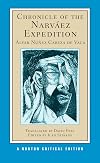
[Chronicle of the Narvaez Expedition: Norton critical Edition] by Alvar Nunez Cabeza de Vaca
An extraordinary first hand account of Spanish Conquistadores blown off course and making landfall in the uncharted land of the Florida panhandle in 1528. Cabeza de Vaca was the treasurer in Panfilo de Narvaez’s expedition which was intent on land grabbing, treasure hunting and slaving in Northern Mexico, but storms and hurricanes pitched them on an inhospitable coastal region that soon turned into show more a battle for survival, for which they were iill equipped. A fleet of five ships and 400 men were reduced to just four survivors who became slaves themselves before battling through Texas to the Pacific Ocean over six years later.
Cabeza de Vaca wrote his first version of his extraordinary adventures in 1537 for the King of Spain and his aim was to secure a post as Governor of the River Plate. It is therefore very much De Vaca’s view of events and he is very critical of Panfilo de Narvaez, but it is also a description of flora, fauna and native peoples encountered for the first time by Europeans, who find themselves in a hostile environment. It is a story of failure and one which costa most of them their lives. De Vaca’s account is matter of fact, but there is enough there to read between the lines, remembering that he is lost, bewildered, but very much a survivor, who becomes dependent on the natives (indians in the text). He is able to describe in some detail the customs and culture of the groups/tribes to whom he manages to attach himself. Here is an example:
“On the island I have described they (the indians) wanted to turn us into physicians without giving us any examinations or asking us for any diplomas, because they heal diseases by blowing on the patient, and with that puff of breath and their hands they drive illness out of him. And they ordered us to do the same so that we would at least be of some use to them. We laughed at this, saying it was ridiculous and that we did not know how to heal, so they took away our food until we did what they told us to. And seeing our obstinate refusal, an Indian told me that I did not know what I was saying when I said what he knew was useless, because the stones and other things that grow in the countryside have virtue……. “
The irony is that the conquistadores who came to conquer the land are soon reduced to a position of slavery. Their ships are wrecked, their horses prove useless in negotiating the swamp lands, their armour proves to be not very effective against well aimed arrows employed by skilful bowman, but worst of all is that they cannot find enough to eat and drink. They are in a world of hunter gatherers where the hunting and the gathering are slim pickings. They die from disease, starvation, hurricanes at sea and from hostile natives on land. They make poor decisions, being unable to negotiate successfully with the more friendly Indians and initially when they were at reasonable strength lured inland in a search for gold and slaves in a Country which was totally unknown to them.
Cabeza de Vaca is very much a man of his times. As a Christian he believes that through all the vicissitudes of war, he is following orders from his king who has a direct link with God and so he is already confessed and leaves his testament done and his soul secured. However de Vaca’s experiences lead him to take a more humane view of the treatment of the Indians, than is customary from their brutal treatment by their Spanish conquerors. He says:
“In order to entice all theses people into being Christians and into obedience to his Imperial Majesty, they must be attracted with good treatment, and that this way is the surest, and the other is not”
De Vaca and three companions; one of whom is an African, escape from their slavery and journey toward the hill country they have seen. Their years among the Indians have taught them how to survive. They eventually find themselves in Northern Texas an area that has come under partial control of the Spaniards. The Indians are frightened of them, but using their skills as physicians they attract a following who become a sort of rag-tag army not above looting and plundering as they go looking for civilisation and a means of getting back home.
The Norton Critical Edition contains a translation of Cabeza de Vaca’s 1542 published text, which is just over 90 pages in length and very readable. There are some other contemporaneous texts about the expedition and some sequels and finally some pages of criticism. I found the criticism extremely helpful in putting the account in perspective, especially from a geographical point of view. I think this is a unique document, a real telescope back to the 16th century, with a description of a part of the American Continent before colonisation. Five stars. show less
An extraordinary first hand account of Spanish Conquistadores blown off course and making landfall in the uncharted land of the Florida panhandle in 1528. Cabeza de Vaca was the treasurer in Panfilo de Narvaez’s expedition which was intent on land grabbing, treasure hunting and slaving in Northern Mexico, but storms and hurricanes pitched them on an inhospitable coastal region that soon turned into show more a battle for survival, for which they were iill equipped. A fleet of five ships and 400 men were reduced to just four survivors who became slaves themselves before battling through Texas to the Pacific Ocean over six years later.
Cabeza de Vaca wrote his first version of his extraordinary adventures in 1537 for the King of Spain and his aim was to secure a post as Governor of the River Plate. It is therefore very much De Vaca’s view of events and he is very critical of Panfilo de Narvaez, but it is also a description of flora, fauna and native peoples encountered for the first time by Europeans, who find themselves in a hostile environment. It is a story of failure and one which costa most of them their lives. De Vaca’s account is matter of fact, but there is enough there to read between the lines, remembering that he is lost, bewildered, but very much a survivor, who becomes dependent on the natives (indians in the text). He is able to describe in some detail the customs and culture of the groups/tribes to whom he manages to attach himself. Here is an example:
“On the island I have described they (the indians) wanted to turn us into physicians without giving us any examinations or asking us for any diplomas, because they heal diseases by blowing on the patient, and with that puff of breath and their hands they drive illness out of him. And they ordered us to do the same so that we would at least be of some use to them. We laughed at this, saying it was ridiculous and that we did not know how to heal, so they took away our food until we did what they told us to. And seeing our obstinate refusal, an Indian told me that I did not know what I was saying when I said what he knew was useless, because the stones and other things that grow in the countryside have virtue……. “
The irony is that the conquistadores who came to conquer the land are soon reduced to a position of slavery. Their ships are wrecked, their horses prove useless in negotiating the swamp lands, their armour proves to be not very effective against well aimed arrows employed by skilful bowman, but worst of all is that they cannot find enough to eat and drink. They are in a world of hunter gatherers where the hunting and the gathering are slim pickings. They die from disease, starvation, hurricanes at sea and from hostile natives on land. They make poor decisions, being unable to negotiate successfully with the more friendly Indians and initially when they were at reasonable strength lured inland in a search for gold and slaves in a Country which was totally unknown to them.
Cabeza de Vaca is very much a man of his times. As a Christian he believes that through all the vicissitudes of war, he is following orders from his king who has a direct link with God and so he is already confessed and leaves his testament done and his soul secured. However de Vaca’s experiences lead him to take a more humane view of the treatment of the Indians, than is customary from their brutal treatment by their Spanish conquerors. He says:
“In order to entice all theses people into being Christians and into obedience to his Imperial Majesty, they must be attracted with good treatment, and that this way is the surest, and the other is not”
De Vaca and three companions; one of whom is an African, escape from their slavery and journey toward the hill country they have seen. Their years among the Indians have taught them how to survive. They eventually find themselves in Northern Texas an area that has come under partial control of the Spaniards. The Indians are frightened of them, but using their skills as physicians they attract a following who become a sort of rag-tag army not above looting and plundering as they go looking for civilisation and a means of getting back home.
The Norton Critical Edition contains a translation of Cabeza de Vaca’s 1542 published text, which is just over 90 pages in length and very readable. There are some other contemporaneous texts about the expedition and some sequels and finally some pages of criticism. I found the criticism extremely helpful in putting the account in perspective, especially from a geographical point of view. I think this is a unique document, a real telescope back to the 16th century, with a description of a part of the American Continent before colonisation. Five stars. show less
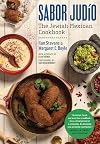
Sabor Judio: The Jewish Mexican Cookbook (Sabor Judío means “Jewish Flavor”) is much, much more than a cookbook; it’s a chronicle of the Jewish diaspora, both Ashkenazi and Sephardic, yes, but it’s also the timeless story of immigrants of every kind adjusting to their new homeland and combining both the old and the new in their cooking.
Authors Ilan Stavans and Margaret E. Boyle both descend from Polish Jews who emigrated to Mexico City. (Mexico City-born professor Ilan Stavans’ show more father was a telenovela actor.) I frankly enjoyed hearing stories about their families and others: Ashkenazim, Sephardia, secret Jews, conversos (Jews who converted under the pressure of the Inquisition). I loved hearing the histories of each recipe, which were jotted down in Spanish, Ladino, Yiddish, Arabic, Polish, Russian or Hungarian — and sometimes a combination of more than one language — more than I loved the recipes.
That’s not to say that there aren’t dozens of interesting recipes here. I’m Cuban, and I’ve read my share of Mexican cookbooks, but you won’t find recipes like these in many other places. A very few are no different than you’d get at any Mexican home; some dishes have remained nearly unchanged from the Old Country: Huevos Haminados is a pretty straight Sephardic dish. However, most of them have a totally different take: chilaquiles made with matzoh instead of tortillas for Passover, tacos al pastor made kosher by swapping in chicken instead of pork, pickled beets with raisins and chile de árbol, Tomato Oregano Beef Kebabs, Bourekas con Queso Blanco, beef tzimmes with piloncillo and pumpkin, Israeli Salad with Queso Oaxaca, couscous with chipotle salsa, Caldo Verde with Corn and Matzah Balls, Falafel Taquitos, Pierogi with Pico de Gallo. You get the idea. I was surprised how many dishes were converted — forgive the choice of word — by adding a triumvirate of dried pasilla chiles, dried ancho chiles and dried guajillo chiles, including Brisket Tacos in Three-Chile Salsa! Fusion cooking at its finest and most interesting. Highly, highly recommended, even if you don’t use a single recipe — which, I promise, you will!
Worthless trivia: When I was growing up, my Cuban-born mother referred to all beans as frijoles — except for white beans; those were judías. I wish I had thought to ask her why before she died. Her father was from the Canary Islands, so maybe it came from Spain?
In the interest of full disclosure, I received this book from NetGalley, Skyhorse Publishing and Good Books in exchange for an honest review. show less
Authors Ilan Stavans and Margaret E. Boyle both descend from Polish Jews who emigrated to Mexico City. (Mexico City-born professor Ilan Stavans’ show more father was a telenovela actor.) I frankly enjoyed hearing stories about their families and others: Ashkenazim, Sephardia, secret Jews, conversos (Jews who converted under the pressure of the Inquisition). I loved hearing the histories of each recipe, which were jotted down in Spanish, Ladino, Yiddish, Arabic, Polish, Russian or Hungarian — and sometimes a combination of more than one language — more than I loved the recipes.
That’s not to say that there aren’t dozens of interesting recipes here. I’m Cuban, and I’ve read my share of Mexican cookbooks, but you won’t find recipes like these in many other places. A very few are no different than you’d get at any Mexican home; some dishes have remained nearly unchanged from the Old Country: Huevos Haminados is a pretty straight Sephardic dish. However, most of them have a totally different take: chilaquiles made with matzoh instead of tortillas for Passover, tacos al pastor made kosher by swapping in chicken instead of pork, pickled beets with raisins and chile de árbol, Tomato Oregano Beef Kebabs, Bourekas con Queso Blanco, beef tzimmes with piloncillo and pumpkin, Israeli Salad with Queso Oaxaca, couscous with chipotle salsa, Caldo Verde with Corn and Matzah Balls, Falafel Taquitos, Pierogi with Pico de Gallo. You get the idea. I was surprised how many dishes were converted — forgive the choice of word — by adding a triumvirate of dried pasilla chiles, dried ancho chiles and dried guajillo chiles, including Brisket Tacos in Three-Chile Salsa! Fusion cooking at its finest and most interesting. Highly, highly recommended, even if you don’t use a single recipe — which, I promise, you will!
Worthless trivia: When I was growing up, my Cuban-born mother referred to all beans as frijoles — except for white beans; those were judías. I wish I had thought to ask her why before she died. Her father was from the Canary Islands, so maybe it came from Spain?
In the interest of full disclosure, I received this book from NetGalley, Skyhorse Publishing and Good Books in exchange for an honest review. show less
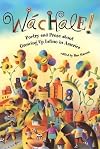
Interest/Reading Level: Grades 5 - 10
Synopsis:
This beautiful collection of poetry and short essays tells the stories of 29 Latino authors and living in America. The word Wáchale is Spanglish (Spanish-English) for look out, or be aware or watch out. The book is in English and Spanish with many items translated. The exception to this is a poem by Pat Mora, originally from El Paso, TX, called Corazon Del Corrido. Ms. Mora wrote the poem to pay homage to her father and his culture. A cute show more story by Alberto Alvaro Rios writes about his English mother and Mexican father building a new house in Nogales, AZ. His mother said she wanted to learn Spanish and in the process of working with the house builders, told them to paint the kitchen limón as yes had always loved yellow kitchens in Mexico. When she returned, the kitchen indeed was painted limón but the color was bright green, the color of limes. Other stories and poems include rites of passage (quinceańeras, posadas), family roots, and going back and forth between cultures. The book has a nice glossary and the editor decided to not define common cultural terms (amigo, enchilada). Also included are extensive notes on sources as well as an annotated list of suggested titles. Through the poems and story-telling, the reader gets a real wonderful feel through the voices of the authors.
Reflection:
I absolutely LOVED the short essays and stories. The poems were so heartfelt and beautifully written; I could feel the passion and emotion of the writer. The editor did a wonderful job compiling this collection and did an clever job of giving each author a concise biography before their entry. The entry by Nash Candelaria is especially poignant as he has crafted letters from a father to his daughter. She is the first in the family to go to college and has left New Mexico to go to a school in the eastern part of the United States. In the last letter, the father is sad that the daughter will not be home for summer, rather choosing to stay and work back East. Any parent who has sent a child away to college will feel empathy with the father. The stories and poetry could be from any country as the themes are common amongst immigrant families. As with most non-English languages, when a native speaker reads a poem or story aloud, it is magical to hear with facial expression and tonal quality. This book would be great in the classroom to use as a read-aloud to give students an idea of how to write their own stories. The cover of the book is colorful and inviting and the artwork is continued throughout the book. show less
Synopsis:
This beautiful collection of poetry and short essays tells the stories of 29 Latino authors and living in America. The word Wáchale is Spanglish (Spanish-English) for look out, or be aware or watch out. The book is in English and Spanish with many items translated. The exception to this is a poem by Pat Mora, originally from El Paso, TX, called Corazon Del Corrido. Ms. Mora wrote the poem to pay homage to her father and his culture. A cute show more story by Alberto Alvaro Rios writes about his English mother and Mexican father building a new house in Nogales, AZ. His mother said she wanted to learn Spanish and in the process of working with the house builders, told them to paint the kitchen limón as yes had always loved yellow kitchens in Mexico. When she returned, the kitchen indeed was painted limón but the color was bright green, the color of limes. Other stories and poems include rites of passage (quinceańeras, posadas), family roots, and going back and forth between cultures. The book has a nice glossary and the editor decided to not define common cultural terms (amigo, enchilada). Also included are extensive notes on sources as well as an annotated list of suggested titles. Through the poems and story-telling, the reader gets a real wonderful feel through the voices of the authors.
Reflection:
I absolutely LOVED the short essays and stories. The poems were so heartfelt and beautifully written; I could feel the passion and emotion of the writer. The editor did a wonderful job compiling this collection and did an clever job of giving each author a concise biography before their entry. The entry by Nash Candelaria is especially poignant as he has crafted letters from a father to his daughter. She is the first in the family to go to college and has left New Mexico to go to a school in the eastern part of the United States. In the last letter, the father is sad that the daughter will not be home for summer, rather choosing to stay and work back East. Any parent who has sent a child away to college will feel empathy with the father. The stories and poetry could be from any country as the themes are common amongst immigrant families. As with most non-English languages, when a native speaker reads a poem or story aloud, it is magical to hear with facial expression and tonal quality. This book would be great in the classroom to use as a read-aloud to give students an idea of how to write their own stories. The cover of the book is colorful and inviting and the artwork is continued throughout the book. show less
I have mixed feelings about Stavans. He's undeniably sharp - I love his notion that the US should consider Spanish a native language, for example, or his refusal to reduce Latines to "brown" - but he often slides towards self indulgence (Ilan, we don't want to hear about your dreams! In. every. damn. book!) and self regard. In short, worth reading but expect to be annoyed.
Lists
Awards


You May Also Like


Associated Authors
Statistics
- Works
- 130
- Also by
- 27
- Members
- 2,478
- Popularity
- #10,350
- Rating
- 4.0
- Reviews
- 32
- ISBNs
- 263
- Languages
- 2
- Favorited
- 2
