
Pablo Neruda (1904–1973)
Author of Twenty Love Poems and a Song of Despair
About the Author
Pablo Neruda was born Ricardo Eliecer Neftalí Reyes Basoalto in Ferral, Chile on July 12, 1904. In 1923 he sold all of his possessions to finance the publication of his first book, Crepusculario (Twilight), which he published under the pseudonym Pablo Neruda. Veinte Poemas de Amor y una Cancion show more Desesperada (Twenty Love Poems and a Song of Despair), which was published the following year, made him a celebrity and allowed him to stop his studies to devote himself to poetry. His other works include España en el Corazón, Canto General, Las Uvas y el Viento, and Para Nacer He Nacido. He received numerous awards including the World Peace Prize with Paul Robeson and Pablo Picasso in 1950, the Lenin Peace Prize and the Stalin Peace Prize in 1953, and the Nobel Prize for Literature for his poetry in 1971. He died of leukemia on September 23, 1973. (Bowker Author Biography) show less
Image credit: Pablo Neruda i september 1973
Works by Pablo Neruda
Antologia General Pablo Neruda / Neruda s Comprehensive Anthology (Real Academia Espanola) (Spanish Edition) (2010) 124 copies, 2 reviews
A Call for the Destruction of Nixon and Praise for the Chilean Revolution (1974) 44 copies, 2 reviews
Vinte poemas de amor e uma cancao desesperada - Edicao bilingue (Em Portugues do Brasil) (2004) 18 copies
Antología general Neruda / General Anthology (EDICIÓN CONMEMORATIVA DE LA RAE Y LA ASALE) (Spanish Edition) (2019) 16 copies
America My Brother, My Blood / America, Mi Hermano, Mi Sangre: A Latin American Song of Suffering and Resistance (2006) 11 copies
Selected Poems 10 copies
Poesia d'amore 9 copies
Defectos Escogidos (Spanish Edition) 9 copies
El habitante y su esperanza ; El hondero entusiasta ; Tentativa del hombre infinito ; Anillos (1924) 8 copies
VIAJES 7 copies
The Lamp on the Ground 6 copies
Şiirler 6 copies
Armastusluuletused ; Kakskümmend armastusluuletust ja meeleheitelaul ; Kapteni laulud ; Sada sonetti armastusest (2019) 5 copies
Poesías 5 copies
Chile en el corazón = Xile al cor = Chile no corazón = Txile bihotzean : homenaje a Pablo Neruda (1975) 5 copies
Selected poems — Author — 4 copies
Geografia infructuosa & Incitacion al nixonicidio & 2000 & El corazon amarillo & Elegia (2004) 4 copies
Tra le labbra e la voce 4 copies
Ποιήματα 4 copies
Runoja 4 copies
Cantos ceremoniales, Plenos Poderes / Ceremonial Songs, Full Powers: Plenos Poderes (Contemporanea / Contemporary) (Spanish Edition) (2004) 4 copies
Elegia dell'assenza 4 copies
Veinte poemas de amor y una cancion deseserada / residencia en la tierra (Biblioteca El Tiempo, 18) (2001) 3 copies
Le opere: Poesia 3 copies
Growing up Latino 3 copies
Huellas de dolor y esperanza 3 copies
4 poemas de Pablo Neruda y un amanecer en la isla/ 4 Poems of Pablo Neruda and a Dawn in the Island (Spanish Edition) (2007) 3 copies
Poesía de amor (Flash Poesía): De tus caderas a tus pies quiero hacer un largo viaje (Spanish Edition) (2017) 3 copies, 1 review
Poemas para recordar 3 copies
Obras escogidas 3 copies
Maremoto, Aun, La Espada Encendida, Las Piedras del Cielo / Seaquake, Still, The Flaming Sword, The Stones of the Sky (C (2004) 3 copies
The Song of the Party 3 copies
Let the Rail Splitter Awake 2 copies
Cartas a Gabriela : correspondencia escogida de Pablo Neruda y Delia del Carril a Gabriela Mistral (1934-1955) (2014) 2 copies
Antología poética de Pablo Neruda, Poemas de amor: Selección y prólogo de Óscar Hahn (Spanish Edition) (2019) 2 copies
The Nocturnal Train 2 copies
Antología de Residencia en la tierra 2 copies
PLAZA SESAME. EL LIBRO DE LAS PREGUNTAS. 8. LA NATURALEZA (EL LIBRO DE LAS PREGUNTAS, 8. LA NATURALEZA) (2006) 2 copies
Cadernos De Temuco 2 copies
Pablo Neruda Lee a Pablo Neruda [Pablo Neruda Reading Pablo Neruda] (Texto Completo) (2002) 2 copies
Veinte poemas de amor y una cancion desesperada- Biblioteca Escolar. (Spanish Edition) (2008) 2 copies
México florido y espinudo 2 copies
A k iirleri sonesi 2 copies
Poemas a Mariátegui 2 copies
El corazón amarillo 2 copies
Poesía para amantes. 2 copies
Poesiealbum 53 : Pablo Neruda 2 copies
Donde nace la lluvia 2 copies
Discursos ante el senado: Soy un escritor elegido senador por los obreros (Spanish Edition) (2013) 2 copies
La Copa de Sangre - Poemas en prosa 2 copies
Crepusculario. Poemas. (1920-1923) 2 copies
Residência na terra II 2 copies
La Insepulta de paita 2 copies
Poemas inmortales 2 copies
Сто љубовни сонети 1 copy
20 poemas al ©Łbrol y un cactus de la costa = 20 poems to trees and a cactus of the coast (2014) 1 copy
مرتفعات ماتشو بيتشو 1 copy
مائة سوناتة حب 1 copy
100 Soneta Cinta 1 copy
En Mi Cielo al Crepúsculo 1 copy
Pioesie (1924-1964) 1 copy
Literatura contemporanea 1 copy
Száz szerelmes szonett 1 copy
Antologia General. Pablo Neruda (Nerudas Comprehensive Anthology) (Real Academia Espanola) by Pablo Neruda (2010) Hardcover (2010) 1 copy
Kara Ada Şiirleri 1 copy
Neruda: Seven Poems 1 copy
Arte De Pajaros, Una Casa en La Arena / Bird Art, A House in the Sand (Contemporanea / Contemporary) (Spanish Edition) (2004) 1 copy
Poetry 1 copy
Antología popular 1 copy
Ode an das Buch 1 copy
Aquí estoy 1 copy
Residencias de Pablo Neruda 1 copy
La grande poesia 1 copy
Nascimento 1 copy
ODA A LA TIPOGRAFÍA 1 copy
SONETOS DE AMOR 1 copy
Poesia 1 copy
SORULAR KİTABI 1 copy
YAŞADIĞIMI İTİRAF EDİYORUM 1 copy
SEÇMELER 1 copy
Una casa en la arena 1966 1 copy
Movimento interiore 1 copy
PERSONALMENTE/PÚBLICO 1 copy
POESIAS ESCOGIDAS 1 copy
Plenitud 1 copy
POEZI 1 copy
LA VERDAD SOBRE LAS RUPTURAS 1 copy
DETI DHE KAMBANAT 1 copy
שירים 1 copy
TROISIEME LIVRE DES ODES 1 copy
CHANT GENERAL 1 copy
Poesias de Pablo Neruda 1 copy
Cuadernos de Crisis 2 1 copy
Residencia en la tiera 1 copy
La espada encendida 1 copy
ANTOLOGÍA POPULAR 1 copy
NEW POEMS 1968-1970 1 copy
100 POEZI 1 copy
Vita, poetica, opere scelte 1 copy
Pablo Neruda Veinte poemas 1 copy
Zwanzig Liebesgedichte. Der rasende Schleuderer. Aufenthalt auf Erden. Spanien im Herzen. Der gro e Gesang. Die Verse de (1984) 1 copy
44 poetas rumanos 1 copy
Revue Europe 537-538, Janvier-Février 1974 : Neruda présent — Contributor — 1 copy
Water 1 copy
Dichtungen 1919 - 1965 2 1 copy
Dichtungen 1919 - 1965 1 1 copy
Mexico florido y espinudo 1 copy
España En El Corazon 1 copy
Lord Cochrane of Chile 1 copy
Pablo Neruda and Nicanor Parra Face to Face: A Bilingual and Critical Edition of Their Speeches on the Occasion of Nerud (1997) 1 copy
EL LIBRO DE LAS PREGUTAS 1 copy
Obras Completas I y II 1 copy
Neruda para Jovens 1 copy
Das lyrische Werk 3 1 copy
Últimos Poemas 1 copy
Das lyrische Werk 2 1 copy
Das lyrische Werk 1 1 copy
Tre residenze sulla terra 1 copy
diVersi 1 copy
Poesias Completas 1 copy
Den store sangen (i utvalg) 1 copy
Residência na terra I 1 copy
Obras completas IV 1 copy
Un poeta nella strada 1 copy
Poesía y revolución 1 copy
Rafael Alberti 1 copy
Four odes, one song 1 copy
El Chile de Pablo Neruda 1 copy
Cantos de Pablo Neruda 1 copy
Obras completas I, II, III 1 copy
Cartas y poemas 1 copy
Poesias 1 copy
Aquí estoy 1 copy
Obras completas. Tomo I 1 copy
Seleccion de poemas 1 copy
Pablo Neruda. Le Opere 1 copy
Select Poems of Pablo Neruda 1 copy
OBRAS COMPLETA I 1 copy
Ode al giorno felice 1 copy
VEINTE POEMAS DE AMOR Y UNA CANCION DESEPERADA LOS VERSOS DEL CAPITAN. Clasicos del siglo XX Estado nuevo (2002) 1 copy
Poesías completas 1 copy
Otro - [OUT] 1 copy
Discursos 1 copy
De jongen uit de provincie 1 copy
NERUDA: SELECTED POEMS 1 copy
O testamento poético de Pablo Neruda: Incitamento ao Nixonicídio e Louvor da Revolução Chilena 1 copy
Geografía infructuosa 1 copy
Poesie 1 copy
Poesía política. Tomo 2 1 copy
Testamento poético de Pablo Neruda. Incitación al Nixonicidio y Alabanza de la Revolución Chilena. 1 copy
Things That Dream 1 copy
poesie di Neruda 1 copy
Selección 1 copy
Residencia en España 1 copy
Cantos de Amor y de Combate 1 copy
Kivid ja linnud 1 copy
Even This Twilight 1 copy
El testamento poético de Pablo Neruda Incitación al nixonicidio Alabanza de la revolución chilena 1 copy
Poesia 1 copy
Uma casa en la arena 1 copy
Ode A Uma Estrela 1 copy
Selección 1 copy
Terceira Residência 1 copy
Libro de las odas 1 copy
Extravagaria 1 copy
Elemi ódák 1 copy
Le chant général 1 copy
Vyznávám se, že jsem žil 1 copy
Pjesme ljubavi i nade 1 copy
Poezje 1 copy
Hundrede kærlighedssonetter 1 copy
Poemas de Pablo Neruda 1 copy
Una Casa en la Arena 1 copy
Sorular Kitabı 1 copy
Mătasea și metalul 1 copy
聶魯達雙情詩:一百首愛的十四行詩(Double love poems Neruda: one hundred love sonnets Twenty Love Poems and a Song of despair) (2009) 1 copy
Residencia na Terra - II 1 copy
Abriendo Puertas 1 copy
Antología total 1 copy
Liebesgedichte 1 copy
Primeros poemas de amor 1 copy
Nu există lumină pură 1 copy
Tutte le opere di Neruda 1 copy
كتاب التساؤلات 1 copy
Poesía de amor 1 copy
Fragmentos de La barcarola 1 copy
Poesías selectas 1920-1952 1 copy
VEINTE POEMAS DE AMOR Y UNA CANCIÓN DESESPERADA con notas de Gonzalo Bolliger (Spanish Edition) (2020) 1 copy
CHiLE KE JUNGLON SE 1 copy
Associated Works
World Poetry: An Anthology of Verse from Antiquity to Our Time (1998) — Contributor — 499 copies, 2 reviews
Against Forgetting: Twentieth-Century Poetry of Witness (1993) — Contributor — 376 copies, 2 reviews
Choice Cuts: A Savory Selection of Food Writing from Around the World and Throughout History (2002) — Contributor — 369 copies, 2 reviews
Teaching with Fire: Poetry That Sustains the Courage to Teach (2003) — Contributor — 225 copies, 1 review
Leading from Within: Poetry That Sustains the Courage to Lead (2007) — Contributor — 116 copies, 3 reviews
The Sophisticated Cat: A Gathering of Stories, Poems, and Miscellaneous Writings About Cats (1992) — Contributor — 112 copies, 1 review
Buzz Words: Poems About Insects (Everyman's Library Pocket Poets Series) (2021) — Contributor — 56 copies
Introducción a la literatura hispanoamericana : de la conquista al siglo XX (1997) — Contributor — 23 copies
The Serpent and the Fire: Poetries of the Americas from Origins to Present (2024) — Contributor; Contributor — 18 copies
Confesiones de escritores, escritores latinoamericanos : los reportajes de The Paris Review (1996) — Contributor — 5 copies
Maestros de la Literatura Universal: Latinoamerica — Contributor — 3 copies
Oskar Kokoschka, Städteportraits: [Ausstellung "Oskar Kokoschka - Städteportraits", Österreichisches Museum für Angewandte Kunst, Wien, 4. März - 6. April 1986] (1986) — Contributor — 3 copies
The Voice of Scotland : vol. v, no. 2 (December 1948) — Contributor — 1 copy
Compaňero Pablo Neruda — Associated Name — 1 copy
Näin ihminen vastaa — Contributor — 1 copy
Tagged
Common Knowledge
- Legal name
- Basoalto, Ricardo Eliecer Neftalí Reyes (Nom de naissance)
- Birthdate
- 1904-07-12
- Date of death
- 1973-09-23
- Gender
- male
- Education
- Universidad de Chile (c.1921) French
- Occupations
- poet
politician
activist
diplomat - Organizations
- Communist Party of Chile
- Awards and honors
- Nobel Prize (Literature ∙ 1971)
National Prize for Literature Chile (1945)
Honorary Member, American Academy of Arts and Letters (1968) - Relationships
- Valle, Juvencio (school friend)
Urrutia, Matilde (spouse) - Cause of death
- poisoning
- Nationality
- Chile
- Birthplace
- Parral, Chili
- Places of residence
- Parral, Chile
Santiago, Chile
Rangoon, Myanmar
Colombo, Sri Lanka
Jakarta, Indonesia
Singapore (show all 13)
Buenos Aires, Argentina
Barcelona, Spain
Paris, France
Mexico City, Mexico
Capri, Italy
Valparaíso, Chile
Temuco, Chile - Place of death
- Parral, Chile
- Associated Place (for map)
- Chile
Members
Reviews

Neruda is everyone’s idea of what a poet should be like: passionate, romantic, extravagant, and colourful; a lot of his poems are about sex or politics, and he spent a good bit of his life in exile. His free-form rants and often surreal leaps of language spoke to people like the Beats (hence this collection edited by Mark Eisner for City Lights to mark the centenary of Neruda’s birth), but there is also plenty in his work to appeal to more everyday readers. If you’re a sex-starved show more teenager or an oppressed worker, there is something here for you.
All these things rather put me off reading Neruda for a long time — like Byron, knowing about him seems almost more interesting than actually reading him — but I’ve been slowly dipping toes in his work for the last couple of years. This selection of work from across a big part of his career comes with new or revised parallel-text translations by Eisner and seven of his colleagues (the translator of each poem is identified by initials: I love the way this means that all the poems Eisner did himself are signed “ME”!). We go from the early Canto General and Veinte poemas de amor to later, more reflective works. I was particularly struck by the selections from Odas elementales, where he focuses down onto very simple concepts — a chestnut, a book, a watch, a glass of wine — something quite surprising when you are used to his usual more bombastic style.
Interesting, reading this in late October, to realise what a poet of autumn he is — autumnal images come up almost as often in his poems as sea-images. Maybe unexpected too, when you reflect on how he moved between hemispheres during his life. Sometimes he almost seems more of a Keats than a Byron!
All these things rather put me off reading Neruda for a long time — like Byron, knowing about him seems almost more interesting than actually reading him — but I’ve been slowly dipping toes in his work for the last couple of years. This selection of work from across a big part of his career comes with new or revised parallel-text translations by Eisner and seven of his colleagues (the translator of each poem is identified by initials: I love the way this means that all the poems Eisner did himself are signed “ME”!). We go from the early Canto General and Veinte poemas de amor to later, more reflective works. I was particularly struck by the selections from Odas elementales, where he focuses down onto very simple concepts — a chestnut, a book, a watch, a glass of wine — something quite surprising when you are used to his usual more bombastic style.
Interesting, reading this in late October, to realise what a poet of autumn he is — autumnal images come up almost as often in his poems as sea-images. Maybe unexpected too, when you reflect on how he moved between hemispheres during his life. Sometimes he almost seems more of a Keats than a Byron!
Y que metí la cuchara hasta el codoshow less
en una adversidad que no era mía,
en el padecimiento de los otros.
No se trató de palma o de partido
sino de poca cosa: no poder
vivir ni respirar con esa sombra,
con esa sombra de otros como torres,
como árboles amargos que lo entierran,
como golpes de piedra en las rodillas.
I plunged up to the neck
into adversities that were not mine,
into all the sufferings of others.
It wasn't a question of applause or profit.
Much less. It was not being able
to live or breathe in this shadow,
the shadow of others like towers,
like bitter trees that bury you,
like cobblestones on the knees.
(From “October Fullness”, trans. Alastair Reid)
Twenty Love Poems and a Song of Despair: Dual-Language Edition (Penguin Classics) (Spanish Edition) by Pablo Neruda
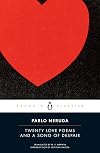
Cuando tenía quince años y vivía enamorada hasta del aire , las palabras que repetía constantemente siempre estaban relacionadas con la tristeza . Cada vez que vivía un amor apasionado no correspondido , me sumergía en depresiones eternas y me regocijaba recitando cosas como "Es tan corto el amor y tan largo el olvido" . Siempre que sentía que iba a morirme de amor y escuchaba mi historia en cada poema , Neruda era el más importante .
Después crecí .Hace poco , en la facultad -hogar show more de los arrogantes -, un profesor muy INTELECTUAL-de esos que saben tanto que de lo único que no dudan es de sus propias palabras - nos las hizo corta a todas las locas de amor por Neruda :
-El poeta ese no vale nada - dijo con palabras un poco más elegantes - Uno no puede sentirse identificado con palabras de amor que alguien en otro tiempo escribió para una persona en especial . Es como robar . Nadie puede tomar prestada una declaración de amor que nada deja a la imaginación ,no te podés apropiar de eso . No son tuyas . Además - terminó - es poesía mal escrita .
Para mi profesor , hombre de mundo , de letras y de varios idiomas ,la poesía de Neruda y de tantos como él estaba sobrevalorada , era más comercial que otra cosa . En cambio , con mucho entusiasmo , nos recomendaba un poeta olvidado llamada Emeterio Cerro - creo - que jugaba con los sonidos . La poesía de ese decía así:
Mondonará , Mondonará
Fluyido Lamosol .
El truco , decía mi profesor , estaba en darle nuestro significado . Buscar en el juego inentendible , algo que tuviese sentido para nosotros . De eso si nos podíamos apropiar , eso si lo podíamos tomar prestado .
Demás está decir que odié el Mondonará tanto como odiaba las peliculas de Lynch . Estaba fuera de mi comprensin y requería mucha movilización de neuronas .
Sin embargo , Con el tiempo entendí lo que quería decir . Neruda es poesía popular . Cualquiera puede entenderla , cualquiera . Eso era lo que le molestaba a este intelectual de elite . El quería hacernos entrar en un círculo de poca gentey trataba a ese estilo de poetas como "la chusma" . Le daba fastidio , más que nada , que un popular hubiese sido premiado con el premio Nobel y a Borges se lo hubiera dejado de lado .
Nunca me dejó de gustar Pablito , pero si capté lo que quiso decir el profe . No es poesía muy complicada , no es Shakespeare ni Borges pero no deja de ser hermosa , no deja de contar una historia de vida , de amores y revoluciones. show less
Después crecí .Hace poco , en la facultad -hogar show more de los arrogantes -, un profesor muy INTELECTUAL-de esos que saben tanto que de lo único que no dudan es de sus propias palabras - nos las hizo corta a todas las locas de amor por Neruda :
-El poeta ese no vale nada - dijo con palabras un poco más elegantes - Uno no puede sentirse identificado con palabras de amor que alguien en otro tiempo escribió para una persona en especial . Es como robar . Nadie puede tomar prestada una declaración de amor que nada deja a la imaginación ,no te podés apropiar de eso . No son tuyas . Además - terminó - es poesía mal escrita .
Para mi profesor , hombre de mundo , de letras y de varios idiomas ,la poesía de Neruda y de tantos como él estaba sobrevalorada , era más comercial que otra cosa . En cambio , con mucho entusiasmo , nos recomendaba un poeta olvidado llamada Emeterio Cerro - creo - que jugaba con los sonidos . La poesía de ese decía así:
Mondonará , Mondonará
Fluyido Lamosol .
El truco , decía mi profesor , estaba en darle nuestro significado . Buscar en el juego inentendible , algo que tuviese sentido para nosotros . De eso si nos podíamos apropiar , eso si lo podíamos tomar prestado .
Demás está decir que odié el Mondonará tanto como odiaba las peliculas de Lynch . Estaba fuera de mi comprensin y requería mucha movilización de neuronas .
Sin embargo , Con el tiempo entendí lo que quería decir . Neruda es poesía popular . Cualquiera puede entenderla , cualquiera . Eso era lo que le molestaba a este intelectual de elite . El quería hacernos entrar en un círculo de poca gentey trataba a ese estilo de poetas como "la chusma" . Le daba fastidio , más que nada , que un popular hubiese sido premiado con el premio Nobel y a Borges se lo hubiera dejado de lado .
Nunca me dejó de gustar Pablito , pero si capté lo que quiso decir el profe . No es poesía muy complicada , no es Shakespeare ni Borges pero no deja de ser hermosa , no deja de contar una historia de vida , de amores y revoluciones. show less

Neruda's most famous collection, published when he was nineteen. Sometimes beautiful and surprising, sometimes loud and bombastic. The poet still seems to be at the stage in his life when love is essentially the same thing as football, a competition between young men (involving a lot of shouting and posturing) that women are meant to watch from the sidelines. The women in these poems don't speak — he prefers them when they are silent: "Me gustas quando callas porque estás como ausente" show more — and they don't seem to exist much except as sets of body parts, not always flatteringly described ("Se parecen tus senos a los caracoles blancos"). There's no way of knowing whether the poems are about one specific woman, a series of women, or a completely abstract female figure. Possibly the last of these, given how often he talks about dolls and statues.
But the images are always breathtaking, even though Neruda draws them from a fairly narrow range (maritime stuff like waves, nets, harbours, anchors, lighthouses, seagulls and mooring lines; bees and butterflies; ears of corn; weather).
I suspect that these are poems that grow on you when you read them aloud just for the sound of the words, without thinking too much about what they are supposed to mean. show less
But the images are always breathtaking, even though Neruda draws them from a fairly narrow range (maritime stuff like waves, nets, harbours, anchors, lighthouses, seagulls and mooring lines; bees and butterflies; ears of corn; weather).
I suspect that these are poems that grow on you when you read them aloud just for the sound of the words, without thinking too much about what they are supposed to mean. show less
Spain in our hearts : hymn to the glories of the people at war = España en el corazón : himno a las glorias del pueblo en guerra by Pablo Neruda

When the Spanish Civil War broke out, Pablo Neruda was in Madrid, working as Chilean consul (his predecessor in the post was another poet and future Nobel laureate, Gabriela Mistral). Through the influence of friends like Federico García Lorca, he became a communist and was soon involved in the struggle on the Republican side.
Neruda's most famous contribution to the Republican cause was this short collection of poems about the war, most of them originally published in the soldiers' show more newspaper El mono azul in 1936 and 1937. The collection appeared in book form in Chile and France in 1938, but the most famous version was the November 1938 pamphlet produced in a limited edition for the armed forces in the renaissance print-shop of the former monastery of Montserrat, which was under Republican control at the time. As Neruda describes it in his memoirs, it was a highly romantic affair of self-taught comrades acting as typographers and shredding any rags they could find to make improvised paper. Sadly, the truth seems to have been a little more prosaic than that, but the myth reflects the quality of the book very well.
These are poems that really need to be declaimed in the open air, preferably standing on a captured enemy tank, or perhaps at the graveside of a fallen comrade. The tone is very exalted: there are invocations to solidarity and resistance, elegies for fallen soldiers and civilian casualties, tributes to the Mothers of Madrid, condemnations of the brutality of the Nationalist rebels, visualisations of what it will be like for Franco and his generals when they arrive in Hell, and so forth. In the middle of the book there is a tribute to pre-war Spain which ends in a fifty-line list of place-names.
It's propaganda, of course, and occasionally it goes too far (Neruda doesn't hesitate to play the racist card by repeatedly mentioning Franco's reliance on North African troops, "Moros"), but it's also transparently full of passion and straight from the heart in a time of crisis, and it's often very moving indeed. It struck me that there's a lot that would still work just as effectively if you replaced "Madrid" by "Kyiv" and "Franco" by "Putin". show less
Neruda's most famous contribution to the Republican cause was this short collection of poems about the war, most of them originally published in the soldiers' show more newspaper El mono azul in 1936 and 1937. The collection appeared in book form in Chile and France in 1938, but the most famous version was the November 1938 pamphlet produced in a limited edition for the armed forces in the renaissance print-shop of the former monastery of Montserrat, which was under Republican control at the time. As Neruda describes it in his memoirs, it was a highly romantic affair of self-taught comrades acting as typographers and shredding any rags they could find to make improvised paper. Sadly, the truth seems to have been a little more prosaic than that, but the myth reflects the quality of the book very well.
These are poems that really need to be declaimed in the open air, preferably standing on a captured enemy tank, or perhaps at the graveside of a fallen comrade. The tone is very exalted: there are invocations to solidarity and resistance, elegies for fallen soldiers and civilian casualties, tributes to the Mothers of Madrid, condemnations of the brutality of the Nationalist rebels, visualisations of what it will be like for Franco and his generals when they arrive in Hell, and so forth. In the middle of the book there is a tribute to pre-war Spain which ends in a fifty-line list of place-names.
It's propaganda, of course, and occasionally it goes too far (Neruda doesn't hesitate to play the racist card by repeatedly mentioning Franco's reliance on North African troops, "Moros"), but it's also transparently full of passion and straight from the heart in a time of crisis, and it's often very moving indeed. It struck me that there's a lot that would still work just as effectively if you replaced "Madrid" by "Kyiv" and "Franco" by "Putin". show less
Lists
Awards


You May Also Like


Associated Authors
Statistics
- Works
- 654
- Also by
- 42
- Members
- 25,995
- Popularity
- #801
- Rating
- 3.8
- Reviews
- 317
- ISBNs
- 1,341
- Languages
- 29
- Favorited
- 164

