
Isabel Allende
Author of The House of the Spirits
About the Author
Isabel Allende was born in 1942 in Lima, Peru, the daughter of a Chilean diplomat. When her parents separated, young Isabel moved with her mother to Chile, where she spent the rest of her childhood. She married at the age of 19 and had two children, Paula and Nicolas. Her uncle was Salvador show more Allende, the president of Chile. When he was overthrown in the coup of 1973, she fled Chile, moving to Caracas, Venezuela. While living in Venezuela, Allende began writing her novels, many of them exploring the close family bonds between women. Her first novel, The House of the Spirits, has been translated into 27 languages, and was later made into a film. She then wrote Of Love and Shadows, Eva Luna, and The Stories of Eva Luna, all set in Latin America. The Infinite Plan was her first novel to take place in the United States. She explores the issues of human rights and the plight of immigrants and refugees in her novel, In The Midst of Winter. In Paula, Allende wrote her memoirs in connection with her daughter's illness and death. She delved into the erotic connections between food and love in Aphrodite: A Memoir of the Senses. In addition to writing books, Allende has worked as a TV interviewer, magazine writer, school administrator, and a secretary at a U.N. office in Chile. She received the 1996 Harold Washington Literacy Award. She lives in California. Her title Maya's Notebook made The New York Times Best Seller List in 2013. (Bowker Author Biography) show less
Disambiguation Notice:
Isabel Allende Llona (b. 1942), Chilean born novelist (US citizen since 2003). Do not confuse with María Isabel Allende Bussi (b. 1945), daughter of former Chilean president Salvador Allende; cousin of the novelist.
Series
Works by Isabel Allende
Paths of Resistance: The Art and Craft of the Political Novel (1989) — Contributor — 26 copies, 1 review
[unidentified works] 12 copies
Two Words 5 copies
Giving Birth, Finding Form: Three Writers Explore Their Lives, Their Loves, Their Art (1993) 4 copies
El sexo y yo 2 copies
Clarisa [short story] 2 copies
بلدي المخترع 1 copy
And of Clay Are We Created 1 copy
الخطة اللانهائية 1 copy
Entrevista 1 copy
مملكة التنين الذهبي 1 copy
الحب والظلال 1 copy
The Infinite Plan - Signed 1 copy
Cuentos de Eva Luna 1 copy
Um lugar sem nome 1 copy
مدينة الوحوش 1 copy
The Girls 1 copy
Cuentos Selectos 1 copy
Impunity 1 copy
mio zio, un eroe del secolo 1 copy
Passie en liefde 1 copy
The Judge's Wife 1 copy
Simple María 1 copy
Revenge 1 copy
The Little Heidelberg 1 copy
Abuela Panchita, La 1 copy
Xứ Sở Của Người Tiền Sử 1 copy
Associated Works
Open Veins of Latin America: Five Centuries of the Pillage of a Continent (1971) — Foreword, some editions — 3,237 copies, 45 reviews
The Story and Its Writer: An Introduction to Short Fiction (1976) — Contributor — 1,218 copies, 3 reviews
This I Believe: The Personal Philosophies of Remarkable Men and Women (2006) — Contributor — 1,151 copies, 36 reviews
My Bookstore: Writers Celebrate Their Favorite Places to Browse, Read, and Shop (2012) — Contributor — 622 copies, 16 reviews
The Year's Best Fantasy & Horror 2006: 19th Annual Collection (2006) — Contributor — 244 copies, 4 reviews
Other Voices, Other Vistas: Short Stories from Africa, China, India, Japan, and Latin America (1992) — Contributor — 213 copies, 2 reviews
Why We Write: 20 Acclaimed Authors on How and Why They Do What They Do (2013) — Contributor — 211 copies, 10 reviews
I Should Have Stayed Home: The Worst Trips of the Great Writers (1994) — Contributor — 187 copies, 5 reviews
Short Stories by Latin American Women: The Magic and the Real (1990) — Foreword; Contributor — 166 copies
A Hammock Beneath the Mangoes: Stories from Latin America (1991) — Contributor — 162 copies, 3 reviews
The Sweet Breathing of Plants: Women Writing on the Green World (2001) — Contributor — 101 copies, 1 review
Living with Shakespeare: Essays by Writers, Actors, and Directors (2013) — Contributor — 95 copies, 4 reviews
Sudden Fiction Latino: Short-Short Stories from the United States and Latin America (2010) — Contributor — 76 copies, 15 reviews
Face to Face: Women Writers on Faith, Mysticism, and Awakening (2004) — Contributor — 39 copies, 1 review
The Faber Book of Contemporary Latin American Short Stories (1989) — Contributor — 27 copies, 1 review
Secret Weavers: Stories of the Fantastic by Women Writers of Argentina and Chile (1991) — Contributor — 25 copies
Introducción a la literatura hispanoamericana : de la conquista al siglo XX (1997) — Contributor — 23 copies
Die Geschichtenerzähler: Neues und Unbekanntes von Allende bis Zafón (suhrkamp taschenbuch) (2008) — Contributor — 5 copies
Fotspår : noveller ur Sveriges radio P1:s serie Författarskap på fötter (2003) — Contributor — 5 copies
Abarat and Other Fantasy Tales for Teens: Abarat, City of the Beasts, Coraline (2002) — some editions — 2 copies
New Internationalist #535: January-February 2022: Romani Lives Matter (2022) — Interviewee — 2 copies
Å herregud, mitt i semestern : en antologi : [möten med sjukdom, lidande och vård] (1999) — Contributor — 1 copy
Urlaubsträume. Geschichten für die schönste Zeit des Jahres — Author — 1 copy
Tagged
Common Knowledge
- Legal name
- Allende Llona, Isabel Angélica
- Birthdate
- 1942-08-02
- Gender
- female
- Occupations
- novelist
translator
dramatist
journalist
teacher (literature)
reporter (show all 9)
documentary filmmaker
TV personality
poet - Organizations
- Isabel Allende Foundation
- Awards and honors
- Academia Chilena de la Lengua (member, 1989)
Gabriela Mistral Order of Merit (1994)
Feminist of the Year Award (1994)
Academia de Artes y Ciencias (member, 1995)
Dorothy and Lilian Gish Prize (1998)
American Academy of Arts and Letters (2004) (show all 17)
Flag Bearer, Olympics Opening Ceremony (2006)
Honorary Degree, D.H.L. (San Francisco State University, 2008)
Cervantes Institute, Spain (Patronato, 2009)
National Prize for Literature Chile (2010)
Hans Christian Andersen Literature Award (2012)
Carl Sandburg Literary Award (2013)
Honorary Degree, D.Litt. (Harvard University ∙ 2014)
Honorary Degree, University of Santiago (2015)
PEN Center Lifetime Achievement Award (USA, 2016)
Anisfield-Wolf Lifetime Achievement Award (2017)
University of Oxford Bodley Medal (2025) - Relationships
- Allende, Salvador (cousin)
- Short biography
- Born in Peru and raised in Chile, Isabel Allende is the author of eight novels, including, most recently, Violeta, Zorro, Portrait in Sepia, and Daughter of Fortune. She has also written a collection of stories; three memoirs, including My Invented Country and Paula; and a trilogy of children's novels. Her books have been translated into more than twenty-seven languages and have become bestsellers across four continents. In 2004 she was inducted into the American Academy of Arts and Letters. Isabel Allende lives in California.
- Nationality
- Peru (birth)
USA (naturalized)
Chile (naturalized) - Birthplace
- Lima, Peru
- Places of residence
- Lima, Peru
Santiago, Chile
Brussels, Belgium
Caracas, Venezuela
San Francisco, California, USA
Beirut, Lebanon (show all 9)
La Paz, Bolivia
San Rafael, California, USA
Spain - Map Location
- Chile
- Disambiguation notice
- Isabel Allende Llona (b. 1942), Chilean born novelist (US citizen since 2003).
Do not confuse with María Isabel Allende Bussi (b. 1945), daughter of former Chilean president Salvador Allende; cousin of the novelist.
Members
Discussions
November 2018: Isabel Allende in Monthly Author Reads (October 2021)
Group Read, October 2016: Of Love and Shadows in 1001 Books to read before you die (October 2016)
Monthly Author Read for September in Monthly Author Reads (September 2011)
Reviews

Historical fiction, starting in contemporary times and flashing back in history, covering the lifespan of protagonist Alma Mendel from her birth in 1932 to her parents sending her to America from Poland in the wake of WWII to forming bonds with Nathaniel, her cousin, and Ichimei, the son of her Uncle’s Japanese gardener. Alma, now in her eighties, is living at Lark House, a seniors’ center in the San Francisco Bay Area. She gradually reveals the secrets of her eventful life to one of her show more caregivers, Irina, and her grandson, Seth. Irina’s life story forms a substantial subplot. Seth is attracted to Irina but puzzled by the way she keeps people at a distance. Allende weaves these stories together in a non-linear fashion, and we eventually learn both Alma’s and Irina’s backstories.
I found this book quietly absorbing. I was impressed by the author’s ability to express the gist of a character in only a few well-crafted sentences. She includes brief sketches of a variety of eccentric characters residing at Lark House, which add color to the narrative. She also provides a vivid sense of time and place, which was particularly evident in the descriptions of the Japanese internment camp in the Utah desert, where Ichimei and his family were confined during WWII. This book is filled with different types of love, and how history and society influence who and how we love. It is a slowly-developing patchwork of scenes that show the shape of love over many decades. It explores the impact of social privilege and racial prejudice. Themes include love, relationships, separation, memory, aging, mortality, and loss.
One of my main takeaways from this novel was the feeling that there is very little space in our culture for older people, though we are living much longer than in the past. Alma is shown as a still-vibrant woman, despite her age. She is somewhat aloof and harbors many secrets, which are gradually revealed. I wish we had learned more about Ichimei as an adult, but I think the author intentionally keeps him in the background. Recommended to those that enjoy poignant stories about the many forms of love or coming to terms with the past. show less
I found this book quietly absorbing. I was impressed by the author’s ability to express the gist of a character in only a few well-crafted sentences. She includes brief sketches of a variety of eccentric characters residing at Lark House, which add color to the narrative. She also provides a vivid sense of time and place, which was particularly evident in the descriptions of the Japanese internment camp in the Utah desert, where Ichimei and his family were confined during WWII. This book is filled with different types of love, and how history and society influence who and how we love. It is a slowly-developing patchwork of scenes that show the shape of love over many decades. It explores the impact of social privilege and racial prejudice. Themes include love, relationships, separation, memory, aging, mortality, and loss.
One of my main takeaways from this novel was the feeling that there is very little space in our culture for older people, though we are living much longer than in the past. Alma is shown as a still-vibrant woman, despite her age. She is somewhat aloof and harbors many secrets, which are gradually revealed. I wish we had learned more about Ichimei as an adult, but I think the author intentionally keeps him in the background. Recommended to those that enjoy poignant stories about the many forms of love or coming to terms with the past. show less
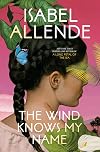
[NOTE: I received early access to this manuscript in exchange for writing an impartial review. Thank you NetGalley and Ballantine Books. Publication Date: June 6, 2023]
Isabel Allende is one of my favorite authors, in part because of her skillful use of language which so often reads more like poetry. I don’t think this particular novel is her best, although the prose is still top notch. What makes it worth reading though is her ability to create a handful of distinctive characters readers show more will care about.
THE WIND KNOWS MY NAME makes some interesting connections between seemingly disparate stories in different time periods. It begins in 1938 with The Adlers, a Jewish family living in Vienna facing the growing Nazi threat. To protect their son Samuel, a violin prodigy, the parents must make the unimaginable decision to send him away to England on the now famous Kindertransport. It is the only way to keep him safe.
A second storyline centers on Selena, a social worker involved in immigration work along the southern border of the United States. Long engaged to a traditionally-minded truck driver, Selena’s true passion is more about her work — helping families reunite after government separation.
The third storyline involves Anita, a young Salvadoran refugee Selena is working with, who has been separated from her mother by U.S. immigration officials. Frightened, traumatized, and shuffled around, Anita is nevertheless convinced she will soon be reunited with her mother.
There are other notable supportive characters as well:
• An attorney who discovers that immigration law is a lot more fulfilling that getting guilty rich people off the hook.
• A former Latin American immigrant now living in San Francisco and dedicated to the elderly music professor whose home she cleans.
• A disgraced police officer now providing security for a organization clouded in mystery.
Though Allende jumps from story to story (a technique I admit I DON’T love), not connecting them all until the very end, she does deal successfully with some big themes. She draws parallels between contemporary events that are widely accepted and similar ones in the past that are universally condemned. She portrays the humanity in the plight of each refugee eager to enter the United States. And she makes a strong argument for the often unrecognized heroism of those people working behind the scenes on behalf of desperate people. Strongly recommended. show less
Isabel Allende is one of my favorite authors, in part because of her skillful use of language which so often reads more like poetry. I don’t think this particular novel is her best, although the prose is still top notch. What makes it worth reading though is her ability to create a handful of distinctive characters readers show more will care about.
THE WIND KNOWS MY NAME makes some interesting connections between seemingly disparate stories in different time periods. It begins in 1938 with The Adlers, a Jewish family living in Vienna facing the growing Nazi threat. To protect their son Samuel, a violin prodigy, the parents must make the unimaginable decision to send him away to England on the now famous Kindertransport. It is the only way to keep him safe.
A second storyline centers on Selena, a social worker involved in immigration work along the southern border of the United States. Long engaged to a traditionally-minded truck driver, Selena’s true passion is more about her work — helping families reunite after government separation.
The third storyline involves Anita, a young Salvadoran refugee Selena is working with, who has been separated from her mother by U.S. immigration officials. Frightened, traumatized, and shuffled around, Anita is nevertheless convinced she will soon be reunited with her mother.
There are other notable supportive characters as well:
• An attorney who discovers that immigration law is a lot more fulfilling that getting guilty rich people off the hook.
• A former Latin American immigrant now living in San Francisco and dedicated to the elderly music professor whose home she cleans.
• A disgraced police officer now providing security for a organization clouded in mystery.
Though Allende jumps from story to story (a technique I admit I DON’T love), not connecting them all until the very end, she does deal successfully with some big themes. She draws parallels between contemporary events that are widely accepted and similar ones in the past that are universally condemned. She portrays the humanity in the plight of each refugee eager to enter the United States. And she makes a strong argument for the often unrecognized heroism of those people working behind the scenes on behalf of desperate people. Strongly recommended. show less
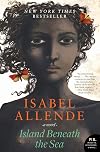
This novel, told by Tete, an enslaved woman of Haiti and Louisiana, is filled with graphic detail about the Haitian revolution and of the lives of women in the Caribbean - drudgery and finery, depending on desirability as a sexual partner or a sugar cane cutter, or both. It's also about the privilege enabled by that "one drop" of white blood, and by the impact of geopolitics on both regions. Tete is sold as a child and ends up being raped by Toulouse Valmorain, a planter from France, at age show more 11. She has two children by him and also becomes the lover of Gambo, an African lieutenant to Toussaint L'Overture, founder of modern Haiti. The reader is not spared the brutality of sugar cane harvesting in the inhospitable climate, and the suicides and death from overwork that result. There's a perfect balance here between the political and the family lives of Tete and Violette, a courtesan, and how indebted Valmorain is to both for his life and those of his children. There's only a tiny modicum of peace and justice for the heroic Tete, and Allende leaves the reader wondering about the fate of the four children under her care at the close of the book. show less
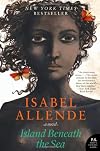
In short, this book was amazing. I struggled to know whether to give it four or five stars, but in the end I relented and gave it the highest possible score. I just loved it so much, in spite of the fact that it was so long that it took me two weeks to read it.
The book has quite an ensemble cast, drawn from a range of race and class backgrounds. The first half of the book is set in the French colony of Saint-Domingue in the late eighteenth century; with the great revolt in which slaves won show more their independence, the action moves to Louisiana. I felt that all Allende's characters were skilfully depicted, and obviously the products of the backgrounds they'd come from - this is probably one of my main criteria in judging a novel - it came across as really left-wing, because of how it COULD show that individuals are the products of their situations and all that.
There are definitely some characters I absolutely despised - I annotated the novel as I went in my Kindle, and I think 90% of my notes are yelling at Valmorain. His character is a plantation owner who deludes himself about how enlightened and generous he is because he doesn't mistreat his slaves quite as badly as his neighbour Lacroix, so I think you can see how I'd get frustrated. I was pretty sure I wouldn't hate anyone in the novel as much as him, but then along came Hortense Guizot... it was a hard-fought battle but I think she triumphed in the end.Valmorain DID rape Tété on a regular basis for years and treat her appallingly in general, and apparently considered raping his daughter Rosette as well... but then Hortense was deliberately malicious and murdered Rosette by proxy so... tough as this decision was to make...
Anyway, in summary - although I reserve the right to edit this review if I think of something more to add - this was an amazing exploration of French colonial society, with characters that I felt were hugely true to life and logical, much as I hated some of them. Well worth reading! (Dec 2012) show less
The book has quite an ensemble cast, drawn from a range of race and class backgrounds. The first half of the book is set in the French colony of Saint-Domingue in the late eighteenth century; with the great revolt in which slaves won show more their independence, the action moves to Louisiana. I felt that all Allende's characters were skilfully depicted, and obviously the products of the backgrounds they'd come from - this is probably one of my main criteria in judging a novel - it came across as really left-wing, because of how it COULD show that individuals are the products of their situations and all that.
There are definitely some characters I absolutely despised - I annotated the novel as I went in my Kindle, and I think 90% of my notes are yelling at Valmorain. His character is a plantation owner who deludes himself about how enlightened and generous he is because he doesn't mistreat his slaves quite as badly as his neighbour Lacroix, so I think you can see how I'd get frustrated. I was pretty sure I wouldn't hate anyone in the novel as much as him, but then along came Hortense Guizot... it was a hard-fought battle but I think she triumphed in the end.
Anyway, in summary - although I reserve the right to edit this review if I think of something more to add - this was an amazing exploration of French colonial society, with characters that I felt were hugely true to life and logical, much as I hated some of them. Well worth reading! (Dec 2012) show less
Lists
Magic Realism (8)
Read These Too (1)
Parallel Novels (1)
GeoCAT 2016 (1)
Which house? (1)
. (1)
al.vick-series (1)
AP Lit (1)
First Novels (1)
Ghosts (1)
Feminism (1)
Five star books (1)
Junky Paperbacks (1)
. (1)
Carole's List (1)
1980s (1)
Swashbucklers (1)
100 New Classics (1)
Latin America (1)
A Novel Cure (2)
My TBR (2)
1990s (2)
Overdue Podcast (2)
Female Author (4)
Unread books (4)
Florida (2)
Latin America (3)
Reading Globally (3)
World Books (2)
Favourite Books (1)
Read in 2014 (1)
Nineties (1)
Allie's Wishlist (1)
Elegant Prose (1)
2024 Reads (1)
B-B to Get (1)
Magical Realism (1)
Awards


You May Also Like


Associated Authors
Statistics
- Works
- 94
- Also by
- 48
- Members
- 85,072
- Popularity
- #130
- Rating
- 3.8
- Reviews
- 2,088
- ISBNs
- 2,507
- Languages
- 38
- Favorited
- 320


