
Julia Alvarez
Author of In the Time of the Butterflies
About the Author
Julia Alvarez was born in New York City on March 27, 1950 and was raised in the Dominican Republic. Before becoming a full-time writer, she traveled across the country with poetry-in-the-schools programs and then taught at the high school level and the college level. In 1991, she earned tenure at show more Middlebury College and published her first book How the Garcia Girls Lost Their Accent, which won the PEN Oakland/Jefferson Miles Award for excellence in 1991. Her other works include In the Time of the Butterflies, The Other Side of El Otro Lado, and Once upon a Quinceañera: Coming of Age in the USA. (Bowker Author Biography) show less
Image credit: By Valerie Hinojosa - https://www.flickr.com/photos/valkyrieh116/3967875650, CC BY-SA 2.0, https://commons.wikimedia.org/w/index.php?curid=90325126
Series
Works by Julia Alvarez
El mejor regalo del mundo: La Leyenda De La Vieja Belen / The Best Gift of All: The Legend of La Vieja Belen (2009) 63 copies, 5 reviews
Play 1 copy
Alvarez, Julia Archive 1 copy
Seven trees 1 copy
Associated Works
The Story and Its Writer: An Introduction to Short Fiction (1976) — Contributor — 1,218 copies, 3 reviews
Literature: An Introduction to Fiction, Poetry, and Drama (1995) — Contributor, some editions — 1,017 copies, 7 reviews
You've Got to Read This: Contemporary American Writers Introduce Stories that Held Them in Awe (1994) — Introduction — 414 copies, 3 reviews
Cries of the Spirit: A Celebration of Women's Spirituality (2000) — Contributor — 404 copies, 2 reviews
The Art of the Story: An International Anthology of Contemporary Short Stories (1999) — Contributor — 394 copies, 5 reviews
Mirror, Mirror on the Wall: Women Writers Explore Their Favorite Fairy Tales (1998) — Contributor — 313 copies, 4 reviews
Tales of Two Americas: Stories of Inequality in a Divided Nation (2017) — Contributor — 229 copies, 7 reviews
The Little School: Tales of Disappearance and Survival (1986) — Preface, some editions — 203 copies, 3 reviews
This Is My Best: Great Writers Share Their Favorite Work (2004) — Contributor — 175 copies, 3 reviews
Half and Half: Writers on Growing Up Biracial and Bicultural (1998) — Contributor — 154 copies, 1 review
Our Shadows Have Claws: 15 Latin American Monster Stories (2022) — Contributor — 149 copies, 1 review
The Poets' Grimm: 20th Century Poems from Grimm Fairy Tales (2003) — Contributor — 70 copies, 1 review
Daughters of the Fifth Sun: A Collection of Latina Fiction and Poetry (1995) — Contributor — 60 copies, 1 review
Daughters of Latin America: An International Anthology of Writing by Latine Women (2023) — Contributor — 40 copies, 1 review
Las Christmas: Favorite Latino Authors Share Their Holiday Memories (1998) — Contributor — 39 copies, 1 review
The Artists' and Writers' Cookbook: A Collection of Stories with Recipes (2016) — Contributor — 19 copies
Tagged
Common Knowledge
- Birthdate
- 1950-03-27
- Gender
- female
- Education
- Abbot Academy (1967)
University of Connecticut
Middlebury College (1971)
Syracuse University (M.A., Creative Writing, 1975) - Occupations
- writer
teacher
poet
professor
business owner - Organizations
- PEN
Sigma Tau Delta - Awards and honors
- Benjamin T. Marshall Poetry Prize, Connecticut College, 1968 and 1969
prize from Academy of American Poetry, 1974
creative writing fellowship, Syracuse University, 1974-75
Kenan grant, Phillips Andover Academy, 1980
poetry award, La Reina Press, 1982
exhibition grant, Vermont Arts Council, 1984-85 (show all 28)
Robert Frost Poetry fellowship, Bread Loaf Writers' Conference, 1986
Third Woman Press Award, first prize in narrative, 1986
award for younger writers, General Electric Foundation, 1986
National Endowment for the Arts grant, 1987-88
grant from Ingram Merrill Foundation, 1990
Josephine Miles Award, PEN Oakland, 1991
notable book designation, American Library Association, 1992
notable book designation, 1994, American Library Association
National Book Critics Circle Award finalist, 1995
Best Books for Young Adults designation, 1995, American Library Association, all for In the Time of the Butterflies
Jessica Nobel-Maxwell Poetry Prize, 1995, American Poetry Review
Doctor of Humane Letters, City University of New York, John Jay College, 1996
Alumni Achievement Award, 1996, Middlebury College
Dominican Republic Annual Book Fair, 1997, dedicated to Alvarez's body of work
selected "Woman of the Year," Latina Magazine, 2000
Sor Juana Award, 2002
Hispanic Heritage Award, Hispanic Heritage Awards Foundation, 2002
Américas Award for Children's and Young Adult Literature, Consortium of Latin American Studies Programs, 2002
Pura Belpre Author Award, American Library Association, 2010, for Return to Sender
F. Scott Fitzgerald Award for Outstanding Achievement in American Fiction (2009)
Pura Belpré Award, American Library Association, 2004
"Twenty-one Classics for the Twenty-first Century" designation, New York Librarians - Agent
- Susan Bergholz Literary Services
- Relationships
- Eichner, Bill (spouse)
- Short biography
- From 2009 National Book Festival brochure: "Although Julia Alvarez was born in New York City, her family moved to the Dominican Republic shortly after birth, where she spent the majority of her childhood. In 1960, when she was 10, her family returned to the United States, fleeing the Dominican Republic because of her father's involvement in an unsuccessful attempt to overthrow the dictator Rafael Trujillo. Alvarez calls herself an American, yet her writing bridges the realms of Latina and American culture."
- Nationality
- USA (birth)
- Birthplace
- New York, New York, USA
- Places of residence
- New York, New York, USA
Dominican Republic - Associated Place (for map)
- New York, USA
Members
Reviews
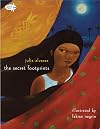
The Secret Footprints is a wonderful and at times thought-provoking folktale (one I actually reread regularly). I love both the story and the illustrations, although I have to admit, that the depictions of the ciguapas with their backwards feet took some getting used to for me. At first glance, the ciguapas seemed (to me) as though they were walking on strangely formed, wrecked or broken legs, but the idea of the ciguapas having backwards feet as a safety measure to avoid discovery is both show more enchanting and ingenious.
When I was reading this tale for the very first time, I immediately thought that the legend of a group of hidden people, living in seclusion on Hispaniola (and very shy and fearful of humans) must be somewhat related to the displacement (and resulting genocide) of the native population of Hispaniola during the European conquest, and the author's note states precisely that some writers do believe this to be the origin of this folktale. And like my LT friend Abigail states in her own excellent review, this makes perfect sense. I actually tend to believe that most folk tales about hidden and secret peoples likely have at least some of their origin in historical and/or pre-historical conquests, incidents of one group or groups of people being overtaken and subjugated by other (conquering) groups.
An interesting twist in The Secret Footprints is that Guapa's curiosity does not have negative consequences for either her or the ciguapas. Guapa not only makes friends with the little boy's family, but the queen of the ciguapas is forced to admit that some humans can be kind (it is amazing what sharing some delicious food can do for community spirit, communication and understanding). When one then remembers what so often happens because of prying nosiness in many folk and fairy tales, one realises how different, how much of a novelty this tale really is. Because more often than not, curiosity ends in at times horrible disasters for the prying, the inquisitive (like the countless European folktales of individuals spying on fairies and being blinded for their audacity or curiosity causing the erstwhile helpful wee folk to disappear forever). In many folktales, even if curiosity does not kill the proverbial cat, it is nevertheless frequently punished, and punished severely. Guapa's inquisitiveness though, not only has no negative consequences, it actually seems to result in understanding between humans and ciguapas, it leads to increased harmony all around.
For me, it was and is wonderful and very special to see Guapa (a curious and inquisitive little girl) not be punished for this, and to actually receive praise; the pursuit of knowledge by a girl is actually seen as positive. Because again, when one thinks of the many folktales where curiosity is condemned and punished, the inquisitive ones are more often than not depicted as being women or girls. And I have also read a goodly number of novels, especially 18th and 19th century social satires, where curiosity is often described not only as negative, but as a female vice in particular. And if one then equates inquisitiveness, curiosity to a striving for knowledge and education, basically many traditional folk and fairy tales seem to actively negate and punish women and girls who seek knowledge (by making the same a punishable, condemnable vice). The fact that this does not occur in The Secret Footprints makes this gem of a picture book not only a perennial personal favourite, but a folktale to be shared with and loved by women and girls especially. show less
When I was reading this tale for the very first time, I immediately thought that the legend of a group of hidden people, living in seclusion on Hispaniola (and very shy and fearful of humans) must be somewhat related to the displacement (and resulting genocide) of the native population of Hispaniola during the European conquest, and the author's note states precisely that some writers do believe this to be the origin of this folktale. And like my LT friend Abigail states in her own excellent review, this makes perfect sense. I actually tend to believe that most folk tales about hidden and secret peoples likely have at least some of their origin in historical and/or pre-historical conquests, incidents of one group or groups of people being overtaken and subjugated by other (conquering) groups.
An interesting twist in The Secret Footprints is that Guapa's curiosity does not have negative consequences for either her or the ciguapas. Guapa not only makes friends with the little boy's family, but the queen of the ciguapas is forced to admit that some humans can be kind (it is amazing what sharing some delicious food can do for community spirit, communication and understanding). When one then remembers what so often happens because of prying nosiness in many folk and fairy tales, one realises how different, how much of a novelty this tale really is. Because more often than not, curiosity ends in at times horrible disasters for the prying, the inquisitive (like the countless European folktales of individuals spying on fairies and being blinded for their audacity or curiosity causing the erstwhile helpful wee folk to disappear forever). In many folktales, even if curiosity does not kill the proverbial cat, it is nevertheless frequently punished, and punished severely. Guapa's inquisitiveness though, not only has no negative consequences, it actually seems to result in understanding between humans and ciguapas, it leads to increased harmony all around.
For me, it was and is wonderful and very special to see Guapa (a curious and inquisitive little girl) not be punished for this, and to actually receive praise; the pursuit of knowledge by a girl is actually seen as positive. Because again, when one thinks of the many folktales where curiosity is condemned and punished, the inquisitive ones are more often than not depicted as being women or girls. And I have also read a goodly number of novels, especially 18th and 19th century social satires, where curiosity is often described not only as negative, but as a female vice in particular. And if one then equates inquisitiveness, curiosity to a striving for knowledge and education, basically many traditional folk and fairy tales seem to actively negate and punish women and girls who seek knowledge (by making the same a punishable, condemnable vice). The fact that this does not occur in The Secret Footprints makes this gem of a picture book not only a perennial personal favourite, but a folktale to be shared with and loved by women and girls especially. show less
…what mattered was here
was the lover who lives for the mystery caught—
if we are lucky—in the lines of our poems.
from Muse Sighting in Matanzas by Julia Alvarez
I loved these poems that form a brief autobiography of the author’s life, starting with childhood memories, turning to the immigrant experience, flowering into the struggles of adulthood, love, marriage, the calling to be a poet. I read a few a night, savoring the stories they told that so moved me.
I adored the earliest poems. show more Discovering as a girl how poetry recited could move an audience, the power of word and song. The simple joy of a Sunday outing, choosing ice cream cones. Watching a beloved grandfather eating a mango, his enjoyment of the children at a time when “he struggles to keep a flicker of hope alive/like the window light that signals a safe house/for friends on the run from el Jefe’s policia.” Recalling the simple food at her sister’s restaurant; even power outages could not stop their enjoyment of a simple meal. The physical punishment at the American school, the prejudice that would not allow her to even clean the blackboards. Her mother at the vanity, putting on her face.
Then the poems turn to New York City, reading at the library, learning English, believing she had a better future here even while her father has been diminished. She dreams of abundant candy while “my new America was waking up/to a nightmare: freedom fighters marching…” Becoming a woman. Knowing her father was different. The eagerness to begin her new life, as a poet, independent.
Then, marriage with its disappointments. Thinking about her sisters, their shared past and divergences. Love in later life: “we were silent, holding hands/like children looking for a way/back to what was lost.” Menopause. Knowing “how love can turn.”
And with age comes wisdom, a better understanding of our parents, the mystery we can’t solve. Watching war and devastation from the safety of home, feeling powerless.
Did I say that I loved these poems? I love the way my chest slightly tightens, my heart aches whilw reading them. How Alvarez is known in them. How they connect.
I will revisit this slender volume.
My wish for this collection would be that at least one poem finds a fervent lover…In these times of encroaching darkness, may poetry provide the necessary spark of joy to keep us going. from Visitations by Julia Alvarez
Thanks to Knopf for a free book. show less
was the lover who lives for the mystery caught—
if we are lucky—in the lines of our poems.
from Muse Sighting in Matanzas by Julia Alvarez
I loved these poems that form a brief autobiography of the author’s life, starting with childhood memories, turning to the immigrant experience, flowering into the struggles of adulthood, love, marriage, the calling to be a poet. I read a few a night, savoring the stories they told that so moved me.
I adored the earliest poems. show more Discovering as a girl how poetry recited could move an audience, the power of word and song. The simple joy of a Sunday outing, choosing ice cream cones. Watching a beloved grandfather eating a mango, his enjoyment of the children at a time when “he struggles to keep a flicker of hope alive/like the window light that signals a safe house/for friends on the run from el Jefe’s policia.” Recalling the simple food at her sister’s restaurant; even power outages could not stop their enjoyment of a simple meal. The physical punishment at the American school, the prejudice that would not allow her to even clean the blackboards. Her mother at the vanity, putting on her face.
Then the poems turn to New York City, reading at the library, learning English, believing she had a better future here even while her father has been diminished. She dreams of abundant candy while “my new America was waking up/to a nightmare: freedom fighters marching…” Becoming a woman. Knowing her father was different. The eagerness to begin her new life, as a poet, independent.
Then, marriage with its disappointments. Thinking about her sisters, their shared past and divergences. Love in later life: “we were silent, holding hands/like children looking for a way/back to what was lost.” Menopause. Knowing “how love can turn.”
And with age comes wisdom, a better understanding of our parents, the mystery we can’t solve. Watching war and devastation from the safety of home, feeling powerless.
Did I say that I loved these poems? I love the way my chest slightly tightens, my heart aches whilw reading them. How Alvarez is known in them. How they connect.
I will revisit this slender volume.
My wish for this collection would be that at least one poem finds a fervent lover…In these times of encroaching darkness, may poetry provide the necessary spark of joy to keep us going. from Visitations by Julia Alvarez
Thanks to Knopf for a free book. show less
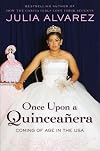
Alvarez is deeply conflicted about the quinceañera. In a time where Latina teens have such distressingly high drop-out and pregnancy rates, is the "princess in the patriarchy fantasy" helping or hurting? Should working-class families really be going into debt to throw a fancy ball for their fifteen-year-olds? Does the quinceañera honor community and ethnicity, or is it an US-ian insta-tradition? Is it stimulating Hispanic economy, or is it playing into American consumerism? Is it an show more expression of hope for the girls' futures, or pessimism about them? Or both?
And given all her feminist-liberal doubts about the quinceañera, why, why does Alvarez get weepy over them? Is it the concrete demonstration of the community's love and hope for each of these girls? Or is she, in the end, just another sucker for a sparkly pink princess dress?
Interwoven into her exploration of the role and history of the modern quinceañera, she tells the story of her own prolonged and halting efforts to learn how to be a Latina adult in the U.S., to invent a role herself that is neither Marianisma nor Malinche. Which, of course, leads back to the question: what does it mean, as a Latina girl, to come of age? And if you were going to have a ritual to mark that---or to guide girl on her way---what should that ritual be?
As you might imagine, there are far more questions here than answers---although in her exploration of the questions, there's a lot she shares about culture, community, family, and history. But even if there are more questions than answers, sometimes there's as much value in figuring out what the questions can and should be, than in figuring out their answers. show less
And given all her feminist-liberal doubts about the quinceañera, why, why does Alvarez get weepy over them? Is it the concrete demonstration of the community's love and hope for each of these girls? Or is she, in the end, just another sucker for a sparkly pink princess dress?
Interwoven into her exploration of the role and history of the modern quinceañera, she tells the story of her own prolonged and halting efforts to learn how to be a Latina adult in the U.S., to invent a role herself that is neither Marianisma nor Malinche. Which, of course, leads back to the question: what does it mean, as a Latina girl, to come of age? And if you were going to have a ritual to mark that---or to guide girl on her way---what should that ritual be?
As you might imagine, there are far more questions here than answers---although in her exploration of the questions, there's a lot she shares about culture, community, family, and history. But even if there are more questions than answers, sometimes there's as much value in figuring out what the questions can and should be, than in figuring out their answers. show less
Julia Alvarez took what, to me, sounds like the worst nightmare I can imagine and built something beautiful from it.
Antonia Vega retired from her job as a professor of writing and went to wait for her husband, a doctor, to arrive at their favourite restaurant to celebrate. But her husband, Sam, never shows up. He had a fatal heart attack on the way to the restaurant. A year later Antonia is somewhat adrift trying to figure out what her life should be like now. Her three sisters telephone her show more regularly (well two of them do, the oldest sibling isn't so organized) to check up on her. Her next door neighbour also checks in on her. In fact, it is him who is the impetus for a major change in her life. He has a dairy farm and he hires undocumented workers to help because otherwise he cannot make it financially. He offers to send one of his workers over to clean the gutters on Antonia's house and when he comes the young man asks Antonia to help him call his girlfriend. Antonia was born in the Dominican Republic and speaks Spanish so it is easier for him to communicate with her. It turns out his girlfriend has crossed into the US with the help of coyotes who are now demanding more money to send her to Vermont. Antonia is not asked for money but she ends up buying a bus ticket to bring the girl from Colorado to Vermont. She then goes away to spend her birthday with her sister in Chicago and the other two sisters decide to join the celebration. Except the oldest sister never shows up and all the sisters have to drop everything to try to find her. When Antonia does get home she finds the girlfriend in her garage because the man who was supposed to be marrying her refuses when she is obviously pregnant and it can't be his child. These dual crises have Antonia trying to figure out what Sam would do and, as long-married couples tend to do, she knows what Sam's reactions would be.
I hope I never have to face living after my husband's death. He's a year younger than I am and his parents lived long healthy lives so hopefully he outlasts me. If it did happen I hope my personal circumstances wouldn't be as fraught as Antonia's but I also hope I would be able to have guidance from my husband to face difficulties. Even if that guidance is only discerning what he would say and do. show less
Antonia Vega retired from her job as a professor of writing and went to wait for her husband, a doctor, to arrive at their favourite restaurant to celebrate. But her husband, Sam, never shows up. He had a fatal heart attack on the way to the restaurant. A year later Antonia is somewhat adrift trying to figure out what her life should be like now. Her three sisters telephone her show more regularly (well two of them do, the oldest sibling isn't so organized) to check up on her. Her next door neighbour also checks in on her. In fact, it is him who is the impetus for a major change in her life. He has a dairy farm and he hires undocumented workers to help because otherwise he cannot make it financially. He offers to send one of his workers over to clean the gutters on Antonia's house and when he comes the young man asks Antonia to help him call his girlfriend. Antonia was born in the Dominican Republic and speaks Spanish so it is easier for him to communicate with her. It turns out his girlfriend has crossed into the US with the help of coyotes who are now demanding more money to send her to Vermont. Antonia is not asked for money but she ends up buying a bus ticket to bring the girl from Colorado to Vermont. She then goes away to spend her birthday with her sister in Chicago and the other two sisters decide to join the celebration. Except the oldest sister never shows up and all the sisters have to drop everything to try to find her. When Antonia does get home she finds the girlfriend in her garage because the man who was supposed to be marrying her refuses when she is obviously pregnant and it can't be his child. These dual crises have Antonia trying to figure out what Sam would do and, as long-married couples tend to do, she knows what Sam's reactions would be.
I hope I never have to face living after my husband's death. He's a year younger than I am and his parents lived long healthy lives so hopefully he outlasts me. If it did happen I hope my personal circumstances wouldn't be as fraught as Antonia's but I also hope I would be able to have guidance from my husband to face difficulties. Even if that guidance is only discerning what he would say and do. show less
Lists
AP Lit (1)
4th Grade Books (1)
Awards


You May Also Like


Associated Authors
Statistics
- Works
- 34
- Also by
- 44
- Members
- 18,648
- Popularity
- #1,175
- Rating
- 3.8
- Reviews
- 505
- ISBNs
- 425
- Languages
- 11
- Favorited
- 37
