
Cristina García (1) (1958–)
Author of Dreaming in Cuban
For other authors named Cristina García, see the disambiguation page.
About the Author
Cristina Garcia was born in Cuba, but soon moved with her family to New York City. Her first novel, Dreaming in Cuban, a nominee for a National Book award, is a story about a Cuban family enduring three generations of life experiences. She has received a Guggenheim Scholarship, a Hodder fellowship show more from Princeton, and a Whiting Writers' Award. Garcia has written a second novel, The Aguero Sisters. (Bowker Author Biography) show less
Image credit: Norma Quintana
Works by Cristina García
Associated Works
Currents from the Dancing River: Contemporary Latino Fiction, Nonfiction, and Poetry (1994) — Contributor — 55 copies
Tagged
Common Knowledge
- Canonical name
- García, Cristina
- Birthdate
- 1958-07-04
- Gender
- female
- Education
- Barnard College
Johns Hopkins University School of Advanced International Studies - Occupations
- journalist
- Awards and honors
- Guggenheim Fellowship
- Nationality
- Cuba
USA - Birthplace
- Havana, Cuba
- Associated Place (for map)
- Havana, Cuba
Members
Reviews
My maternal aunt married a dashing Cuban American. We called him Uncle Joe, but my aunt called him Jose'. I have learned that his father was born in Spain and married a Cuban girl whose family I can trace back two generations in Cuba. In Buffalo, NY, Joe's father worked as a waiter in a posh restaurant. I visited their home in as a girl. These people are all long gone, and I am left with questions about what experiences caused Joe's parents to immigrate. For I understand that no one leaves show more their homeland without reason.
What was nostalgia except the last refuge of those who'd lost their worlds?
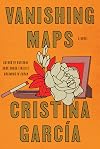
from Vanishing Maps by Cristina Garcia
Vanishing Maps by Cristina Garcia continues the story of the family from Dreaming in Cuban. There is the eighty-seven-year-old grandmother who reunites with the lover of her youth. And, the deceased mother who idolized Castro, who haunts her son. The family is dispersed across the globe until by coincidence and choice, six cousins find themselves reunited in Berlin.
Ivanito is haunted by his deceased mother, whom he loved in spite of her mental illness. His cousin Pilar and her young son Azul have joined him after years of separation; they had been close in their younger years, part of a punk band.
I resonated to Pilar's awareness of the transient relationship between mother and son: "But there were things I would never know about him. And these unknown things would multiply with each passing day, each passing year, until we became loving, receding strangers to each other--a mother-and-son mystery."
The separated twins Irina and Tereza come across each other at a Berlin tango dance, amazed to encounter their double, for they had no knowledge of being twins.
"We're products of the Cold War," Tereza understands. "The political and the personal are inseparable," Ivanito knows; "Hadn't all of them been torn up by their roots? Their lives misshapen by one upheaval or another: revolution, immigration, dislocation?" He had lived in four countries, fleeing a family divided by political allegiances.
I appreciated the insight into Cuban history and the Cuban diaspora. The characters' conflicting political beliefs were interesting to me. One daughter, living in Miami, is a staunch capitalist and becomes an activist working to prevent an illegal immigrant child from being returned to Cuba and his father. Another character idolizes Castro.
With themes of division and reunification, being haunted by the past, and the struggle for self realization and identity, the novel gives insight into the particular while addressing the universal.
Thanks to A. A. Knopf for show less
What was nostalgia except the last refuge of those who'd lost their worlds?
from Vanishing Maps by Cristina Garcia
Vanishing Maps by Cristina Garcia continues the story of the family from Dreaming in Cuban. There is the eighty-seven-year-old grandmother who reunites with the lover of her youth. And, the deceased mother who idolized Castro, who haunts her son. The family is dispersed across the globe until by coincidence and choice, six cousins find themselves reunited in Berlin.
Ivanito is haunted by his deceased mother, whom he loved in spite of her mental illness. His cousin Pilar and her young son Azul have joined him after years of separation; they had been close in their younger years, part of a punk band.
I resonated to Pilar's awareness of the transient relationship between mother and son: "But there were things I would never know about him. And these unknown things would multiply with each passing day, each passing year, until we became loving, receding strangers to each other--a mother-and-son mystery."
The separated twins Irina and Tereza come across each other at a Berlin tango dance, amazed to encounter their double, for they had no knowledge of being twins.
"We're products of the Cold War," Tereza understands. "The political and the personal are inseparable," Ivanito knows; "Hadn't all of them been torn up by their roots? Their lives misshapen by one upheaval or another: revolution, immigration, dislocation?" He had lived in four countries, fleeing a family divided by political allegiances.
I appreciated the insight into Cuban history and the Cuban diaspora. The characters' conflicting political beliefs were interesting to me. One daughter, living in Miami, is a staunch capitalist and becomes an activist working to prevent an illegal immigrant child from being returned to Cuba and his father. Another character idolizes Castro.
With themes of division and reunification, being haunted by the past, and the struggle for self realization and identity, the novel gives insight into the particular while addressing the universal.
Thanks to A. A. Knopf for show less
I'm a little in love with Berlin. It's this modern, bustling, multi-cultural city, festooned with building cranes that is also haunted by history in a way no other city is. It's full of art and grime and people getting on with their days. You can grab a döner, see an exhibition of pretty much any kind of art you like, encounter a gathering of Stolpersteine in front of a building you've passed a dozen times unaware, browse in an English-language bookshop and catch a train going anywhere in show more Europe all in the same afternoon. And so it happens that I will buy pretty much any book with Berlin in the title.
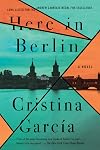
In Here in Berlin a middle-aged Cuban woman goes to Berlin. She's looking for a new beginning, but finds herself lonely and without focus in this city she's unfamiliar with. But as she becomes more fluent in German, she begins talking to people, usually older people, usually living in nursing homes, about their pasts. And in short chapters, they tell their stories. So there are former Nazis and former Stasi agents justifying their pasts, women remembering their fear of the Russians, Cubans who fought for the Nazis on behalf of General Franco and who stayed behind after the war, circus performers and musicians, Stalinists and lesbians. It's an interesting format that is hampered only by its reliance on the voices of the elderly so that the novel feels more like an elegy for a disappeared city than a reflection of Berlin today. show less
In Here in Berlin a middle-aged Cuban woman goes to Berlin. She's looking for a new beginning, but finds herself lonely and without focus in this city she's unfamiliar with. But as she becomes more fluent in German, she begins talking to people, usually older people, usually living in nursing homes, about their pasts. And in short chapters, they tell their stories. So there are former Nazis and former Stasi agents justifying their pasts, women remembering their fear of the Russians, Cubans who fought for the Nazis on behalf of General Franco and who stayed behind after the war, circus performers and musicians, Stalinists and lesbians. It's an interesting format that is hampered only by its reliance on the voices of the elderly so that the novel feels more like an elegy for a disappeared city than a reflection of Berlin today. show less
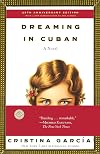
Garcia illustrates a binary world of New York and Cuba, democracy and communism, rational and superstitious, and, fortunately, never takes sides. Instead the characters and their choices/circumstances are stand-ins for social arguments. There is some beautiful prose here. Unfortunately, there is not a small portion of voice among the many (too many) characters. Also, I found many of the characters to be strangely mean without motivation.
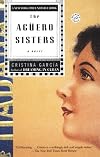
The Aguero Sisters starts with a bang (pun totally intended). Ignacio and Blanca Aguero are a husband and wife naturalist team, slogging through the Zapata swamp shooting specimens for a U.S. based museum. Suddenly forty-four year old Ignacio turns the gun on his wife and pulls the trigger...The mystery of what really happened in the swamp on that day in 1948 doesn't become clear until much, much later.
The rest of the novel follows the lives of Ignacio's adult daughters and their very show more different lives. Constancia Aguero Cruz lives in New York, married to a tobacco shop owner with a daughter in Oahu and a son in Morningside Heights, New York. She has been kept apart from her sister in Cuba for as long as she can remember, but she doesn't really know why. Reina was only six when her mother died. She still lives in Cuba as an electrician and mechanic and has many passions, seducing married men. She has a daughter, Dulcita, in Madrid, Spain. Interspersed between this current-day, third-person narrative is Ignacio's first person account of his life, starting with remembering his parents, Reinaldo and Soledad Aguero. Through his accounts, the history of Ignacio and his daughters becomes clearer and clearer, like sediment settling in the bottom of a glass of murky water once the agitation of stirring has stopped. show less
The rest of the novel follows the lives of Ignacio's adult daughters and their very show more different lives. Constancia Aguero Cruz lives in New York, married to a tobacco shop owner with a daughter in Oahu and a son in Morningside Heights, New York. She has been kept apart from her sister in Cuba for as long as she can remember, but she doesn't really know why. Reina was only six when her mother died. She still lives in Cuba as an electrician and mechanic and has many passions, seducing married men. She has a daughter, Dulcita, in Madrid, Spain. Interspersed between this current-day, third-person narrative is Ignacio's first person account of his life, starting with remembering his parents, Reinaldo and Soledad Aguero. Through his accounts, the history of Ignacio and his daughters becomes clearer and clearer, like sediment settling in the bottom of a glass of murky water once the agitation of stirring has stopped. show less
Lists
Awards


You May Also Like


Associated Authors
Statistics
- Works
- 17
- Also by
- 5
- Members
- 3,152
- Popularity
- #8,106
- Rating
- 3.6
- Reviews
- 80
- ISBNs
- 123
- Languages
- 9