
Oscar Hijuelos (1951–2013)
Author of The Mambo Kings Play Songs of Love
About the Author
Óscar Jerome Hijuelos was born in Manhattan, New York on August 24, 1951 to Cuban immigrant parents. He received a bachelor's degree and a master of fine arts degree from City College. His first novel, Our House in the Last World, was published in 1983 and won the Rome Prize of the American show more Academy of Arts and Letters. His other works include The Fourteen Sisters of Emilio Montez O'Brien, Mr. Ives' Christmas, Empress of the Splendid Season, A Simple Habana Melody (From When the World was Good), Beautiful Maria of My Soul, Another Spaniard in the Works, and Twain and Stanley Enter Paradise. His novel, The Mambo Kings Play Songs of Love, won the 1990 Pulitzer Prize for fiction and was made into a 1992 movie starring Armand Assante and Antonio Banderas. He also wrote a young adult novel entitled Dark Dude and a memoir entitled Thoughts Without Cigarettes. In 2000, he received the Hispanic Heritage Award for Literature. He died after collapsing with a heart attack while playing tennis on October 12, 2013 at age 62. (Bowker Author Biography) show less
Image credit: Courtesy of Serpent's Tail Press
Series
Works by Oscar Hijuelos
Escape to Miami 1 copy
1992 1 copy
City of beliefs 1 copy
Il Disco del Mese - Salsa — Author — 1 copy
Associated Works
You've Got to Read This: Contemporary American Writers Introduce Stories that Held Them in Awe (1994) — Introduction — 415 copies, 3 reviews
Writing New York: A Literary Anthology (Expanded 10th-Anniversary Edition) (2008) — Contributor — 101 copies, 1 review
How I Learned English: 55 Accomplished Latinos Recall Lessons in Language and Life (2007) — Contributor — 54 copies, 4 reviews
You're On!: Seven Plays in English and Spanish (Spanish and English Edition) (1999) — Contributor — 17 copies
Amerika, Amerika bloemlezing — Contributor — 8 copies
Tagged
Common Knowledge
- Legal name
- Hijuelos, Oscar Jerome
- Birthdate
- 1951-08-24
- Date of death
- 2013-10-12
- Gender
- male
- Education
- City College of New York (B.A.|1975)
City University of New York (M.A.|Creative Writing|1976) - Occupations
- novelist
professor - Organizations
- PEN International Writers' Organization
Duke University
Hofstra University - Awards and honors
- Creative Writing Fellowship, National Endowment for the Arts (1985)
Pulitzer Prize (Fiction, 1990)
Ingram Merrill Foundation Award (1983)
Rome Prize (1985)
Hispanic Heritage Award for Literature (2000)
Luis Leal Award (2003) - Relationships
- Carlson, Lori Marie (wife)
- Cause of death
- heart attack
- Nationality
- USA
- Birthplace
- New York, New York, USA
- Places of residence
- New York, New York, USA
- Place of death
- Manhattan, New York, USA
- Associated Place (for map)
- New York, USA
Members
Reviews

What a lush, gorgeous, heart-wrenching read this is! Hijuelos possesses the rare gift of being able to pack more poetry, passion, and pathos into a sentence than some authors spend their lives aspiring to achieve. For once, I wholly concur with Pulitzer Prize folks – this novel deserves to be celebrated.
Ostensibly, this is the story of two Cuban bothers, Nestor and Cesar Castillo, both musicians, who find themselves in right place at the right time: New York City in the 1940s and '50s, show more just as Latin music is achieving the pinnacle of its popularity in the US, thanks to cultural forces such as the renaissance of Cuban pleasure tourism and I Love Lucy, which invited loveable Ricky Ricardo, Cuban band leader, into living rooms across America.
The brothers seem to have all the things that they *should* desire at their fingertips: talent, fame, friendship, women. And yet, over the course of the novel, each finds themselves struggling to accept that all the things the world tells them they *ought* to want (friends, fame, sex, respect, machismo) have little to do with what their hearts actually want: in the case of Cesar – the outgoing, hearty, larger-than-life bandleader brother – it’s the pure, unconditional love of family which, in his eagerness to embrace pleasure, he’s carelessly discarded; in the case of Nestor – the brilliant but melancholy trumpet player brother – it’s the love of the beautiful woman who betrayed him, she of the haunting song “Beautiful Maria of My Soul.” (If you’ve never heard it, do yourself a favor and Spotify it now – it’s gorgeous.)
I get that people who are reading this for plot may be disappointed, because it’s not a plot-driven novel. Not that this isn’t overflowing with an enormous cast of captivating characters and luscious set-pieces: smoky dance halls crowded with dancers enthralled by sensuous Cuban rhythms; tiny apartments overflowing with the boisterous energy of jamming musicians; tables groaning with platters of savory Cuban foodstuffs; the overripe fields of rural Cuba. Contributing to the sense of intimacy and authenticity: the fact that Hijuelos appears to have done a ton of research, allowing him to evoke a sense of time and place that’s almost photographic in its detail and immediacy. The way he interlaces the names and careers of actual Latin music greats – Perez Prado, Tito Puente, Desi Arnaz – further blurs the line between fact and fiction.
But primarily this is an exploration of the human heart, a book about joy and melancholy, pleasure and pain, life and love, desire and memory, passion and loss. And the way that Hijuelos evokes the final days of Cesar’s life – a waterfall of disordered but vivid memories, celebrations, revelations, and regrets? (Not a spoiler: it's the organizing premise of the novel.) Much of the time, unable to figure out whether I should be smiling or crying, I found myself doing both simultaneously.
Perhaps not everyone’s cup of tea, but I found this to be raw, lyric, and absolutely enthralling. show less
Ostensibly, this is the story of two Cuban bothers, Nestor and Cesar Castillo, both musicians, who find themselves in right place at the right time: New York City in the 1940s and '50s, show more just as Latin music is achieving the pinnacle of its popularity in the US, thanks to cultural forces such as the renaissance of Cuban pleasure tourism and I Love Lucy, which invited loveable Ricky Ricardo, Cuban band leader, into living rooms across America.
The brothers seem to have all the things that they *should* desire at their fingertips: talent, fame, friendship, women. And yet, over the course of the novel, each finds themselves struggling to accept that all the things the world tells them they *ought* to want (friends, fame, sex, respect, machismo) have little to do with what their hearts actually want: in the case of Cesar – the outgoing, hearty, larger-than-life bandleader brother – it’s the pure, unconditional love of family which, in his eagerness to embrace pleasure, he’s carelessly discarded; in the case of Nestor – the brilliant but melancholy trumpet player brother – it’s the love of the beautiful woman who betrayed him, she of the haunting song “Beautiful Maria of My Soul.” (If you’ve never heard it, do yourself a favor and Spotify it now – it’s gorgeous.)
I get that people who are reading this for plot may be disappointed, because it’s not a plot-driven novel. Not that this isn’t overflowing with an enormous cast of captivating characters and luscious set-pieces: smoky dance halls crowded with dancers enthralled by sensuous Cuban rhythms; tiny apartments overflowing with the boisterous energy of jamming musicians; tables groaning with platters of savory Cuban foodstuffs; the overripe fields of rural Cuba. Contributing to the sense of intimacy and authenticity: the fact that Hijuelos appears to have done a ton of research, allowing him to evoke a sense of time and place that’s almost photographic in its detail and immediacy. The way he interlaces the names and careers of actual Latin music greats – Perez Prado, Tito Puente, Desi Arnaz – further blurs the line between fact and fiction.
But primarily this is an exploration of the human heart, a book about joy and melancholy, pleasure and pain, life and love, desire and memory, passion and loss. And the way that Hijuelos evokes the final days of Cesar’s life – a waterfall of disordered but vivid memories, celebrations, revelations, and regrets? (Not a spoiler: it's the organizing premise of the novel.) Much of the time, unable to figure out whether I should be smiling or crying, I found myself doing both simultaneously.
Perhaps not everyone’s cup of tea, but I found this to be raw, lyric, and absolutely enthralling. show less
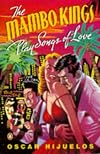
I wanted to love this book. It has a genuine flavor of time gone by, of the days just before and during the Cuban revolution that brought Castro to power and transported so many Cuban citizens to America. It is a trip behind the curtain, into a different culture and the hopes and dreams of a handsome musician, Cesar Castillo, and his brother, Nestor.
I wanted to love this book, but I didn’t. There were parts of it that were marvelous, but there was a kind of shadow that stood between me show more and Cesar, and I found myself just watching him, instead of knowing him or feeling him. Which is ironic, because feeling him is 50% of what this book is about. For Cesar is a “macho”, a man of virility, a man who lays every woman he meets, wants to lay even his sister-in-law, and I would say, finds very little else to admire about a woman beyond her sexuality.
There is a kind of sadness in the life Cesar lives, and the sex is part of it, because the focus on sex precludes him from ever making a connection that lasts. He is a man of dreams, but in the end, he has a moment of fame that involves a guest shot on I Love Lucy and a tenuous connection with Desi Arnaz. He lives a lifetime off that moment and a song that his brother writes that almost achieves them fame.
He has friends and family, but I could never decide if we were supposed to believe this was enough to make a life worthwhile or see his life as a wasteland. I confess that I settled on the latter, which made the book have no upside for me and left me feeling as if I had viewed a picture painting of disappointment and despair. I could not find one single character in the entire book who lived anything close to a fulfilling or happy life.
I do not feel that I am a prude. The sexual exploits in Cesar’s life are a necessary part of the narrative to understand who he is and what drives him, but I do not need explicit and detailed descriptions of every carnal act, thought, and desire. I always feel something can be left to the imagination and feel a little resentful when an author assumes he might be the only person who knows about sex, so he needs to explain it to the rest of us. More effective, I would think, to tell me how it makes Cesar feel, why he acts as he does, than a three page description of fellatio itself. In fact, my main objection to the book would be the repeated (and I stress this is not once or twice) descriptions of body parts and the fact that this man could not even attend a funeral without thinking about sex with the women in attendance. I realize this almost pornographic element would not bother everyone and would actually be an enhancement for some. Apparently, it appealed to the Pulitzer Committee.
Perhaps I am just worn out with this theme. [b:The History of Tom Jones, a Foundling|99329|The History of Tom Jones, a Foundling|Henry Fielding|https://i.gr-assets.com/images/S/compressed.photo.goodreads.com/books/1444450775l/99329._SY75_.jpg|1350343], which was the last novel I finished before this one, was one sexual romp after another, and the [b:The Saga of Gösta Berling|6358385|The Saga of Gösta Berling|Selma Lagerlöf|https://i.gr-assets.com/images/S/compressed.photo.goodreads.com/books/1348424032l/6358385._SY75_.jpg|1623527], before Jones, was much the same. I am definitely looking for a book that is about a celibate for my next read, maybe it is time for another Brother Cadfael. show less
I wanted to love this book, but I didn’t. There were parts of it that were marvelous, but there was a kind of shadow that stood between me show more and Cesar, and I found myself just watching him, instead of knowing him or feeling him. Which is ironic, because feeling him is 50% of what this book is about. For Cesar is a “macho”, a man of virility, a man who lays every woman he meets, wants to lay even his sister-in-law, and I would say, finds very little else to admire about a woman beyond her sexuality.
There is a kind of sadness in the life Cesar lives, and the sex is part of it, because the focus on sex precludes him from ever making a connection that lasts. He is a man of dreams, but in the end, he has a moment of fame that involves a guest shot on I Love Lucy and a tenuous connection with Desi Arnaz. He lives a lifetime off that moment and a song that his brother writes that almost achieves them fame.
He has friends and family, but I could never decide if we were supposed to believe this was enough to make a life worthwhile or see his life as a wasteland. I confess that I settled on the latter, which made the book have no upside for me and left me feeling as if I had viewed a picture painting of disappointment and despair. I could not find one single character in the entire book who lived anything close to a fulfilling or happy life.
I do not feel that I am a prude. The sexual exploits in Cesar’s life are a necessary part of the narrative to understand who he is and what drives him, but I do not need explicit and detailed descriptions of every carnal act, thought, and desire. I always feel something can be left to the imagination and feel a little resentful when an author assumes he might be the only person who knows about sex, so he needs to explain it to the rest of us. More effective, I would think, to tell me how it makes Cesar feel, why he acts as he does, than a three page description of fellatio itself. In fact, my main objection to the book would be the repeated (and I stress this is not once or twice) descriptions of body parts and the fact that this man could not even attend a funeral without thinking about sex with the women in attendance. I realize this almost pornographic element would not bother everyone and would actually be an enhancement for some. Apparently, it appealed to the Pulitzer Committee.
Perhaps I am just worn out with this theme. [b:The History of Tom Jones, a Foundling|99329|The History of Tom Jones, a Foundling|Henry Fielding|https://i.gr-assets.com/images/S/compressed.photo.goodreads.com/books/1444450775l/99329._SY75_.jpg|1350343], which was the last novel I finished before this one, was one sexual romp after another, and the [b:The Saga of Gösta Berling|6358385|The Saga of Gösta Berling|Selma Lagerlöf|https://i.gr-assets.com/images/S/compressed.photo.goodreads.com/books/1348424032l/6358385._SY75_.jpg|1623527], before Jones, was much the same. I am definitely looking for a book that is about a celibate for my next read, maybe it is time for another Brother Cadfael. show less

"Beautiful Maria of My Soul. A song about love so far away it hurts; a song about lost pleasures, a song about youth, a song about love so elusive a man can never know where he stands; a song about wanting a woman so much death does not frighten you, a song about wanting that woman even when she has abandoned you."
Oscar Hijuelos's novel The Mambo Kings Play Songs of Love is a beautifully written historical novel about Cesar Castillo, who comes to New York City from Cuba in 1949 with his show more younger brother Nestor with the dream of becoming successful musicians. For a short period of their tumultuous lives, this dream does come true.
At the end of his life in 1980, Cesar has deliberately ensconced himself in The Hotel Splendour, to die alone. This is his story, told in flashback. As the reader will surmise immediately, Cesar Castillo never became rich, never lived an easy life, and the excessiveness of his lifestyle--the constant drinking, the lack of sleep, the womanizing--are there to drown out Cesar's deep-seated emotional problems and unhappiness. Cesar is the brother who is always able to hide this melancholy from himself and others, yet when the withdrawn, taciturn Nestor dies, his defenses crumble. It is as if Nestor bequeathed his depression to his older brother, to carry along with the self-destructive habits that were already there.
Cesar Castillo is a richly drawn character who has his good-natured, generous A side, along with his dastardly B side. He is crippled by the need to be macho, but there is a love-starved, abused boy that is still crying out for help. And so, at the end of his life, there are people he has hurt as well as people who will remember him fondly and gratefully forever.
Oscar Hijuelos made every character's pain throb on the page, but this is not a hard book to read. He made Cesar's alcoholism painful and his sexual urges unbearable.
The author also brings a time period and culture back to life in this story. I enjoyed the book very much!
Mambo Kings Sing Songs of Love won the Pulitizer Prize in 1990. show less
Oscar Hijuelos's novel The Mambo Kings Play Songs of Love is a beautifully written historical novel about Cesar Castillo, who comes to New York City from Cuba in 1949 with his show more younger brother Nestor with the dream of becoming successful musicians. For a short period of their tumultuous lives, this dream does come true.
At the end of his life in 1980, Cesar has deliberately ensconced himself in The Hotel Splendour, to die alone. This is his story, told in flashback. As the reader will surmise immediately, Cesar Castillo never became rich, never lived an easy life, and the excessiveness of his lifestyle--the constant drinking, the lack of sleep, the womanizing--are there to drown out Cesar's deep-seated emotional problems and unhappiness. Cesar is the brother who is always able to hide this melancholy from himself and others, yet when the withdrawn, taciturn Nestor dies, his defenses crumble. It is as if Nestor bequeathed his depression to his older brother, to carry along with the self-destructive habits that were already there.
Cesar Castillo is a richly drawn character who has his good-natured, generous A side, along with his dastardly B side. He is crippled by the need to be macho, but there is a love-starved, abused boy that is still crying out for help. And so, at the end of his life, there are people he has hurt as well as people who will remember him fondly and gratefully forever.
Oscar Hijuelos made every character's pain throb on the page, but this is not a hard book to read. He made Cesar's alcoholism painful and his sexual urges unbearable.
The author also brings a time period and culture back to life in this story. I enjoyed the book very much!
Mambo Kings Sing Songs of Love won the Pulitizer Prize in 1990. show less
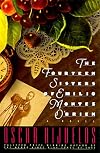
Oscar Hijuelos- an American writer of Cuban descent -gives a truly authentic flavor to his diverse characters. As this novel begins and all 14 of the O’Brien sisters are introduced in order of their age, we quickly discover that Emilio was the last to be born into her unusually large family. Although each sister is featured individually throughout the tale, most of the attention goes to first-born Margarita and to last-born Emilio. At times the narrative regresses back to the past, telling show more the story of how the Irish father and Cuban mother met in her home town in Cuba, came to the United States, and settled on a small farm in Pennsylvania.
As the O’Brien children become adults, they scatter to Cuba, Hollywood, New York City and other less notable locations. And with a family that big, you know there is plenty of action: marriages, affairs, divorces, births and deaths. The story is quaint, nostalgic, and beautifully written. The love scenes, though sexually graphic, are benign and sterile in their poetic cadence.
Emilio ends up in Hollywood starring in B rated movies. Several sisters perform in up-scale nightclubs in Manhattan, thus Hijuelos provides lots of trivia information about the entertainment industry in the 1930s.
The plot is interesting with all the characters realistically presented and vividly detailed. "The Fourteen Sisters of Emilio Montez O’Brien" is one of the few novels I’ve ever read that portrays elderly people as totally functional independent participants in life. Margarita finds love and re-marries at the age of 90, as another slightly younger sister has a short but beautifully romantic affair. So for those readers who think romantic life ends at age 60 or even 70, this is a huge revelation… and totally believable in the context of the story.
After being impressed with Oscar Hijuelos’ Pulitzer Prize winning novel "The Mambo Kings Play Songs of Love", I was looking forward to reading The "Fourteen Sisters of Emilio Montez O’Brien". My only complaint is that the story drags on and on, with too little drama, guarded emotion. and simply way too many sisters. In the early 1900s it was customary to have as many as 7 or 8 children, but 15? What was Hijuelos’ intention in creating such a large family? Perhaps there is some underlying message but it doesn’t bode well... a Cuban mother that never learned to speak English, pumping out babies year after year while her husband struggles to support the family and hides his anguish with alcohol and drugs. But this is not written in Faulkner’s dark depressing style, nor the introspective cynical philosophy of Sinclair Lewis. Hijuelos has a lighter style. He doesn’t dig too deeply into the tragic side of life. "The Fourteen Sisters" is a bit more upbeat, with a complacent contemporary Latino flair. Hijuelos implies there is no sense in contemplating life too deeply because what will be, will be, or as they say in Spanish, “Que Sera, Sera”. show less
As the O’Brien children become adults, they scatter to Cuba, Hollywood, New York City and other less notable locations. And with a family that big, you know there is plenty of action: marriages, affairs, divorces, births and deaths. The story is quaint, nostalgic, and beautifully written. The love scenes, though sexually graphic, are benign and sterile in their poetic cadence.
Emilio ends up in Hollywood starring in B rated movies. Several sisters perform in up-scale nightclubs in Manhattan, thus Hijuelos provides lots of trivia information about the entertainment industry in the 1930s.
The plot is interesting with all the characters realistically presented and vividly detailed. "The Fourteen Sisters of Emilio Montez O’Brien" is one of the few novels I’ve ever read that portrays elderly people as totally functional independent participants in life. Margarita finds love and re-marries at the age of 90, as another slightly younger sister has a short but beautifully romantic affair. So for those readers who think romantic life ends at age 60 or even 70, this is a huge revelation… and totally believable in the context of the story.
After being impressed with Oscar Hijuelos’ Pulitzer Prize winning novel "The Mambo Kings Play Songs of Love", I was looking forward to reading The "Fourteen Sisters of Emilio Montez O’Brien". My only complaint is that the story drags on and on, with too little drama, guarded emotion. and simply way too many sisters. In the early 1900s it was customary to have as many as 7 or 8 children, but 15? What was Hijuelos’ intention in creating such a large family? Perhaps there is some underlying message but it doesn’t bode well... a Cuban mother that never learned to speak English, pumping out babies year after year while her husband struggles to support the family and hides his anguish with alcohol and drugs. But this is not written in Faulkner’s dark depressing style, nor the introspective cynical philosophy of Sinclair Lewis. Hijuelos has a lighter style. He doesn’t dig too deeply into the tragic side of life. "The Fourteen Sisters" is a bit more upbeat, with a complacent contemporary Latino flair. Hijuelos implies there is no sense in contemplating life too deeply because what will be, will be, or as they say in Spanish, “Que Sera, Sera”. show less
Lists
Awards


You May Also Like


Associated Authors
Statistics
- Works
- 16
- Also by
- 13
- Members
- 4,847
- Popularity
- #5,180
- Rating
- 3.6
- Reviews
- 172
- ISBNs
- 202
- Languages
- 13
- Favorited
- 6


