

Bharati Mukherjee (1940–2017)
Author of Jasmine
About the Author
Bharati Mukherjee was born in Calcutta, India on July 27, 1940. She received a bachelor's degree in English from the University of Calcutta in 1959 and a master's degree from the University of Baroda in 1961. After sending six stories to the University of Iowa, she was accepted into the Iowa show more Writers' Workshop. She received an M.F.A. in 1963 and a doctorate in comparative literature in 1969 from the University of Iowa. She married fellow student Clark Blaise, a Canadian author, in 1963. They moved to Montreal in 1966, where she taught English at McGill University. They moved back to the United States in 1980. After teaching creative writing at Columbia University, New York University, and Queens College, she taught postcolonial and world literature at the University of California, Berkeley. She wrote numerous books during her lifetime including The Tiger's Daughter, Wife, Darkness, Jasmine, The Holder of the World, Desirable Daughters, The Tree Bride, and Miss New India. In 1988, The Middleman and Other Stories won the National Book Critics Circle Award for fiction. She died from complications of rheumatoid arthritis and takotsubo cardiomyopathy, a stress-induced heart condition, on January 28, 2017 at the age of 76. (Bowker Author Biography) show less
Image credit: Photo by Chip Cooper
Works by Bharati Mukherjee
The Management of Grief 7 copies
Orbiting 1 copy
Associated Works
The Story and Its Writer: An Introduction to Short Fiction (1976) — Contributor — 1,214 copies, 3 reviews
The Scribner Anthology of Contemporary Short Fiction: Fifty North American American Stories Since 1970 (1999) — Contributor — 584 copies, 4 reviews
The Art of the Story: An International Anthology of Contemporary Short Stories (1999) — Contributor — 394 copies, 5 reviews
The Workshop: Seven Decades of the Iowa Writers Workshop - 43 Stories, Recollections, & Essays on Iowa's Place in Twentieth-Century American Literature (1999) — Contributor — 197 copies, 1 review
Charlie Chan Is Dead: An Anthology of Contemporary Asian American Fiction (1993) — Contributor — 169 copies, 3 reviews
Half and Half: Writers on Growing Up Biracial and Bicultural (1998) — Contributor — 153 copies, 1 review
Me, My Hair, and I: Twenty-seven Women Untangle an Obsession (2015) — Contributor — 151 copies, 35 reviews
Charlie Chan Is Dead 2: At Home in the World: An Anthology of Contemporary Asian-American Fiction (2004) — Contributor — 97 copies, 1 review
The Heath Anthology of American Literature, Concise Edition (2003) — Contributor — 73 copies, 1 review
High Infidelity: 24 Great Short Stories About Adultery by Some of Our Best Contemporary Authors (1997) — Contributor — 33 copies
The Artists' and Writers' Cookbook: A Collection of Stories with Recipes (2016) — Contributor — 19 copies
Tagged
Common Knowledge
- Birthdate
- 1940-07-27
- Date of death
- 2017-01-28
- Gender
- female
- Education
- University of Iowa (PhD)
University of Iowa (MFA)
University of Kolkata (MA)
Maharaja Sayajirao University of Baroda (BA) - Occupations
- writer
university professor - Organizations
- University of California, Berkeley
- Relationships
- Blaise, Clark (spouse)
- Cause of death
- rheumatoid arthritis (complications)
takotsubo cardiomyopathy - Nationality
- India (birth)
USA (naturalized | 1988) - Birthplace
- Kolkata, India
- Places of residence
- Montréal, Québec, Canada
San Francisco, California, USA - Place of death
- New York, New York, USA
Members
Reviews
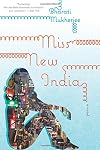
Mukherjee navigates the world of "The New India" as seen through the eyes of Anjali, a girl from a small town who moves to bustling, bursting-with-possibility Bangalore --the international epicenter of the customer phone service industry -- in search of a new way of living. Anjali, assisted by an ex-pat American teacher, is on the run after being raped by the man her father had chosen to be her husband and certainly there are many more perils waiting for Anjali in Bangalore, including a run show more with in terrorists. Some of the finest scenes are those that take place in the crumbling mansion of "Mad Minnie." The decaying, ramshackle house (as well as its mistress) with beggars squatting in the ruined garden and photos of British troops with their feet atop slaughtered Indians, a fine and beautifully written metaphor for the clash of old and new, in all it's emotionally-churning complexities. One is reminded of Dickens' Miss Haversham.
Mukherjee is exploring, in this somewhat fable-like novel, how the economic boom and resultant new possibilities affect the lives of young Indian women, whose lives will be far different than those of their mothers. The answer is not so simple as 'better' or 'worse' and Mukherjee allows for that complexity. Life, even in the "New India" is still messy and fraught with danger, but like Theodore Dreiser's "Sister Carrie," it's the potential that lures a provincial young woman into the wider world, and there is always a price to be paid for lost innocence. show less
Mukherjee is exploring, in this somewhat fable-like novel, how the economic boom and resultant new possibilities affect the lives of young Indian women, whose lives will be far different than those of their mothers. The answer is not so simple as 'better' or 'worse' and Mukherjee allows for that complexity. Life, even in the "New India" is still messy and fraught with danger, but like Theodore Dreiser's "Sister Carrie," it's the potential that lures a provincial young woman into the wider world, and there is always a price to be paid for lost innocence. show less
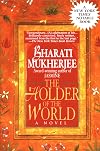
Had I not been held captive in a stifling, airless bedroom of a beach bungalow in Zanzibar by the worst sunburn I’ve ever had in my life AND a foot aching from sea urchin spines, I doubt I would have had the wherewithal to make it through this. As it was: “Thanks, Ms Mukherjee. You only added to my misery.”
Trying to do too much in a short novel is the fate of any writer who really lacks the ability to write well. If you can write prose like Alessandro Barrico, Virginia Woolf or Colm show more Toibin, you can easily achieve mastery of your literary mission in under 200 pages. If you’re Mukherjee, you cannot. In fact, she should not.
Having said that, I wouldn’t have wanted her to have to pull another 200 pages of printer paper off the shelf to make this one work. Her writing jumps around all over the place, can’t make up its mind if it is history of sci-fi or romance or whatever.
Having completed it, I was somewhat surprised to find that it’s supposed to be a retelling of Hawthorne’s Scarlet Letter. Quite why a novelist with the output of Hawthorne needs to be retold, I have no idea. I also had no idea while reading Holder that Mukherjee was retelling that particular narrative such was the success of the attempt. Simply having your protagonist name her daughter Pearl is insufficient.
The prose is turgid, completely opaque at points and completely banal at others. Here’s an example of the opaque:
Before this longing, she had conceived of emptiness as absence, detectable only by the circumference within which it was contained. Now the void became a pleasure-filled pain subsuming all the old salient virtues such as duty and compassion
I’ve re-read that enough times to know that I can’t wring any more meaning than none from it. Horrendous.
And here’s an example of the banal:
Hannah shrieked, even though she didn’t know she had until she heard the shriek herself.
There are two things wrong with this. Firstly, sound travels at 343 metres per second and let’s say she has a fairly large head to give her the benefit of the doubt. That means it that the period of ignorance Mukherjee is referring to last less than half a thousandth of a second. Hardly worth referring to.
Secondly, and worse still, the subordinating conjunction “even though” implies that the shrieking happened despite her not hearing it which is meaningless at best. Whether or not you hear yourself shriek does not in any way determine whether you shriek or not.
Sadly, what Mukherjee lacks in her ability to write she also lacks in her ability to construct a coherent novel. Every single reference to a modern-day researcher of artifacts (who exactly has that job description?) and her live-in lover who is attempting a time-travel experiment could be excised from the book and it would actually improve it. It has zero relevance.
Other characters such as Hannah’s husband Gabriel or Higginbotham drift in and out of the reader’s semi-consciousness and seem to contribute little or nothing to the point of anything.
I’ve just now realised that I’m in serious danger of praising the novel by assuming there was a point to it so I’d better stop. show less
Trying to do too much in a short novel is the fate of any writer who really lacks the ability to write well. If you can write prose like Alessandro Barrico, Virginia Woolf or Colm show more Toibin, you can easily achieve mastery of your literary mission in under 200 pages. If you’re Mukherjee, you cannot. In fact, she should not.
Having said that, I wouldn’t have wanted her to have to pull another 200 pages of printer paper off the shelf to make this one work. Her writing jumps around all over the place, can’t make up its mind if it is history of sci-fi or romance or whatever.
Having completed it, I was somewhat surprised to find that it’s supposed to be a retelling of Hawthorne’s Scarlet Letter. Quite why a novelist with the output of Hawthorne needs to be retold, I have no idea. I also had no idea while reading Holder that Mukherjee was retelling that particular narrative such was the success of the attempt. Simply having your protagonist name her daughter Pearl is insufficient.
The prose is turgid, completely opaque at points and completely banal at others. Here’s an example of the opaque:
Before this longing, she had conceived of emptiness as absence, detectable only by the circumference within which it was contained. Now the void became a pleasure-filled pain subsuming all the old salient virtues such as duty and compassion
I’ve re-read that enough times to know that I can’t wring any more meaning than none from it. Horrendous.
And here’s an example of the banal:
Hannah shrieked, even though she didn’t know she had until she heard the shriek herself.
There are two things wrong with this. Firstly, sound travels at 343 metres per second and let’s say she has a fairly large head to give her the benefit of the doubt. That means it that the period of ignorance Mukherjee is referring to last less than half a thousandth of a second. Hardly worth referring to.
Secondly, and worse still, the subordinating conjunction “even though” implies that the shrieking happened despite her not hearing it which is meaningless at best. Whether or not you hear yourself shriek does not in any way determine whether you shriek or not.
Sadly, what Mukherjee lacks in her ability to write she also lacks in her ability to construct a coherent novel. Every single reference to a modern-day researcher of artifacts (who exactly has that job description?) and her live-in lover who is attempting a time-travel experiment could be excised from the book and it would actually improve it. It has zero relevance.
Other characters such as Hannah’s husband Gabriel or Higginbotham drift in and out of the reader’s semi-consciousness and seem to contribute little or nothing to the point of anything.
I’ve just now realised that I’m in serious danger of praising the novel by assuming there was a point to it so I’d better stop. show less
Mukherjee's novel is a fantastic journey not through history, per se, but about the aspects of the personal that inform history and its varied tellings. Many of the reviews I've read of The Holder of the World that were negative seemed to be expecting a historical fiction; this is far from Mukherjee's intention here. Indeed, she is questioning the very notion of history itself in how the narrator constructs the past of her seventeenth-century ancestor, Hannah, whose very name is palindrome, show more implying that she can be read in the same way from any vantage point. But this is not what the narrator discovers: Mukherjee's text is a collage of other texts from the narrator's trips to archival sources to journal entries (some from texts that actually exist, some from texts that do not exist at all), from intertextual allusions to Hawthorne and Rowlandson to a juxtaposition of different ways to retrieve and assess different kinds of information and build histories from them—e.g. the narrator's archival quest versus her partner's computerized experiments in mapping memory and time.
As a novel about history, this is wonderfully written, engaging, and compelling; the fractured and fragmented narrative—which sometimes jumps back and forth in time rapidly and lacks an overall cohesiveness—can be dizzying at first, but this is part of its structural integrity. The project of building one's history is never linear, and Mukherjee's project in bringing colonial America into dialogue with colonial England—and placing Hannah in the direct center of the Native Americans and native Indians as she journeys throughout her life—is a sophisticated attempt to discuss how power and narrative can be subverted. Not only are the stereotypical traits assigned to race and mapped on to gender at play here, with Hannah navigating her way through them, but these "negative" attributes are actually sources of freedom, movement, and liberation, both for this seventeenth-century woman and for the narrator who is intent on constructing this woman's history.
The source material is varied and rich; the historical settings are always visceral and enhanced by archival material—whether real or not, as Mukherjee seems to want to get the reader involved in questioning whether all truths are necessary in constructing a history or histories. I really enjoyed the book, and would highly recommend it to those interested in the problematical task of writing and constructing personal and cultural histories, and how the same problems at work in these attempts to reach back through time are also at play in the time period in questioning, allowing for a concurrent analysis of power, class, race, gender, and imperialism to take place while still conducting a very personal project close to one's heart. show less
As a novel about history, this is wonderfully written, engaging, and compelling; the fractured and fragmented narrative—which sometimes jumps back and forth in time rapidly and lacks an overall cohesiveness—can be dizzying at first, but this is part of its structural integrity. The project of building one's history is never linear, and Mukherjee's project in bringing colonial America into dialogue with colonial England—and placing Hannah in the direct center of the Native Americans and native Indians as she journeys throughout her life—is a sophisticated attempt to discuss how power and narrative can be subverted. Not only are the stereotypical traits assigned to race and mapped on to gender at play here, with Hannah navigating her way through them, but these "negative" attributes are actually sources of freedom, movement, and liberation, both for this seventeenth-century woman and for the narrator who is intent on constructing this woman's history.
The source material is varied and rich; the historical settings are always visceral and enhanced by archival material—whether real or not, as Mukherjee seems to want to get the reader involved in questioning whether all truths are necessary in constructing a history or histories. I really enjoyed the book, and would highly recommend it to those interested in the problematical task of writing and constructing personal and cultural histories, and how the same problems at work in these attempts to reach back through time are also at play in the time period in questioning, allowing for a concurrent analysis of power, class, race, gender, and imperialism to take place while still conducting a very personal project close to one's heart. show less

This novel of trifurcation follows a young woman from a tiny Punjabi village to Florida, Manhattan, and a farm in Baden, Iowa. When her husband Prakash is murdered by a terrorist's bomb in a sari shop, seventeen year old widow Jyoti manages to gather enough false documents and funds to become contraband on a cargo ship out of Amsterdam. Landing penniless in the Florida Keys, she kills the rapist ship captain and is rescued by a kind stranger who helps Jyoti to chop off her hair to pay for a show more green card. In Manhattan, she morphs into Jasmine, au pair to a Columbia professor, a book editor, and their young daughter. When Jasmine thinks she sees the terrorist from her hometown selling hot dogs in a city park, she leaves the family and flees across country. In Iowa, Jasmine becomes Jane to her boss, a middle aged married bank manager who falls in love and divorces his wife to marry her. And this is a mere outline of all the events in her story. Jyoti/Jasmine/Jane is a dreamy survivor and I reveled in the lyrical, sometimes difficult to follow, non-linear passages and in the dramatic conclusion.
Quotes: "An astrologer cupped his ears, his satellite dish to the stars, and foretold my widowhood and exile." show less
Quotes: "An astrologer cupped his ears, his satellite dish to the stars, and foretold my widowhood and exile." show less
Lists
Awards


You May Also Like


Associated Authors
Statistics
- Works
- 17
- Also by
- 36
- Members
- 3,162
- Popularity
- #8,077
- Rating
- 3.6
- Reviews
- 91
- ISBNs
- 101
- Languages
- 10
- Favorited
- 7

