
Manil Suri
Author of The Death of Vishnu
About the Author
Manil Suri was born in Bombay. He is a mathematics professor at the University of Maryland, Baltimore County. (Bowker Author Biography)
Image credit: Alchetron.com
Series
Works by Manil Suri
Associated Works
Eat, Memory: Great Writers at the Table: A Collection of Essays from the New York Times (2008) — Contributor — 179 copies, 6 reviews
The Artists' and Writers' Cookbook: A Collection of Stories with Recipes (2016) — Contributor — 19 copies
Tagged
Common Knowledge
- Birthdate
- 1959-07
- Gender
- male
- Education
- University of Bombay
Carnegie Mellon University (PhD | Mathematics | 1983) - Occupations
- mathematician
author
mathematics professor - Organizations
- University of Maryland Baltimore County (Mathematics professor, 1983-?)
- Awards and honors
- Guggenheim Fellowship (2004)
- Relationships
- Suri, R. L. (father)
- Nationality
- India
USA - Birthplace
- Bombay, India
- Places of residence
- Mumbai, India (birth)
Silver Spring, Maryland, USA - Associated Place (for map)
- India
Members
Reviews
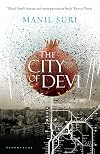
‘The City of Devi’ is definitely one of the most enjoyable of my dystopia-keyword-library-catalogue-search finds. The blurb is quite coy about the plot, stating only that two people are searching for the person they love most in Mumbai, while the threat of nuclear annihilation hangs over the city. It’s actually much more fun than that might suggest. The two people who team up to survive chaotic Mumbai are the wife and ex-boyfriend of the same man. So it’s a bisexual love triangle and show more there’s a race against time to see whether the three will discover polyamory before nuclear war breaks out. I found the description of apocalyptic, collapsing Mumbai atmospheric and exciting. The split point of view was very effective and the flashbacks well-handled. The death of a main character near the end was disappointing, as I would have liked a happy ending, but it did seem fitting. Too conveniently comfortable an ending would have been incongruous with the background of nuclear war and global disaster, I suppose. The tone is fast-paced and witty, with a wistful, thoughtful edge. There’s something cinematic about it, in fact, that could translate well onto film. As an escapist adventure, however, it sometimes jolted me back into reality with passages about religious intolerance and terrorism. I would term it more of an apocalyptic novel than a dystopian one, personally, and a very good one. I liked the characters, found their emotional dilemmas moving, got carried along by the plot, and thought the settings vivid and compelling. I gather it’s the third in a series, yet it seems to work perfectly well as a stand alone novel. show less
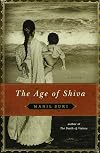
I thought this was a touching story of a young Indian woman's struggles with relationships and with identifying her self worth in a restrictive culture. While still a teenager she rebels against her manipulative father and marries a boy of a lower caste. Although demonstrating her independence, she has to live with the ramifications of her decision. In a crucial point early in the novel she is manipulated by her husband and father into getting an abortion she later regrets. This further show more alienates her to her father. After moving to Bombay her husband grows increasingly distant from her as he struggles to become a successful singer. Later she has a son, Ashwin, to whom she dedicates her life. In the end, she must learn to live with the death of loved ones and the independence of her son. The novel is set in the historical context of India in the first few decades after Partition and, I gather from my limited research, follows the Hindu story of Shiva and Parvati.
I enjoyed the novel because of the insight it provided into this woman's life and it provided an opportunity to learn a bit more about India's history & culture. Beautifully written! show less
I enjoyed the novel because of the insight it provided into this woman's life and it provided an opportunity to learn a bit more about India's history & culture. Beautifully written! show less
 This review was written for LibraryThing Early Reviewers.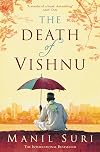
A wonderful tale that revolves around Vishnu, who sleeps on the staircase landing of a Bombay apartment block and does odd-jobs for the residents. He is dying and we begin to meet the residents as they argue about who will pay for an ambulance to take Vishnu away. There are two Hindu families, the Pathaks and Asranis, who have petty arguments about sharing a kitchen, there is Mr Taneja, whose wife has died and who has become a recluse and there is the unfortunate Mr and Mrs Jalal and Mr show more Jalal's search for enlightenment in different religions and their son who is secretly meeting Kavita, the Asrani's daughter. All of this is intertwined with Indian myths and religion. There is humour as the residents deal with each other. Vishnu looks back on his life as he dies and we read the back story of many of the residents but it is the flats and the staircase where the novel happens. show less
A highly imaginative, fast-paced storyline propels you along, and the three main characters are each touching in their own way. I may have missed something though, not being familiar with Hinduism, because I don't really understand the concept of Devi and what that really meant. I also found the ending to be a bit trite. The author really tried to avoid sentimentality and cliche at the end, but it still felt a bit trite to me. For the right reader, though, this book could be highly enjoyable.
Lists
Awards


You May Also Like


Associated Authors
Statistics
- Works
- 8
- Also by
- 3
- Members
- 2,689
- Popularity
- #9,553
- Rating
- 3.5
- Reviews
- 71
- ISBNs
- 93
- Languages
- 15
- Favorited
- 3

