
Neel Mukherjee
Author of The Lives of Others
About the Author
Neel Mukherjee is a UK author who won the 2015 Encore Award for his novel The Lives of Others. Mukherjee's novel, which was also shortlisted for the 2014 Man Booker Prize and the Costa Novel Award, was chosen from a shortlist of six. (Bowker Author Biography)
Disambiguation Notice:
A Life Apart was published in India as Past Continuous.
Image credit: Nick Tucker
Works by Neel Mukherjee
Immigrant 1 copy
Associated Works
Tagged
Common Knowledge
- Birthdate
- 1970
- Gender
- male
- Education
- University of Oxford (BA | English)
University of Cambridge (PhD | English)
University of East Anglia (MA) - Occupations
- fiction writer
- Awards and honors
- Royal Society of Literature (fellow)
- Nationality
- India
- Birthplace
- Calcutta, India
- Places of residence
- London, England, UK
- Map Location
- India
- Disambiguation notice
- A Life Apart was published in India as Past Continuous.
Members
Discussions
2014 Booker Prize longlist: The Lives of Others in Booker Prize (October 2014)
Reviews
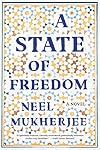
There is much inequity, struggle, and pain in this book, as each character's life seems more miserable than the next. The author notes a peculiarity of Indian culture: "the hatred of the successful for the less lucky of the same group." (Perhaps this trait is universal, but as an Indian immigrant I feel especially sensitive to it among my compatriots.) The cruelty of inequality feels so endemic that the most shocking situations are the rare acts of kindness that people (or in one case, a show more bear) proffer selflessly. As one character says, "...it's not despair that kills you but hope." Recommended for all readers, especially "probasi Bengalis." show less
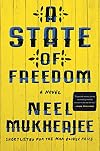
As I was reading the last pages of this uncomfortable and upsetting novel, my eyes were streaming. My grief was overwhelming.
What story set in India is easy to read? E. M. Forster's Passage to India, depicting British racism and the confused heroine nearly destroying a native Indian man's life because he was more attractive than her fiancé? Or Rumor Godden's novels and stories set in the India of her childhood, and where she returned to live with her children, their cook adding ground glass show more to their food? I have never forgotten her short story Mercy, Pity, and Love where a man of privilege is thinking about this thesis as his wife is on a buying spree, while on the street an starving woman holds her dying baby.
No, India holds such poverty and cruelness next to its beauty and exotic attractions that it is not easy to encounter it. A family member by marriage went to India and talked about the beggars who sat n the traffic circle, obviously unprepared for what they would see.
"...but then he was hopeful and it's hope that kills you in the end"--from A State of Freedom
A State of Freedom is a novel in five stories that are interconnected by characters, each story revealing that character's life and challenges. The characters include native Indians crushed by poverty and desperately hoping for a better life, and those who have gone abroad and return to their homeland to see it with new eyes, the eyes of an outsider.
Can we go home again? We leave and the world changes us so that when we return we can not become again who we were. We know too much, we have assumed new values, or perhaps we just see with fresh vision what we had ignored before, familiar things we once accepted become horrors.
The first story concerns an native Indian who has brought his child to see the land of his nativity, and then is appalled by what they see, starting with a man falling from a tall building. He us upset knowing his child is being exposed to the harsh realities of poverty.
The second story concerns a man visiting his family who becomes overly friendly with the staff; invited to visit the cook's home village he realizes he "had failed to imagine how other people live."
The third story I could not read through; children find a bear cub and ask a man to teach it to be a dancing bear--which the father and son in the first story encounter. When they found the cub they were concerned for it, but the training is cruel and inhumane; the ending is horrifying.
The fourth story concerns Milly who works for the wealthy family in the second story, Her mother sent her away at age eight to be a domestic worker. When she asks when she will return home again, her mother tells her, you won't come back. The girl is desperate to learn, to find a better life. Every few years she is moved to a new position. She finds herself virtually imprisoned in never-ending work. Until rescued from her tower by a clever man.
The last story is stream-of-consciousness, the thoughts of an ailing construction worker desperate to complete his job, his mind wandering to the boy in a car he had seen, wishing he could be "the pampered son of a rich man." But he is betrayed, for neither he or the boy escape their mutual fate.
The novel is dark and painful. Why would I choose to endure such unhappiness? Why should one read this book?
One cannot change the way of the world, or the workings of a foreign society, but one can learn to see beyond the narrow limits of our comfortable world. We can understand how others live, we can learn mercy, pity and compassion.
I received a free ebook from the publisher through NetGalley in exchange for a fair and unbiased review. show less
What story set in India is easy to read? E. M. Forster's Passage to India, depicting British racism and the confused heroine nearly destroying a native Indian man's life because he was more attractive than her fiancé? Or Rumor Godden's novels and stories set in the India of her childhood, and where she returned to live with her children, their cook adding ground glass show more to their food? I have never forgotten her short story Mercy, Pity, and Love where a man of privilege is thinking about this thesis as his wife is on a buying spree, while on the street an starving woman holds her dying baby.
No, India holds such poverty and cruelness next to its beauty and exotic attractions that it is not easy to encounter it. A family member by marriage went to India and talked about the beggars who sat n the traffic circle, obviously unprepared for what they would see.
"...but then he was hopeful and it's hope that kills you in the end"--from A State of Freedom
A State of Freedom is a novel in five stories that are interconnected by characters, each story revealing that character's life and challenges. The characters include native Indians crushed by poverty and desperately hoping for a better life, and those who have gone abroad and return to their homeland to see it with new eyes, the eyes of an outsider.
Can we go home again? We leave and the world changes us so that when we return we can not become again who we were. We know too much, we have assumed new values, or perhaps we just see with fresh vision what we had ignored before, familiar things we once accepted become horrors.
The first story concerns an native Indian who has brought his child to see the land of his nativity, and then is appalled by what they see, starting with a man falling from a tall building. He us upset knowing his child is being exposed to the harsh realities of poverty.
The second story concerns a man visiting his family who becomes overly friendly with the staff; invited to visit the cook's home village he realizes he "had failed to imagine how other people live."
The third story I could not read through; children find a bear cub and ask a man to teach it to be a dancing bear--which the father and son in the first story encounter. When they found the cub they were concerned for it, but the training is cruel and inhumane; the ending is horrifying.
The fourth story concerns Milly who works for the wealthy family in the second story, Her mother sent her away at age eight to be a domestic worker. When she asks when she will return home again, her mother tells her, you won't come back. The girl is desperate to learn, to find a better life. Every few years she is moved to a new position. She finds herself virtually imprisoned in never-ending work. Until rescued from her tower by a clever man.
The last story is stream-of-consciousness, the thoughts of an ailing construction worker desperate to complete his job, his mind wandering to the boy in a car he had seen, wishing he could be "the pampered son of a rich man." But he is betrayed, for neither he or the boy escape their mutual fate.
The novel is dark and painful. Why would I choose to endure such unhappiness? Why should one read this book?
One cannot change the way of the world, or the workings of a foreign society, but one can learn to see beyond the narrow limits of our comfortable world. We can understand how others live, we can learn mercy, pity and compassion.
I received a free ebook from the publisher through NetGalley in exchange for a fair and unbiased review. show less
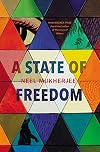
This book will be hard to forget. Five loosely linked tales. A bit-part-player in one tale is the subject of another. Everyone here has left the familiar in quest of something different, something better. The raw poverty and scraping by existence of many of the characters is quite hard to bear. I'll remember most I think Lakshman, who comes upon a beer cub, and with astonishing ignorance, cruelty and lack of empathy teaches the creature to 'dance', to provide him with an income. He lurches show more from crisis to crisis, and we know it won't end well. Village girl Milly is sent away aged eight to become a maid to provide an income for her family. She rarely sees her family again, but this is a success story of sorts.
It's about brutal social divisions, grinding poverty and inequality, but this compassionate book is a rewarding read. show less
It's about brutal social divisions, grinding poverty and inequality, but this compassionate book is a rewarding read. show less

I'm going to have to find a print copy to improve this review. I didn't realize at first that these were separate stories, or how different sections related to each other. It took longer than I expected to get used to the accent of the reader, but once I did I felt it strongly supported the sense of a different culture.
I did visit India for 2 weeks in my early 20's, and was completely unprepared for the Delhi streets. Reading this book made me look back on my experience and wonder how much show more of the ceremony I was there for was another attempt to bilk the white visitors, as profit to an upper caste man.
The first story, about a father's sense of dissociation when he has brought his young son to tour his homeland of India, was not that interesting, but as the book progressed and presented more stories about the impoverished people of India, I began to wonder if there was some meaning in presenting this experience of an emigrant Indian first. Definitely need the print book to study this, as I also wonder how much of this story is autobiographical.
The story of a man who trains a bear did not engender much sympathy for the man, but as I heard another story of a man trapped in paying off debt, I began to understand the motivation for the bear story.
The story about Indian cooking, and the descriptions of food in some of the other stories, had me longing to eat them.
What seemed to be a long story (or maybe it was 2 related stories) about a tribal girl who is raped and beaten by the local police and later joins guerillas connected in my mind with the treatment the native persons in my country also receive. There is no way we can stand as 'holier than thou' and condemn practices in another country if we can't take care of our own.
Shortly after reading this, I picked up a missionary's book which was essentially describing life in modern India to induce guilt and donations from Euro/American readers. It made a big deal about the caste system limiting people. The book did not inspire me, but did cause me to ponder how much the caste system is still active in India. Mukherjee barely mentioned any sense of caste by the people in his stories; one just picks up on a vague impression of the Indian emigrant likely being and upperclass educated person, versus the barely literate forest dwellers. Based on our American culture it was easy to see the difference as economic classes (which play a major role here) as a religio-oppressive caste belief. show less
I did visit India for 2 weeks in my early 20's, and was completely unprepared for the Delhi streets. Reading this book made me look back on my experience and wonder how much show more of the ceremony I was there for was another attempt to bilk the white visitors, as profit to an upper caste man.
The first story, about a father's sense of dissociation when he has brought his young son to tour his homeland of India, was not that interesting, but as the book progressed and presented more stories about the impoverished people of India, I began to wonder if there was some meaning in presenting this experience of an emigrant Indian first. Definitely need the print book to study this, as I also wonder how much of this story is autobiographical.
The story of a man who trains a bear did not engender much sympathy for the man, but as I heard another story of a man trapped in paying off debt, I began to understand the motivation for the bear story.
The story about Indian cooking, and the descriptions of food in some of the other stories, had me longing to eat them.
What seemed to be a long story (or maybe it was 2 related stories) about a tribal girl who is raped and beaten by the local police and later joins guerillas connected in my mind with the treatment the native persons in my country also receive. There is no way we can stand as 'holier than thou' and condemn practices in another country if we can't take care of our own.
Shortly after reading this, I picked up a missionary's book which was essentially describing life in modern India to induce guilt and donations from Euro/American readers. It made a big deal about the caste system limiting people. The book did not inspire me, but did cause me to ponder how much the caste system is still active in India. Mukherjee barely mentioned any sense of caste by the people in his stories; one just picks up on a vague impression of the Indian emigrant likely being and upperclass educated person, versus the barely literate forest dwellers. Based on our American culture it was easy to see the difference as economic classes (which play a major role here) as a religio-oppressive caste belief. show less
Lists
Awards


You May Also Like


Associated Authors
Statistics
- Works
- 6
- Also by
- 5
- Members
- 1,057
- Popularity
- #24,365
- Rating
- 3.6
- Reviews
- 34
- ISBNs
- 58
- Languages
- 5