
Madeleine Thien
Author of Do Not Say We Have Nothing
About the Author
Madeline Thien, 26, is the Canadian born daughter of Malaysian-Chinese immigrants. She holds an MFA in creative writing from the University of British Columbia. She live in Vancouver, BC. Madeleine Thien was born in Vancouver, Canada. She received an MFA in creative writing from the University of show more British Columbia. She is the author of Certainty, Dogs at the Perimeter, and Do Not Say We Have Nothing, which won the 2016 Scotiabank Giller Prize. She also wrote the story collection Simple Recipes. (Bowker Author Biography) show less
Image credit: bc writer's fest
Works by Madeleine Thien
Ricepaper Magazine: Vol 5.1 1 copy
Ricepaper Magazine: Vol 5.2 1 copy
Ricepaper Magazine: Vol 5.3 1 copy
Bundan Sonra Her Şey Biziz 1 copy
Associated Works
Kingdom of Olives and Ash: Writers Confront the Occupation (2017) — Contributor — 166 copies, 5 reviews
Tagged
Common Knowledge
- Birthdate
- 1974
- Gender
- female
- Education
- University of British Columbia (MFA|Creative Writing)
Simon Fraser University - Occupations
- short story writer
novelist - Awards and honors
- Writers' Trust Engel Findley Award (2024)
- Short biography
- Madeleine Thien is the Canadian-born daughter of Malaysian-Chinese immigrants. She holds an MFA in creative writing from the University of British Columbia. She received the 2001 Canadian Authors Association Air Canada Award and the 1998 Asian Canadian Writers' Workshop Emerging Writer Award for fiction, and her collection Simple Recipes was named a notable book by the 2001 Kiriyama Pacific Rim Book Prize.
Thien won the 2006 First-Novel Award from Amazon.ca and Books in Canada. The first novel award comes with a prize of $7,500.
She lives in Vancouver, British Columbia. - Nationality
- Canada
- Birthplace
- Vancouver, British Columbia, Canada
- Associated Place (for map)
- British Columbia, Canada
Members
Reviews

Do Not Say We Have Nothing traces the impact of China's political revolutions on two families from the mid-20th century to the present day. Marie, the daughter of Chinese immigrants in Vancouver, begins her story in 1989, with her father's death. The story reaches back in time to the Cultural Revolution, when Marie's father, Kai, was a student at a Shanghai music conservatory. His life intertwined with that of Sparrow, a composer and professor at the conservatory, and Sparrow's cousin, show more Zhuli, another student at the conservatory. The three are separated when the events of the revolution catch up to them. The story continues with Sparrow's daughter, Ai-ming, and her aspirations of attending a Beijing university. The student protests at Tiananmen Square change the direction of her life. A mysterious Book of Records provides a link from the past to the present.
The book's recurring themes include music, mathematics, Chinese characters and their shades of meaning, the social and psychological effects of the lack of self-determination, familial duty, love, and friendship. The first section covering the end of the Communist Revolution through the first years of the Cultural Revolution is the strongest part of the book. The characters are well rounded and the physical setting is vivid. The second half that centers on the events of Tiananmen Square isn't as sharply focused, and Ai-ming is not as fully developed as the other major characters in the book. Perhaps that's intentional, though. As a child of the Cultural Revolution, her life has always been controlled by the state. The well-deserved attention this book has received from major literary prize committees has it poised to become Thien's breakthrough novel.
This review is based on electronic advance reader copy provided by the publisher through NetGalley. show less
The book's recurring themes include music, mathematics, Chinese characters and their shades of meaning, the social and psychological effects of the lack of self-determination, familial duty, love, and friendship. The first section covering the end of the Communist Revolution through the first years of the Cultural Revolution is the strongest part of the book. The characters are well rounded and the physical setting is vivid. The second half that centers on the events of Tiananmen Square isn't as sharply focused, and Ai-ming is not as fully developed as the other major characters in the book. Perhaps that's intentional, though. As a child of the Cultural Revolution, her life has always been controlled by the state. The well-deserved attention this book has received from major literary prize committees has it poised to become Thien's breakthrough novel.
This review is based on electronic advance reader copy provided by the publisher through NetGalley. show less
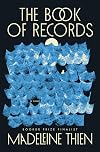
A novel that takes place in a liminal space occupied by people who are escaping various forms of poiitical persecution as artists who have opinions or ethnicities that don't comport with the changing times. There are four strains, three belonging to historical figures. What I appreciated was the blending of fiction and fact in a narrative that undulated between those two poles. Having recently read a bio on Arendt and a bio of Spinosa, I was quite receptive to this interesting book. It's show more also very much about how important storytelling is. It provides strength during challenging times. People are always moving forward in this novel, into the unknown but carrying their memories along with them to help them endure. A smart, rich book. Full of ideas and aphorisms, the book is somehow held together by her skill as a writer. For a lesser novelist, this would have all fallen apart or never even gotten off the ground. show less
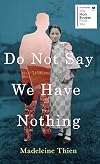
I'm going to be pushing this book to friends. Tracing two families, in particular through the friendship of Kai, Sparrow and Zhuli, through the civil war, the cultural revolution, the Tiananmen Square protests and the liberalisation of China. It sweeps across China and beyond, as exiles are sent to the far reaches of this enormous country, as well as encompassing the experiences of change in the almost unrecognisable cities. As well as the horror of the actions of the revolutionary guard show more there is also joy, such as shared company on the top of a bus, squashed in with other students.
"He watched the lowlands disappear, giving way to higher altitude and drier winds. Quilts were unrolled, thermoses opened and whips of steam plaited together and curled into the night sky. Sparrow slept under the protection of stars and a half moon..."
In case this sounds too worthy - it made me laugh as well. Unlike other stories with a contemporary narrator, I genuinely felt the connection and relevance of Marie's story too, united by a samizdat story circulated around China hand to hand.
"I leaned over the notebook and stared at the gathering of words. Chinese characters tracked down the page like animal prints in the snow.
"It's a story," Ma said.
"Oh. What kind of story?"
"I think it's a novel. There's an adventurer named Da-Wei who sets sail to America and a heroine named May Fourth who walks across the Gobi Desert..."
I stated harder but the words remained unreadable.
"There was a time when people copied out entire books by hand," Ma said. "The Russians called it samizdat, the Chinese called it...well, I don't think we have a name. Look how dirty this notebook is, there's even bits of grass on it. Goodness knows how many people carried it all over the place....it's decades older than you Li-Ling. "
I wondered: What wasn't?"
In choosing to focus on a musical family the author has been able to ask all sorts of questions about what you do when the thing that makes you you is banned, or you are told you have to do a different job. And the characters all have different responses, which feels real too.
"...the music had no beginning, it persisted, whether she was there or not, awake or not, aware or sleeping. She had accepted it all her life, but lately, she had begun to wonder what purpose it served. Prokofiev, Bach and Old Bei occupied the space that the Party, the nation and Chairman Mao occupied for others. Why was this? How had she been made differently? After her parents had been taken away from Bingpai, she had been cut into an entirely different person.
There was a man limping across the park, one hand holding a rip in his shirt, as if this unsightliness bothered him more than the blood that ran down his face."
(Do I need to say I want this one to win the Booker? ) show less
"He watched the lowlands disappear, giving way to higher altitude and drier winds. Quilts were unrolled, thermoses opened and whips of steam plaited together and curled into the night sky. Sparrow slept under the protection of stars and a half moon..."
In case this sounds too worthy - it made me laugh as well. Unlike other stories with a contemporary narrator, I genuinely felt the connection and relevance of Marie's story too, united by a samizdat story circulated around China hand to hand.
"I leaned over the notebook and stared at the gathering of words. Chinese characters tracked down the page like animal prints in the snow.
"It's a story," Ma said.
"Oh. What kind of story?"
"I think it's a novel. There's an adventurer named Da-Wei who sets sail to America and a heroine named May Fourth who walks across the Gobi Desert..."
I stated harder but the words remained unreadable.
"There was a time when people copied out entire books by hand," Ma said. "The Russians called it samizdat, the Chinese called it...well, I don't think we have a name. Look how dirty this notebook is, there's even bits of grass on it. Goodness knows how many people carried it all over the place....it's decades older than you Li-Ling. "
I wondered: What wasn't?"
In choosing to focus on a musical family the author has been able to ask all sorts of questions about what you do when the thing that makes you you is banned, or you are told you have to do a different job. And the characters all have different responses, which feels real too.
"...the music had no beginning, it persisted, whether she was there or not, awake or not, aware or sleeping. She had accepted it all her life, but lately, she had begun to wonder what purpose it served. Prokofiev, Bach and Old Bei occupied the space that the Party, the nation and Chairman Mao occupied for others. Why was this? How had she been made differently? After her parents had been taken away from Bingpai, she had been cut into an entirely different person.
There was a man limping across the park, one hand holding a rip in his shirt, as if this unsightliness bothered him more than the blood that ran down his face."
(Do I need to say I want this one to win the Booker? ) show less
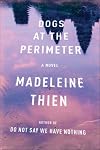
Beautifully tangled
A riveting, sorrowful read. It's like being inside the main character's head while she devolves into mental illness, but the tendrils of story that cling to the reader like questing fingers reveal the horror she has endured that formed her into the broken simulacra of a woman. I know enough history of Laos and Cambodia to fill in the blanks of this literary horror tale. The plot rambles and is sometimes incoherent, and there is no resolution or happiness at the end of the show more book. show less
A riveting, sorrowful read. It's like being inside the main character's head while she devolves into mental illness, but the tendrils of story that cling to the reader like questing fingers reveal the horror she has endured that formed her into the broken simulacra of a woman. I know enough history of Laos and Cambodia to fill in the blanks of this literary horror tale. The plot rambles and is sometimes incoherent, and there is no resolution or happiness at the end of the show more book. show less
Lists
Awards


You May Also Like


Associated Authors
Statistics
- Works
- 12
- Also by
- 3
- Members
- 2,362
- Popularity
- #10,866
- Rating
- 3.9
- Reviews
- 96
- ISBNs
- 110
- Languages
- 15
- Favorited
- 3