
Ian Jack (1) (1945–2022)
Author of Granta 81: Best of Young British Novelists 2003
For other authors named Ian Jack, see the disambiguation page.
About the Author
Image credit: Courtesy of Allen and Unwin
Works by Ian Jack
Associated Works
Tagged
Common Knowledge
- Other names
- Jack, Ian Grant
- Birthdate
- 1945-02-07
- Date of death
- 2022-10-28
- Gender
- male
- Education
- Dunfermline High School
- Occupations
- journalist
editor - Organizations
- Glasgow Herald (trainee journalist|1965)
Sunday Times (1970)
Observer (contributor)
Vanity Fair (contributor)
Independent on Sunday (creative team|1990|editor|1991-1995)
Granta (editor|1995-2007) (show all 7)
Guardian (contributor|2001-2022) - Awards and honors
- What The Papers Say Awards (journalist of the year|1985)
British Press Awards (reporter of the year|1988)
Newspaper Industry Awards (editor of the year|1993)
Royal Society of Literature (fellow) - Relationships
- Bagchi, Aparna (wife|1979|divorced|1992)
Sharpe, Lindy (journalist and food systems academic|second wife) - Nationality
- UK
- Birthplace
- Farnworth, Lancashire, England, UK
- Places of residence
- North Queensferry, Fife, Scotland (1952)
London, England (1970)
Calcutta, India (Sunday Times foreign correspondent)
New Delhi, India (Sunday Times foreign correspondent) - Place of death
- Paisley, Renfrewshire, Scotland
- Map Location
- Scotland, UK
Members
Reviews

Whilst Granta 48 was mostly European or American writers writing about Africa, almost all of the contributors to Granta 92 are actually African (the issue closes with one entirely non-African piece, a topical essay by John Biguenet on the experience of losing his home in New Orleans to hurricane Katrina).
There are some unexpected viewpoints, though, which is fun: Ghanaian-born poet Kwame Dawes writes about the prejudice he experienced growing up as an African in Jamaica; Segun Afolabi's show more story "Gifted" is set in an expat Nigerian family in snowy Japan; Adewale Maja-Pearce writes about growing up in the cultural tension between his estranged British and Nigerian parents. The stories by Chimamanda Ngozi Adichie and Moses Isegawa are more conventional "African writing", and maybe at least on the fringes of the territory that Binyavanga Wainaina mocks in his satirical essay "How to write about Africa" ("Some tips: sunsets and starvation are good"). That essay seems to have sparked off quite some discussion at the time.
In "The master", Adichie presents us a charming picture of a naive teenage boy from a village who comes to work as servant for a university professor in the city, with lots of buried little jokes about sixties intellectuals; Isegawa's "The war of the ears" follows a Ugandan teacher under the threat of attack by rebel child-soldiers.
Nadine Gordimer's story "Beethoven was one-sixteenth black" and a selection of Ivan Vladislavić's "Joburg" microessays give interestingly different views of post-apartheid South Africa.
On the documentary side, there's a photo-essay by Geert van Kesteren about the Ogiek, indigenous people under threat in Kenya, and a sample from Santu Mofokeng's "Black albums", a collection of family photographs of black people in South Africa around 1900, showing us some of the rising aspirations that were slapped down in the course of the 20th century.
A lot of interesting samples to follow up. show less
There are some unexpected viewpoints, though, which is fun: Ghanaian-born poet Kwame Dawes writes about the prejudice he experienced growing up as an African in Jamaica; Segun Afolabi's show more story "Gifted" is set in an expat Nigerian family in snowy Japan; Adewale Maja-Pearce writes about growing up in the cultural tension between his estranged British and Nigerian parents. The stories by Chimamanda Ngozi Adichie and Moses Isegawa are more conventional "African writing", and maybe at least on the fringes of the territory that Binyavanga Wainaina mocks in his satirical essay "How to write about Africa" ("Some tips: sunsets and starvation are good"). That essay seems to have sparked off quite some discussion at the time.
In "The master", Adichie presents us a charming picture of a naive teenage boy from a village who comes to work as servant for a university professor in the city, with lots of buried little jokes about sixties intellectuals; Isegawa's "The war of the ears" follows a Ugandan teacher under the threat of attack by rebel child-soldiers.
Nadine Gordimer's story "Beethoven was one-sixteenth black" and a selection of Ivan Vladislavić's "Joburg" microessays give interestingly different views of post-apartheid South Africa.
On the documentary side, there's a photo-essay by Geert van Kesteren about the Ogiek, indigenous people under threat in Kenya, and a sample from Santu Mofokeng's "Black albums", a collection of family photographs of black people in South Africa around 1900, showing us some of the rising aspirations that were slapped down in the course of the 20th century.
A lot of interesting samples to follow up. show less

That rarest of books - the one where, when you've finished reading it, you immediately start to re-read it so that you can enjoy the word-pictures painted by the author again.
The title here may mislead. This collection of articles by the late Scottish journalist Ian Jack has nothing to do with oil - its abundance or its scarcity. It is, rather, a look at the state of the nation of Britain and abroad in the period from 1977 to 1986: what was happening in Britain and further afield, in other show more words, before the question of oil even arose.
There are sixteen well-written articles here which take as their starting-point an aspect of life in Britain in this period. They include : the end of the age of steam, as reflected in the life of a Glasgow engine-driver; a comparison of the working-class districts of Liverpool and Turin, seen through the eyes of their football supporters; a snapshot of a day in the life of the honorary secretary and co-founder of the Society of Advanced Meccano Constructors; and race-relations in Bradford, as witnessed by the former head of Drummond Middle School, Ray Honeyford.
In a nice touch, the author references two earlier 'state of the nation' books by JB Priestley and Louis MacNiece as he tours Yorkshire and the Hebrides. He also recounts what was probably one of the last interviews with Priestley when the latter was 88 years old.
This is a delightful collection of pieces by Ian Jack which show real insight into the lives of those he writes about. You would be hard-pressed to find a better description of life in the Falkland Islands in the 1980's, for example, than the beautifully-crafted chapter here titled "Don't cry for us, Argentina".
Sadly, this book is out of print. However, it's worth tracking down a copy if you can find one. show less
The title here may mislead. This collection of articles by the late Scottish journalist Ian Jack has nothing to do with oil - its abundance or its scarcity. It is, rather, a look at the state of the nation of Britain and abroad in the period from 1977 to 1986: what was happening in Britain and further afield, in other show more words, before the question of oil even arose.
There are sixteen well-written articles here which take as their starting-point an aspect of life in Britain in this period. They include : the end of the age of steam, as reflected in the life of a Glasgow engine-driver; a comparison of the working-class districts of Liverpool and Turin, seen through the eyes of their football supporters; a snapshot of a day in the life of the honorary secretary and co-founder of the Society of Advanced Meccano Constructors; and race-relations in Bradford, as witnessed by the former head of Drummond Middle School, Ray Honeyford.
In a nice touch, the author references two earlier 'state of the nation' books by JB Priestley and Louis MacNiece as he tours Yorkshire and the Hebrides. He also recounts what was probably one of the last interviews with Priestley when the latter was 88 years old.
This is a delightful collection of pieces by Ian Jack which show real insight into the lives of those he writes about. You would be hard-pressed to find a better description of life in the Falkland Islands in the 1980's, for example, than the beautifully-crafted chapter here titled "Don't cry for us, Argentina".
Sadly, this book is out of print. However, it's worth tracking down a copy if you can find one. show less
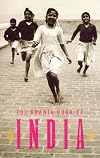
This was one of those books I found a joy to read. Of the seventeen stories, essays, and articles, I can call only two of them duds. The rest I’d rate four to five stars. All of them dealt with India and/or Pakistan: rural villages, big cities like Mumbai, memoirs of travelers to both. The India/Pakistan conflicts were touched upon in several, a subject which I didn’t know much about; one excellent article, “Jihadists” was about the conflicts that led to the 9/11 attacks and what was show more going on in Pakistan and Afghanistan afterward. Although the political commentary was outdated (most of the book’s material was from the 1990s) most of the writers were from India or Pakistan and so it was interesting to hear their viewpoints. The fiction was mainly slices-of-life from the lives of ordinary Indian people, like a businessman who is embarrassed by, but also enjoys, his wife’s singing talent (“White Lies” by Amit Chaudhuri).
Other favorites of mine were “What Bengali Widows Cannot Eat” by Chitrita Banerjee, in which an Indian-American cookbook writer describes her mother’s Indian widowhood customs, one of which is not eating any meat, ever again. According to custom widows are treated as bad luck in India among all classes and the older generation of women, at least, is still buying into this. It could have been another “Gee-it-sucks-to-be-woman-in-[name of country]” story that usually pops up whenever some Asian country in essayed, but the descriptions of the food were truly sumptuous.
The other article I enjoyed, also about a woman, was “Little Durga” by Shampa Banerjee (not related to the author above, Banerjee is something of the “Smith” of India). This was the adult recollections of the child actress who had played the role of older sister to Apu, the main character in the Apu movie trilogy of acclaimed director Satyajit Ray.
The other was the recollections of the actress who became famous for playing a little girl in an acclaimed Indian movie.
The two duds were an incoherent article/memoir about dervishes and a story about an Indian tutor, Ivy League educated, who agrees to ghost-write a college entrance essay for an unmotivated American girl living in Bombay with her expat father. The tutor has a bit of a crush on the girl. This wasn’t badly written, but just rubbed me the wrong way. First, the main character knowingly participates in fraud, second, I don’t have a lot of sympathy for spoiled teenage girls who can’t be assed to write their own essays, no matter how young and rich and beautiful they are.
The story just sort of… ended, without much of a conclusion, as most of the fiction did, and not a few of the essays. Which wasn’t necessarily bad, I enjoyed reading them. But I do wonder if that is considered the thing to do now when writing modern essays. I was raised, for example, to write a beginning, a middle, and an end, and if not handing the conclusion to the reader, point them to it with some very strong hints. But a lot of the material forced me to draw my own. show less
Other favorites of mine were “What Bengali Widows Cannot Eat” by Chitrita Banerjee, in which an Indian-American cookbook writer describes her mother’s Indian widowhood customs, one of which is not eating any meat, ever again. According to custom widows are treated as bad luck in India among all classes and the older generation of women, at least, is still buying into this. It could have been another “Gee-it-sucks-to-be-woman-in-[name of country]” story that usually pops up whenever some Asian country in essayed, but the descriptions of the food were truly sumptuous.
The other article I enjoyed, also about a woman, was “Little Durga” by Shampa Banerjee (not related to the author above, Banerjee is something of the “Smith” of India). This was the adult recollections of the child actress who had played the role of older sister to Apu, the main character in the Apu movie trilogy of acclaimed director Satyajit Ray.
The other was the recollections of the actress who became famous for playing a little girl in an acclaimed Indian movie.
The two duds were an incoherent article/memoir about dervishes and a story about an Indian tutor, Ivy League educated, who agrees to ghost-write a college entrance essay for an unmotivated American girl living in Bombay with her expat father. The tutor has a bit of a crush on the girl. This wasn’t badly written, but just rubbed me the wrong way. First, the main character knowingly participates in fraud, second, I don’t have a lot of sympathy for spoiled teenage girls who can’t be assed to write their own essays, no matter how young and rich and beautiful they are.
The story just sort of… ended, without much of a conclusion, as most of the fiction did, and not a few of the essays. Which wasn’t necessarily bad, I enjoyed reading them. But I do wonder if that is considered the thing to do now when writing modern essays. I was raised, for example, to write a beginning, a middle, and an end, and if not handing the conclusion to the reader, point them to it with some very strong hints. But a lot of the material forced me to draw my own. show less
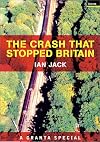
This is a short but powerful book that builds the argument that the Hatfield train crash in 2000 resulted from an environment that diffused responsibility and blocked the free flow of safety-critical information. The details are shocking, and it’s sad to read about them now because I am not sure how much has changed. I learned a great deal from this book.
Lists
You May Also Like


Associated Authors
Statistics
- Works
- 62
- Also by
- 10
- Members
- 8,195
- Popularity
- #2,951
- Rating
- 3.8
- Reviews
- 47
- ISBNs
- 144
- Languages
- 5
- Favorited
- 1