
Anita Desai
Author of Fasting, Feasting
About the Author
Anita Desai was born in Mussoorie, India, in 1937 of Indian and German parentage. Her works focus on relationships and family life in India, particularly the problems of women in Indian society. She has written for both adults and children, winning the Winifred Holtby Prize from the Royal Society show more of Literature for Fire on the Mountain (1977) and the Guardian Prize for Children's Fiction for her novel The Village by the Sea (1982). Among her numerous other honors is a Literary Lion Award from the New York Public Library in 1993. Desai came to America in 1987. She has taught at Mount Holyoke College, Baruch College, and Smithe College. Desai is currently Emeritus John E. Burchard Professor of Humanities at MIT. (Bowker Author Biography) Anita Desai was born & educated in India. Among her many published works are "Fasting, Feasting" (a finalist for the 1999 Booker Prize), "Baumgartner's Bombay," "In Custody," "Games at Twilight," & "Diamond Dust." Her awards & honors include the Alberto Moravia Award, the National Academy of Letters Award, & the Winifred Holtby Prize of the Royal Society of Literature. She lives in Cambridge, Massachusetts, where she teaches writing at MIT. (Publisher Provided) show less
Works by Anita Desai
Translator Translated 2 copies
An Autobiography 1 copy
Kadakkkarayile Gramam 1 copy
The Zig Zag Way 1 copy
The Rooftop Dwellers 1 copy
The Museum of Final Journeys 1 copy
Desai Anita 1 copy
KADALKKARAYILE GRAAMAM 1 copy
Associated Works
Other Voices, Other Vistas: Short Stories from Africa, China, India, Japan, and Latin America (1992) — Contributor — 213 copies, 2 reviews
Kingdom of Olives and Ash: Writers Confront the Occupation (2017) — Contributor — 166 copies, 5 reviews
In Custody [1994 film] — Original book — 1 copy
Tagged
Common Knowledge
- Canonical name
- Desai, Anita
- Legal name
- Mazumdar, Anita (born)
- Birthdate
- 1937-06-24
- Gender
- female
- Education
- Queen Mary's Higher Secondary School, Delhi
Delhi University - Occupations
- novelist
teacher (writing program ∙ M.I.T.)
children's writer - Organizations
- American Academy of Arts and Letters (Foreign Honorary, Literature, 1992)
- Awards and honors
- Benson Medal
Royal Society of Literature (Fellow)
American Academy of Arts and Letters (Fellow)
Fellow, Girton College, University of Cambridge, Uk
Neil Gunn Prize (1993)
Alberto Moravia Prize for Literature (2000) (show all 7)
Fellow, Clare Hall, Cambridge - Agent
- Deborah Rogers (Rogers, Coleridge & White)
- Relationships
- Desai, Kiran (daughter)
- Nationality
- India
- Birthplace
- Mussoorie, India
- Places of residence
- Delhi, India
Boston, Massachusetts, USA
Cambridge, Cambridgeshire, England, UK
Mussoorie, India (birth) - Map Location
- India
Members
Discussions
26Shorts2026: ShortsRead --- Anisha's 2026 log in 26 Short Stories for 2026 (Sunday 11:49am)
Reviews
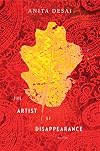
All of us, every one of us, has had a moment when a window opened, when we caught a glimpse of the open, sunlit world beyond, but all of us, on this bus, have had that window close and remain closed. – from Translator Translated -
The Artist of Disappearance is a collection of novellas which are all set in India and have the similar themes of identity, searching for meaning in one’s life and how place can define who we become.
The Museum of Final Journeys, the first novella in the book, show more introduces the idea that memory is fragile and unreliable. Another theme in the story is the delicate balance of the natural world in a modernized society. In this story, a young man arrives in a dusty, desolate town where he has been posted to complete his training for a government position. He laments the long, dull days and the slovenly conditions of his new home. Then, one afternoon, a clerk arrives to make an appeal – he is the curator of sorts of an unusual museum but he can no longer afford to keep it running and wishes for the government to take it over. Intrigued, the narrator agrees to visit the museum. What he finds is astonishing and surprising – a treasure trove of objects, the unusual story of a family, and a creature whose life depends on the benevolence of her caretakers. Years later, his memory of the event is fragmented and frail like a mirage – perhaps as a way to resolve the guilt he feels for his lack of action.
The second story in the collection, Translator Translated, centers around Prema, an Indian woman who unexpectedly runs into an old high school friend and gets the opportunity to realize her dream of translating fiction. In this novella, Desai explores the different cultures of India and the loss of little known languages, as well as the role language plays in our identity. Prema loves the language of Oriya which is her mother’s tongue, but it is a language which very few people speak or understand. When Prema begins translating a book from Oriya into English she finds herself struggling to connect the two halves of her own life which includes the inter-caste marriage of her parents. As Prema works, she finds it harder and harder to be faithful in her translation of the author’s work.
Wasn’t this what the Impressionist painters had done in those early adventurous days, breaking up flat surfaces to refract light into many scattered molecules, and so reconstruct the surface and make it stir to life? – from Translator Translated -
As the novella unfolds, Prema becomes more lost to herself as she converts her mother tongue into the colonial language of English. Translator Translated is a beautiful meditation on the loss of culture and identity in a modern world.
The final story of this collection is, perhaps, my favorite. The Artist of Disappearance centers around Ravi, an odd man who is isolated from society and lives in the burned out shell of his family’s home. Ravi has always been different from others. He is especially connected to nature.
Outdoors was the life to which he chose to belong – the life of the crickets springing out of the grass, the birds wheeling hundreds of feet below in the valley or soaring upwards above the mountains, and the animals invisible in the undergrowth, giving themselves away by an occasional rustle or eruption of cries or flurried calls; plants following their own green compulsions and purposes, almost imperceptibly, and the rocks and stones, seemingly inert but mysteriously part of the constant change and movement of the earth. – from The Artist of Disappearance -
Ravi’s story is about nurturing that part of ourselves which is connected to the earth. In the towns around Ravi’s home, bulldozers are destroying the land and mining has stripped the earth of living creatures. But, high in the mountains, Ravi constructs a beautiful glade made from stones and trees, flowers and berries. Ravi is completely disconnected from society while being wholly connected to the physical space he calls home.
As a whole, Desai’s collection is nearly dreamlike in quality. Her characters have unfulfilled dreams and are disillusioned with their lives. Each character is presented with opportunities to enrich themselves and then find they stumble because of their human imperfection.
Anita Desai writes beautifully. She captures the beauty of India, but also does not hesitate to reveal its faults and complexities. I thoroughly enjoyed this slim volume of stories whose characters struggle and search for meaning in their lives.
Highly recommended for readers who love literary fiction. show less
The Artist of Disappearance is a collection of novellas which are all set in India and have the similar themes of identity, searching for meaning in one’s life and how place can define who we become.
The Museum of Final Journeys, the first novella in the book, show more introduces the idea that memory is fragile and unreliable. Another theme in the story is the delicate balance of the natural world in a modernized society. In this story, a young man arrives in a dusty, desolate town where he has been posted to complete his training for a government position. He laments the long, dull days and the slovenly conditions of his new home. Then, one afternoon, a clerk arrives to make an appeal – he is the curator of sorts of an unusual museum but he can no longer afford to keep it running and wishes for the government to take it over. Intrigued, the narrator agrees to visit the museum. What he finds is astonishing and surprising – a treasure trove of objects, the unusual story of a family, and a creature whose life depends on the benevolence of her caretakers. Years later, his memory of the event is fragmented and frail like a mirage – perhaps as a way to resolve the guilt he feels for his lack of action.
The second story in the collection, Translator Translated, centers around Prema, an Indian woman who unexpectedly runs into an old high school friend and gets the opportunity to realize her dream of translating fiction. In this novella, Desai explores the different cultures of India and the loss of little known languages, as well as the role language plays in our identity. Prema loves the language of Oriya which is her mother’s tongue, but it is a language which very few people speak or understand. When Prema begins translating a book from Oriya into English she finds herself struggling to connect the two halves of her own life which includes the inter-caste marriage of her parents. As Prema works, she finds it harder and harder to be faithful in her translation of the author’s work.
Wasn’t this what the Impressionist painters had done in those early adventurous days, breaking up flat surfaces to refract light into many scattered molecules, and so reconstruct the surface and make it stir to life? – from Translator Translated -
As the novella unfolds, Prema becomes more lost to herself as she converts her mother tongue into the colonial language of English. Translator Translated is a beautiful meditation on the loss of culture and identity in a modern world.
The final story of this collection is, perhaps, my favorite. The Artist of Disappearance centers around Ravi, an odd man who is isolated from society and lives in the burned out shell of his family’s home. Ravi has always been different from others. He is especially connected to nature.
Outdoors was the life to which he chose to belong – the life of the crickets springing out of the grass, the birds wheeling hundreds of feet below in the valley or soaring upwards above the mountains, and the animals invisible in the undergrowth, giving themselves away by an occasional rustle or eruption of cries or flurried calls; plants following their own green compulsions and purposes, almost imperceptibly, and the rocks and stones, seemingly inert but mysteriously part of the constant change and movement of the earth. – from The Artist of Disappearance -
Ravi’s story is about nurturing that part of ourselves which is connected to the earth. In the towns around Ravi’s home, bulldozers are destroying the land and mining has stripped the earth of living creatures. But, high in the mountains, Ravi constructs a beautiful glade made from stones and trees, flowers and berries. Ravi is completely disconnected from society while being wholly connected to the physical space he calls home.
As a whole, Desai’s collection is nearly dreamlike in quality. Her characters have unfulfilled dreams and are disillusioned with their lives. Each character is presented with opportunities to enrich themselves and then find they stumble because of their human imperfection.
Anita Desai writes beautifully. She captures the beauty of India, but also does not hesitate to reveal its faults and complexities. I thoroughly enjoyed this slim volume of stories whose characters struggle and search for meaning in their lives.
Highly recommended for readers who love literary fiction. show less
 This review was written for LibraryThing Early Reviewers.
Fasting, feasting is another novel that builds on Philip Larkin's famous line about parents, looking at two seriously dysfunctional families. Uma's middle-class, provincial, Indian MamaPapa (she finds it hard to think of them as separate entities) don't see any particular need for her to have a life of her own. Several attempts to marry her off have failed ignominiously, as have some half-hearted attempts at rebellion, and since she's not clever enough or pretty enough to get away with show more fighting her parents long-term, she finds herself stuck in a life of looking after her baby brother and running pointless errands. Her pretty cousin doesn't fare much better, either - she is married off only to find herself at the mercy of a bullying mother-in-law.
Lest we think that all this is just a rant against "traditional" attitudes to women in India, Desai then changes the scene to Massachusetts, where Uma's overprivileged little brother has been sent for the obligatory "studying overseas". It becomes clear immediately that he's been just as heavily damaged by being pushed to succeed as Uma has by being pushed to fail, and moreover he finds himself staying with an American family that is every bit as dysfunctional as his own, with none of its members (least of all the father, who blithely keeps on barbecuing meat for vegetarians...) paying any serious attention to what's going wrong in the lives of the others. The only real difference between the Indians and the Americans seems to be that the American parents get a chance to mitigate some of the harm they've done before it's absolutely too late... show less
Lest we think that all this is just a rant against "traditional" attitudes to women in India, Desai then changes the scene to Massachusetts, where Uma's overprivileged little brother has been sent for the obligatory "studying overseas". It becomes clear immediately that he's been just as heavily damaged by being pushed to succeed as Uma has by being pushed to fail, and moreover he finds himself staying with an American family that is every bit as dysfunctional as his own, with none of its members (least of all the father, who blithely keeps on barbecuing meat for vegetarians...) paying any serious attention to what's going wrong in the lives of the others. The only real difference between the Indians and the Americans seems to be that the American parents get a chance to mitigate some of the harm they've done before it's absolutely too late... show less
Incandescent, immaculate - this is a pristine little book containing clarity of vision and purpose in such a simple clean package, much like a shard of quartz or the glittering beetle - objects that Desai also pays homage to in the final of the three novellas contained wherein.
I've noticed that writers who are further along in their careers seem to favor a stripped down sort of language, as if the challenge is to convey the same meaning of a 15-worded sentence within a more compact statement show more of perhaps half the length. Desai seemed to do this even early in her career, and it's always done her writing credit; she packs so much dynamite into the shortest of sentences; they are all the more powerful for their brevity.
Within the three novellas are characters who are all desperate for something which they cannot grasp, though the recluse Ravi seems to come closest in the last novella which the whole book takes its title from. The first story's narrator describes his predicament of being presented with a responsibility that he does not quite fathom; the second character conversely grasps at some responsibility in a desperate move to salvage her own self; and the third does not so much take on a responsibility as become it - his duty and his self wholly merged within each other.
It all raises questions that will pick at you long after reading, chiefly regarding the artist's participation in the surrounding world, and whether the degree of engagement is help or hindrance to the creative work. Must you detach yourself completely in order to gain the perspective to translate the world faithfully in your art? And if you do, what about the resulting loss of experience?
What - or where - is the balance? show less
I've noticed that writers who are further along in their careers seem to favor a stripped down sort of language, as if the challenge is to convey the same meaning of a 15-worded sentence within a more compact statement show more of perhaps half the length. Desai seemed to do this even early in her career, and it's always done her writing credit; she packs so much dynamite into the shortest of sentences; they are all the more powerful for their brevity.
Within the three novellas are characters who are all desperate for something which they cannot grasp, though the recluse Ravi seems to come closest in the last novella which the whole book takes its title from. The first story's narrator describes his predicament of being presented with a responsibility that he does not quite fathom; the second character conversely grasps at some responsibility in a desperate move to salvage her own self; and the third does not so much take on a responsibility as become it - his duty and his self wholly merged within each other.
It all raises questions that will pick at you long after reading, chiefly regarding the artist's participation in the surrounding world, and whether the degree of engagement is help or hindrance to the creative work. Must you detach yourself completely in order to gain the perspective to translate the world faithfully in your art? And if you do, what about the resulting loss of experience?
What - or where - is the balance? show less
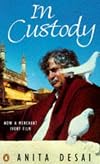
There aren't really specific words to describe this book's power. On the surface of it Anita Desai's work can be seen as overwrought, a tad pretentious, and even unsatisfying as to how it concludes. Additionally, Desai has, at least in this work, the somewhat dubious distinction of writing some of the most unpleasant characters in (relatively) recent fiction.
However under this scrim, this veneer of unpleasantness, there's a powerful mind presenting a challenging work. Maybe I've become too show more complacent in recent years. Though even after reading Calvino's If on a winter's night... I felt, at the bare minimum, slightly confident in my ability to consume a work of complexity. But maybe that was because Calvino's work was more a feat of structural dexterity. Hell, even Dostoyevsky in his Notes on the Underground was easier to take in. This is not to say that Desai is a less skilled writer than the aforementioned or that the pair are in anyway simplistic writers. It's just that what Desai gives us is neither a Byzantine riddle nor a psychological labyrinth; her book is instead an elegant work of craft showcasing a group of people shouldering the burden of their own very human weaknesses and that of the history of a much conflicted and complicated nation.
This is a definite recommendation to anyone though be warned that the picture of India here is not that of the affluent Western tourist. There is nothing kitsch or remotely stereotypical. It's an honest and bracing narrative encompassing happiness, despair, success, failure, and the nature and importance of art's necessary immortality to humanity. show less
However under this scrim, this veneer of unpleasantness, there's a powerful mind presenting a challenging work. Maybe I've become too show more complacent in recent years. Though even after reading Calvino's If on a winter's night... I felt, at the bare minimum, slightly confident in my ability to consume a work of complexity. But maybe that was because Calvino's work was more a feat of structural dexterity. Hell, even Dostoyevsky in his Notes on the Underground was easier to take in. This is not to say that Desai is a less skilled writer than the aforementioned or that the pair are in anyway simplistic writers. It's just that what Desai gives us is neither a Byzantine riddle nor a psychological labyrinth; her book is instead an elegant work of craft showcasing a group of people shouldering the burden of their own very human weaknesses and that of the history of a much conflicted and complicated nation.
This is a definite recommendation to anyone though be warned that the picture of India here is not that of the affluent Western tourist. There is nothing kitsch or remotely stereotypical. It's an honest and bracing narrative encompassing happiness, despair, success, failure, and the nature and importance of art's necessary immortality to humanity. show less
Lists
Booker Prize (3)
Unmarried women (1)
My TBR (1)
Big Jubilee List (1)
Female Author (2)
1980 great books (1)
Awards


You May Also Like


Associated Authors
Statistics
- Works
- 39
- Also by
- 23
- Members
- 4,745
- Popularity
- #5,298
- Rating
- 3.8
- Reviews
- 137
- ISBNs
- 247
- Languages
- 14
- Favorited
- 13

