
Esmeralda Santiago
Author of When I Was Puerto Rican
About the Author
Esmeralda Santiago is the author of two other memoirs, When I Was Puerto Rican and Almost a Woman, which was made into a Peabody Award-winning film for Masterpiece Theatre
Series
Works by Esmeralda Santiago
Las Christmas: Favorite Latino Authors Share Their Holiday Memories (1998) — Editor — 39 copies, 1 review
Almost A Woman 1 copy
Almost a Woman 1 copy
Mango's en milkshakes 1 copy
Sokeriplantaasin valtiatar 1 copy
Associated Works
How I Learned English: 55 Accomplished Latinos Recall Lessons in Language and Life (2007) — Contributor — 54 copies, 4 reviews
Daughters of Latin America: An International Anthology of Writing by Latine Women (2023) — Contributor — 41 copies, 1 review
The Artists' and Writers' Cookbook: A Collection of Stories with Recipes (2016) — Contributor — 19 copies
Tagged
Common Knowledge
- Canonical name
- Santiago, Esmeralda
- Birthdate
- 1948-05-17
- Gender
- female
- Education
- Harvard University (BA|1976)
Sarah Lawrence College (MFA|1992) - Occupations
- writer
- Organizations
- Cantomedia
- Awards and honors
- National Women of Distinction Award (2002)
George Foster Peabody Award (2002) - Relationships
- Cantor, Frank (spouse)
- Nationality
- USA
Puerto Rico - Birthplace
- San Juan, Puerto Rico
- Places of residence
- New York, New York, USA
- Associated Place (for map)
- New York, New York, USA
Members
Reviews

Conquistadora is an arduous three-part journey that follows several generations through the hardships of running a sugar plantation in Puerto Rico. The story belongs to the main female character, Ana Cubillas, but does not neglect providing different aspects of life during this niche in history. Ana's ambition paints her as cold and sometimes cruel, but the determination she shows is remarkable, if not admirable. Conquistadora echoes the classic Gone With the Wind, and the main character show more reflects the strength and stubbornness of Scarlett O'Hara. Hacienda los Gemelos sings an eerily familiar tune and is just as majestic as Tara. Its beauty and glory is, and also regretfully, built on the back of slavery. Freedom is a concept that evades all the characters in novel. Despite their gender, class, history, name, origin, marriage and wealth, each are enslaved and bound by duty, history and country. Some chains are literal, while others are phantoms that bind each person to the Earth or each other. In this Spanish land, during this era, and from the heart of the story, it seems the only way to achieve absolute freedom is through death. It is foretold that Ana Cubillas will live to be an old woman, which brings her relief -- but given the definition of 'freedom' is this really good news? Conquistadora is thematically heavy, epically depicted and steeped in the traditional structure of old world story-telling generally attached to historical fiction. Purest of the historical genre will likely enjoy the lyrical voice of Esmeralda Santiago. show less
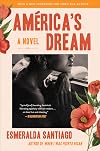
"To her, the scar is not invisible. It irritates her when people pretend it's not there. It's a reminder of who she is now, and who she was then....They're there to remind her that she fought for her life, and that, no matter what how others may interpret it, she has a right to live that life as she chooses."
America's Dream by Esmeralda Santiago was November's pick for #ReadPuertoRican book club. In this one, Santiago highlights Puerto Rican women while at the same time giving you important show more Puerto Rican history such as: U.S. occupation and bomb testing in Vieques, birth control and sterilization of Puerto Rican women, and rise of tourism from the slave system and haciendas. Santiago's main focus was on machismo and domestic violence. Although this book published in 1996, it relevant still today as Puerto Rican femicide and gender violence led to a state if emergency being declared in Puerto Rico as gender based violence continues to rise and has historically been a huge problem in the Caribbean.
Santiago gives us a nuanced perspective on domestic abuse through America Gonzalez's eyes. She shows us how difficult it is to get help while being in and even after leaving the relationship. She shows us the push-pull mentality as Puerto Rican women grapple with wanting to pursue freedom through feminism but at the same time upholding the very same beliefs that are the cause of their oppression. For many women poverty forces the cycle of violence and machismo to continue. She shows how mother-daughter relationships are strained through mixed messaging and not being able to openly talk about machismo without feeling like they're assimilating or abandoning their culture. She shows us the ways they cope with abuse and trauma, from total denial of depression, numbing through alcoholism and learning how to be in survival mode on a daily basis.
What I found interesting about Santiago's writing is how she places the status of women within the greater context of the colonial status of Puerto Rico. The state of ambivalence the women display directly mirrors the mentality of Puerto Ricans when is comes to their relationship with the U.S.
They've been abused for so long, they've almost become passive. They know they need to change in order to survive but the roots of trauma and abuse are embedded so deeply through Puerto Ricans that at times, it feels almost impossible to come up for air. But the Puerto Rican resilience and will to survive has sustained despite all the tragedy. For many change has come from exposure to living in the diaspora but more importantly by holding on to language, refusing assimilation and empowering the next generation to become changemakers. Essentially, the fate of Puerto Rican women depends on the fight for Puerto Rico's sovereignty. América Gonzalez, as a character reminds us that although we may be battered and bruised, we are not broken and there is much work to do in the areas of decolonization, unlearning machismo and gender violence and solidarity in liberation movements. Siempre pa'lante but never forgetting what it means to be a Puerto Rican survivor. show less
America's Dream by Esmeralda Santiago was November's pick for #ReadPuertoRican book club. In this one, Santiago highlights Puerto Rican women while at the same time giving you important show more Puerto Rican history such as: U.S. occupation and bomb testing in Vieques, birth control and sterilization of Puerto Rican women, and rise of tourism from the slave system and haciendas. Santiago's main focus was on machismo and domestic violence. Although this book published in 1996, it relevant still today as Puerto Rican femicide and gender violence led to a state if emergency being declared in Puerto Rico as gender based violence continues to rise and has historically been a huge problem in the Caribbean.
Santiago gives us a nuanced perspective on domestic abuse through America Gonzalez's eyes. She shows us how difficult it is to get help while being in and even after leaving the relationship. She shows us the push-pull mentality as Puerto Rican women grapple with wanting to pursue freedom through feminism but at the same time upholding the very same beliefs that are the cause of their oppression. For many women poverty forces the cycle of violence and machismo to continue. She shows how mother-daughter relationships are strained through mixed messaging and not being able to openly talk about machismo without feeling like they're assimilating or abandoning their culture. She shows us the ways they cope with abuse and trauma, from total denial of depression, numbing through alcoholism and learning how to be in survival mode on a daily basis.
What I found interesting about Santiago's writing is how she places the status of women within the greater context of the colonial status of Puerto Rico. The state of ambivalence the women display directly mirrors the mentality of Puerto Ricans when is comes to their relationship with the U.S.
They've been abused for so long, they've almost become passive. They know they need to change in order to survive but the roots of trauma and abuse are embedded so deeply through Puerto Ricans that at times, it feels almost impossible to come up for air. But the Puerto Rican resilience and will to survive has sustained despite all the tragedy. For many change has come from exposure to living in the diaspora but more importantly by holding on to language, refusing assimilation and empowering the next generation to become changemakers. Essentially, the fate of Puerto Rican women depends on the fight for Puerto Rico's sovereignty. América Gonzalez, as a character reminds us that although we may be battered and bruised, we are not broken and there is much work to do in the areas of decolonization, unlearning machismo and gender violence and solidarity in liberation movements. Siempre pa'lante but never forgetting what it means to be a Puerto Rican survivor. show less

Set against the rich historical tapestry of Civil War era Puerto Rico, this generational epic follows the misguided quest of Ana who wants to live the lives of her Conquistador ancestors. As a young girl growing up in Spain she read the diaries of her distant relations who came to the new world seeking their fortune. From that moment she will long for nothing so much as to go to Puerto Rico herself and experience the life they lead.
These dreams become a reality when she marries the son of a show more man who owns a Puerto Rican plantation. The family embarks on a voyage with the goal of rehabilitating the beleaguered plantation. This mission will test Ana's moral compass as she becomes a slave owner and comes to understand all the horror and evil implicit in this practice. Despite what she sees, she does not relent but ruthlessly pursues her dreams even at the expense of her child.
This is a complex story with a simultaneously unsympathetic but admirable protagonist. Ana is repelled by the evil that is slavery, but determined to use it in her ambitious plans to fashion the life that she wants for herself. The setting is rich and the characters are drawn with exquisite detail. show less
These dreams become a reality when she marries the son of a show more man who owns a Puerto Rican plantation. The family embarks on a voyage with the goal of rehabilitating the beleaguered plantation. This mission will test Ana's moral compass as she becomes a slave owner and comes to understand all the horror and evil implicit in this practice. Despite what she sees, she does not relent but ruthlessly pursues her dreams even at the expense of her child.
This is a complex story with a simultaneously unsympathetic but admirable protagonist. Ana is repelled by the evil that is slavery, but determined to use it in her ambitious plans to fashion the life that she wants for herself. The setting is rich and the characters are drawn with exquisite detail. show less
[ [ [ When I Was Puerto Rican[ WHEN I WAS PUERTO RICAN ] By Santiago, Esmeralda ( Author )Feb-28-2006 Paperback by Esmeralda Santiago
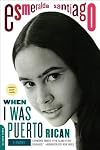
"Con la musica por dentro"...with the music inside...perfectly describes Negi the main protagonist in Esmeralda's Santiago's memoir When I Was Puerto Rican. I read this one with as a buddy read with @idleutopia_reads and some other awesome bookstagrammers and it couldn't have come at a more perfect time.
From the moment I started reading this I knew that Negi and I shared the same spirit: the spirit of a fighter, one who questions everything, one who challenges authority and makes her own show more rules and her own space in an uber masculine world that seeks to break you. No matter what tragedy happened, she just pushed through and it fueled her determination to save herself from her circumstances. My mother used to tell me I had " la musica por dentro" and I never understood what it meant. All I knew was that I was sensitive to people's pain but I was also a rebel who could not be tamed or silenced.
There are books that come into your life that give you glimpses of your younger self, your journey, your homeland and more importantly your beloved culture and ancestry. Representation in books is far and in between but this one spoke to me deeply on a visceral level. It transported me to Puerto Rico and places that I loved to visit as little girl. It brought back memories of my grandparents and it also gave me snippets of what my mother's life was like when she first moved to NYC. I gave me some new history about my neighborhood and made me feel more connected to my Puerto Rican roots. It gave me new insight into my own parents' experiences and it provided validation for their own migration stories.
This book touched me in so many ways that I can't help but cry and smile at the same time. The little girl in me that was just like Negi has found reconciliation and newfound pride in the pages. Negi's story is one that I will revisit over and over because it reminded me that the undying fire that lives inside of me burns for a reason. I am reminded who I fight for every day. Thank you Esmeralda Santiago for sharing your life with the world. I am forever grateful. show less
From the moment I started reading this I knew that Negi and I shared the same spirit: the spirit of a fighter, one who questions everything, one who challenges authority and makes her own show more rules and her own space in an uber masculine world that seeks to break you. No matter what tragedy happened, she just pushed through and it fueled her determination to save herself from her circumstances. My mother used to tell me I had " la musica por dentro" and I never understood what it meant. All I knew was that I was sensitive to people's pain but I was also a rebel who could not be tamed or silenced.
There are books that come into your life that give you glimpses of your younger self, your journey, your homeland and more importantly your beloved culture and ancestry. Representation in books is far and in between but this one spoke to me deeply on a visceral level. It transported me to Puerto Rico and places that I loved to visit as little girl. It brought back memories of my grandparents and it also gave me snippets of what my mother's life was like when she first moved to NYC. I gave me some new history about my neighborhood and made me feel more connected to my Puerto Rican roots. It gave me new insight into my own parents' experiences and it provided validation for their own migration stories.
This book touched me in so many ways that I can't help but cry and smile at the same time. The little girl in me that was just like Negi has found reconciliation and newfound pride in the pages. Negi's story is one that I will revisit over and over because it reminded me that the undying fire that lives inside of me burns for a reason. I am reminded who I fight for every day. Thank you Esmeralda Santiago for sharing your life with the world. I am forever grateful. show less
Lists
Awards


You May Also Like


Associated Authors
Statistics
- Works
- 14
- Also by
- 7
- Members
- 3,007
- Popularity
- #8,484
- Rating
- 3.8
- Reviews
- 70
- ISBNs
- 105
- Languages
- 5
- Favorited
- 2