

Judith Ortiz Cofer
Author of An Island Like You: Stories of the Barrio
About the Author
Judith Ortiz Cofer was born in Puerto Rico in 1952. She was a Franklin Professor of English and creative writing at the University of Georgia from 1984 until she retired in 2013. She was also a poet and author. Her collections of poetry include Terms of Survival, Reaching for the Mainland, and A show more Love Story Beginning in Spanish: Poems. Her novels include Call Me Maria, The Meaning of Consuelo, and The Line of the Sun. She won an O. Henry Prize for the story A Latin Deli, which appeared in The Latin Deli: Prose and Poetry. Her other books include Silent Dancing: A Partial Remembrance of a Puerto Rican Childhood, An Island Like You: Stories of the Barrio, If I Could Fly, and Woman in Front of the Sun: On Becoming a Writer. She died from cancer on December 30, 2016 at the age of 64. (Bowker Author Biography) show less
Works by Judith Ortiz Cofer
Associated Works
Race, Class, and Gender in the United States: An Integrated Study (1992) — Contributor, some editions — 561 copies
Cries of the Spirit: A Celebration of Women's Spirituality (2000) — Contributor — 404 copies, 2 reviews
Growing Up Ethnic in America: Contemporary Fiction About Learning to Be American (1999) — Contributor — 120 copies
Sudden Fiction Latino: Short-Short Stories from the United States and Latin America (2010) — Contributor — 76 copies, 15 reviews
Daughters of the Fifth Sun: A Collection of Latina Fiction and Poetry (1995) — Contributor — 59 copies, 1 review
Currents from the Dancing River: Contemporary Latino Fiction, Nonfiction, and Poetry (1994) — Contributor — 54 copies
The Other Side of Heaven: Post-War Fiction by Vietnamese and American Writers (1995) — Contributor — 43 copies
Las Christmas: Favorite Latino Authors Share Their Holiday Memories (1998) — Contributor — 38 copies, 1 review
Becoming American: Personal Essays By First Generation Immigrant Women (2000) — Contributor — 29 copies
Family Trouble: Memoirists on the Hazards and Rewards of Revealing Family (2013) — Contributor — 21 copies
When She Named Fire: An Anthology of Contemporary Poetry by American Women (2008) — Contributor — 15 copies
Tagged
Common Knowledge
- Canonical name
- Ortiz Cofer, Judith
- Gender
- female
Members
Reviews
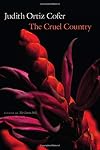
A father-in-law dies. A mother dies. A husband takes ill. The Cruel Country, by Judith Ortiz Cofer is an amorphous meditation on all this. Not a particularly uplifting book with which to start 2016.
Part way through The Cruel Country, I thought to myself Is this really necessary? Not that the book isn't necessary to the author; with each word, you can feel how cathartic this memoir is for her, the ability to place all this in a narrative, however unsatisfying. But the book in relation to the show more reader: my father-in-law and mother are still alive, my husband isn't sick. Ortiz Cofer's words are going to be nothing more than a pale simulacrum until these things happen to me, in the same way that explaining motherhood to the childfree is a somewhat futile task. What can I say to an experience I haven't lived through? Is it a failure of the words that I feel distanced from them? A failure of my own imagination? A failure of empathy? A failure of eliciting empathy? I can't say. I can say that a few times the jumps between paragraphs fall flat, too quick transitions. I can say that there is some repetition, because of the repetitiveness of life, but that doesn't mean I want to read it. I can say there is some unevenness, the story pushed into two books, one far longer than the other, so the second, dealing with the illness of her husband, feels more like a P.S. at the end, with the writing style and tone changing almost completely (less poetry, less Spanish).
I'll say I loved the Spanish words sprinkled in. I'll say I love, now and then, with the poetry. I'll say I love this, this quote:
I'll think of that with my grandmother, who is the closest person I've lost, who was Catholic, and slightly foreign to my Protestant upbringing. I'll think of her as I watch the little kids across the way tobogganing down their hill in the snow, almost a completely perpendicular image from the de afuera who lives in Georgia, USA, and comes to Puerto Rico to bury her mother.
Let me learn to relinquish; at least that I will take away from this book that I can barely even fathom.
The Cruel Country, by Judith Ortiz Cofer went on sale March 1, 2015.
I received a copy free from Netgalley in exchange for an honest review. show less
Part way through The Cruel Country, I thought to myself Is this really necessary? Not that the book isn't necessary to the author; with each word, you can feel how cathartic this memoir is for her, the ability to place all this in a narrative, however unsatisfying. But the book in relation to the show more reader: my father-in-law and mother are still alive, my husband isn't sick. Ortiz Cofer's words are going to be nothing more than a pale simulacrum until these things happen to me, in the same way that explaining motherhood to the childfree is a somewhat futile task. What can I say to an experience I haven't lived through? Is it a failure of the words that I feel distanced from them? A failure of my own imagination? A failure of empathy? A failure of eliciting empathy? I can't say. I can say that a few times the jumps between paragraphs fall flat, too quick transitions. I can say that there is some repetition, because of the repetitiveness of life, but that doesn't mean I want to read it. I can say there is some unevenness, the story pushed into two books, one far longer than the other, so the second, dealing with the illness of her husband, feels more like a P.S. at the end, with the writing style and tone changing almost completely (less poetry, less Spanish).
I'll say I loved the Spanish words sprinkled in. I'll say I love, now and then, with the poetry. I'll say I love this, this quote:
Ave María. Let me learn to relinquish her physical presence. Let her be the dew in the grass, the seed in teh rich black earth, the shade of the tree; let her be in the ephemeral bloom of the hibiscus plant ... with flowers that fold unto themselves each night and are renewed each day.
I'll think of that with my grandmother, who is the closest person I've lost, who was Catholic, and slightly foreign to my Protestant upbringing. I'll think of her as I watch the little kids across the way tobogganing down their hill in the snow, almost a completely perpendicular image from the de afuera who lives in Georgia, USA, and comes to Puerto Rico to bury her mother.
Let me learn to relinquish; at least that I will take away from this book that I can barely even fathom.
The Cruel Country, by Judith Ortiz Cofer went on sale March 1, 2015.
I received a copy free from Netgalley in exchange for an honest review. show less
Cofer's related short stories of life in a Puerto Rican neighborhood in New Jersey are individually stellar. Each one is practically perfect. I enjoyed seeing characters recur through each other's eyes. Some are in first, some close third. There are many characters, however, and not one single thread that keeps a reader turning pages between stories. The final story would be cheesy in anyone else's hand, but in Cofer's, it worked. Themes: immigration, generations, sexuality, gender, show more violence, art, beauty, change, education, class, race. show less
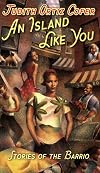
I thoroughly enjoyed these short stories of the barrio, and the window they gave me onto an unfamiliar world. These first person narratives by the Puerto Rican teens of the El apartment building in Paterson, NJ beautifully illustrate the struggles of coming of age as a second or third generation Puerto Rican immigrant to the U.S. Many of these struggles would be familiar to any American teen—pressure to have sex with an older boy (i.e., Rita in Bad Influence), pressure to hide your show more intelligence or academic achievement (i.e., Arturo in Arturo’s Flight), pressure to be beautiful (i.e., Sandi in Beauty Lessons), pressure to join gangs or try drugs (i.e., Kenny Matoa in Matoa’s Mirror). These are all stories of young adult self-discovery. Fortunately most of these teens discover their inner strength of character, and find enough of themselves to resist the dangerous pressures, as with Doris in her observations of the shoplifting Yolanda in The One Who Watches, “She has problems that make her act crazy. Maybe some day she’ll work them out, but I have to start trying to figure out who I am and where I want to go before I can help anybody else.” Similarly, Anita narrowly escapes losing her virginity to the older, seductive, Italian Frank, and feels, “Safe within the four walls of her room where she can sort out her thoughts and try to discover what it is that she really wants.” in Home to El Building. This very small book covers a wide array of young adult themes, from the being embarrassed and ashamed of your parents and/or grandparents, to being cruel to those with disabilities, to confronting feelings about and discrimination against homosexuals. I particularly enjoyed the way in which the author weaved these stories together, reexamining parallel themes with related characters who appear first as minor characters in one narrative, then reappear as the protagonist in a later story. While Arturo discovers his love for Shakespearian tragedies because they have, “No happy endings like the ones in grammar school” in Arturo’s Flight, I found the endings to a majority of these stories to be satisfyingly happy. show less
Consuelo is a serious, contemplative 14-year-old girl who observes her family slowly crumbling as tragedia looms. Her father is a typical macho with women on the side. Her mother is una sufrida, the suffering wife with her cross to bear. Mami clings to the island and its traditional culture but Papi prefers the progress and new inventiveness that America is bringing to Puerto Rico. Consuelo's little sister Mili is the lively, social one of the family. But as she grows older she begins show more speaking to herself in a made-up language, escaping into inner trances, and wandering off. Her parents deny that anything is seriously wrong, that somewhere there is a cure. Meanwhile, Consuelo's solace is her cousin Patricio with whom she plays and confides. But it's suspected among the gossips that he is gay, and soon his father moves the two of them to NYC. Consuelo later embarks on an ill-fated romance and becomes the subject of scorn and gossip at school. She eventually derives strength from being the faluna, the outsider in her own family and at school, and recognizes that she must forge her own path away from Puerto Rico. After her sister's drowning, Consuelo prepares to leave for New York to stay with her uncle. Very strong sense of island and culture, lovingly portrayed. show less
Lists
Awards


You May Also Like


Associated Authors
Statistics
- Works
- 19
- Also by
- 32
- Members
- 1,237
- Popularity
- #20,750
- Rating
- 3.8
- Reviews
- 30
- ISBNs
- 71
- Languages
- 1
- Favorited
- 2