
Joy Castro
Author of Hell or High Water
About the Author
Joy Castro is an associate professor of both English and ethnic studies at the University of NebraskaLincoln. She is the author of two memoirs, Island of Bones and The Truth Book, both available from the University of Nebraska Press, and two novels, Hell or High Water and Nearer Home.
Image credit: Wabash College
Series
Works by Joy Castro
Family Trouble: Memoirists on the Hazards and Rewards of Revealing Family (2013) — Editor — 21 copies
Après le déluge 1 copy
Associated Works
Breeder: Real-Life Stories from the New Generation of Mothers (2001) — Contributor — 164 copies, 8 reviews
Tagged
Common Knowledge
- Birthdate
- 1967
- Gender
- female
- Education
- Texas A&M (PhD | Literature)
- Birthplace
- Miami, Florida, USA
- Associated Place (for map)
- Florida, USA
Members
Reviews
http://www.newsreview.com/sacramento/Content?oid=oid%3A44193
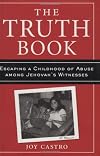
My review of THE TRUTH BOOK:
Don’t let the subtitle scare you off. Joy Castro’s memoir of a childhood spent in an abusive, dysfunctional family is neither an indictment of an offbeat religious sect nor your typical “surviving a hellish childhood” screed. While Castro’s oblivious door-knocking mother, stepfather from hell and self-centered father come in for their share of criticism, the memoir concentrates instead on show more Castro’s journey from judgment of others to self-blame to self-confidence, and eventually to a literary life. Castro’s got a readable style and a great sense of humor, especially considering the subject matter. There’s enough blame to go around--and she doesn’t let anyone off the hook--but at least in Castro’s story, there’s also a bit of forgiveness. show less
My review of THE TRUTH BOOK:
Don’t let the subtitle scare you off. Joy Castro’s memoir of a childhood spent in an abusive, dysfunctional family is neither an indictment of an offbeat religious sect nor your typical “surviving a hellish childhood” screed. While Castro’s oblivious door-knocking mother, stepfather from hell and self-centered father come in for their share of criticism, the memoir concentrates instead on show more Castro’s journey from judgment of others to self-blame to self-confidence, and eventually to a literary life. Castro’s got a readable style and a great sense of humor, especially considering the subject matter. There’s enough blame to go around--and she doesn’t let anyone off the hook--but at least in Castro’s story, there’s also a bit of forgiveness. show less
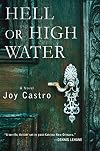
Nola Céspedes wants a real story to work on, not the society fluff that her editor at the New Orleans Times-Picayunens keeps giving her. Problem is she sometimes can’t rein her temper in. Even when handed a great story, a feature about sex offenders now off the grid because of all the dislocations after Hurricane Katrina, Nola initially back talks and tells her boss it’s not real news. She changes her mind and throughout the book she is putting her first serious piece of journalism show more together, interviewing offenders, victims, and professionals to create a wide-ranging article she hopes will be her ticket out.
In spite of her occasional temper Nola is a warm and very appealing first person narrator with a unique perspective on the city she both loves and hates. Nola’s mother escaped Cuba and followed a man from Miami to New Orleans only to have him leave when she got pregnant. New Orleans doesn’t have much of a Cuban American community and being poor Nola grew up in its projects. With her job at the paper Nola can now afford to live in a nicer part of the city, but she often can’t relate to the lives of her wealthy girlfriends and, ironically considering the story she is writing, she engages in some very risky sexual activity. Though she’s a straight talker, Nola still has secrets.
Lots of information about New Orleans and Sex Crimes is woven almost (but not quite) seamlessly into the narrative, and the lively colors, flavors and sounds of New Orleans are so vividly described the city practically vibrates to life on the page. The story is fascinating and suspenseful, with a twist at the end I didn’t see coming. A couldn't put it down book. show less
In spite of her occasional temper Nola is a warm and very appealing first person narrator with a unique perspective on the city she both loves and hates. Nola’s mother escaped Cuba and followed a man from Miami to New Orleans only to have him leave when she got pregnant. New Orleans doesn’t have much of a Cuban American community and being poor Nola grew up in its projects. With her job at the paper Nola can now afford to live in a nicer part of the city, but she often can’t relate to the lives of her wealthy girlfriends and, ironically considering the story she is writing, she engages in some very risky sexual activity. Though she’s a straight talker, Nola still has secrets.
Lots of information about New Orleans and Sex Crimes is woven almost (but not quite) seamlessly into the narrative, and the lively colors, flavors and sounds of New Orleans are so vividly described the city practically vibrates to life on the page. The story is fascinating and suspenseful, with a twist at the end I didn’t see coming. A couldn't put it down book. show less
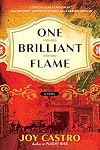
I owe my thanks to NetGalley and Lake Union Publishing for gifting me the opportunity to read this, prior to the release date of 3 January 2023.
In the spirit of candidness, historical fiction is not typically a genre that I engage with. But something about this one drew me in. Perhaps the fact that, admittedly, I was fairly ignorant as to the history behind this tale - being born, raised and educated in the UK, our history classes focus on Europe, touching on on American history with regards show more to the civil rights movement, and the consumerism of the 20th century. I was so enthralled by the rich, vibrant history portrayed here that I was encouraged to research as I read, enveloping myself further into the culture.
But a backdrop can only do so much. Whilst the chosen setting and time period is, undoubtedly, a selling point for this book, it is Castro's affinity for weaving a story with beautiful prose and a poetic nature that truly does it justice. As a reader, I felt as though I was being transported there; I could feel the build up, this undercurrent through the whole story that feels like electricity; suspense escalating as you get closer and closer to the end. You know something colossal is going to happen; you simply don't know what.
Throughout, the descriptive writing inspires feelings of humor, sadness, shock and awe. It's a beautifully crafted story.
Told primarily through the switching POV's of Zenaida, Chaveta and Sofia (with a few cameos from the mens' POV too), the characters feel impossibly real. Each of them is brought to life upon the page, and there are no two-dimensional characters here. All complicated, with their own desires, agendas and thoughts. From Sofia, who seems little more than shallow and selfish at first, before the calculating, cunning nature of hers is bared for the reader; to Zenaida, quiet and dutiful, but burning with the revolutionary passion of her father within; and Chaveta, named for the knife with which she works, as sharp and fierce as any blade.
There were moments that truly shocked me, with twists and turns that I truly did not anticipate. I think that is rare for a book, these days. And there were moments that left me feeling raw, and desperate for what they were going through. But there was also a great deal of warmth; of optimism; of the belief in a better future.
I absolutely adored this in a way that I didn't expect to. Not least because of the genre, but also because of how little I knew about the history going in. But Joy Castro's writing is stirring, powerful and an absolute joy to read; her characters each relatable in some way or another, and the story itself cleverly and engagingly told.
An easy 5/5 stars; an an easy recommendation to anyone who even considers reading this one. Do it. You won't regret it. show less
In the spirit of candidness, historical fiction is not typically a genre that I engage with. But something about this one drew me in. Perhaps the fact that, admittedly, I was fairly ignorant as to the history behind this tale - being born, raised and educated in the UK, our history classes focus on Europe, touching on on American history with regards show more to the civil rights movement, and the consumerism of the 20th century. I was so enthralled by the rich, vibrant history portrayed here that I was encouraged to research as I read, enveloping myself further into the culture.
But a backdrop can only do so much. Whilst the chosen setting and time period is, undoubtedly, a selling point for this book, it is Castro's affinity for weaving a story with beautiful prose and a poetic nature that truly does it justice. As a reader, I felt as though I was being transported there; I could feel the build up, this undercurrent through the whole story that feels like electricity; suspense escalating as you get closer and closer to the end. You know something colossal is going to happen; you simply don't know what.
Throughout, the descriptive writing inspires feelings of humor, sadness, shock and awe. It's a beautifully crafted story.
Told primarily through the switching POV's of Zenaida, Chaveta and Sofia (with a few cameos from the mens' POV too), the characters feel impossibly real. Each of them is brought to life upon the page, and there are no two-dimensional characters here. All complicated, with their own desires, agendas and thoughts. From Sofia, who seems little more than shallow and selfish at first, before the calculating, cunning nature of hers is bared for the reader; to Zenaida, quiet and dutiful, but burning with the revolutionary passion of her father within; and Chaveta, named for the knife with which she works, as sharp and fierce as any blade.
There were moments that truly shocked me, with twists and turns that I truly did not anticipate. I think that is rare for a book, these days. And there were moments that left me feeling raw, and desperate for what they were going through. But there was also a great deal of warmth; of optimism; of the belief in a better future.
I absolutely adored this in a way that I didn't expect to. Not least because of the genre, but also because of how little I knew about the history going in. But Joy Castro's writing is stirring, powerful and an absolute joy to read; her characters each relatable in some way or another, and the story itself cleverly and engagingly told.
An easy 5/5 stars; an an easy recommendation to anyone who even considers reading this one. Do it. You won't regret it. show less
The book jacket promises: A gripping, rich psychological thriller set in post-Katrina New Orleans that introduces an intense and spellbinding protagonist.
Allowing for the usual hyperbole, this isn’t too far off the mark. Nola Cespedes is a reporter at the Times-Picayune, trying hard to get off the “lifestyle” page and onto the city desk. Finally, she gets the chance – when Hurricane Katrina hit New Orleans many formerly registered sex offenders were evacuated and no one kept track of show more their locations. Sure, some have re-registered, but many have “gone off the grid.” As she begins to research the story, the city’s attention is captured by a new disappearance – a young tourist has been kidnapped in broad daylight from a popular French Quarter eatery.
There were several things I liked about this thriller. I liked that Nola is a pretty strong female lead; she tackles her work (mostly) like a responsible adult, and she has a good network of girlfriends to hang with. I liked also that she maintained contact with her mother, though she seemed to resent their weekly church-going, and that she was trying to be a good “big sister” to Marisol. I liked the pace that Castro set for this novel, although some of the sidebars giving background information on politics, or the Cajuns, or environmental issues did slow the action. Still these elements also enhanced the sense of place. (I definitely felt the torpidity of a New Orleans’ hot humid day; I think my hair even frizzed just reading about the weather!)
I wasn’t so happy with Nola’s bad behavior and risk-taking. Although I do appreciate that Castro was showing us her underlying psychological issues rather than simply telling us about them. Still, there were sections where Nola seemed far too damaged to be able to hold it together at all. I wondered why the three girlfriends all had to be from upper-middle class families, with no financial worries. Then again, hanging with these girls may be another way for Nola to hide her own background.
There were several loose threads at the end, leaving me wondering but hopeful. I’d certainly be willing to give another book a try. show less
Allowing for the usual hyperbole, this isn’t too far off the mark. Nola Cespedes is a reporter at the Times-Picayune, trying hard to get off the “lifestyle” page and onto the city desk. Finally, she gets the chance – when Hurricane Katrina hit New Orleans many formerly registered sex offenders were evacuated and no one kept track of show more their locations. Sure, some have re-registered, but many have “gone off the grid.” As she begins to research the story, the city’s attention is captured by a new disappearance – a young tourist has been kidnapped in broad daylight from a popular French Quarter eatery.
There were several things I liked about this thriller. I liked that Nola is a pretty strong female lead; she tackles her work (mostly) like a responsible adult, and she has a good network of girlfriends to hang with. I liked also that she maintained contact with her mother, though she seemed to resent their weekly church-going, and that she was trying to be a good “big sister” to Marisol. I liked the pace that Castro set for this novel, although some of the sidebars giving background information on politics, or the Cajuns, or environmental issues did slow the action. Still these elements also enhanced the sense of place. (I definitely felt the torpidity of a New Orleans’ hot humid day; I think my hair even frizzed just reading about the weather!)
I wasn’t so happy with Nola’s bad behavior and risk-taking. Although I do appreciate that Castro was showing us her underlying psychological issues rather than simply telling us about them. Still, there were sections where Nola seemed far too damaged to be able to hold it together at all. I wondered why the three girlfriends all had to be from upper-middle class families, with no financial worries. Then again, hanging with these girls may be another way for Nola to hide her own background.
There were several loose threads at the end, leaving me wondering but hopeful. I’d certainly be willing to give another book a try. show less
Lists
Awards


You May Also Like


Associated Authors
Statistics
- Works
- 10
- Also by
- 4
- Members
- 355
- Popularity
- #67,467
- Rating
- 3.9
- Reviews
- 24
- ISBNs
- 46
- Languages
- 2
- Favorited
- 1