
Nicholasa Mohr
Author of Felita
About the Author
Nicholasa Mohr was born on November 1, 1938. She is a well known Nuyorican writer. In 1973 she became the first Hispanic woman to have her literary works published by the large publishing houses. Her works are about growing up in the Puerto Rican comminities of the Bronx and El Barrio. In 1973, her show more book Nilda, which traces the life of a teenage Puerto Rican girl who confronts prejudices during World War II era in New York was awarded the Jane Addams Children Book Award. In 1975 her second book El Bronx Remembered was awarded the New York Times Outstanding Book Award. Her titles include: A Matter of Pride and Other Stories, The Song of el coqui and other Tales of Puerto Rico, The Magic Shell and I Never Seen My Father. (Bowker Author Biography) show less
Works by Nicholasa Mohr
Associated Works
When I Was Your Age, Volume One: Original Stories About Growing Up (1996) — Contributor — 279 copies, 2 reviews
Currents from the Dancing River: Contemporary Latino Fiction, Nonfiction, and Poetry (1994) — Contributor — 54 copies
Daughters of Latin America: An International Anthology of Writing by Latine Women (2023) — Contributor — 40 copies, 1 review
Tagged
Common Knowledge
- Birthdate
- 1935-11-01
- Gender
- female
- Nationality
- USA
- Associated Place (for map)
- USA
Members
Reviews
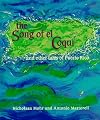
This book literally and figuratively hit home for me. The coqui's song is something I grew up hearing every night and the stories of La Guinea and La Mula are ones that I grew up learning as a child. The ilustrations were absolutely beautiful throughout the book and although the language of the stories are a bit heavy for a young child to read on their own, it would be amazing to read as a family or in a a classroom setting.
Title: The Song of el Coqui and other tales of Puerto Rico
Author: Nicholasa Mohr and Antonio Martorell
Copyright: 1995
Type of Book: Children’s, 6 and up
General Subject Matter: Children’s Literature
Price: $15.99
ISBN: 0670858374
Language: English
Pages: 48
“Dedicated to the children of the barrios who live far away from the Caribbean magic that weaves the stories of this book.” –Nicholasa Mohr and Antonio Martorell
There were several facts which contributed to the development of show more this children’s book. The authors explain, “All 3 tales have been written with affection and respect for the rich and complex ancestral traditions that make up Puerto Rican culture. The history, the characters, and the elements depicted are all apart of the mixed heritage of Latin America, drawn predominately from the indigenous inhabitants the Africans, and the Spaniards.”
This book is a creative presentation of Puerto Rican folklore. The book includes educational facts, and translations of indigenous animals and people who contribute to this rich cultures heritage. It emphasizes the three most important cultural groups 1. The Coqui (representing the indigenous Tainos) 2. La Guinea (symbolic of the African People who were brought as captive slaves) and 3. La Mula ( a story about the Spaniards who conquered the island by force.)
These tales are told with heavy symbolism and foundations for what is the underlying thread that holds together one of many elements of a culture. The book presents these concepts effectively within the text. Particularly, those elements are spelled out for the reader as the integration of: the importance of music, art, heritage, struggle, spiritualism, and nature within the society.
I was drawn to the visual lyricism, and artistic quality of the book as well. The Song of El Coqui has strong images full of: texture, color, and illustrations. Overflowing with detail-oriented pictures containing foundations of expressive line, curved lines, and pronounced mark making. He emphasizes the psychological impact of it’s meaning through the balance of the warm and cool colors, primary colors, and split complimentary colors for example; and their fluid presentation. The skill, refined technique, of the artist, become an important rhythmic signature emphasizing mark making, and vivid hues which becomes a fine graphic representation throughout the book which ultimately presents an developed authoritative charm.
This is a children’s book, but I believe it’s a book for all ages. The symbolism may be a bit heavy for young readers, but will have a direct impact for the adult reader. The book includes important facts about the stories, and historical information. Each short story has an evocative quality to it’s phrasing that any storyteller can animate for children while telling this story to make it truly entertaining. I enjoyed all 3 short stories equally, I did not gravitate soundly over one story versus the other. This is a good children’s book for your library to place on your shopping list to help impact, entertain, and educate young minds. show less
Author: Nicholasa Mohr and Antonio Martorell
Copyright: 1995
Type of Book: Children’s, 6 and up
General Subject Matter: Children’s Literature
Price: $15.99
ISBN: 0670858374
Language: English
Pages: 48
“Dedicated to the children of the barrios who live far away from the Caribbean magic that weaves the stories of this book.” –Nicholasa Mohr and Antonio Martorell
There were several facts which contributed to the development of show more this children’s book. The authors explain, “All 3 tales have been written with affection and respect for the rich and complex ancestral traditions that make up Puerto Rican culture. The history, the characters, and the elements depicted are all apart of the mixed heritage of Latin America, drawn predominately from the indigenous inhabitants the Africans, and the Spaniards.”
This book is a creative presentation of Puerto Rican folklore. The book includes educational facts, and translations of indigenous animals and people who contribute to this rich cultures heritage. It emphasizes the three most important cultural groups 1. The Coqui (representing the indigenous Tainos) 2. La Guinea (symbolic of the African People who were brought as captive slaves) and 3. La Mula ( a story about the Spaniards who conquered the island by force.)
These tales are told with heavy symbolism and foundations for what is the underlying thread that holds together one of many elements of a culture. The book presents these concepts effectively within the text. Particularly, those elements are spelled out for the reader as the integration of: the importance of music, art, heritage, struggle, spiritualism, and nature within the society.
I was drawn to the visual lyricism, and artistic quality of the book as well. The Song of El Coqui has strong images full of: texture, color, and illustrations. Overflowing with detail-oriented pictures containing foundations of expressive line, curved lines, and pronounced mark making. He emphasizes the psychological impact of it’s meaning through the balance of the warm and cool colors, primary colors, and split complimentary colors for example; and their fluid presentation. The skill, refined technique, of the artist, become an important rhythmic signature emphasizing mark making, and vivid hues which becomes a fine graphic representation throughout the book which ultimately presents an developed authoritative charm.
This is a children’s book, but I believe it’s a book for all ages. The symbolism may be a bit heavy for young readers, but will have a direct impact for the adult reader. The book includes important facts about the stories, and historical information. Each short story has an evocative quality to it’s phrasing that any storyteller can animate for children while telling this story to make it truly entertaining. I enjoyed all 3 short stories equally, I did not gravitate soundly over one story versus the other. This is a good children’s book for your library to place on your shopping list to help impact, entertain, and educate young minds. show less
Summary: The book shares tales about the origins of the coqui frog, guinea, and mule to the island of Puerto Rico. The coqui frog came after many years of rain shortly after the god Huracan created the island of Borinquen. His island was silent until the coqui appears. The other animals speak after hearing the frog sing, “coqui, coqui, coqui”. The author personifies the first guinea, and calls her La Guinea. La Guinea accidently gets on a ship from Africa and is brought to Puerto Rico. show more She finds a home with Don Elias, who is inspired by her beauty and created masks. His masks become so popular, he becomes famous on the island. The author also personifies La Mula, who is brought from Spain to work hard along the slaves. She befriends one slave, and they escape together to his community where she is honored for her loyalty.
Reflection: The illustrations in this book were marvelous. I believe they are the best I’ve seen, and I even double checked the front cover to see if it had won any awards. I was surprised to find it has not. The stories are interesting, and at the very end it gives some quick facts about Puerto Rico that pertain to the stories.
I’m a big animal lover, so I think it’s really neat to learn how different cultures share their appreciation for the animals that are specific or important to their area.
Extension ideas: If at all possible, I would bring in a coqui frog or at least play a sound clip of it’s coqui chirp. I think the kids would love it. Another idea would be to have the kids do a creative writing assignment. I’d encourage them to write about how an animal they loved first came to America. show less
Reflection: The illustrations in this book were marvelous. I believe they are the best I’ve seen, and I even double checked the front cover to see if it had won any awards. I was surprised to find it has not. The stories are interesting, and at the very end it gives some quick facts about Puerto Rico that pertain to the stories.
I’m a big animal lover, so I think it’s really neat to learn how different cultures share their appreciation for the animals that are specific or important to their area.
Extension ideas: If at all possible, I would bring in a coqui frog or at least play a sound clip of it’s coqui chirp. I think the kids would love it. Another idea would be to have the kids do a creative writing assignment. I’d encourage them to write about how an animal they loved first came to America. show less
Mistreated by public authoriities - police, social workers, teachers, Nilda deals with the pressures the broader community place on her. Yet the protection and love of her family helps.
Lists
Awards


You May Also Like


Associated Authors
Statistics
- Works
- 15
- Also by
- 13
- Members
- 967
- Popularity
- #26,625
- Rating
- 3.8
- Reviews
- 7
- ISBNs
- 71
- Languages
- 1