
Benjamin Alire Sáenz
Author of Aristotle and Dante Discover the Secrets of the Universe
About the Author
Benjamin Alire Saenz was born in 1954 in his grandmother's house in Old Picacho, a small farming village in the outskirts of Las Cruces, New Mexico. He was the fourth of seven children and was raised on a small farm near Mesilla Park. Later, when the family lost the farm, his father went back to show more his former occupation -- being a cement finisher. His mother worked as a cleaning woman and a factory worker. During his youth, he worked at various jobs -- painting apartments, roofing houses, picking onions, and cleaning for a janitorial service. He graduated from high school in 1972 and went on to college. He studied philosophy and theology in Europe for four years and spent a summer in Tanzania. He eventually became a writer and professor and moved back to the border -- the only place where he feels he truly belongs. show less
Image credit: Larry D. Moore
Series
Works by Benjamin Alire Sáenz
The Dog Who Loved Tortillas (A Little Diego Book) (English and Spanish Edition) (2009) 81 copies, 1 review
Grandma Fina and Her Wonderful Umbrellas / La Abuelita Fina y Sus Sombrillas Maravillosas (1999) 41 copies
Associated Works
Currents from the Dancing River: Contemporary Latino Fiction, Nonfiction, and Poetry (1994) — Contributor — 55 copies
Hecho en Tejas: An Anthology of Texas-Mexican Literature (Southwestern Writers Collection) (2006) — Contributor — 32 copies
The Late Great Mexican Border: Reports from a Disappearing Line (1996) — Contributor — 26 copies, 1 review
Without Discovery: A Native Response to Columbus (Turning Point Series) (1992) — Contributor — 17 copies
Tagged
Common Knowledge
- Canonical name
- Sáenz, Benjamin Alire
- Birthdate
- 1954-08-16
- Gender
- male
- Education
- Las Cruces High School, Las Cruces, New Mexico
St. Thomas Seminary (BA | 1977 | Humanities and Philosophy)
University of Texas, El Paso (MA | Creative writing)
Katholieke Universiteit Leuven
Stanford University (Stegner Fellow)
University of Iowa - Occupations
- poet
novelist
writer
professor
parish priest - Organizations
- University of Texas at El Paso
Roman Catholic Church (ordained 1981) - Awards and honors
- Wallace E. Stegner Fellowship, poetry
Lannan Poetry Fellowship (1993)
Pura Belpré Award (2013)
Hummingbird Award in Literary Arts (2022)
American Book Award (1992)
Southwest Book Award (1996) (show all 9)
Michael L. Printz Award (2013)
Tomás Rivera Mexican American Children's Book Award
Lambda Literary Award - Nationality
- USA
- Birthplace
- Old Picacho, New Mexico, USA
- Places of residence
- El Paso, Texas, USA
- Associated Place (for map)
- USA
Members
Discussions
Girl kidnapped from Mexico and taken to the U.S. in Name that Book (December 2012)
Reviews
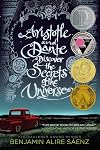
Rating: 4.5* of five
The Publisher Says: A lyrical novel about family and friendship from critically acclaimed author Benjamin Alire Sáenz.
Aristotle is an angry teen with a brother in prison. Dante is a know-it-all who has an unusual way of looking at the world. When the two meet at the swimming pool, they seem to have nothing in common.
But as the loners start spending time together, they discover that they share a special friendship—the kind that changes lives and lasts a lifetime. And it show more is through this friendship that Ari and Dante will learn the most important truths about themselves and the kind of people they want to be.
I RECEIVED THIS BOOK AS A GIFT. THANKS!
My Review: First love, with another boy, when you're fifteen and angsty and from a Mexican-American family.
Wow, that's a lot. Like, a real, real lot.
Which, as adults, we sometimes do not take into account when dealing with teens. The thing we lose sight of most often is that teens have adult-strength emotions triggered by the same things we get triggered by but without our decades of perspective to temper our responses with. Ari's right...his Dad is suffering. His Dad is right...Ari can't understand this suffering. In fact, no one really can. Adults don't think this is as weird and awful as Ari, not yet used to the helplessness of loving others, does. All Ari knows is that his Dad's refusal to talk about his feelings feels like rejection. So Ari clams up...and doesn't see the irony of this. Perspective: missing.
Dante, being brash and bold, just...does stuff. Ari feels envious, astonished, drawn to this bigness and forcefulness. This feels so intoxicating, so overwhelmingly right, that he and Dante meet each other all the time, talk, think, and in that gloriously uniquely young man way, fall in love. They're on different pages here, too, stunningly. Dante doesn't see this love as weird or ugly...it's the 1980s! Stonewall was in the 1960s! Ari thinks it's another way he's weird. He does think Dante's weird, too, and if Dante...big, bright, beautiful Dante with his strong ideas about Chicanismo...is weird, weird must be okay. Somehow that must be true, but how?
Thus is first love born. That was my absolute favorite thing about the story. It wasn't about the zeal of the organs for each other, in Joseph Campbell's memorable and accurate formulation of sexual desire's essence; it was instead about the addictive rush of communion with the Other, the joy of discovering the Other is not only Other but gloriously beautifully Other. These boys discover, slowly and organically, that Love is the best, the only addictive drug that makes things better.
Or it can. And it does in this story. It does this, you should note, S L O W L Y. And Ari, angry teen with a huge rock on top of his mouth, needs help figuring out what it is about Dante that he is, well, Noticing. Here is where I felt the true beauty of the story comes to the fore. It is Ari's parents, these complicatedly wounded souls who are sources of difficulty for him (as all parents must be) who rip off the bandage and show him that he is in love with Dante.
And they do it, in 1980s El Paso, Texas, with kindness and acceptance. This is how we know it's fiction.
Everything about this read was a pleasure to me. It's been over a decade since the story burst on the scene. There are sequels (I haven't read those yet). This story keeps reverberating through our louding voices of hatred. I hope you and I, readers with mileage and perspective unavailable to its target audience, can help that audience find this wonderful story of honest love and acceptance offered and accepted. show less
The Publisher Says: A lyrical novel about family and friendship from critically acclaimed author Benjamin Alire Sáenz.
Aristotle is an angry teen with a brother in prison. Dante is a know-it-all who has an unusual way of looking at the world. When the two meet at the swimming pool, they seem to have nothing in common.
But as the loners start spending time together, they discover that they share a special friendship—the kind that changes lives and lasts a lifetime. And it show more is through this friendship that Ari and Dante will learn the most important truths about themselves and the kind of people they want to be.
I RECEIVED THIS BOOK AS A GIFT. THANKS!
My Review: First love, with another boy, when you're fifteen and angsty and from a Mexican-American family.
Wow, that's a lot. Like, a real, real lot.
Which, as adults, we sometimes do not take into account when dealing with teens. The thing we lose sight of most often is that teens have adult-strength emotions triggered by the same things we get triggered by but without our decades of perspective to temper our responses with. Ari's right...his Dad is suffering. His Dad is right...Ari can't understand this suffering. In fact, no one really can. Adults don't think this is as weird and awful as Ari, not yet used to the helplessness of loving others, does. All Ari knows is that his Dad's refusal to talk about his feelings feels like rejection. So Ari clams up...and doesn't see the irony of this. Perspective: missing.
Dante, being brash and bold, just...does stuff. Ari feels envious, astonished, drawn to this bigness and forcefulness. This feels so intoxicating, so overwhelmingly right, that he and Dante meet each other all the time, talk, think, and in that gloriously uniquely young man way, fall in love. They're on different pages here, too, stunningly. Dante doesn't see this love as weird or ugly...it's the 1980s! Stonewall was in the 1960s! Ari thinks it's another way he's weird. He does think Dante's weird, too, and if Dante...big, bright, beautiful Dante with his strong ideas about Chicanismo...is weird, weird must be okay. Somehow that must be true, but how?
Thus is first love born. That was my absolute favorite thing about the story. It wasn't about the zeal of the organs for each other, in Joseph Campbell's memorable and accurate formulation of sexual desire's essence; it was instead about the addictive rush of communion with the Other, the joy of discovering the Other is not only Other but gloriously beautifully Other. These boys discover, slowly and organically, that Love is the best, the only addictive drug that makes things better.
Or it can. And it does in this story. It does this, you should note, S L O W L Y. And Ari, angry teen with a huge rock on top of his mouth, needs help figuring out what it is about Dante that he is, well, Noticing. Here is where I felt the true beauty of the story comes to the fore. It is Ari's parents, these complicatedly wounded souls who are sources of difficulty for him (as all parents must be) who rip off the bandage and show him that he is in love with Dante.
And they do it, in 1980s El Paso, Texas, with kindness and acceptance. This is how we know it's fiction.
Everything about this read was a pleasure to me. It's been over a decade since the story burst on the scene. There are sequels (I haven't read those yet). This story keeps reverberating through our louding voices of hatred. I hope you and I, readers with mileage and perspective unavailable to its target audience, can help that audience find this wonderful story of honest love and acceptance offered and accepted. show less
Aristotle and Dante Discover the Secrets of the Universe (Aristotle and Dante Discover the Secrets of the Universe #1) by Benjamin Alire Sáenz
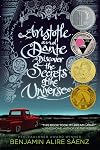
Aristotle and Dante was one of those books which made me regret some of the 5 star ratings I had given other books. This one, for me, sets a new standard for YA, for LGBT YA and for YA M-M Romance.
The author, Benjamin Sáenz, takes on very difficult challenges: Portraying the challenges and difficulties faced by second and third generation Mexicans who and neither wholly Mexican and wholly Americanized, the challenge of portraying teenage thinking feelings of general angst and behavior; and, show more third, the awakening and confused sexuality of adolescent teenage boys. In this case, they have the added challenge of being gay in a very non-accepting culture.
Sáenz meets each of these challenges full on and comes out the winner. To me, the usual flaw in books and movies portraying children is that the kids speak lines and make observations worthy of the most wise and learned adults. Sáenz does not fall into that trap and instead, crafts a totally believable novel. show less
The author, Benjamin Sáenz, takes on very difficult challenges: Portraying the challenges and difficulties faced by second and third generation Mexicans who and neither wholly Mexican and wholly Americanized, the challenge of portraying teenage thinking feelings of general angst and behavior; and, show more third, the awakening and confused sexuality of adolescent teenage boys. In this case, they have the added challenge of being gay in a very non-accepting culture.
Sáenz meets each of these challenges full on and comes out the winner. To me, the usual flaw in books and movies portraying children is that the kids speak lines and make observations worthy of the most wise and learned adults. Sáenz does not fall into that trap and instead, crafts a totally believable novel. show less
It took me a little bit to adjust to this book when I started, because it definitely takes place in a hyperreal teenage world.... Ari has life-changing things happen to him that don't matter later at all, and he thinks & writes in cliches, and does stupid things, and has weird relationships and weird dreams and stilted conversations, and all of those things are perfect because that's exactly how being a teenager feels.
The book's written in an easygoing, free-flowing style that's eminently show more readable. There's no plot, really. It's just about Ari and Dante and what they're feeling and doing and how they grow up. It's not flashy. It's simple and good.
About the end: To those who think that Ari coming out was supposed to be a big plot twist, or that he didn't know he was gay until his parents told him, I can see how you could read the ending in that way and be disappointed by that suddenness. But the way I saw it, Ari was thinking and feeling things that go unrecorded through the whole book, things that are revealed only through his actions and confusions... Sáenz's style, with many long stretches of dialogue uninterrupted by interpretation, feels very true to the way in which teenagers, and really all of us, must often decipher each other through our words alone. It's easier to figure out how Dante is feeling-- in most ways he's an open book. Ari, even though we experience the entire story through his perspective, is much less readable, even (or especially) to himself. Anyway, those are just my thoughts. show less
The book's written in an easygoing, free-flowing style that's eminently show more readable. There's no plot, really. It's just about Ari and Dante and what they're feeling and doing and how they grow up. It's not flashy. It's simple and good.
About the end:
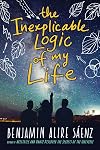
https://iwriteinbooks.wordpress.com/2018/05/31/the-inexplicable-logic-of-my-life...
I have this dear friend who has a terrible habit of recommending the most heart-wrenchingly beautiful books.
Every time, I think I know what I’m getting into.
Every time, I end up a sobbing pile of tears on the floor.
This one, I should have seen coming. It is the latest book from Benjamin Alire Saenz (of Aristotle and Dante Discover the Secrets of the Universe fame) so I knew I would need tissues even without show more the aforementioned friend’s stamp of emotional approval.
That blessed man understands how to write people better than almost anyone I’ve come across.
In this particular story, there was no center around the protagonist’s romance but he seemed locked in the middle of everyone else’s. That was sort of a beautiful thing, to see love budding around in various forms but not have the entire story centered around love and lust.
In its simplest form, Saenz tells the story of a little boy living and coming of age with his single, gay dad. It is so much deeper and bigger than that, though. for the bulk of the story, that little boy, now 17-year-old Sal, is on a warpath to simultaneously figure out who he is and pay absolutely no attention to who he is.
The entire piece is an ode to the beauty and complications of family, in all of its myriad forms. The family we are born with, the family we stumble upon, and of course, the family we choose. There is also a good deal of discussion about identity and ethnicity as Sal is the only non-Mexican wrapped up in his family and friend group. That portion of the story is wound so seamlessly into the body of the book that is at once always present and yet, quietly lingering in a sort of invisible way.
Overall, this is such a breathtakingly beautiful book and I highly recommend it. Of course, you will need at least one big box of tissues. There. Now you’ve been warned. show less
I have this dear friend who has a terrible habit of recommending the most heart-wrenchingly beautiful books.
Every time, I think I know what I’m getting into.
Every time, I end up a sobbing pile of tears on the floor.
This one, I should have seen coming. It is the latest book from Benjamin Alire Saenz (of Aristotle and Dante Discover the Secrets of the Universe fame) so I knew I would need tissues even without show more the aforementioned friend’s stamp of emotional approval.
That blessed man understands how to write people better than almost anyone I’ve come across.
In this particular story, there was no center around the protagonist’s romance but he seemed locked in the middle of everyone else’s. That was sort of a beautiful thing, to see love budding around in various forms but not have the entire story centered around love and lust.
In its simplest form, Saenz tells the story of a little boy living and coming of age with his single, gay dad. It is so much deeper and bigger than that, though. for the bulk of the story, that little boy, now 17-year-old Sal, is on a warpath to simultaneously figure out who he is and pay absolutely no attention to who he is.
The entire piece is an ode to the beauty and complications of family, in all of its myriad forms. The family we are born with, the family we stumble upon, and of course, the family we choose. There is also a good deal of discussion about identity and ethnicity as Sal is the only non-Mexican wrapped up in his family and friend group. That portion of the story is wound so seamlessly into the body of the book that is at once always present and yet, quietly lingering in a sort of invisible way.
Overall, this is such a breathtakingly beautiful book and I highly recommend it. Of course, you will need at least one big box of tissues. There. Now you’ve been warned. show less
Lists
Five star books (1)
Best Beach Reads (1)
Comfort Reads (1)
FAB 2021 (1)
READ IN 2021 (1)
BookTok Teen (1)
READ IN 2022 (1)
Awards


You May Also Like


Associated Authors
Statistics
- Works
- 28
- Also by
- 8
- Members
- 12,431
- Popularity
- #1,889
- Rating
- 4.2
- Reviews
- 528
- ISBNs
- 190
- Languages
- 16
- Favorited
- 6