
Elizabeth Nunez (1944–2024)
Author of Prospero's Daughter: A Novel
About the Author
Elizabeth Nunez is a CUNY Distinguished Professor of English at Medgar Evers College.
Image credit: Credit: David Shankbone, Brooklyn Book Festival, Sept. 14, 2008
Works by Elizabeth Nunez
Stories from Blue Latitudes: Caribbean Women Writers at Home and Abroad (2006) — Editor, contributor — 32 copies
Associated Works
New Daughters of Africa: An International Anthology of Writing by Women of African Descent (2019) — Contributor — 117 copies, 1 review
Iron Balloons: Hit Fiction from Jamaica's Calabash Writer's Workshop (2006) — Contributor — 34 copies, 1 review
Tagged
Common Knowledge
- Other names
- Nunez-Harrell, Eliza
- Birthdate
- 1944-02-18
- Date of death
- 2024-11-08
- Gender
- female
- Education
- Marian College, Fond du Lac, Wisconsin, USA (BA|English)
New York University (MA, PhD|Literature) - Occupations
- novelist
English professor - Organizations
- City University of New York, Medgar Evers College
Hunter College, City University of New York
National Black Writers' Conference (co-founder, co-director)
PEN/Open Book Committee (chair) - Cause of death
- complications of a stroke
- Nationality
- Trinidad and Tobago
USA - Birthplace
- Cocorite, Trinidad
- Places of residence
- Trinidad & Tobago
New York, New York, USA - Place of death
- Brooklyn, New York, USA
- Associated Place (for map)
- New York, USA
Members
Reviews
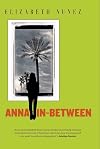
Thirty-nine year old Anna returns to her parents' home in the Caribbean islands. Anna has been in New York City as an in-demand editor for almost eighteen years, returning to her Caribbean home periodically for short visits. She returns, not because of a longing for her country, but only to check in on her aging parents. They appreciate the visits but feel Anna has lost touch with her roots. It is as if Anna cannot wait to bolt from her childhood memories, the color of her mixed-race skin, show more and her emotional parents.
On this particular trip, Anna discovers her mother has advanced stage breast cancer and is appalled her parents have been aware of the growing tumors all along. It is inconceivable they chose not to do anything about the disease growing in Beatrice's breast. With Anna's insistence of medical care ever increasing, Anna's parents finally visit a doctor to begin treating the disease with chemotherapy. Anna's mother, however, draws the line at traveling to the United States for necessary-for-survival surgery, strongly believing her dark skin will warrant sub par treatment.
Mother and daughter are locked in a cultural battle; mother accusing daughter of becoming too Americanized as if it were akin to catching a different debilitating disease. Anna In-Between is the dance of expectation. Mothers want so much for their daughters that reality seems like a constant disappointment, an "you can never do anything right" attitude.Beatrice is not entirely to blame in all this. Anna has her assumptions, too. She has so much pent up resentment towards her mother she thinks Beatrice blames her for a failed marriage, is disappointed in Anna's less than impressive career, and is embarrassed by Anna's less than impeccable appearance. It is hard for Anna to empathize; to see Beatrice as human when she feels like such a failure herself. I won't spoil the plot, but I can say Nunez's gift is a satisfactory non-ending with a healthy dose of hope. For Anna and Beatrice.
Interestingly enough, Nunez refers to the locale of Anna In-Between as "the island" as if she doesn't want to put a pin the map of where the story actually takes place. show less
On this particular trip, Anna discovers her mother has advanced stage breast cancer and is appalled her parents have been aware of the growing tumors all along. It is inconceivable they chose not to do anything about the disease growing in Beatrice's breast. With Anna's insistence of medical care ever increasing, Anna's parents finally visit a doctor to begin treating the disease with chemotherapy. Anna's mother, however, draws the line at traveling to the United States for necessary-for-survival surgery, strongly believing her dark skin will warrant sub par treatment.
Mother and daughter are locked in a cultural battle; mother accusing daughter of becoming too Americanized as if it were akin to catching a different debilitating disease. Anna In-Between is the dance of expectation. Mothers want so much for their daughters that reality seems like a constant disappointment, an "you can never do anything right" attitude.Beatrice is not entirely to blame in all this. Anna has her assumptions, too. She has so much pent up resentment towards her mother she thinks Beatrice blames her for a failed marriage, is disappointed in Anna's less than impressive career, and is embarrassed by Anna's less than impeccable appearance. It is hard for Anna to empathize; to see Beatrice as human when she feels like such a failure herself. I won't spoil the plot, but I can say Nunez's gift is a satisfactory non-ending with a healthy dose of hope. For Anna and Beatrice.
Interestingly enough, Nunez refers to the locale of Anna In-Between as "the island" as if she doesn't want to put a pin the map of where the story actually takes place. show less
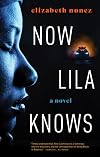
This one was total page turner. It starts with Lila arriving in Mayfield, Vermont to begin her year as a guest professor at Mayfield College. On her way to her new lodgings traffic stops, and Lila has to walk the final few blocks. Someone has collapsed on the street and another person is trying to help her. The person trying to administer CPR is a black college professor in what is a predominately white community. The police end up shooting and killing the good samaritan, totally show more misinterpreting his attempt to rescue the woman. Lila is a witness to this incident of police brutality and blatant racism. The question of what Lila will do in response to this is central to the development of the plot and her own evolution.
The novel deals with the topic of racism on many levels, both here in the US and in the Caribbean. The author handles this topic so well. I found the book so enlightening. The characters are real and engaging. In her interaction with the African American teaching staff at Mayfield College Lila comes to broaden her understanding of how racism in the US differs from her experience of it in the Caribbean. She also realizes how important it is for her personally to take a stand. I highly recommend this book! show less
 This review was written for LibraryThing Early Reviewers.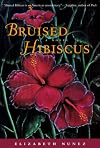
Lean into the narrative of Bruised Hibiscus lest you might miss something important or more likely, something sensuous. The lyrical language is like two songs being sung at the same time. Two love songs in different languages. First, there is the language of the Trinidad village of Otahiti, abuzz with the news of a mysterious white woman pulled from the sea, her eyes and lips eaten away by sea life. An evil has come into their community. Then there is the culture of sexuality, both good and show more bad, which circles two marriages. Two women share a dark secret from childhood; forever linked after witnessing the brutal violation of a young girl. Zuela is the mother of ten children and runs a grocery shop with her husband in Port-of-Spain. Rosa lives on the other side of town in a two-story house in Taccarigua. As adults Zuela and Rosa are mired in loveless and cruel marriages. When the body of the white woman was first discovered, each woman reacted differently but both shared the sensation of memories of the young girl's violation flooding back. show less
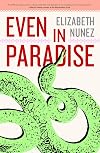
This is a retelling of Shakespeare’s King Lear set in the Caribbean. Peter Duckworth is a Trinidadian and proud of it, but after his wife dies he decides to move to Barbados where he builds a magnificent house, high on a hill, surrounded by considerable property and with stunning views of the sea. His youngest daughter, Corrine, continues to live with him, while his older daughters are at university and about to be married.
What a wonderful character study! Nunez had me on the edge of my show more seat a few times, even though I knew the basic story line already. I liked how she wove in current issues of race and class and history of colonialism (and slavery) in the Caribbean.
Her narrator is Emile, the son of a prominent black doctor who once saved Peter Duckworth’s life. He first meets Duckworth and Corrine at the racetrack stables in Trinidad, when Corrine is just a child, 9 or 10 years old. He later reconnects with the family when they’ve moved to Barbados and he is a university student. His best friend, Albert Glazal, has fallen in love with Glynnis and he’s invited Emile to come along when he’s to meet Mr Duckworth for the first time.
The tragic event is shrouded in further mystery, and I’m glad that Nunez leaves so much to the imagination. What IS clear is the motivation of Glynnis. Poor Albert. But I’m reminded of the parable of the little girl who picks up a half-dead rattlesnake …. He knew what he was getting into. show less
What a wonderful character study! Nunez had me on the edge of my show more seat a few times, even though I knew the basic story line already. I liked how she wove in current issues of race and class and history of colonialism (and slavery) in the Caribbean.
Her narrator is Emile, the son of a prominent black doctor who once saved Peter Duckworth’s life. He first meets Duckworth and Corrine at the racetrack stables in Trinidad, when Corrine is just a child, 9 or 10 years old. He later reconnects with the family when they’ve moved to Barbados and he is a university student. His best friend, Albert Glazal, has fallen in love with Glynnis and he’s invited Emile to come along when he’s to meet Mr Duckworth for the first time.
The tragic event is shrouded in further mystery, and I’m glad that Nunez leaves so much to the imagination. What IS clear is the motivation of Glynnis. Poor Albert. But I’m reminded of the parable of the little girl who picks up a half-dead rattlesnake …. He knew what he was getting into. show less
Lists
Awards


You May Also Like


Associated Authors
Statistics
- Works
- 13
- Also by
- 6
- Members
- 612
- Popularity
- #41,085
- Rating
- 3.7
- Reviews
- 54
- ISBNs
- 67
- Favorited
- 1
