
Jamaica Kincaid
Author of Annie John
About the Author
Jamaica Kincaid came to the United States in 1966 as a free-lance writer and is now on staff at the New Yorker. Her first volume of stories, At the Bottom of the River (1983), depicts men and women alienated from each other by conflict, physical separation, or death. The story "My Mother" vividly show more describes the painful separation between mother and daughter; and the stories in Annie John (1985) clearly reveal that the world of the past cannot be recaptured. Kincaid's poetic use of language and everyday images allows the reader to experience ordinary events with a new and heightened sensitivity. Kincaid is a relatively new writer whose works are beginning to receive critical attention. (Bowker Author Biography) Jamaica Kincaid, novelist, memoirist, & essayist, was born in St. John's, Antigua. Her books include At the Bottom of the River, Annie John, Lucy, The Autobiography of My Mother, and My Brother, all published by FSG. She lives with her family in Vermont. (Publisher Provided) show less
Image credit: Bob Anderson
Works by Jamaica Kincaid
My Favorite Plant: Writers and Gardeners on the Plants They Love (1998) — Editor — 100 copies, 1 review
Zo'n klein eiland 2 copies
Wingless 2 copies
My Favorite Flowers 1 copy
Annemin Otobiyografisi 1 copy
Kincaid, Jamaica Archive 1 copy
The Poor Visitor 1 copy
Figures in the Distance 1 copy
World Writers Today 1 copy
Mother 1 copy
En el fondo del río 1 copy
Associated Works
The Scribner Anthology of Contemporary Short Fiction: Fifty North American American Stories Since 1970 (1999) — Contributor — 586 copies, 4 reviews
Wayward Girls and Wicked Women: An Anthology of Subversive Stories (1986) — Contributor — 581 copies, 9 reviews
The Vintage Book of Contemporary American Short Stories (1994) — Contributor — 548 copies, 2 reviews
Writers on Writing: Collected Essays from the New York Times (2001) — Contributor — 482 copies, 5 reviews
You've Got to Read This: Contemporary American Writers Introduce Stories that Held Them in Awe (1994) — Contributor — 414 copies, 3 reviews
The Norton Anthology of African American Literature {2nd edition} (2003) — Contributor, some editions — 283 copies, 2 reviews
The New Gothic: A Collection of Contemporary Gothic Fiction (1991) — Contributor, some editions — 273 copies, 2 reviews
Touchstone Anthology of Contemporary Creative Nonfiction: Work from 1970 to the Present (2007) — Contributor — 219 copies, 3 reviews
Daughters of Africa: An International Anthology of Words and Writings by Women of African Descent from the Ancient Egyptian to the Present (1992) — Contributor — 186 copies
Children of the Night: The Best Short Stories by Black Writers, 1967 to the Present (1995) — Contributor — 127 copies
Writing Women's Lives: An Anthology of Autobiographical Narratives by Twentieth-Century American Women Writers (1994) — Contributor — 127 copies, 3 reviews
The Glorious American Essay: One Hundred Essays from Colonial Times to the Present (2020) — Contributor — 119 copies
Calling the Wind: Twentieth Century African-American Short Stories (1992) — Contributor — 116 copies
The Colors of Nature: Culture, Identity, and the Natural World (2002) — Contributor — 104 copies, 1 review
Black Ink: Literary Legends on the Peril, Power, and Pleasure of Reading and Writing (2018) — Contributor — 95 copies
On Girlhood: 15 Stories from the Well-Read Black Girl Library (2021) — Contributor — 83 copies, 1 review
More Stories We Tell: The Best Contemporary Short Stories by North American Women (2004) — Contributor — 66 copies
How I Learned to Cook and Other Writings on Complex Mother-Daughter Relationships (2004) — Contributor — 62 copies
In the Land of the Blue Poppies: The Collected Plant-Hunting Writings of Frank Kingdon Ward (2003) — Preface — 60 copies
Her True-True Name : an anthology of women's writing from the Caribbean (1989) — Contributor — 48 copies
Jo's Girls: Tomboy Tales of High Adventure, True Grit, and Real Life (1997) — Contributor — 48 copies
Daughters of Latin America: An International Anthology of Writing by Latine Women (2023) — Contributor — 40 copies, 1 review
A Way Out of No Way: Writing about Growing Up Black in America (1996) — Contributor — 36 copies, 2 reviews
Stories from Blue Latitudes: Caribbean Women Writers at Home and Abroad (2006) — Contributor — 32 copies
Centers of the Self: Stories by Black American Women, from the Nineteenth Century to the Present (1994) — Contributor — 31 copies
The Bluelight Corner: Black Women Writing on Passion, Sex, and Romantic Love (1998) — Contributor — 10 copies
Amerika, Amerika bloemlezing — Contributor — 8 copies
Tagged
Common Knowledge
- Canonical name
- Kincaid, Jamaica
- Legal name
- Potter Richardson, Elaine Cynthia
- Birthdate
- 1949-05-25
- Gender
- female
- Education
- New School for Social Research (Photography)
Franconia College (New Hampshire) - Occupations
- fact checker (Forbes magazine)
staff writer (The New Yorker)
creative writing teacher (Harvard University)
novelist
gardener
gardening writer (show all 7)
professor - Organizations
- The New Yorker
Harvard University - Awards and honors
- Lannan Literary Award (Fiction, 1999)
Paris Review Hadada Prize (2022)
Morton Dauwen Zabel Award (1984)
Anisfield-Wolf Book Award (1997)
Prix Femina étranger (2000)
American Academy of Arts and Letters (Literature ∙ 2004) (show all 12)
American Academy of Arts and Sciences (2009)
Clifton Fadiman Medal (2010)
American Book Award (2014)
Dan David Prize (2017)
Royal Society of Literature International Writer (2019)
Saint Louis Literary Award (2024) - Agent
- The Wylie Agency (UK) Ltd
- Relationships
- Shawn, Allen (husband | divorced)
- Short biography
- Jamaica Kincaid is an Antiguan-American novelist, essayist, gardener, and gardening writer. She was born in St. John's, Antigua (part of the twin-island nation of Antigua and Barbuda). She lives in North Bennington, Vermont and is Professor of African and African American Studies in Residence at Harvard University during the academic year.
- Wikipedia - Nationality
- Antigua and Barbuda
- Birthplace
- St. John's, Antigua and Barbuda
- Places of residence
- St. John's, Antigua and Barbuda (birth)
New York, New York, USA
New Hampshire, USA
North Bennington, Vermont, USA - Map Location
- Antigua and Barbuda
Members
Discussions
YA, S. American girl moves to U.S., Irish friend, sexual discovery in Name that Book (November 2014)
Reviews
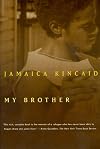
This book is the author's attempt to come to grips with the dying of her youngest brother. She knew him for only a few years of his life, three on either end, and has an admittedly complex relationship with him. Most of her familial relationships are complicated, and soured by years of cruelty and neglect. Despite this, when she heard that her brother was dying of AIDS, she found deep within herself a well of something like love. Was it love? She's not totally sure, but this feeling drove show more her to return home and know her brother as an adult. She felt responsibility to help him. She purchased drugs for him, a bed, consulted with doctors and counselors.
This book recounts her experiences and frustrations as she tries to know he brother briefly before he dies. It is not beautiful, but extremely honest. For its honesty, perhaps most of all, it is difficult to read. It threw in sharp relief all the accepted lies, omissions, and euphemisms that death mandates. So few people, even those who are dying themselves are able to face or understand their own mortality. This book is thoughtful and poetic as it wrestles with some of the greatest questions of this life. show less
This book recounts her experiences and frustrations as she tries to know he brother briefly before he dies. It is not beautiful, but extremely honest. For its honesty, perhaps most of all, it is difficult to read. It threw in sharp relief all the accepted lies, omissions, and euphemisms that death mandates. So few people, even those who are dying themselves are able to face or understand their own mortality. This book is thoughtful and poetic as it wrestles with some of the greatest questions of this life. show less
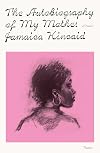
This book is both stunning and exceptional. A woman describes the people and events of her very much examined life with a stark absence not just of sentimentality, but as if even the notion of sentimentality did not exist. She depicts only one person she felt love for, a sensual, passionate love, and none with whom a shared understanding of the world creates a bond that supports trust and affection. The very sensuality with which she accepts herself and the colors, smells, and sounds that show more saturate her world make her sympathetic, but do not make me want to fully accept that world as one I could comprehend more than partially. show less
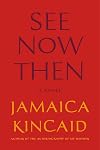
Kincaid's writing is stunning and truly immersive. This book feels off, perhaps because (despite her denials) I suspect this was a cathartic exercise about her own acrimonious divorce following a betrayal by her husband...as mirrored in the novel...and while I'm sure it was xathartic for her, it was hard for me to read it. It felt unexamined as fiction. I cannot recommend her other work highly enough, and perhaps for those who want to sit in these emotions, this novel would work for that show more time in your life, only. show less
Story of a dissolving marriage. You know it ain't right when you find out they are living in Shirley Jackson's old house in Vermont. May be one of the harshest treatment of family I've ever read- divided loyalties, broken promises, and endless disappointment, all told in Kincaid's shamanistic prose.
Chilling.
Chilling.
Lists
Awards


You May Also Like


Associated Authors
Statistics
- Works
- 51
- Also by
- 70
- Members
- 8,472
- Popularity
- #2,841
- Rating
- 3.7
- Reviews
- 185
- ISBNs
- 314
- Languages
- 14
- Favorited
- 27
