
Caryl Phillips
Author of Crossing the River
About the Author
Caryl Phillips, 1958 - Author Caryl Phillips was born in St. Kitts on March 13, 1958. He received a B.A. with honors from Oxford University and soon after began his writing career. He is now professor at Yale University and a visiting professor at Barnard College of Columbia University. Phillips show more has received many awards and fellowships and was appointed to the post of chief editor of the Faber and Faber Caribbean writers' series. Phillips' writing explores the challenges of dealing with such divisions as race and heritage, and investigates how they were created in the first place. In "Cambridge," he presents his characters confused identities and frequently compares their personal histories and questions the process of how stories become known as history. He draws links between groups, like the Jews during the Holocaust or Victorian women, to make analogies for the West Indian situation. (Bowker Author Biography) Caryl Phillips is the author of seven previous books. He divides his time between New York City and London. (Publisher Provided) show less
Image credit: Michael Eastman
Works by Caryl Phillips
Color Me English: Thoughts About Migrations and Belonging Before and After 9/11 (2011) 40 copies, 1 review
Caryl Phillips: Plays One: Strange Fruit; Where There is Darkness; The Shelter (Oberon Modern Playwrights) (2019) 3 copies
Playing Away — Screenplay — 3 copies
21 (BARNES) 1 copy
Associated Works
Heart of Darkness and Selections from The Congo Diary (1902) — Introduction, some editions — 377 copies, 6 reviews
Lost Classics: Writers on Books Loved and Lost, Overlooked, Under-read, Unavailable, Stolen, Extinct, or Otherwise Out of Commission (2000) — Contributor — 319 copies, 6 reviews
The Norton Anthology of African American Literature {2nd edition} (2003) — Contributor, some editions — 283 copies, 2 reviews
Know the Past, Find the Future: The New York Public Library at 100 (2011) — Contributor — 133 copies, 4 reviews
Mentors, Muses & Monsters: 30 Writers on the People Who Changed Their Lives (2009) — Contributor — 71 copies, 2 reviews
Tagged
Common Knowledge
- Legal name
- Phillips, Caryl
- Birthdate
- 1958-05-13
- Gender
- male
- Occupations
- author
professor (creative writing, Yale)
writer
professor (English, Amherst College) - Organizations
- Royal Society of Literature
- Awards and honors
- Lannan Literary Award (Fiction, 1994)
Granta's Best of Young British Novelists (1993)
Guggenheim Fellowship - Nationality
- UK
- Birthplace
- St. Kitts
- Places of residence
- St. Kitts, West Indies (birth)
Leeds, Yorkshire, England, UK
New York, New York, USA (current) - Map Location
- Saint Kitts and Nevis
Members
Reviews
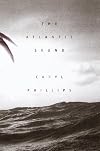
Caryl Phillips explores, both literally and figuratively, the transatlantic slave-trade route between Europe, Africa, and America, in The Atlantic Sound. In each of the 3 parts of the book he visits a part of 'the triangle,' Liverpool, Ghana, and Charleston, and tells the histories of these places and how they were affected by the slave trade. And he does it wonderfully!
The Atlantic Sound just sucked me in. It's one of those books you read and lose track of time, then look up an hour later show more without realizing you've been reading for more than 5 or 10 minutes. Despite the emotional subject, Caryl delivered it in a way as to make it readable, yet no less alarming, due in large part to his storytelling ability. His 'characters' jump out of the page at you, he really brought these historical figures to life.
Most important, in my opinion, is how the author's personality seeps through the pages. Witty, a bit snarky, and hopelessy pessimistic most of the time. Loved it.
The books is a riveting read, I came upon it 'randomly' and am so happy I did. 4 stars! show less
The Atlantic Sound just sucked me in. It's one of those books you read and lose track of time, then look up an hour later show more without realizing you've been reading for more than 5 or 10 minutes. Despite the emotional subject, Caryl delivered it in a way as to make it readable, yet no less alarming, due in large part to his storytelling ability. His 'characters' jump out of the page at you, he really brought these historical figures to life.
Most important, in my opinion, is how the author's personality seeps through the pages. Witty, a bit snarky, and hopelessy pessimistic most of the time. Loved it.
The books is a riveting read, I came upon it 'randomly' and am so happy I did. 4 stars! show less
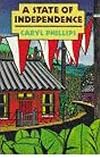
After a 20-year absence, Bertram Francis returns to his home in Saint Kitts on the eve of its independence. As he visits his old haunts, Bertram begins to feel like the 19-year-old he was when he left with a scholarship to study in England. He had expected the island to look different upon his return, but he wasn't prepared for the change in the attitudes of his family and friends. Bertram didn't realize he had burned so many bridges when he left. He was an outsider in England, and now he is show more an outsider in his childhood home.
There is a sense in which Saint Kitts is like the 19-year-old Bertram of twenty years ago, with hope in vague opportunities that will surely come its way with its new independent status. What will the nation look like twenty years from now? Will the tiny nation achieve any more than Bertram did with his independence? Phillips raises many questions and gives hints about his opinions, but he leaves the resolution up to his readers. show less
There is a sense in which Saint Kitts is like the 19-year-old Bertram of twenty years ago, with hope in vague opportunities that will surely come its way with its new independent status. What will the nation look like twenty years from now? Will the tiny nation achieve any more than Bertram did with his independence? Phillips raises many questions and gives hints about his opinions, but he leaves the resolution up to his readers. show less
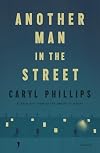
…the thought of maybe one day leaving the country and beginning again, back home, momentarily lifts your spirits, even though you know you are trapped in England. from Another Man in the Street by Caryl Phillips
Victor wanted more from life than cutting sugar cane. He had been a bookish boy who longed to be a writer. At twenty-seven, he left his home in the Caribbean for the England. He found a job at a bar, then lucked into a job as a rent collector for another immigrant with a tragic show more background. He began writing for a newspaper. It turned into a career. He gained a white, educated girlfriend (no matter that he had left a wife and child behind) who herself had left home for an imagined better life, becoming a secretary.
But in 1960s England, the immigrant dream of a new life never turned out the way one imagined. I tried to hold on to dignity, Victor tells his girlfriend, knowing “full well that all you people see is the colour and not the man.”
The story is told from different points in time and from the viewpoints of Victor, his boss Peter, and Ruth, who had been Peter’s love before Victor stole her away.
Victor finds those who are sympathetic to his plight as an immigrant. But the wider attitude is anti-immigrant, those who resent the influx of people from the colonies. As one character states, “The real worry for us Englishmen is that we’re bloody well running out of colonies…But you lot need us, don’t you? We make things all nice and easy for you, don’t we? Cheap passage to England, no questions asked. Loose women and lots of jobs.”
Our sympathy for Victor wavers as we learn his ruthlessness in his pursuit of bettering his life. It took a lifetime for Victor to realize what he had lost in England, his grappling with his choices at end of life redeems him in our eyes.
Thanks to the publisher for a free book through NetGalley. show less
Victor wanted more from life than cutting sugar cane. He had been a bookish boy who longed to be a writer. At twenty-seven, he left his home in the Caribbean for the England. He found a job at a bar, then lucked into a job as a rent collector for another immigrant with a tragic show more background. He began writing for a newspaper. It turned into a career. He gained a white, educated girlfriend (no matter that he had left a wife and child behind) who herself had left home for an imagined better life, becoming a secretary.
But in 1960s England, the immigrant dream of a new life never turned out the way one imagined. I tried to hold on to dignity, Victor tells his girlfriend, knowing “full well that all you people see is the colour and not the man.”
The story is told from different points in time and from the viewpoints of Victor, his boss Peter, and Ruth, who had been Peter’s love before Victor stole her away.
Victor finds those who are sympathetic to his plight as an immigrant. But the wider attitude is anti-immigrant, those who resent the influx of people from the colonies. As one character states, “The real worry for us Englishmen is that we’re bloody well running out of colonies…But you lot need us, don’t you? We make things all nice and easy for you, don’t we? Cheap passage to England, no questions asked. Loose women and lots of jobs.”
Our sympathy for Victor wavers as we learn his ruthlessness in his pursuit of bettering his life. It took a lifetime for Victor to realize what he had lost in England, his grappling with his choices at end of life redeems him in our eyes.
Thanks to the publisher for a free book through NetGalley. show less
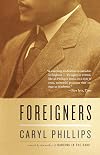
Foreigners is a novel constructed of three stories, each about a Black man who migrated to England, each of them in different circumstances and in different times. First is Francis Barber, a slave given to the writer Samuel Johnson in the 18th century. This story is narrated by a caring colleague of Johnson's who compassionately observes Barber at his master's funeral but rationalizes his failure to reach out to the now freed but unrooted "immigrant." He seeks out Barber many years later and show more describes the man's attempt to build an honorable life in the face of social isolation, marginalization, and neglect.
The second story is that of Randolph Turpin, the son of an immigrant from British Guiana who defeats middleweight champion Sugar ray Reynolds in the boxing ring in 1951. Turpin's own status as champion is short-lived and this story, which especially reads like non-fiction (they all do, but in differing voices), again illustrates the challenge of a Black man making it in England. Social isolation, marginalization, neglect ---- yep, they collude to undermine his ability to break out of the one-dimensional mold established for the boxer by privileged society.
Finally, the third story is of a young immigrant (stowaway) from Nigeria and his too-short life in Leeds in the 1950s. A target of abusive and degrading "entertainment" by local police officers, David Oluwale is found dead in a river and "Northern Lights" reads like a series of reports or interviews by anonymous citizens who knew him while he was living rough in the streets of Leeds. We are also provided excerpts from the trial of the two police officers charged with manslaughter in David's death.
I think this is an excellent novel with its dispassionate and paradoxically emotional exploration of being "other," of being a "foreigner" living on the margins of society. Phillips considers the different manner in which each of these men tries to cope with their situation, which can be and is considered by some to amount to their own contributions to their tragic endings. Whether they try to assimilate and adapt, or fight, or passively allow their detractors to abuse and torment them, the ending is basically the same. White society sees the men in unidimensional, stereotyped say; no behavioral route on their part will change the story.
It sounds depressing and, in fact, it is. It's also a beautifully narrated story with tremendous depth for a reader who's willing to go there. show less
The second story is that of Randolph Turpin, the son of an immigrant from British Guiana who defeats middleweight champion Sugar ray Reynolds in the boxing ring in 1951. Turpin's own status as champion is short-lived and this story, which especially reads like non-fiction (they all do, but in differing voices), again illustrates the challenge of a Black man making it in England. Social isolation, marginalization, neglect ---- yep, they collude to undermine his ability to break out of the one-dimensional mold established for the boxer by privileged society.
Finally, the third story is of a young immigrant (stowaway) from Nigeria and his too-short life in Leeds in the 1950s. A target of abusive and degrading "entertainment" by local police officers, David Oluwale is found dead in a river and "Northern Lights" reads like a series of reports or interviews by anonymous citizens who knew him while he was living rough in the streets of Leeds. We are also provided excerpts from the trial of the two police officers charged with manslaughter in David's death.
I think this is an excellent novel with its dispassionate and paradoxically emotional exploration of being "other," of being a "foreigner" living on the margins of society. Phillips considers the different manner in which each of these men tries to cope with their situation, which can be and is considered by some to amount to their own contributions to their tragic endings. Whether they try to assimilate and adapt, or fight, or passively allow their detractors to abuse and torment them, the ending is basically the same. White society sees the men in unidimensional, stereotyped say; no behavioral route on their part will change the story.
It sounds depressing and, in fact, it is. It's also a beautifully narrated story with tremendous depth for a reader who's willing to go there. show less
Lists
Booker Prize (2)
Awards


You May Also Like


Associated Authors
Statistics
- Works
- 31
- Also by
- 11
- Members
- 2,396
- Popularity
- #10,714
- Rating
- 4.0
- Reviews
- 52
- ISBNs
- 198
- Languages
- 8
- Favorited
- 11
