
Maryse Condé (1937–2024)
Author of I, Tituba, Black Witch of Salem
About the Author
Series
Works by Maryse Condé
La Civilisation du bossale réflexions sur la littérature orale de la Guadeloupe et de la Martinique (1978) 4 copies
La migració dels cors 3 copies
Tierra mezclada 2 copies
Ségou Tome I 1 copy
Ségou Tome II 1 copy
Nanna-ya 1 copy
La manta Disney 1999 1 copy
Associated Works
Daughters of Africa: An International Anthology of Words and Writings by Women of African Descent from the Ancient Egyptian to the Present (1992) — Contributor — 186 copies
Her True-True Name : an anthology of women's writing from the Caribbean (1989) — Contributor — 48 copies
Daughters of Latin America: An International Anthology of Writing by Latine Women (2023) — Contributor — 40 copies, 1 review
Tagged
Common Knowledge
- Canonical name
- Condé, Maryse
- Legal name
- Boucolon, Maryse (born)
- Other names
- Philcox, Maryse
- Birthdate
- 1937-02-11
- Date of death
- 2024-04-02
- Gender
- female
- Education
- Lycée Fénelon, Paris
Sorbonne University - Occupations
- novelist
teacher of West Indian literature (Sorbonne)
teacher (University of Virginia)
lecturer
essayist
children's writer (show all 8)
playwright
teacher Caribbean & French literature (University of Columbia ∙ NY) - Awards and honors
- Fulbright Fellowship (1985)
Guggenheim Fellowship (1987-88)
Puterbaugh Fellowship (1993)
Ordre des Arts et des Lettres (Commandeur, 2001)
Rockefeller Foundation Bellagio Writer-in Residence (1987)
Le Grand Prix Litteraire de la Femme (1986) (show all 9)
Prix Anaïs-Ségalas de l'Académie française (1988)
Légion d'Honneur (Chevalier ∙ 2004)
New Academy Prize in Literature (2018) - Relationships
- Philcox, Richard (husband)
- Nationality
- France
- Birthplace
- Pointe-à-Pitre, Guadeloupe, France
- Places of residence
- Pointe-à-Pitre, Guadeloupe (birth)
Paris, Île-de-France, France
Conakry, Guinea
Accra, Ghana
Saint Louis, Senegal
Los Angeles, California, USA (show all 9)
Berkeley, California, USA
New York, New York, USA
London, Middlesex, England, UK - Place of death
- Apt, Vaucluse, Provence-Alpes-Côte d'Azur, France
- Map Location
- Guadeloupe
Members
Reviews
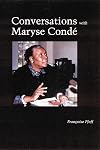
“The awareness of failure must not prevent or retard action.”
This collection of interviews, conducted and translated by Françoise Pfaff, cover a wide range of topics. Amongst them Maryse Condé's life, her beliefs, her observations on race and power, her opinions of other writers's works, and, of course, comments on her own works.
Part of her earlier life, her childhood specifically, I already knew as I've read her brilliant memoir [b:Tales from the Heart: True Stories from My show more Childhood|3120727|Tales from the Heart True Stories from My Childhood|Maryse Condé|https://i.gr-assets.com/images/S/compressed.photo.goodreads.com/books/1312024998l/3120727._SX50_.jpg|187505]. Condé was born to an upper class family in Guadeloupe, her parents being amongst the first Black professionals in her country, went to study in Paris as a young lady and was disillusioned by the bourgeois upbringing she had after encountering leftist and Marxist beliefs, left to live in West Africa, specifically Guinea, where she was further disenchanted when Touré, a self-professed Marxist, used terror against his own citizens. In this period she was divorced and raising four children on her own, was arrested, jailed and deported while she was in Ghana after Nkrumah was ousted, and lived a life of constant turbulence and drifting for a while. This all brings to mind Condé's own quote from Segu: "Why was life no more than a bridge from disillusion to disillusion?"
So it's no surprise that throughout these conversations, taking place some twenty odd years after all this, have a disenchanted and blunt tone to them. I think Pfaff covered everything she possibly could.
There were certain comments that gave me pause while I read them. Her praise of Naipaul and her fascination at his separation from his West Indian origins, as she criticised it, but since I haven't read his work yet and only know him for his "controversial" statements I won't dwell much on that. Her criticism of Toni Morrison's work, as being politically correct, even while praising her as a great writer and remarkable stylist. This comment is made while she compares Toni to other Black American women writers with more radical leanings in their writing: Lorde, Davis, and Walker. So it seems partly true, but given that Toni's whole writing centred on Black American life and history in the U.S.A, politically correct doesn't seem the right word here to describe it.
Other than that her praise of Ousmane Sembene's films and their importance, which I agree wholeheartedly with, and her exploration of West Indian literature, her love and interest in the African diaspora, amongst other topics, were great to read. The most fascinating point from these conversations to me was her remarks on European criticism, specifically French, to her work. Only as story-telling, without mention of structure and the writer's craft. And about the expectations and entrapments of the Black writer:
"It's a trap that writers of the African diaspora often fall into because we have the misfortune of being published by the Other. The Other confines us to an image, perceives us in a particular way, and we don't always have the possibility of saying no and presenting ourselves differently."
And to expand on this also mentions the conundrum Black writers face while making their art:
"Black writers find themselves in a very difficult situation: on the one hand, they have their own people who read them locally and ask for and expect certain things; and on the other hand, there is the press, which creates literary success, objectifies, stresses exoticism, and asks for something else. In between these two demands, writers have to find themselves."
Overall this is a great collection. Especially for those interested in Condé's work or those who have read her work. This was truly thorough and gives a sense of Maryse's work and of her ironic personality, her honesty, and her intelligence. show less
This collection of interviews, conducted and translated by Françoise Pfaff, cover a wide range of topics. Amongst them Maryse Condé's life, her beliefs, her observations on race and power, her opinions of other writers's works, and, of course, comments on her own works.
Part of her earlier life, her childhood specifically, I already knew as I've read her brilliant memoir [b:Tales from the Heart: True Stories from My show more Childhood|3120727|Tales from the Heart True Stories from My Childhood|Maryse Condé|https://i.gr-assets.com/images/S/compressed.photo.goodreads.com/books/1312024998l/3120727._SX50_.jpg|187505]. Condé was born to an upper class family in Guadeloupe, her parents being amongst the first Black professionals in her country, went to study in Paris as a young lady and was disillusioned by the bourgeois upbringing she had after encountering leftist and Marxist beliefs, left to live in West Africa, specifically Guinea, where she was further disenchanted when Touré, a self-professed Marxist, used terror against his own citizens. In this period she was divorced and raising four children on her own, was arrested, jailed and deported while she was in Ghana after Nkrumah was ousted, and lived a life of constant turbulence and drifting for a while. This all brings to mind Condé's own quote from Segu: "Why was life no more than a bridge from disillusion to disillusion?"
So it's no surprise that throughout these conversations, taking place some twenty odd years after all this, have a disenchanted and blunt tone to them. I think Pfaff covered everything she possibly could.
There were certain comments that gave me pause while I read them. Her praise of Naipaul and her fascination at his separation from his West Indian origins, as she criticised it, but since I haven't read his work yet and only know him for his "controversial" statements I won't dwell much on that. Her criticism of Toni Morrison's work, as being politically correct, even while praising her as a great writer and remarkable stylist. This comment is made while she compares Toni to other Black American women writers with more radical leanings in their writing: Lorde, Davis, and Walker. So it seems partly true, but given that Toni's whole writing centred on Black American life and history in the U.S.A, politically correct doesn't seem the right word here to describe it.
Other than that her praise of Ousmane Sembene's films and their importance, which I agree wholeheartedly with, and her exploration of West Indian literature, her love and interest in the African diaspora, amongst other topics, were great to read. The most fascinating point from these conversations to me was her remarks on European criticism, specifically French, to her work. Only as story-telling, without mention of structure and the writer's craft. And about the expectations and entrapments of the Black writer:
"It's a trap that writers of the African diaspora often fall into because we have the misfortune of being published by the Other. The Other confines us to an image, perceives us in a particular way, and we don't always have the possibility of saying no and presenting ourselves differently."
And to expand on this also mentions the conundrum Black writers face while making their art:
"Black writers find themselves in a very difficult situation: on the one hand, they have their own people who read them locally and ask for and expect certain things; and on the other hand, there is the press, which creates literary success, objectifies, stresses exoticism, and asks for something else. In between these two demands, writers have to find themselves."
Overall this is a great collection. Especially for those interested in Condé's work or those who have read her work. This was truly thorough and gives a sense of Maryse's work and of her ironic personality, her honesty, and her intelligence. show less
I, Tituba, Black Witch of Salem (CARAF Books: Caribbean and African Literature Translated from French) by Maryse Condé

As I stumbled forward, I was racked by a violent feeling of pain and sorrow. It seemed that I was gradually being forgotten. I felt that I would only be mentioned in passing in these Salem witchcraft trails about which so much would be written later, trials that would arouse the curiosity and pity of generations to come as the greatest testimony of a superstitious and barbaric age. There would be mention here and there of "a slave originating from the West Indies and probably practicingshow more
'hoodoo.'" There would be no mention of my age or my personality. I would be ignored. As early as the end of the seventeenth century, petitions would be circulated, judgments made, rehabilitating the victims, restoring their honor, and returning their property to their descendants. I would never be included! Tituba would be condemned forever! There would never, ever be a careful, sensitive biography recreating my life and its suffering.
Tituba is a historically important figure, as she was the only person of color to be accused of witchcraft during the notorious Salem witch trials in Massachusetts from 1692 to 1693. Her background isn’t completely clear, but she spent much of her early years enslaved in Barbados and was eventually purchased by Reverend Samuel Parris, an exceptionally harsh Puritan minister who moved his family from Barbados to Massachusetts after a hurricane damaged much of his property there. It was quite unusual for people of color to be enslaved in New England, and Salem Village was an already quarrelsome and divided community before the Parris family, Tituba and her husband John Indian arrived.
As part of her responsibilities Tituba oversaw several young girls in the colony, most notably Betty Parris, Abigail Williams, Ann Putnam and Elizabeth Williams, along with the other Parris children. The Parris girls shared stories that Tituba had told them about her childhood in Barbados with other girls in the village, and as a result they declared that she was a witch, then accused others of witchcraft, pretending to see spirits and causing afflictions, including epileptiform convulsions and screaming fits. Reverend Parris was key in the expansion of the accusations to others, which led to 30 convictions and 20 executions, 19 by hanging and one, Giles Corey, by peine forte et dure, a hard and forceful punishment by the progressive placement of heavier and heavier stones.
Tituba’s fate was lost to history, although she was not apparently put to death in or near Salem. However, Condé makes her a mock-epic protagonist, as she eventually becomes the servant of a widowed Jewish man and his family in New England before returning to Barbados, where she spends her remaining days.
[I, Tituba] was a captivating and compelling exploration of a historical figure who Condé brings to life, as she also provides the reader with an examination of the life of enslaved people of color in the Caribbean. Highly recommended! show less
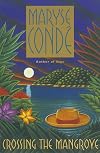
Do we really know who our neighbors are, who our friends are, what thoughts they keep to themselves, not to be shared with even their own family members?
Francis Sancher is found dead in the mud along the path to Riviere au Sel, but the story isn't about how he died or even if someone had killed him. His wake, attended by everyone in the village, both those who detested the man and the few who liked him, is the event during which each person is lost in his or her own thoughts, analyzing the show more decisions they made, significant events in their lives and how they met Francis.
Through the internal monologues, we're given a glimpse into the nature of Francis, a man who was complex, verbose, and yet secretive. In each of the internal monologues, there is a thread of sadness, some thicker than others, telling of dreams that have been set aside, hope that has been lost, children who are unloved and passions left unanswered.
All the personal stories are beautifully nuanced. They highlight the caste system that existed in Guadaloupe based on the color of one's skin and provide a richly detailed cultural journey into this part of the world. show less
Francis Sancher is found dead in the mud along the path to Riviere au Sel, but the story isn't about how he died or even if someone had killed him. His wake, attended by everyone in the village, both those who detested the man and the few who liked him, is the event during which each person is lost in his or her own thoughts, analyzing the show more decisions they made, significant events in their lives and how they met Francis.
Through the internal monologues, we're given a glimpse into the nature of Francis, a man who was complex, verbose, and yet secretive. In each of the internal monologues, there is a thread of sadness, some thicker than others, telling of dreams that have been set aside, hope that has been lost, children who are unloved and passions left unanswered.
All the personal stories are beautifully nuanced. They highlight the caste system that existed in Guadaloupe based on the color of one's skin and provide a richly detailed cultural journey into this part of the world. show less

Maryse Condé’s short childhood memoir describes growing up in a middle-class Black family in Guadeloupe in the 1940s, and follows her experience up to her early years as a student at the Sorbonne. She was the youngest child in a large family: her father was a former civil servant who had become a banker, her mother a teacher, and both of them considered themselves more French than the French. Young Maryse was strictly prohibited from speaking Creole, and only allowed to associate with show more children “of her own sort” — she talks about her shock at realising on trips to Paris that white people looked down on them and regarded their ability to speak good French as though it was some sort of circus skill they had learnt.
This is a charming account of childhood and the oddities of growing up in a privileged niche protected from the realities of your own culture. You don’t have to read it politically to enjoy it, but of course it is a very political book. show less
This is a charming account of childhood and the oddities of growing up in a privileged niche protected from the realities of your own culture. You don’t have to read it politically to enjoy it, but of course it is a very political book. show less
Lists
Awards


You May Also Like


Associated Authors
Statistics
- Works
- 54
- Also by
- 9
- Members
- 3,922
- Popularity
- #6,452
- Rating
- 3.8
- Reviews
- 80
- ISBNs
- 286
- Languages
- 13
- Favorited
- 11