
Patrick Chamoiseau
Author of Texaco
About the Author
Image credit: Patrick Chamoiseau @franceculture
Series
Works by Patrick Chamoiseau
Une enfance créole : Coffret en 3 volumes : Tome 1, Antan d'enfance ; Tome 2, Chemin-d'école ; Tome 3, A bout d'enfance (2006) 3 copies
La prison vue de l'intérieur : Regards et paroles de ceux qui travaillent derrière les murs (2007) 2 copies
Le déshumain grandiose 1 copy
Kur bien muret 1 copy
Quando cadono i muri 1 copy
Old Man And Molasses 1 copy
Associated Works
The Art of the Story: An International Anthology of Contemporary Short Stories (1999) — Contributor — 395 copies, 5 reviews
La bibliothèque des écrivains: Le livre qui a changé leur vie (2021) — Contributor — 4 copies, 1 review
Tagged
Common Knowledge
- Canonical name
- Chamoiseau, Patrick
- Birthdate
- 1953-12-03
- Gender
- male
- Awards and honors
- Prix Goncourt 1992
- Nationality
- France
- Birthplace
- Fort-de-France, Martinique, France
- Places of residence
- Fort-de-France, Martinique (birth)
Paris, France
Fort-de-France, Martinique - Associated Place (for map)
- France
Members
Reviews

Solibo was written a couple of years before Texaco, and also engages with the tension between “French” and “Creole” ways of looking at the world. Chamoiseau uses a parody of one of the most notoriously linear and logical narrative forms, the detective story, as a deliberately incongruous vehicle for an investigation into the role of a traditional storyteller and his increasingly tenuous place in the modern world. Solibo has died - inexplicably - in mid-sentence during a late night show more storytelling session under a tamarind tree in Fort de France, and a couple of local policemen are trying to find out who killed him, by the usual techniques of sifting physical evidence and collecting witness statements.
Needless to say, they get nowhere, and the neat narrative of the investigation refuses to advance in the approved linear fashion. Random accidents distract the cops from what they are supposed to be doing, whilst looping Creole recursions and excursions keep diverting us away from the matter in hand so that we can learn why a character has a particular name, or what they had for dinner and how it was cooked.
As in Texaco, the chief joy of this book is in the way Chamoiseau’s playful language allows us to feel that we have been given access to the richness of Creole culture. This sometimes sits a little uncomfortably with the rather heavy-handed satire of the police investigation, which keeps on drifting into grand guignol violence, however much the detective tries to pursue a calm, reasonable approach. So a slighter and less satisfying book than Texaco, but still very interesting. show less
Needless to say, they get nowhere, and the neat narrative of the investigation refuses to advance in the approved linear fashion. Random accidents distract the cops from what they are supposed to be doing, whilst looping Creole recursions and excursions keep diverting us away from the matter in hand so that we can learn why a character has a particular name, or what they had for dinner and how it was cooked.
As in Texaco, the chief joy of this book is in the way Chamoiseau’s playful language allows us to feel that we have been given access to the richness of Creole culture. This sometimes sits a little uncomfortably with the rather heavy-handed satire of the police investigation, which keeps on drifting into grand guignol violence, however much the detective tries to pursue a calm, reasonable approach. So a slighter and less satisfying book than Texaco, but still very interesting. show less

Texaco is essentially an oral history of Martinique from the 1820s to the 1980s, told from the point of view of Marie Sophie Labourieux, the founder of an illegal shanty-town built on the fringes of an oil depot in Fort-de-France. With only a little bit of necessary time-compression, Chamoiseau manages to fit this whole span (containing inter alia the end of slavery and collapse of the plantation system, the 1902 volcano disaster, two world wars, and the transition from colony to overseas show more Département) into the combined memories of Marie Sophie and her father Esternome, who was born a plantation slave and later became a joiner and smallholder before moving to Fort-de-France in the aftermath of the eruption that destroyed St Pierre. Marie Sophie works for most of her life as a domestic servant, but falls into the role of a community leader in her old age when she finds herself fighting the city and the oil company for the right to squat on the waste land below the tank-farm.
We are supposed to imagine Marie Sophie telling her story to the Urbaniste - a town-planner who has come to see Texaco for himself before advising the city to clear it or incorporate and improve it - but the author comes back in an afterword to explain to us that it's actually based on a series of interviews he, in his self-defined capacity of Marqueur de paroles (i.e. collector of folklore), had with the woman who was the original for Marie Sophie. In addition, the text is punctuated by excerpts from notebooks in which Marei Sophie recorded her own thoughts or the memories of her father, and with letters from the Urbaniste to the Marqueur de paroles.
The text itself is a complicated mixture of formal literary French, street language and Creole, always exciting, always poetic, and constantly undermining our expectations and prejudices. It's divided into sections in the way academic historians like to do "periodisation", but the periods are far from conventional: Temps de pail, Temps de bois-caisse, Temps de fibrociment, Temps béton (straw age, packing-case-wood age, asbestos age, concrete age). Creole words are introduced deliberately and systematically, and always turn out to have far more levels of meaning than the equivalent term in standard French.
Two terms in particular, turn out to be key concepts that keep on expanding in meaning and complexity as we go on through the book: l'En-ville, which is not just the city but the whole idea of urbanisation and everything associated with it; and the competing anarchistic Noutéka, ("us-ness"), an evocation of the powerful mutuality of small communities. Creole is rooted in African spirituality and in the disruptions of slavery, but we're never allowed to forget that Creole has a huge stake in the French language as well. Marie Sophie turns out to be a fan of Montaigne and Rabelais, and just when we're least expecting it, she will hit us with a couple of alexandrines buried in the middle of a passage of prose (...du matin de chaque jour aux beaux néons du soir). Or we suddenly get a couple of pages of vers-libre that looks suspiciously like a parody of Césaire's Cahier d'un retour. And there are some really awful jokes - as when de Gaulle visits the island and no-one is quite sure afterwards whether his speech was celebrating the Frenchness of the Martiniqueans ("Mon dieu, mon dieu, comme vous êtes français!") or exclaiming at their colour ("Mon dieu, mon dieu, comme vous êtes foncés!").
This novel won Chamoiseau the most prestigious French literary award, the Prix Goncourt, in 1992 - he was only the second Caribbean writer to win (the first being his fellow-Martiniquean, René Maran, in 1921). It's not hard to see why: it uses both language and history in original and exciting ways to show us where creole culture comes from, what it can do, and why it matters that little bits of anarchic individuality like Texaco should be able to exist in the world. show less
We are supposed to imagine Marie Sophie telling her story to the Urbaniste - a town-planner who has come to see Texaco for himself before advising the city to clear it or incorporate and improve it - but the author comes back in an afterword to explain to us that it's actually based on a series of interviews he, in his self-defined capacity of Marqueur de paroles (i.e. collector of folklore), had with the woman who was the original for Marie Sophie. In addition, the text is punctuated by excerpts from notebooks in which Marei Sophie recorded her own thoughts or the memories of her father, and with letters from the Urbaniste to the Marqueur de paroles.
The text itself is a complicated mixture of formal literary French, street language and Creole, always exciting, always poetic, and constantly undermining our expectations and prejudices. It's divided into sections in the way academic historians like to do "periodisation", but the periods are far from conventional: Temps de pail, Temps de bois-caisse, Temps de fibrociment, Temps béton (straw age, packing-case-wood age, asbestos age, concrete age). Creole words are introduced deliberately and systematically, and always turn out to have far more levels of meaning than the equivalent term in standard French.
Two terms in particular, turn out to be key concepts that keep on expanding in meaning and complexity as we go on through the book: l'En-ville, which is not just the city but the whole idea of urbanisation and everything associated with it; and the competing anarchistic Noutéka, ("us-ness"), an evocation of the powerful mutuality of small communities. Creole is rooted in African spirituality and in the disruptions of slavery, but we're never allowed to forget that Creole has a huge stake in the French language as well. Marie Sophie turns out to be a fan of Montaigne and Rabelais, and just when we're least expecting it, she will hit us with a couple of alexandrines buried in the middle of a passage of prose (...du matin de chaque jour aux beaux néons du soir). Or we suddenly get a couple of pages of vers-libre that looks suspiciously like a parody of Césaire's Cahier d'un retour. And there are some really awful jokes - as when de Gaulle visits the island and no-one is quite sure afterwards whether his speech was celebrating the Frenchness of the Martiniqueans ("Mon dieu, mon dieu, comme vous êtes français!") or exclaiming at their colour ("Mon dieu, mon dieu, comme vous êtes foncés!").
This novel won Chamoiseau the most prestigious French literary award, the Prix Goncourt, in 1992 - he was only the second Caribbean writer to win (the first being his fellow-Martiniquean, René Maran, in 1921). It's not hard to see why: it uses both language and history in original and exciting ways to show us where creole culture comes from, what it can do, and why it matters that little bits of anarchic individuality like Texaco should be able to exist in the world. show less
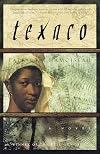
Written history gives us ages, demarcation points, like the Romanov Empire or the Industrial Revolution, capitalized to enforce just how important such people and developments are. But what of all the people and events whose history never sees the light of day, is lost along with the people whose oral record it was?
Marie-Sophie Labourieux believed in stories, believed in places, believed in her people. Constantly changing, constantly evolving, their origins were in danger of being lost to show more memory. A people who had descended from African slaves and French colonists, and from all those who came later to their island, a people who had fled the plantations and the masters only to be swallowed by the sugar refineries and City, had little chance of an official history. Even had such a thing existed, it could never capture the sounds, the smells, the tastes and colours of her world. Marie-Sophie set out to do this.
Thirty-five years earlier, Marie-Sophie had left City (Fort de France) and gone around the harbour to the land of the Texaco company. Here she set up her solitary hut, living alone until gradually a whole community of squatters grew up around her. Such places are never left in peace though. The oil people left, City noticed the wonderful vistas and needed more space. A connecting highway, the Pénétrante, was built. Now urban renewal threatened to destroy her community, the "insalubrious" Texaco.
By now, Marie-Sophie was regarded as a matadora, a woman of knowledge, worthy of respect. She was selected to entertain the first urban planner to assay her Texaco over glasses of rum in her hut. In her words
Slowly she wove for him the stories of her island and her people. More slowly, she filled notebook after notebook with them. From City, the place where she was born, there was Adélina, or was it Sophélise, one of two sisters who left this world so late that no one knew who she might be; their mother Théresa-Marie-Rose, who carried baskets of oranges and volumes of Montaigne across to the guards at the asylum where her husband, the man who had introduced Marie-Sophie to literature, but went mad and ate his library when war was declared, was incarcerated. From this family she had the books that followed her always.
From Texaco there was Nelta, the man she loved, whose goal was partir as soon as he had enough money, a goal they both tacitly acknowledged; partir, a French word to take him to France. There was Iréné the shark catcher with whom she would live out her days; Marie-Clémence, whose tongue was "televised news", "dispensing just enough bitterness to make life passionate"; Julot the Mangy, the Boss, afraid only of his dead mother's return to earth; the raids by police trying to flatten the community and the raids by foreign sailors trying to flatten the women.
Marie-Sophie told it all with the immediacy and yet also the mythic quality only an oral culture can convey. Marie-Sophie herself recognized the loss that the writing of history imposes on its material, a loss framed by the very language that seeks to preserve.
If there is, Marie-Sophie and Patrick Chamoiseau have captured it. show less
Marie-Sophie Labourieux believed in stories, believed in places, believed in her people. Constantly changing, constantly evolving, their origins were in danger of being lost to show more memory. A people who had descended from African slaves and French colonists, and from all those who came later to their island, a people who had fled the plantations and the masters only to be swallowed by the sugar refineries and City, had little chance of an official history. Even had such a thing existed, it could never capture the sounds, the smells, the tastes and colours of her world. Marie-Sophie set out to do this.
Thirty-five years earlier, Marie-Sophie had left City (Fort de France) and gone around the harbour to the land of the Texaco company. Here she set up her solitary hut, living alone until gradually a whole community of squatters grew up around her. Such places are never left in peace though. The oil people left, City noticed the wonderful vistas and needed more space. A connecting highway, the Pénétrante, was built. Now urban renewal threatened to destroy her community, the "insalubrious" Texaco.
By now, Marie-Sophie was regarded as a matadora, a woman of knowledge, worthy of respect. She was selected to entertain the first urban planner to assay her Texaco over glasses of rum in her hut. In her words
The angel of destruction had come that morning to familiarize himself with the setting for his future exploits.
-- But what's the use of visiting something you're going to raze?
He hadn't known what to answer and had concentrated on emptying his glass. So I took a real deep breath: I suddenly understood that it was I, around this table with this poor old rum, with my word for my only weapon, who had to wage --- at my age --- the decisive battle for Texaco's survival.
-- Little fellow, permit me to tell you Texaco's story...
Slowly she wove for him the stories of her island and her people. More slowly, she filled notebook after notebook with them. From City, the place where she was born, there was Adélina, or was it Sophélise, one of two sisters who left this world so late that no one knew who she might be; their mother Théresa-Marie-Rose, who carried baskets of oranges and volumes of Montaigne across to the guards at the asylum where her husband, the man who had introduced Marie-Sophie to literature, but went mad and ate his library when war was declared, was incarcerated. From this family she had the books that followed her always.
Some Montaigne of course, whom I feel I can still hear murmuring in his freezing castle; Alice, Lewis Carroll's, wandering from wonder to wonder as in a true Creole tale; Monsieur de La Fontaine's fables, where writing looks easy; and, of course, some Rabelais... I like to read my Rabelais, I don't understand much, but his bizarre language reminds me of my dear Esternome's strange sentences stuck between his desire to speak good French and his hill Creole -- a singular quality that I was never able to capture in my notebooks.
From Texaco there was Nelta, the man she loved, whose goal was partir as soon as he had enough money, a goal they both tacitly acknowledged; partir, a French word to take him to France. There was Iréné the shark catcher with whom she would live out her days; Marie-Clémence, whose tongue was "televised news", "dispensing just enough bitterness to make life passionate"; Julot the Mangy, the Boss, afraid only of his dead mother's return to earth; the raids by police trying to flatten the community and the raids by foreign sailors trying to flatten the women.
Marie-Sophie told it all with the immediacy and yet also the mythic quality only an oral culture can convey. Marie-Sophie herself recognized the loss that the writing of history imposes on its material, a loss framed by the very language that seeks to preserve.
The feeling of death became even more present when I began to write about myself, and about Texaco. It was like petrifying the tatters of my flesh. I was emptying my memory into immobile notebooks without having brought back the quivering of the living life which at each moment modifies what's just happened. Texaco was dying in my notebooks though it wasn't finished. And I myself was dying there though I felt the person I was now... still elaborating. ...
Is there such a thing as writing informed by the word, and by the silences, and which remains a living thing, moving in a circle and wandering all the time, ceaselessly irrigating with life the things written before, and which reinvents the circle each time like a spiral which at any moment is in the future, ahead, each loop modifying the other, nonstop, without losing a unity difficult to put into words?
If there is, Marie-Sophie and Patrick Chamoiseau have captured it. show less

The painful legacy of slavery is ever-present in this collection of twelve Creole folktales from the Caribbean island of Martinique, retold by novelist and historian Patrick Chamoiseau, whose critically acclaimed Texaco was awarded the Prix Goncourt. It could hardly be otherwise, as so many of these stories (according to the author's brief foreword) come from the days of slavery, and so many of their heroes, like that trickster Ti-Jean Horizon, are slaves themselves. One especially haunting show more tale, The Person Who Bled Hearts Dry, is actually set during one of the transatlantic sea voyages of the Middle Passage. But even in those selections which do not reference slavery directly, there is this sense that it is still present - a malignant and influential force, like the devils that also seem to crop up with regularity. The ubiquity of hunger - "gluttony is no sin," declares the narrator, at one point - and racial injustice in these tales, highlight slavery's sinister and lasting influence on Creole culture.
The ability of the storyteller - that nighttime rebel, that "Master of Words" - to capture these realties without being captured by them; to use all of his facility with language, all of his humor and understanding, in depicting the heart which survives - and even defies - such terrible brutality and oppression, make these tales a truly exceptional testament to the human spirit. And, of course, the language itself is simply gorgeous. I loved the narrative voice here, the many little editorial asides made by the storyteller, as when (in Glan-Glan, the Spat-Out Bird) he remarks mid-story: "Allow me to offer my opinion: I would have tiptoed away from such a sight, because when it comes to marvels, unless they're in a fairy tale, I keep my head down." As other reviewers have noted, the reader feels as if the teller were speaking directly to her, in some intimate setting, rather than through the words on a flat page.
I do not think I have read any other folklore from Martinique - although I did enjoy Daniel Picouly's Thumbelina of Toulaba, a Martiniquais adaptation of Hans Christian Andersen's famous tale - so many of these stories were new to me. Of course, some of the constituent elements - the Bluebeard-like locked chambers in A Little Matter of Marriage, for instance - were familiar. One tale - Yé, Master of Famine, in which a shiftless father manages to bring home a hungry devil who eats all the family food (and forces his unfortunate victims to eat his feces) - seems like a variant of the Puerto Rican tale Oté, with which it has many common points. But other than these few examples, I wasn't able to pick out very many points of comparison (one of my favorite things to do, when reading folklore).
With powerful story and beautiful language, this slim little volume packs quite a punch, and I would recommend it to anyone who loves good folktales, anyone interested in the effects of slavery on African-descended peoples in the Caribbean, and anyone interested in Martiniquais culture. I've looked around, and can't find another collection like it! show less
The ability of the storyteller - that nighttime rebel, that "Master of Words" - to capture these realties without being captured by them; to use all of his facility with language, all of his humor and understanding, in depicting the heart which survives - and even defies - such terrible brutality and oppression, make these tales a truly exceptional testament to the human spirit. And, of course, the language itself is simply gorgeous. I loved the narrative voice here, the many little editorial asides made by the storyteller, as when (in Glan-Glan, the Spat-Out Bird) he remarks mid-story: "Allow me to offer my opinion: I would have tiptoed away from such a sight, because when it comes to marvels, unless they're in a fairy tale, I keep my head down." As other reviewers have noted, the reader feels as if the teller were speaking directly to her, in some intimate setting, rather than through the words on a flat page.
I do not think I have read any other folklore from Martinique - although I did enjoy Daniel Picouly's Thumbelina of Toulaba, a Martiniquais adaptation of Hans Christian Andersen's famous tale - so many of these stories were new to me. Of course, some of the constituent elements - the Bluebeard-like locked chambers in A Little Matter of Marriage, for instance - were familiar. One tale - Yé, Master of Famine, in which a shiftless father manages to bring home a hungry devil who eats all the family food (and forces his unfortunate victims to eat his feces) - seems like a variant of the Puerto Rican tale Oté, with which it has many common points. But other than these few examples, I wasn't able to pick out very many points of comparison (one of my favorite things to do, when reading folklore).
With powerful story and beautiful language, this slim little volume packs quite a punch, and I would recommend it to anyone who loves good folktales, anyone interested in the effects of slavery on African-descended peoples in the Caribbean, and anyone interested in Martiniquais culture. I've looked around, and can't find another collection like it! show less
Lists
Awards


You May Also Like


Associated Authors
Statistics
- Works
- 53
- Also by
- 7
- Members
- 1,824
- Popularity
- #14,100
- Rating
- 3.9
- Reviews
- 39
- ISBNs
- 145
- Languages
- 13
- Favorited
- 6
