

Raphaël Confiant
Author of Éloge de la créolité (In praise of creoleness)
About the Author
Image credit: By Lpalli - Own work, CC BY-SA 3.0, https://commons.wikimedia.org/w/index.php?curid=9979867
Works by Raphaël Confiant
Kòd Yanm 2 copies
Bassin des Ouragans 1 copy
Bitako-a 1 copy
Le Nègre et l'Amiral 1 copy
THE CANE-CUTTER’S SONG 1 copy
Tagged
Common Knowledge
- Birthdate
- 1951
- Gender
- male
- Education
- University of Provence (English, Political Science, l'Institut d'études politiques d'Aix-en-Provence
- Occupations
- lecturer (University of the Antilles and Guiana)
- Nationality
- France
- Birthplace
- Lorrain, Martinique, France
- Places of residence
- Le Lorrain, Martinique (birth)
- Associated Place (for map)
- Le Lorrain, Martinique
Members
Reviews
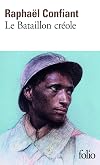
Raphaël Confiant is one of Martinique's most important contemporary writers, and the de-facto figurehead of a literary movement in the French Antilles known as créolité, or ‘creoleness’. Créolité stands, in name and in intent, against the négritude movement of fellow Martiniquan Aimé Césaire, which sought to portray the Antilles as participating in a commonality of black Africans (and African descendants) worldwide. Confiant and his supporters, by contrast, are more interested in show more stressing Martinique's multiracial diversity, which is primarily a three-way mix of European, Indian and African.
The creole language spoken on the island is, for Confiant, a crucial symbol of that vibrant mixture, and his first few novels were in fact written in Antilles Creole. However, deciding that his principles could be relaxed at least a little in favour of a broader audience, he switched to French in 1988 and has since found a good deal of literary recognition, narrowly missing out on the Goncourt Prize on at least one occasion. His books focus on the major events in Martinique's history; in the case of this novel, we are looking at the war of 1914-18 and it makes for an excellent sidelight on an aspect of the First World War that is not investigated by most general histories of the conflict, which, when they touch on the participation of France's overseas territories at all, tend to focus exclusively on troops from the Maghreb.
The Bataillon Créole was formed of soldiers from the French Antilles, French Guiana, and La Réunion, who were pressed into service on the Western Front and in the Dardanelles. This was the first time that troops from these territories had been integrated into the French army as regular soldiers and not as ‘volunteer’ detachments; for that generation, it was an important turning-point in the relation of Martinique to its ‘mother country’, for which they went off to die in great numbers despite knowing almost nothing about the place. Even the name ‘France’ itself was not common at the time, most Martiniquans referring to it only as Là-bas. Over there.
Confiant's novel gives us an imagined tapestry of different voices from the Creole Battalion, from the trenches of Flanders to the landings at Gallipoli, alongside the stories and the emotions of friends and family members left behind in the small town of Grande-Anse (which is now called Le Lorrain). Instead of chapters, these stories are grouped together in five ‘circles’ of roughly-related narratives, a structure that Confiant has said better represents native creole forms of storytelling. The novel's most successful moments – and there could perhaps have been more of them – come when the characters find strange similarities, or dramatic contrasts, between the frontline environment and their beloved Martinique. Ferjule, for instance, whose unit has been cut off for days in its trenches at Cape Helles, finds himself hallucinating from thirst about home:
Debout dans sa tranchée, maladroitement protégé du soleil par sa capote, il se voyait plonger tête la première dans les magnifiques bassins de la rivière du Lorrain, à hauteur du quartier Macédoine, endroit qu'il affectionnait lorsqu'il était enfant, mais qu'il avait déserté une fois qu'il eut obtenu ce job de tonnelier a l'usine de Vivé. Les rives étaient bordées de goyaviers dont les fruits mûrs tombaient dans l'eau et éclataient, libérant une pulpe rose bonbon. Ferjule les attrapait avant que le courant les charroie et les avalait dans un grand éclat de rire.
[Upright in his trench, clumsily protected from the sun by his greatcoat, he saw himself diving headfirst into the magnificent pools along the Le Lorrain river, near Macédoine, a place that he'd loved when he was a child but that he'd deserted once he landed the coopering job at the factory in Vivé. The banks were fringed with guava trees whose ripe fruits would drop into the water and burst open, releasing a candy-pink pulp. Ferjule used to catch them before the current carried them off, and swallow them with a roar of laughter.]
Although you could describe this as a war novel, actually most of the action takes place in Martinique, since we spend a lot of time following the relatives and loved ones of those away fighting, or living out their memories of home. This probably fits Confiant's inclination and expertise better (there are a couple of historical mistakes in the European sections, as when he has flamethrowers at the Marne), but it also turns out to be an excellent strategic choice, since novels set on the Western Front are legion whereas this offers something very different. Instead of details about dawn raids and no-man's-land, we spend time in the company of rum-shop owners, sorceresses and sugarcane cutters, who grow up in bustling shanties surrounded by innumerable children.
Ma manman avait un embarras de dix-sept bouches à nourrir et aucun de ses rejetons ne connaissait son vrai père, car quand mes aînés cherchaient à le savoir, elle répondait d'un cinglant: Sa pa ka gadé zot ! Sel bagay, di'y mèsi davwè i pèmet zot vini anlè latè, sakré ti popilè ki zot yé !
[My mamma had an embarrassment of seventeen mouths to feed and none of her kids knew who their real father was, since every time my older brothers and sisters tried to find out, she'd reply with a scathing: Sa pa ka gadé zot! Sel bagay, di'y mèsi davwè i pèmet zot vini anlè latè, sakré ti popilè ki zot yé! (‘That doesn't concern you! You should just be thankful that he brought you into the world at all, you little rascals!’)]
Martinique is home, still, to a bewildering spectrum of terms to describe gradations of race, many of which crop up in this book. At the top, in terms of social class, is the Béké or ‘white creole’ – a descendant of the French colonisers – and at the bottom is the Nègre-Congo (a ‘Congo black’), but in between you also have mulattos, câpres (the offspring of one black and one mulatto parent), chabins (pale-skinned black people), and Nègres-Rouges (those with dark skin and curly hair that has gone reddish, perhaps from sun and saltwater).
This folk taxonomy reflects a strong racial-mindedness in Martinique that comes presumably from its colonial past, and that filters into the narrative in various interesting ways. The Martiniquan soldiers are objects of derision for many of their comrades, who refer to them with nicknames like ‘Chocolate’, or ‘Snow White’, sometimes good-naturedly but more often out of simple malice. On the battlefield, one character suggests, the black soldier has ‘centuries of vengeance to assuage’. In one of the most interesting (and perhaps controversial) passages, a Martiniquan infantryman who has been honoured for bravery reflects guiltily on his underlying motives:
La baïonnette qui s'enfonce dans le corps blanc efface d'un seul trait des siècles s'agenouillement, d'humiliation. Le Teuton, qui vous fait face […] devient le Béké, le Blanc créole, devant lequel les vôtres et vous n'ont jamais pu que courber l'échine et balbutier « oui, missié ». […A]u moment même où vous avez enfoncé la baïonnette dans les génitoires de celui qui vous a fait face, ce n'était ni sa nationalité, ni sa religion, ni sa langue que vous aviez cherché à détruire, mais son être même. Sa race. Ou, plus exactement, sa couleur.
[The bayonet that is thrust into the white body erases, in a single stroke, centuries of prostration and of humiliation. The Teuton in front of you becomes the Béké, the white creole, before whom you and yours have never been able to do anything but bow the head and stammer ‘yessuh’. At the exact moment when you buried your bayonet in the balls of the man facing you, it wasn't his nationality, or his religion, or his language that you were trying to destroy, but his very being. His race. Or, more precisely, his colour.]
Moments like this, imagined though they are by a modern author, make for an interesting new way to read some of the events of 1914-18, and also act as a useful introduction to some of the main themes of Martiniquan literature. This is well worth a look for French-language readers interested in the First World War, race relations, postcolonialism or the literature of the Antilles – and indeed for anyone who appreciates well-written, thoughtful fiction. show less
The creole language spoken on the island is, for Confiant, a crucial symbol of that vibrant mixture, and his first few novels were in fact written in Antilles Creole. However, deciding that his principles could be relaxed at least a little in favour of a broader audience, he switched to French in 1988 and has since found a good deal of literary recognition, narrowly missing out on the Goncourt Prize on at least one occasion. His books focus on the major events in Martinique's history; in the case of this novel, we are looking at the war of 1914-18 and it makes for an excellent sidelight on an aspect of the First World War that is not investigated by most general histories of the conflict, which, when they touch on the participation of France's overseas territories at all, tend to focus exclusively on troops from the Maghreb.
The Bataillon Créole was formed of soldiers from the French Antilles, French Guiana, and La Réunion, who were pressed into service on the Western Front and in the Dardanelles. This was the first time that troops from these territories had been integrated into the French army as regular soldiers and not as ‘volunteer’ detachments; for that generation, it was an important turning-point in the relation of Martinique to its ‘mother country’, for which they went off to die in great numbers despite knowing almost nothing about the place. Even the name ‘France’ itself was not common at the time, most Martiniquans referring to it only as Là-bas. Over there.
Confiant's novel gives us an imagined tapestry of different voices from the Creole Battalion, from the trenches of Flanders to the landings at Gallipoli, alongside the stories and the emotions of friends and family members left behind in the small town of Grande-Anse (which is now called Le Lorrain). Instead of chapters, these stories are grouped together in five ‘circles’ of roughly-related narratives, a structure that Confiant has said better represents native creole forms of storytelling. The novel's most successful moments – and there could perhaps have been more of them – come when the characters find strange similarities, or dramatic contrasts, between the frontline environment and their beloved Martinique. Ferjule, for instance, whose unit has been cut off for days in its trenches at Cape Helles, finds himself hallucinating from thirst about home:
Debout dans sa tranchée, maladroitement protégé du soleil par sa capote, il se voyait plonger tête la première dans les magnifiques bassins de la rivière du Lorrain, à hauteur du quartier Macédoine, endroit qu'il affectionnait lorsqu'il était enfant, mais qu'il avait déserté une fois qu'il eut obtenu ce job de tonnelier a l'usine de Vivé. Les rives étaient bordées de goyaviers dont les fruits mûrs tombaient dans l'eau et éclataient, libérant une pulpe rose bonbon. Ferjule les attrapait avant que le courant les charroie et les avalait dans un grand éclat de rire.
[Upright in his trench, clumsily protected from the sun by his greatcoat, he saw himself diving headfirst into the magnificent pools along the Le Lorrain river, near Macédoine, a place that he'd loved when he was a child but that he'd deserted once he landed the coopering job at the factory in Vivé. The banks were fringed with guava trees whose ripe fruits would drop into the water and burst open, releasing a candy-pink pulp. Ferjule used to catch them before the current carried them off, and swallow them with a roar of laughter.]
Although you could describe this as a war novel, actually most of the action takes place in Martinique, since we spend a lot of time following the relatives and loved ones of those away fighting, or living out their memories of home. This probably fits Confiant's inclination and expertise better (there are a couple of historical mistakes in the European sections, as when he has flamethrowers at the Marne), but it also turns out to be an excellent strategic choice, since novels set on the Western Front are legion whereas this offers something very different. Instead of details about dawn raids and no-man's-land, we spend time in the company of rum-shop owners, sorceresses and sugarcane cutters, who grow up in bustling shanties surrounded by innumerable children.
Ma manman avait un embarras de dix-sept bouches à nourrir et aucun de ses rejetons ne connaissait son vrai père, car quand mes aînés cherchaient à le savoir, elle répondait d'un cinglant: Sa pa ka gadé zot ! Sel bagay, di'y mèsi davwè i pèmet zot vini anlè latè, sakré ti popilè ki zot yé !
[My mamma had an embarrassment of seventeen mouths to feed and none of her kids knew who their real father was, since every time my older brothers and sisters tried to find out, she'd reply with a scathing: Sa pa ka gadé zot! Sel bagay, di'y mèsi davwè i pèmet zot vini anlè latè, sakré ti popilè ki zot yé! (‘That doesn't concern you! You should just be thankful that he brought you into the world at all, you little rascals!’)]
Martinique is home, still, to a bewildering spectrum of terms to describe gradations of race, many of which crop up in this book. At the top, in terms of social class, is the Béké or ‘white creole’ – a descendant of the French colonisers – and at the bottom is the Nègre-Congo (a ‘Congo black’), but in between you also have mulattos, câpres (the offspring of one black and one mulatto parent), chabins (pale-skinned black people), and Nègres-Rouges (those with dark skin and curly hair that has gone reddish, perhaps from sun and saltwater).
This folk taxonomy reflects a strong racial-mindedness in Martinique that comes presumably from its colonial past, and that filters into the narrative in various interesting ways. The Martiniquan soldiers are objects of derision for many of their comrades, who refer to them with nicknames like ‘Chocolate’, or ‘Snow White’, sometimes good-naturedly but more often out of simple malice. On the battlefield, one character suggests, the black soldier has ‘centuries of vengeance to assuage’. In one of the most interesting (and perhaps controversial) passages, a Martiniquan infantryman who has been honoured for bravery reflects guiltily on his underlying motives:
La baïonnette qui s'enfonce dans le corps blanc efface d'un seul trait des siècles s'agenouillement, d'humiliation. Le Teuton, qui vous fait face […] devient le Béké, le Blanc créole, devant lequel les vôtres et vous n'ont jamais pu que courber l'échine et balbutier « oui, missié ». […A]u moment même où vous avez enfoncé la baïonnette dans les génitoires de celui qui vous a fait face, ce n'était ni sa nationalité, ni sa religion, ni sa langue que vous aviez cherché à détruire, mais son être même. Sa race. Ou, plus exactement, sa couleur.
[The bayonet that is thrust into the white body erases, in a single stroke, centuries of prostration and of humiliation. The Teuton in front of you becomes the Béké, the white creole, before whom you and yours have never been able to do anything but bow the head and stammer ‘yessuh’. At the exact moment when you buried your bayonet in the balls of the man facing you, it wasn't his nationality, or his religion, or his language that you were trying to destroy, but his very being. His race. Or, more precisely, his colour.]
Moments like this, imagined though they are by a modern author, make for an interesting new way to read some of the events of 1914-18, and also act as a useful introduction to some of the main themes of Martiniquan literature. This is well worth a look for French-language readers interested in the First World War, race relations, postcolonialism or the literature of the Antilles – and indeed for anyone who appreciates well-written, thoughtful fiction. show less
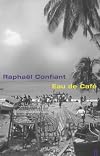
Confiant is one of the proponents of what he calls 'creolitude', along with Patrick Chamoiseau and Aime Cesaire. Creolitude is a sort of reaction to the negritude movement. Whereas negritude emphasises the African origins of Afro-Caribbean and African-Americans, Creolitude is more interested in the often bewildering racial, social and sexual politics of the Caribbean, and how that milieu gave rise to modern Caribbean identity.
'Eau de Cafe' is a woman, so-called because her skin is the colour show more of weak coffee. She lives in a village that is on the coast, but has turned its back on the sea, seeing it as dangerous and malevolent. The village is populated by people of a variety of races; white, black, mulatto, middle-eastern. The book examines the lives of some of the main characters, principally through their loves, their conflicts and their sexual interactions. The subtle politics of the region inveigles every relationship, and Confiant uses his often slightly aimless narrative to examine Martinican identity. At the heart of the story is Eau de Cafe herself, and her adoptive children, one of whom, Atilia, was drowned, the other of whom has returned from exile to discover the truth behind Atilia's death, and uncover the village's secret history.
Confiant's style was very reminiscent of Chamoiseau's, with a jaunty, avuncular tone and a light touch of magical realism. The lives of the characters are blighted by poverty, sexual violence and heartache, so this is no light read, but the generally positive tone was engaging and allowed Confiant to play with some very dark issues. This was a very enjoyable book, but one that packed a punch. show less
'Eau de Cafe' is a woman, so-called because her skin is the colour show more of weak coffee. She lives in a village that is on the coast, but has turned its back on the sea, seeing it as dangerous and malevolent. The village is populated by people of a variety of races; white, black, mulatto, middle-eastern. The book examines the lives of some of the main characters, principally through their loves, their conflicts and their sexual interactions. The subtle politics of the region inveigles every relationship, and Confiant uses his often slightly aimless narrative to examine Martinican identity. At the heart of the story is Eau de Cafe herself, and her adoptive children, one of whom, Atilia, was drowned, the other of whom has returned from exile to discover the truth behind Atilia's death, and uncover the village's secret history.
Confiant's style was very reminiscent of Chamoiseau's, with a jaunty, avuncular tone and a light touch of magical realism. The lives of the characters are blighted by poverty, sexual violence and heartache, so this is no light read, but the generally positive tone was engaging and allowed Confiant to play with some very dark issues. This was a very enjoyable book, but one that packed a punch. show less
le melange de personnages habituel chez confiant,un parfum d'antilles mais trop de melanges et de raccourcis ou peut etfe plus assez de dzcouverte pour moi
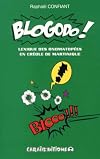
Martinique Creole Onomatopoeias with their translations arranged in alphabetical order with a detailed description of the value of onomatopoeia in French grammar.
Onomatopées en créole de Martinique avec leurs traductions classées par ordre alphabétique assorties d’une description détaillée de la valeur de l’onomatopée dans la grammaire française.
Onomatopées en créole de Martinique avec leurs traductions classées par ordre alphabétique assorties d’une description détaillée de la valeur de l’onomatopée dans la grammaire française.
Lists
Awards


You May Also Like


Associated Authors
Statistics
- Works
- 95
- Members
- 583
- Popularity
- #43,004
- Rating
- 3.4
- Reviews
- 12
- ISBNs
- 133
- Languages
- 7