
Gisele Pineau
Author of Un papillon dans la cité
About the Author
Works by Gisele Pineau
FEMMES DES ANTILLES. Traces et voix, Cent cinquante ans après l'abolition de l'esclavage (1998) 7 copies
Tagged
Common Knowledge
- Birthdate
- 1956
- Gender
- female
- Education
- Université de Nanterre (literature)
- Occupations
- Psychiatric nurse
- Nationality
- France
- Birthplace
- Paris, France
- Places of residence
- Paris, France
Martinique, France
Guadeloupe, France - Associated Place (for map)
- France
Members
Reviews

This manages a number of stylistic and tonal shifts quite smoothly, has a very autobiographical feel. A deeply loving portrait of a Guadalupean grandmother through the eyes of a maturing child whose perspective shifts as she ages and moves to France and then Guadalupe. Googling I learned the author is a psychiatric nurse.
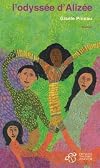
This was a good book. There were places where the writing was less than stellar, but the main character was believable. Jasmine's character provided some balance. I wish Pineau had used Haitian Creole instead of an Antillean version because it took me completely out of the text when old Haitian women started talking about "pov pitit ich."
Guadalupe.
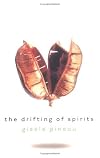
The appended essay on Créolité ("Afterword") notwithstanding, I didn't find The Drifting of Spirits compelling or especially interesting. Perhaps it was a translation issue, but I never felt emotionally engaged with any of the characters. They seemed more cartoonish than I was expecting as well. In this way it reminded me of many of Kim Stanley Robinson's books (such as the Mars trilogy). Also an award winner, Robinson has the same distanced style in which the characters, no show more matter how vividly they are described, retain a cool distance from the reader; his plots, like this one, sprawl and are unpredictable, forcing the reader to be passive in relation to the story. The message of The Drifting of Spirits seems to be that no matter how good or decent you are, evil will take you down. I don't mind the fatalism, but I am left thinking that if this was the point, it might be better served by a poem than a novel. show less
The appended essay on Créolité ("Afterword") notwithstanding, I didn't find The Drifting of Spirits compelling or especially interesting. Perhaps it was a translation issue, but I never felt emotionally engaged with any of the characters. They seemed more cartoonish than I was expecting as well. In this way it reminded me of many of Kim Stanley Robinson's books (such as the Mars trilogy). Also an award winner, Robinson has the same distanced style in which the characters, no show more matter how vividly they are described, retain a cool distance from the reader; his plots, like this one, sprawl and are unpredictable, forcing the reader to be passive in relation to the story. The message of The Drifting of Spirits seems to be that no matter how good or decent you are, evil will take you down. I don't mind the fatalism, but I am left thinking that if this was the point, it might be better served by a poem than a novel. show less

As a second-language learner, this book had a lot of new vocabulary for me. However, I enjoyed the story and how it crossed cultures. It is only 5 chapters long, but they are long chapters.
Lists
Awards


You May Also Like


Associated Authors
Statistics
- Works
- 32
- Members
- 263
- Popularity
- #87,566
- Rating
- 3.2
- Reviews
- 4
- ISBNs
- 56
- Languages
- 5