
Frantz Fanon (1925–1961)
Author of The Wretched of the Earth
About the Author
Martinique islander by birth and a psychiatrist by training, Franz Fanon is better known as a pan-African revolutionary ideologue. His treatises on colonialism call for revolutionary confrontation with malignant colonial regimes, where necessary on the battlefield, and, more important, for the show more eradication of the most invidious form of colonialism, namely, colonial mentality. Fanon holds that this mentality prevents the African and the black person everywhere even from being aware of the seriousness of the social and personal deprivations of his or her colonized status. Fanon found his voice when he worked for the Algerian revolutionaries during the Algerian War of Independence against the French. Not only did he become deeply involved in the Algerian struggle, he also emerged as its principal ideologue and formulated his anticolonial writings from the Algerian experience. (Bowker Author Biography) show less
Works by Frantz Fanon
Dialéctica de la liberación 3 copies
Ecrits contre le colonialisme Coffret en 2 volumes : Les damnés de la terre ; Pour la révolution africaine (2006) 3 copies
Algeria Unveiled 2 copies
Frantz Fanon. Recueil De Textes Introduit Par Mireille Fanon-Mendes-France: Recueil De Textes (2013) 2 copies
Frantz Fanon - Peau noire masques blancs - etude critique ' entre les lignes ' [ Cliff Notes French ] (French Edition) (2013) 2 copies
Afrikar Iraultzaren alde 1 copy
Associated Works
Frantz Fanon, o, L'eversione anticoloniale (Pensiero forte) (Italian Edition) (1994) — Associated Name — 2 copies
Tagged
Common Knowledge
- Legal name
- Fanon, Franz Omar
- Other names
- Fanon, Ibrahim Frantz
- Birthdate
- 1925-07-20
- Date of death
- 1961-12-06
- Gender
- male
- Education
- Lycée Victor-Schoelcher, Fort-de-France, Martinique, France
Université de Lyon (Doctor of Medicine) - Occupations
- psychiatrist
ambassador - Organizations
- Free French Army (WWII)
FLN - Awards and honors
- Croix de Guerre
- Relationships
- Fanon-Mendès-France, Mireille (daughter)
Pirelli, Giovanni (friend, translator) - Nationality
- Martinique (birth)
France - Birthplace
- Fort-de-France, Martinique, France
- Places of residence
- Lyon, France
Algeria
Blida, Algeria - Place of death
- Bethesda, Maryland, USA
- Burial location
- martyr's graveyard, Ain Kerma, Algeria
- Map Location
- Martinique
France
Members
Reviews

One thing needs to be perfectly clear about this book: Fanon was not a neutral observer evaluating the politics of colonial Algeria. He was an intensely interested party - despite being from Martinique, Fanon was a member of the F.L.N. In other words, this book is a piece of political advocacy. As a side note, Fanon died quite young, before the end of the Algerian Revolution, and never got the chance to see the independent Algeria he so obviously longed for.
I say this to eliminate the notion show more that this is a work of scholarship, or a reasoned study on the effects of colonization and the resistance to it. Fanon is earnest in his beliefs, but it seems like he tries to hard to make a case for universality of opinion, on both sides of the struggle. According to Fanon, for example, all European men want to unveil and rape Algerian women, and all Algerians of all races (except those who are in the active service of the colonial government, and supposedly, many of them are secret agents for the resistance) are ardently supportive of the revolutionary forces - a claim contradicted by the mass exodus from Algeria following independence.
Although he never "officially" came out as one, Fanon also seems to be a socialist at heart, and through much of the book he struggles to cast Algerian adherence to traditional practices (such as the veil) in properly revolutionary terms. Adherence to traditional values is a sign of resistance to colonialism, except where it isn't. The tension between traditional Algerian society and the fact that Fanon is a modern, educated man runs through the entire book. Fanon extols the virtues of the F.L.N. fighter, decries the ineffectiveness of the political left in France (while lauding actions by the F.L.N. that made any kind of political compromise difficult or impossible). Fanon also seems to be somewhat blind to the seeds of an Islamic revolutionary movement that lurks at the edges of his narrative concerning the development of the F.L.N. - I think this book may contain one of the earliest references to mujahedin in a work published in the West.
I don't normally bother to reference Introductions when I am evaluating books, as they are usually fluff pieces of limited value, but the Introduction by Adolfo Gilly a "journalist" (really pretty much an advocate for socialist revolution rather than a reporter of news) is an example of wishful thinking that is worth commenting upon. The Introduction also shows how much Fanon became the darling of the socialist movement, even if his book has scant little to say on the subject of socialism, rather than simply anti-colonialism. Gilly believes that the triumph of the socialist revolution is an inevitable outcome, and that Fanon's book is going to pave the way. Oddly, Gilly seems to think that the socialists should look to Moscow, effectively exchanging one form of colonialism for another.
Hindsight is twenty-twenty, and we know a lot more about Algeria now than Fanon could have possibly predicted. Despite Fanon advocating repeatedly for Algerian democracy, we know that independence resulted in somewhat brutal one-party rule of Algeria for decades. Despite Fanon arguing for a multicultural independent Algeria, we know that virtually all of the Europeans, Jews and other non-Arabic inhabitants left Algeria in droves following independence. Reading the book now, it is a study in naive hope, that we know, had he survived, probably would have been destroyed by reality. show less
I say this to eliminate the notion show more that this is a work of scholarship, or a reasoned study on the effects of colonization and the resistance to it. Fanon is earnest in his beliefs, but it seems like he tries to hard to make a case for universality of opinion, on both sides of the struggle. According to Fanon, for example, all European men want to unveil and rape Algerian women, and all Algerians of all races (except those who are in the active service of the colonial government, and supposedly, many of them are secret agents for the resistance) are ardently supportive of the revolutionary forces - a claim contradicted by the mass exodus from Algeria following independence.
Although he never "officially" came out as one, Fanon also seems to be a socialist at heart, and through much of the book he struggles to cast Algerian adherence to traditional practices (such as the veil) in properly revolutionary terms. Adherence to traditional values is a sign of resistance to colonialism, except where it isn't. The tension between traditional Algerian society and the fact that Fanon is a modern, educated man runs through the entire book. Fanon extols the virtues of the F.L.N. fighter, decries the ineffectiveness of the political left in France (while lauding actions by the F.L.N. that made any kind of political compromise difficult or impossible). Fanon also seems to be somewhat blind to the seeds of an Islamic revolutionary movement that lurks at the edges of his narrative concerning the development of the F.L.N. - I think this book may contain one of the earliest references to mujahedin in a work published in the West.
I don't normally bother to reference Introductions when I am evaluating books, as they are usually fluff pieces of limited value, but the Introduction by Adolfo Gilly a "journalist" (really pretty much an advocate for socialist revolution rather than a reporter of news) is an example of wishful thinking that is worth commenting upon. The Introduction also shows how much Fanon became the darling of the socialist movement, even if his book has scant little to say on the subject of socialism, rather than simply anti-colonialism. Gilly believes that the triumph of the socialist revolution is an inevitable outcome, and that Fanon's book is going to pave the way. Oddly, Gilly seems to think that the socialists should look to Moscow, effectively exchanging one form of colonialism for another.
Hindsight is twenty-twenty, and we know a lot more about Algeria now than Fanon could have possibly predicted. Despite Fanon advocating repeatedly for Algerian democracy, we know that independence resulted in somewhat brutal one-party rule of Algeria for decades. Despite Fanon arguing for a multicultural independent Algeria, we know that virtually all of the Europeans, Jews and other non-Arabic inhabitants left Algeria in droves following independence. Reading the book now, it is a study in naive hope, that we know, had he survived, probably would have been destroyed by reality. show less
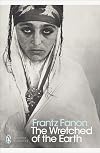
It took me some while to get through 'The Wretched of the Earth', as it is a painful book to read and a period of history that I know far too little about. Fanon systematically dissects the phenomenon of colonialism, with a focus on Algeria and its attempts to break free from French rule. He explains how the native population is dehumanised by their occupiers, enslaved, exploited, killed, raped, and their land treated as a resource to be expropriated. He demonstrates the pernicious show more pseudo-scientific racist rationalisations, used to justify colonialism as protecting native populations from their own worse nature. Beyond this damning indictment, Fanon examines the problems that face a decolonised country and their possible solutions. I was also struck by the analysis of decolonised countries having no real middle class, merely a group of middlemen as a legacy of colonisation. These sections remain unsettlingly relevant today, as African countries are still faced with developed world protectionism weighting international trade against them. The world remains resolutely unequal and is only becoming more so.
Reading this book reminded me of a realisation I came to at the age of 20. Prior to that point, I had been idealistically contemplating a career in the international development, to try and alleviate the terrible poverty there. Then I begun to actually study development economics and it hit me that the interference of naive, privileged, white university graduates from the developed world is not going to solve the problems of the developing world. Rather, such interference is a major part of the problem and part of the legacy of colonialism. I came to be horrified at the sheer arrogance of much international development discourse, which carries the underlying message that, 'We in the developed world know best, just do as we say'. Fanon ends his book with a powerful entreaty that decolonised countries avoid trying to emulate Europe and America, which is just the agenda that the IMF and World Bank push. Apart from the ways in which this agenda benefits multinational companies at the expense of the developing world, it ignores the fact that Europe's present economic success is based on centuries of slavery and rapacious theft. Fanon makes a striking point about this, noting that reparations were demanded from Germany after the Second World War, but decolonised countries have never even had the chance to ask for similar compensation for the crimes against them and the resources stolen. To this day, the developed world gets far more from the developing world than it gives back. As things often do, this also reminded me of climate change, which is essentially a problem the rich world has created that disproportionately affects the poor world. (Don't get me started on the appalling arrogance of the developed world in international climate negotiations.)
Fanon doesn't just elucidate the big picture, however. The last section of 'The Wretched of the Earth' details case studies of psychological disorders he has come across during Algeria's war of independence. These reinforce the message (also put across powerfully by Vasily Grossman in a Russian context) that one who sees others as less than human loses their own humanity, and indeed their sanity. Fanon's case studies describe the mental states of both colonial torturers and their victims. It is made clear, here and throughout, that violence begets violence. The colonial authorities accuse natives of being inherently violent and criminal, without acknowledging that colonialism forces them to be so. Treat a whole race as less than human and they will have nothing to lose from resorting to violence. Fanon explains this much more eloquently, of course.
I think it's important that Fanon's 1961 book is still read as a reminder of the legacy of colonialism, both on a continental and individual scale. After all, the racism and injustice that he describes is in no way eradicated. His writing style is eloquent, clear, and articulate, despite every word resonating with anger. It's an incredibly powerful combination. show less
Reading this book reminded me of a realisation I came to at the age of 20. Prior to that point, I had been idealistically contemplating a career in the international development, to try and alleviate the terrible poverty there. Then I begun to actually study development economics and it hit me that the interference of naive, privileged, white university graduates from the developed world is not going to solve the problems of the developing world. Rather, such interference is a major part of the problem and part of the legacy of colonialism. I came to be horrified at the sheer arrogance of much international development discourse, which carries the underlying message that, 'We in the developed world know best, just do as we say'. Fanon ends his book with a powerful entreaty that decolonised countries avoid trying to emulate Europe and America, which is just the agenda that the IMF and World Bank push. Apart from the ways in which this agenda benefits multinational companies at the expense of the developing world, it ignores the fact that Europe's present economic success is based on centuries of slavery and rapacious theft. Fanon makes a striking point about this, noting that reparations were demanded from Germany after the Second World War, but decolonised countries have never even had the chance to ask for similar compensation for the crimes against them and the resources stolen. To this day, the developed world gets far more from the developing world than it gives back. As things often do, this also reminded me of climate change, which is essentially a problem the rich world has created that disproportionately affects the poor world. (Don't get me started on the appalling arrogance of the developed world in international climate negotiations.)
Fanon doesn't just elucidate the big picture, however. The last section of 'The Wretched of the Earth' details case studies of psychological disorders he has come across during Algeria's war of independence. These reinforce the message (also put across powerfully by Vasily Grossman in a Russian context) that one who sees others as less than human loses their own humanity, and indeed their sanity. Fanon's case studies describe the mental states of both colonial torturers and their victims. It is made clear, here and throughout, that violence begets violence. The colonial authorities accuse natives of being inherently violent and criminal, without acknowledging that colonialism forces them to be so. Treat a whole race as less than human and they will have nothing to lose from resorting to violence. Fanon explains this much more eloquently, of course.
I think it's important that Fanon's 1961 book is still read as a reminder of the legacy of colonialism, both on a continental and individual scale. After all, the racism and injustice that he describes is in no way eradicated. His writing style is eloquent, clear, and articulate, despite every word resonating with anger. It's an incredibly powerful combination. show less

Um livro justificadamente incendiário com um arco formal interessante: o capítulo de filosofia política sobre a violência e sua necessidade no caso dos negros colonizados-racializados (existem situações em que não há ação política mediadora, não há negociação possível que não seja abrir mão do que seria justo. Fanon aborda brilhantemente essa condição); segue análises da condição nacional, incluindo a irresponsabilidade oportunista predatória das burguesias nacionais show more (pós)-coloniais (que podemos reconhecer na nossa), desembocando numa discussão sobre nacionalismo e uma avaliação um pouco esperançosa demais de uma ação de desalienação e que soa em momentos ingenua (mas que assim alivia um pouco o tom), para a denuncia do que haveria ainda de verniz de civilidade falsamente universal nas tentativas das metrópoles européias de dominação. Mas eis então que, e isso é genial, são inseridos capítulos de prática psicanalítica com casos escabrosos de traumas e desequilíbrios mentais advindos da guerra de libertação nacional algeriana, descrevendo o lado visceralmente podre das forças colonizadoras, pra arrematar com um discurso incitatório bonito, que pede uma atenção maior ao humano, por quem sabe um humanismo real, que quiçá poderia uma África libertada e emancipada oferecer à humanidade. Vale a pena. (já os dois prefácios e a nota do tradutor são plenamente dispensáveis). show less

An essential analysis of the psychosocial nature of blackness in the context of colonialism. Fanon is perhaps only hampered by his reliance on case studies representing the extremes of psychological conditions to explain and justify his more universal arguments about reactions to blackness. However, the phenomenological nature of the book allows for narrative to lend powerful support to the central thesis of double consciousness and tension that exists in the world he inhabits. It is show more impossible to ignore the lived experience of the Antillean as presented by Fanon. It calls us to challenge our perceptions, recognize our failings, and most importantly to allow a dialectical process to reimagine our relation to the other. show less
Lists
Awards


You May Also Like


Associated Authors
Statistics
- Works
- 34
- Also by
- 5
- Members
- 9,603
- Popularity
- #2,497
- Rating
- 4.1
- Reviews
- 59
- ISBNs
- 171
- Languages
- 16
- Favorited
- 17
