

Jessica Hagedorn
Author of Dogeaters
About the Author
Image credit: Author Jessica Hagedorn in San Francisco, California 1975. By Nancy Wong, CC BY-SA 3.0, https://commons.wikimedia.org/w/index.php?curid=26352651
Works by Jessica Hagedorn
Charlie Chan Is Dead: An Anthology of Contemporary Asian American Fiction (1993) — Editor; Contributor — 169 copies, 3 reviews
Charlie Chan Is Dead 2: At Home in the World: An Anthology of Contemporary Asian-American Fiction (2004) — Editor — 97 copies, 1 review
The Leopard 1 copy
Associated Works
From Totems to Hip-Hop: A Multicultural Anthology of Poetry Across the Americas 1900-2002 (2002) — Contributor — 182 copies
The Heath Anthology of American Literature, Concise Edition (2003) — Contributor — 73 copies, 1 review
Did My Mama Like to Dance? and Other Stories about Mothers and Daughters (1994) — Contributor — 42 copies
Breaking Silence: An Anthology of Contemporary Asian-American Poets (1983) — Contributor — 30 copies, 1 review
Returning a Borrowed Tongue: An Anthology of Filipino and Filipino American Poetry (1995) — Contributor — 30 copies
Premonitions: The Kaya Anthology of New Asian North American Poetry (1995) — Contributor — 27 copies
Intersecting Circles: The Voices of Hapa Women in Poetry and Prose (Bamboo Ridge, No. 76) (1999) — Contributor — 18 copies
Tagged
Common Knowledge
- Legal name
- Hagedorn, Jessica Tarahata
- Birthdate
- 1949
- Gender
- female
- Awards and honors
- Macdowell Colony Fellowships (1985, 1986, 1988)
- Nationality
- Philippines
- Places of residence
- Manila, Philippines
San Francisco, California, USA
New York, New York, USA
Members
Reviews
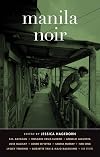
"Manila Noir," edited by Jessica Hagedorn, is one of the latest offerings from the popular series put out by Akashic Books. Hagedorn is a Filipino-born writer instrumental in introducing many American readers to the Philippines and its culture. Hagedorn could undoubtedly write an entire book of noir short stories herself as much of her work is edgy and can easily move to the dark side. Readers of "Manila Noir" may wish Hagedorn had written more than the one piece she contributed to this show more collection. Although most of the stories are entertaining, and it is delight to feel the atmosphere of the city of Manila, not all Hagedorn's contributors are equally talented and many of the stories fall a bit flat. Several feel more like writing-class assignments than serious contributions from accomplished writers. This, it should be pointed out, is not just a Hagedorn problem; many of the books in this noir series suffer from the same awkwardness.
Hagedorn divides the book into three sections. Part One is called "Us Against Them;" Part Two is entitled "Black Pearl of the Orient" and Part Three is "They Live By Night." The best writing is in Part Three. The stories in the third section read like the best noir readers have come to expect from this series. Placing these pieces toward the end of the book, however, shows that Hagedorn saved the best for last, but also gambled that the reader would make it that far in the book.
Comparing "Manila Noir" to other books in the Akashic series, it comes in the middle of the pack. It is average, decent, has a few stand-out stories and a lot of very forgettable ones. It does offer something different in the form of a graphic short story, illustrated in black & white, in the middle of the book. This will turn off readers who don't appreciate graphic stories, but may attract a new audience of readers. Overall, any reader hooked on noir will probably want to check out "Manila Noir." For those who have no experience with the series, this is not recommended as a starting point. "San Francisco Noir" edited by Peter Maravelis might be better for a series beginning. show less
Hagedorn divides the book into three sections. Part One is called "Us Against Them;" Part Two is entitled "Black Pearl of the Orient" and Part Three is "They Live By Night." The best writing is in Part Three. The stories in the third section read like the best noir readers have come to expect from this series. Placing these pieces toward the end of the book, however, shows that Hagedorn saved the best for last, but also gambled that the reader would make it that far in the book.
Comparing "Manila Noir" to other books in the Akashic series, it comes in the middle of the pack. It is average, decent, has a few stand-out stories and a lot of very forgettable ones. It does offer something different in the form of a graphic short story, illustrated in black & white, in the middle of the book. This will turn off readers who don't appreciate graphic stories, but may attract a new audience of readers. Overall, any reader hooked on noir will probably want to check out "Manila Noir." For those who have no experience with the series, this is not recommended as a starting point. "San Francisco Noir" edited by Peter Maravelis might be better for a series beginning. show less
 This review was written for LibraryThing Early Reviewers.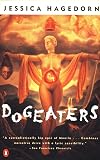
Quite a frenetic and schizophrenic book. I can see that Hagedorn was attempting to create an intricate picture of the mostly seedy underbelly of Manila but it felt a bit crowded. For example, there is a kind of *gasp* moment near the end that I just shrugged at because I couldn't remember why that character was important. I don't know that it benefited from its large cast of characters. I also don't like feeling cheated at the end and I felt a bit of that reading the two conflicting accounts show more of what occurred.
Thankfully Hagedorn does spend a little more time with Rio and Joey, probably the two more saner characters in the book. Still, I have to think Hagedorn is trying to say something when 90% of the supporting cast consists of druggies, thugs, colonial elitists, corrupt politicians, loveless neglectful family members, and shallow, vapid women. The book reads more like interweaving vignettes than a novel, and while that makes for exciting reading I do wish Hagedorn spent more time developing Joey and Rio.
I think this book would improve with a second reading, if only because this time I'd be more familiar with the characters and be able to remember them better by the book's end.
___________________________
Must amend the above based on something I just read out of Lisa Lowe's [b:Immigrant Acts: On Asian American Cultural Politics|2781|Immigrant Acts On Asian American Cultural Politics|Lisa Lowe|http://photo.goodreads.com/books/1161517783s/2781.jpg|6704] which I think is a great way to look at the troublesome format of the book: Dogeaters offers scenes, dialogues, and episodes that are not regulated by plot, character, progress or resolution. Both the gossip [tsismis] it features and the format of the novel itself move in a horizontal, or metonymic, contagion rather than through the vertical, or metaphorical, processes of referentiality and signification. Spontaneous, decentered, and multivocal, gossip is antithetical to developmental narrative. It seizes details and hyperbolizes their importance; it defies the notion of information of property" (115). And later: "The association in Dogeaters of insurrection with gossip may refer implicitly to a history of guerrilla strategies that were not centrally organized and to different modes of political practice that have been obscured by the stage of oppositional party nationalisms" (119).
So my demand for more character development can in one sense be seen as a reaction to my looking for a western developmental plotline in a non-western text. Regardless, I still want to read more about Joey and Rio. :) show less
Thankfully Hagedorn does spend a little more time with Rio and Joey, probably the two more saner characters in the book. Still, I have to think Hagedorn is trying to say something when 90% of the supporting cast consists of druggies, thugs, colonial elitists, corrupt politicians, loveless neglectful family members, and shallow, vapid women. The book reads more like interweaving vignettes than a novel, and while that makes for exciting reading I do wish Hagedorn spent more time developing Joey and Rio.
I think this book would improve with a second reading, if only because this time I'd be more familiar with the characters and be able to remember them better by the book's end.
___________________________
Must amend the above based on something I just read out of Lisa Lowe's [b:Immigrant Acts: On Asian American Cultural Politics|2781|Immigrant Acts On Asian American Cultural Politics|Lisa Lowe|http://photo.goodreads.com/books/1161517783s/2781.jpg|6704] which I think is a great way to look at the troublesome format of the book: Dogeaters offers scenes, dialogues, and episodes that are not regulated by plot, character, progress or resolution. Both the gossip [tsismis] it features and the format of the novel itself move in a horizontal, or metonymic, contagion rather than through the vertical, or metaphorical, processes of referentiality and signification. Spontaneous, decentered, and multivocal, gossip is antithetical to developmental narrative. It seizes details and hyperbolizes their importance; it defies the notion of information of property" (115). And later: "The association in Dogeaters of insurrection with gossip may refer implicitly to a history of guerrilla strategies that were not centrally organized and to different modes of political practice that have been obscured by the stage of oppositional party nationalisms" (119).
So my demand for more character development can in one sense be seen as a reaction to my looking for a western developmental plotline in a non-western text. Regardless, I still want to read more about Joey and Rio. :) show less
I don’t read a lot of short stories. I usually go for the meatier fare of a novel. But a good short story can be like a good chocolate – a lot of excellent flavor packed into a small bite. The stories in Manila Noir are more savory treats. Best read one or two at a time. They explore the shadowy side of a difficult society. More descriptive of a country I’ve never seen than any travel guide. After the first story, Lysley Tenorio’s Aviary, I put the book aside for a few days just to show more come back and appreciate it over again. The authors – Tenorio, Jessica Hagedorn, Sabina Murray, Jonas Vitman, Gina Apostol, among others – are not familiar to me but I look forward to exploring their talents further. show less
This review was written for LibraryThing Early Reviewers.Noir is defined as "Of or relating to a genre of crime literature featuring tough, cynical characters and bleak settings; Suggestive of danger or violence." Well, these are that. Not so much bleak as bland, however, and in my opinion classing them as "noir" elevates them to a plane they do not deserve to occupy. For the most part, I found these stories uninspired, pointless and instantly forgettable. With a few exceptions, they suffer from a lack of contrast or subtlety. The evil and show more violence exist in a world without the hint of an alternative, and therefore lose their impact. The collection does include one graphic piece, a horror komic, featuring Alexandra Trese, a character from a popular Phillipine detective series, which may be brilliant for all I know. I am not a visual reader, and graphic fiction leaves me cold. The editor says in her introduction that "All the fabulous and fearless writers gathered here have a deep connection and abiding love for this crazy-making, intoxicating city. There's nothing like it in the world, and they know it." Unfortunately, for this reader who has no other experience of Manila, they have failed to convey any unique atmosphere or sense of place. show less
This review was written for LibraryThing Early Reviewers.Lists
Awards


You May Also Like


Associated Authors
Statistics
- Works
- 19
- Also by
- 19
- Members
- 1,478
- Popularity
- #17,380
- Rating
- 3.5
- Reviews
- 25
- ISBNs
- 38
- Languages
- 1
- Favorited
- 2
