
Chang-Rae Lee
Author of Native Speaker
About the Author
Works by Chang-Rae Lee
A Tender Age: A Novel 9 copies
Coming Home Again (Singles Classic) 3 copies
Associated Works
Secret Ingredients: The New Yorker Book of Food and Drink (2007) — Contributor — 595 copies, 10 reviews
Eat, Memory: Great Writers at the Table: A Collection of Essays from the New York Times (2008) — Contributor — 179 copies, 6 reviews
Charlie Chan Is Dead 2: At Home in the World: An Anthology of Contemporary Asian-American Fiction (2004) — Contributor — 98 copies, 1 review
Tagged
Common Knowledge
- Legal name
- 이창래
- Birthdate
- 1965-07-29
- Gender
- male
- Education
- Phillips Exeter Academy
Yale University (English)
University of Oregon (MFA, writing) - Organizations
- Wall Street (financial analyst)
Princeton University (Program in Creative Writing, director)
Punahou School (writer-in-residence) - Awards and honors
- Amisfield-Wilf Literary Award
John Dos Passos Prize (2017) - Nationality
- Korea (birth)
USA (passport) - Birthplace
- Korea
- Places of residence
- Princeton, New Jersey, USA
Westchester, New York, USA
Exeter, New Hampshire, USA - Associated Place (for map)
- USA
Members
Reviews

This is an episodic novel that, as the title suggests, centers a college student's trip to Asia with his mentor, a charismatic, energetic immigrant entrepreneur named Pong. But that event is recounted late in the novel, one that first describes what happens to Tiller beforehand; his childhood in a quiet, well-heeled town being raised by his father after his mother leaves them. The book goes off on various tangents, the most interesting is the account of the life of Pong's parents in China, show more and the heart of the book is what happens to Tiller after his adventure, when he meets a single mother in the witness protection program and her unusual son and joins them in hiding out in a suburban tract home in Plano Stagno, Texas. The events advertised in the title are the oddest and least impactful moments in this novel.
The writing is excellent and Lee has created a wonderful, complex character in Tiller, a young man who combines insecurity with a sense of humor, a clear-eyed view of his place in the world, a sweet heart, and a willingness to adapt to new situations. And the structure of the novel, which feels random, pulls together at the end to explain something that was burning under the surface the whole time in such a low key way and was beautifully executed. There's humor here and heart and if the story edges towards Grand Guignol there towards the end, it recaptures its footing soon afterward. show less
The writing is excellent and Lee has created a wonderful, complex character in Tiller, a young man who combines insecurity with a sense of humor, a clear-eyed view of his place in the world, a sweet heart, and a willingness to adapt to new situations. And the structure of the novel, which feels random, pulls together at the end to explain something that was burning under the surface the whole time in such a low key way and was beautifully executed. There's humor here and heart and if the story edges towards Grand Guignol there towards the end, it recaptures its footing soon afterward. show less
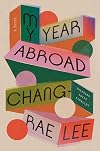
During his year abroad, Tiller Bardmon gets a surprising but practical education in the extremes of entrepreneurship, decadence and corruption. Armed with a trusting nature and a need to belong, Tiller embarks on his sabbatical with the naïve belief that he will learn something important about life. Instead, he ends up falling prey to a consummate grifter with an eye for the long con. Hence Chang-Rae Lee’s novel can be read as an ambitious critique of global capitalist overconsumption and show more the people who cash in on it. Along the way, he folds in plenty of humor, gluttony and sex but never loses focus on family dynamics.
Lee’s strength seems to be setting scenes, both big and small. His narrative shifts between the present in a shabby American suburb Tiller calls “Stagno” to the recent past in the privileged N.J. college town of Dunbar and Tiller’s wide-eyed tour of Asia. Lee embellishes these larger settings with more granular ones that serve as fodder for biting satire. In America, these include a faux English steak house, a pretentious suburban mansion, and an eclectic array of upscale fusion restaurants (WTF Yo! frozen yogurt, Gnarly Gnoodle Soups, MadMad Maki). In Asia, Lee takes us from the casinos of Macau to karaoke bars and an upscale brothel in Shenzhen and ultimately to an isolated sprawling palatial estate on the Pearl River Delta.
Tiller, a minimally Asian and minimally motivated 20-year-old, narrates the story. He is open to being led by a couple of older and more experienced Asian adults. Val, an older woman with a needy son, is hiding from the mob in “Stagno.” Pong Lou is a scammer with the uncanny ability to groom pigeons. In this instance, the game involves introducing an Indonesian health drink known as jamu to the lucrative Asian market as a tonic with miraculous properties alleged to cure disease. The problem with this plan for Pong and, by association, Tiller is the unfortunate choice as their sponsor and pigeon. Drum Kappagoda is a ruthless Asian gangster with strange ideas about how to cure his cancer. He is surrounded by an eclectic cast of malevolent characters, including a manipulative daughter, a trapped ESL teacher and a sadistic chef. Obviously, nothing good will come from this.
Lee tells the story in a haphazard picaresque narrative that is anything but clear. It is filled with food imagery, sexual content and racial stereotypes that can be off putting as well as downright bizarre. The mood carries a strong sense of imminent danger that in the end actually materializes. It is easy to understand why Lee chose to make Tiller such an empty vessel since he offers the opportunity to educate the reader about racial issues as they exist in both Eastern and Western cultures. Yet it is hard to develop much empathy for such a protagonist. Clearly, Tiller’s choices and flaws come from a family dynamic that consisted of an absent mother and distant father. Both Val and Pong seem to be substitutes for a flawed family life. show less
Lee’s strength seems to be setting scenes, both big and small. His narrative shifts between the present in a shabby American suburb Tiller calls “Stagno” to the recent past in the privileged N.J. college town of Dunbar and Tiller’s wide-eyed tour of Asia. Lee embellishes these larger settings with more granular ones that serve as fodder for biting satire. In America, these include a faux English steak house, a pretentious suburban mansion, and an eclectic array of upscale fusion restaurants (WTF Yo! frozen yogurt, Gnarly Gnoodle Soups, MadMad Maki). In Asia, Lee takes us from the casinos of Macau to karaoke bars and an upscale brothel in Shenzhen and ultimately to an isolated sprawling palatial estate on the Pearl River Delta.
Tiller, a minimally Asian and minimally motivated 20-year-old, narrates the story. He is open to being led by a couple of older and more experienced Asian adults. Val, an older woman with a needy son, is hiding from the mob in “Stagno.” Pong Lou is a scammer with the uncanny ability to groom pigeons. In this instance, the game involves introducing an Indonesian health drink known as jamu to the lucrative Asian market as a tonic with miraculous properties alleged to cure disease. The problem with this plan for Pong and, by association, Tiller is the unfortunate choice as their sponsor and pigeon. Drum Kappagoda is a ruthless Asian gangster with strange ideas about how to cure his cancer. He is surrounded by an eclectic cast of malevolent characters, including a manipulative daughter, a trapped ESL teacher and a sadistic chef. Obviously, nothing good will come from this.
Lee tells the story in a haphazard picaresque narrative that is anything but clear. It is filled with food imagery, sexual content and racial stereotypes that can be off putting as well as downright bizarre. The mood carries a strong sense of imminent danger that in the end actually materializes. It is easy to understand why Lee chose to make Tiller such an empty vessel since he offers the opportunity to educate the reader about racial issues as they exist in both Eastern and Western cultures. Yet it is hard to develop much empathy for such a protagonist. Clearly, Tiller’s choices and flaws come from a family dynamic that consisted of an absent mother and distant father. Both Val and Pong seem to be substitutes for a flawed family life. show less
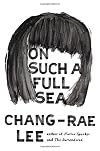
This story is set in a future dystopia in which Earth has been made largely uninhabitable by ecological devastation. The city of “B-Mor” (old Baltimore) was established by Chinese immigrants who came to the mostly abandoned city and remade it, cleaning it up and turning it into a food cultivation center. They provide clean and healthy products for the elites in the “Charter villages” - heavily guarded cities of palatial homes, good health care, abundant goods and services, and yet show more whose people are plagued by a spiritual emptiness. In between the walled areas of the labor enclaves and the rich are the “open counties,” where a wild, dog-eat-dog subsistence is the norm.
As the story opens, one of the B-Mor-ians, sixteen-year-old Fan, abruptly leaves the confines of B-Mor for the “open counties.” This follows the sudden disappearance of her boyfriend Reg. Her story is told through a rather unique style of narration employing the collective voice of the citizens of B-Mor. The delivery is that of a sort of stylized Victorian novel or a morality tale. Readers are addressed as “you” and the story is often advanced in the form of questions, such as in these examples:
“Did Fan care about such things? We can’t be certain.”
“But hold on, you might say.”
“When did this change? you ask..”
“So let us keep our attention on the small...”
“For how can it be denied that these incidents were in some tangled way inspired by Fan’s actions?”
"For aren’t all such murals as bounteous in their hopes as in their scale? Aren’t they expressions of the grandest wishes, which by definition will never come true?”
This first-multiple-person retrospective narration is interspersed with chapters told by a third person narrator who is in the moment with Fan.
We follow the “adventures” of Fan out in the open, which may be described succinctly as bleak, bleak, and bleak. There is a lot of greed and psychosis in the people Fan encounters, and because of it, consistent betrayal. Is this behavior born of desperation or is it innate, but forced under control by the strictures of civilization with its rules both overt and unspoken? This question is constantly raised by the collective narrator, but no answers are ever provided. And in the end, we don’t care. Or at least, I didn’t care. The collective narrator, previously knowing everything, suddenly stopped knowing any more of what happened, and I was grateful.
Discussion: For most of the book, the collective narrator knows things it could never know about what happens to Fan, and yet keeps making claims to the effect “We can never know what she was thinking or why she did what she did.” Maybe it was the collective narrators’ way of saying “IMHO.” Because this narrator is also bombastic and boring, and given to bloviating philosophical pronouncements on the meaning of life that can try the reader’s patience. Take this passage, for example, which is actually one of the better of such musings (being one that actually makes sense):
"We watch ourselves routinely brushing our teeth, or coloring the wall, or blowing off the burn from a steaming yarn of soup noodles, and for every moment there is a companion moment that elides onto it, a secret span that deepens the original’s stamp. We feel ever obliged by everyday charges and tasks. They conscript us more and more. We find world enough in a frame. Until at last we take our places at the wheel, or wall, or line, having somewhere forgotten that we can look up.”
Evaluation: This is a book I disliked intensely, but I kept reading because it did have a certain literateness to it, and because I wanted to know what happened to the main character. So is it a “good” book? It isn’t one I enjoyed (and in fact, I found reading it a bit torturous), nor is it one I would recommend, but I can’t go so far as to say it’s “bad” and unworthy of reading. I’m sure it has an audience somewhere. show less
As the story opens, one of the B-Mor-ians, sixteen-year-old Fan, abruptly leaves the confines of B-Mor for the “open counties.” This follows the sudden disappearance of her boyfriend Reg. Her story is told through a rather unique style of narration employing the collective voice of the citizens of B-Mor. The delivery is that of a sort of stylized Victorian novel or a morality tale. Readers are addressed as “you” and the story is often advanced in the form of questions, such as in these examples:
“Did Fan care about such things? We can’t be certain.”
“But hold on, you might say.”
“When did this change? you ask..”
“So let us keep our attention on the small...”
“For how can it be denied that these incidents were in some tangled way inspired by Fan’s actions?”
"For aren’t all such murals as bounteous in their hopes as in their scale? Aren’t they expressions of the grandest wishes, which by definition will never come true?”
This first-multiple-person retrospective narration is interspersed with chapters told by a third person narrator who is in the moment with Fan.
We follow the “adventures” of Fan out in the open, which may be described succinctly as bleak, bleak, and bleak. There is a lot of greed and psychosis in the people Fan encounters, and because of it, consistent betrayal. Is this behavior born of desperation or is it innate, but forced under control by the strictures of civilization with its rules both overt and unspoken? This question is constantly raised by the collective narrator, but no answers are ever provided. And in the end, we don’t care. Or at least, I didn’t care. The collective narrator, previously knowing everything, suddenly stopped knowing any more of what happened, and I was grateful.
Discussion: For most of the book, the collective narrator knows things it could never know about what happens to Fan, and yet keeps making claims to the effect “We can never know what she was thinking or why she did what she did.” Maybe it was the collective narrators’ way of saying “IMHO.” Because this narrator is also bombastic and boring, and given to bloviating philosophical pronouncements on the meaning of life that can try the reader’s patience. Take this passage, for example, which is actually one of the better of such musings (being one that actually makes sense):
"We watch ourselves routinely brushing our teeth, or coloring the wall, or blowing off the burn from a steaming yarn of soup noodles, and for every moment there is a companion moment that elides onto it, a secret span that deepens the original’s stamp. We feel ever obliged by everyday charges and tasks. They conscript us more and more. We find world enough in a frame. Until at last we take our places at the wheel, or wall, or line, having somewhere forgotten that we can look up.”
Evaluation: This is a book I disliked intensely, but I kept reading because it did have a certain literateness to it, and because I wanted to know what happened to the main character. So is it a “good” book? It isn’t one I enjoyed (and in fact, I found reading it a bit torturous), nor is it one I would recommend, but I can’t go so far as to say it’s “bad” and unworthy of reading. I’m sure it has an audience somewhere. show less
At first glance, this appears to be a dystopian novel set in the future, after there has been significant environmental damage done to the planet. On second glance, this book is a philosophical novel exploring current themes of alienation, wealth, greed, ecology, freedom, and what it takes to survive in a harsh world where the only thing of value is money.
TRUST NO ONE.
That seems to be one underlying theme of this book. At some point in the future, people with money will live in walled show more cities, people without will live in the lawless, poor, outlying areas. Everyone, rich or poor, suffers serious health consequences of living in such a polluted world. The rich people (Charters) have created some safe towns for workers to produce factory-grown fish and vegetables that they can purchase and hopefully, live a few years longer. These worker towns seem to be almost idyllic, but they have their issues as our unseen narrator reveals throughout the novel.
Our heroine, Fan, leaves her safe city of B-Mor one day after the sudden disappearance of her boyfriend, Reg. She sets out on her own across the counties and ends up in one adventure after another. She learns the world works on money, and the buying and selling of people is just part of the game. After all, you have to have money. You have to eat. And is anyone ever truly free?
The pace is relatively slow, and after a chapter or two of Fan's adventures, the narrator discusses what things are like in B-Mor now that Fan has gone, causing more unrest than she ever dreamed of causing.
Sad, hopeful, and thought provoking. show less
TRUST NO ONE.
That seems to be one underlying theme of this book. At some point in the future, people with money will live in walled show more cities, people without will live in the lawless, poor, outlying areas. Everyone, rich or poor, suffers serious health consequences of living in such a polluted world. The rich people (Charters) have created some safe towns for workers to produce factory-grown fish and vegetables that they can purchase and hopefully, live a few years longer. These worker towns seem to be almost idyllic, but they have their issues as our unseen narrator reveals throughout the novel.
Our heroine, Fan, leaves her safe city of B-Mor one day after the sudden disappearance of her boyfriend, Reg. She sets out on her own across the counties and ends up in one adventure after another. She learns the world works on money, and the buying and selling of people is just part of the game. After all, you have to have money. You have to eat. And is anyone ever truly free?
The pace is relatively slow, and after a chapter or two of Fan's adventures, the narrator discusses what things are like in B-Mor now that Fan has gone, causing more unrest than she ever dreamed of causing.
Sad, hopeful, and thought provoking. show less
Lists
Awards


You May Also Like


Associated Authors
Statistics
- Works
- 10
- Also by
- 15
- Members
- 6,166
- Popularity
- #3,989
- Rating
- 3.6
- Reviews
- 215
- ISBNs
- 116
- Languages
- 10
- Favorited
- 15


