
Yiyun Li
Author of The Vagrants
About the Author
Works by Yiyun Li
Li, Yiyun Archive 1 copy
Prison 1 copy
Extra [short story] 1 copy
Secrets of the Trade 1 copy
Mon amie de plume : Rentrée littéraire 2025. Un roman saisissant qui rappelle L'Amie prodigieuse d'Elena Ferrante (2025) 1 copy
Se vado via 1 copy
After a Life 1 copy
Associated Works
The Real Story of Ah-Q and Other Tales of China: The Complete Fiction of Lu Xun (2009) — Afterword, some editions — 379 copies, 4 reviews
Fight of the Century: Writers Reflect on 100 Years of Landmark ACLU Cases (2020) — Contributor — 261 copies, 5 reviews
Eat, Memory: Great Writers at the Table: A Collection of Essays from the New York Times (2008) — Contributor — 180 copies, 6 reviews
Light the Dark: Writers on Creativity, Inspiration, and the Artistic Process (2017) — Contributor — 165 copies, 5 reviews
The Decameron Project: 29 New Stories from the Pandemic (2020) — Contributor — 160 copies, 5 reviews
Everyday People: The Color of Life--a Short Story Anthology (2018) — Contributor — 52 copies, 1 review
The Artists' and Writers' Cookbook: A Collection of Stories with Recipes (2016) — Contributor — 19 copies
Tagged
Common Knowledge
- Canonical name
- Li, Yiyun
- Legal name
- 李翊雲
- Birthdate
- 1972-11-04
- Gender
- female
- Education
- Peking University
University of Iowa - Occupations
- writer
professor - Organizations
- Princeton University
- Awards and honors
- Whiting Writers' Award (2006)
Granta's Best Of Young American Novelists (2007)
PEN/Malamud Award for Excellence in the Short Story (2022) - Nationality
- China (birth)
USA - Birthplace
- Beijing, China
- Places of residence
- Beijing, China
Oakland, California, USA
Princeton, New Jersey, USA - Associated Place (for map)
- USA
Members
Reviews

Buddhists do not accept the existence of dualities. For them, placing value on phenomena (e.g., good vs. bad; this vs. that) serves no useful purpose. Things just are, and one needs to perceive them that way. Certainly, the sentiment expressed by Li in the title of her memoir aptly reflects that view—"Things in Nature Merely Grow.”
This memoir is not easy to read because of its tragic content. After losing two teenage sons to suicide, Li adopts a coping strategy she calls “radical show more acceptance.” She realizes that for the rest of her life, she will live in an abyss, a place “where no parent would want to be.” Her approach does not allow for healing. There is no magical thinking here. Instead, it focusses on acknowledgment. She rejects the euphemisms about death that people adopt; platitudes are not for her; she even rejects the word “grieve” because it suggests there will be an end. Clearly, her strategy does not offer her readers much in the way of inspiration or consolation.
Alternatively, Li provides a cleareyed guide for thinking about the death of loved ones. She relies on two main strategies. First, she meditates on her two highly gifted sons. Each had a unique personality. Vincent related to life with intense feelings, and she found that he was easy to memorialize through fiction. However, James was the ultimate rationalist. She concludes that he would never accept that approach. So, she struggles with the limitations of writing and language to remember him. Li’s second coping strategy involved emphasizing the quotidian. For her, these are gardening, writing, reading and meditating.
Her writing is honest and unadorned. Despite being filled with heartbreak, it also radiates immense love and devotion for her sons. show less
This memoir is not easy to read because of its tragic content. After losing two teenage sons to suicide, Li adopts a coping strategy she calls “radical show more acceptance.” She realizes that for the rest of her life, she will live in an abyss, a place “where no parent would want to be.” Her approach does not allow for healing. There is no magical thinking here. Instead, it focusses on acknowledgment. She rejects the euphemisms about death that people adopt; platitudes are not for her; she even rejects the word “grieve” because it suggests there will be an end. Clearly, her strategy does not offer her readers much in the way of inspiration or consolation.
Alternatively, Li provides a cleareyed guide for thinking about the death of loved ones. She relies on two main strategies. First, she meditates on her two highly gifted sons. Each had a unique personality. Vincent related to life with intense feelings, and she found that he was easy to memorialize through fiction. However, James was the ultimate rationalist. She concludes that he would never accept that approach. So, she struggles with the limitations of writing and language to remember him. Li’s second coping strategy involved emphasizing the quotidian. For her, these are gardening, writing, reading and meditating.
Her writing is honest and unadorned. Despite being filled with heartbreak, it also radiates immense love and devotion for her sons. show less
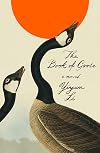
An absolutely lovely novel that takes a premise that's already pretty interesting on its face -- a pair of French country girls conspire to write a book of short stories shortly after the end of the Second World War -- and goes to unexpectedly deep, and often sad, places. It's clear from the book's opening that Agnés and Fabienne are a pair: Agnés, our narrator, even cops to being Fabienne's "whetstone." But while Fabienne is the duo's real talent, she's also barely literate: Agnés acts show more as both her amanuensis and as her public face. Later events suggest that the girls' literary experiment doesn't work when Agnés is left on her own, but that just provides an opportunity for the author to get at her deeper themes. This isn't just a book about fake child prodigies, and there's a lot more going on here than a friendship between two lonely, talented girls.
There's also the tricky question of time. The girls' friendship is intense, but I suspect it might not be any less intense than the friendships that many other girls' their age have before the rest of their lives -- love, sex, work, responsibility and maybe children -- rushes in. In "The Book of Goose" Fabienne and Agnés exist in a sort of liminal space between childhood and adulthood, and what they have is necessarily fragile and fleeting. They're both smart enough to know it. What impressed me most about "The Book of Goose" is that Fabienne's talent is also framed in similar terms. Fabienne has no real desire to be a famous literary type: for her, telling stories is a game. But the game that the girls are playing cannot survive its own inherent contradictions: both separation and exposure would spell its end.
There's a larger story here about the nature of genius and the precarity of all of our lives. The author presents genius as a wondrous, alchemical quality, dependent both on raw talent and on the emotional and social resources that are necessary to give it shape. Fabienne seems to have the sort of detachment that great writers often display in their works, but the fact that she can't really take ownership of her own voice is telling. It's also worth noting that Agnés and Fabienne's story is further marked by other seemingly random tragedies. While the end of their precocious literary career can be seen as another sort of tragedy, the book's two main protagonists are no strangers to misfortune or injustice. By the time we reach the end of the book, it seems a small miracle that Fabienne's untutored literary mind and the girls' difficult life circumstances produced so much as a book of short stories and a close friendship. The world that Li describes in "The Book of Goose" is one that constantly forecloses on our most dazzling possibilities even as it offers us other ways to survive. To say that I found this book unbearably sad verges, if that's possible, on understatement.
I also noted that Li herself is a Chinese-American, currently on the faculty at Princeton, who has lived an interesting and in many ways accomplished life. I could find anything in her biography, however, that might connect her to this novel's rural French setting. Seen from that perspective, "The Book of Goose" is a truly impressive product of the imagination. I was deeply impressed by how well the author evoked a time in which the French countryside felt worlds away from any place of real importance. To avoid all of the usual "life in Provence" clichés would have been more than enough, but this one's a real time machine. It's is one of those works that examines the question of literary talent while, at the same time, announcing its presence. In other words, "The Book of Goose" is a very good novel, and Yiyun Li is the real thing. show less
There's also the tricky question of time. The girls' friendship is intense, but I suspect it might not be any less intense than the friendships that many other girls' their age have before the rest of their lives -- love, sex, work, responsibility and maybe children -- rushes in. In "The Book of Goose" Fabienne and Agnés exist in a sort of liminal space between childhood and adulthood, and what they have is necessarily fragile and fleeting. They're both smart enough to know it. What impressed me most about "The Book of Goose" is that Fabienne's talent is also framed in similar terms. Fabienne has no real desire to be a famous literary type: for her, telling stories is a game. But the game that the girls are playing cannot survive its own inherent contradictions: both separation and exposure would spell its end.
There's a larger story here about the nature of genius and the precarity of all of our lives. The author presents genius as a wondrous, alchemical quality, dependent both on raw talent and on the emotional and social resources that are necessary to give it shape. Fabienne seems to have the sort of detachment that great writers often display in their works, but the fact that she can't really take ownership of her own voice is telling. It's also worth noting that Agnés and Fabienne's story is further marked by other seemingly random tragedies. While the end of their precocious literary career can be seen as another sort of tragedy, the book's two main protagonists are no strangers to misfortune or injustice. By the time we reach the end of the book, it seems a small miracle that Fabienne's untutored literary mind and the girls' difficult life circumstances produced so much as a book of short stories and a close friendship. The world that Li describes in "The Book of Goose" is one that constantly forecloses on our most dazzling possibilities even as it offers us other ways to survive. To say that I found this book unbearably sad verges, if that's possible, on understatement.
I also noted that Li herself is a Chinese-American, currently on the faculty at Princeton, who has lived an interesting and in many ways accomplished life. I could find anything in her biography, however, that might connect her to this novel's rural French setting. Seen from that perspective, "The Book of Goose" is a truly impressive product of the imagination. I was deeply impressed by how well the author evoked a time in which the French countryside felt worlds away from any place of real importance. To avoid all of the usual "life in Provence" clichés would have been more than enough, but this one's a real time machine. It's is one of those works that examines the question of literary talent while, at the same time, announcing its presence. In other words, "The Book of Goose" is a very good novel, and Yiyun Li is the real thing. show less

What if someone wrote My Brilliant Friend about psychopaths? It might look a lot like this book, which tells the story of a girl living in a poor French village soon after the end of WWII, whose best friend, Fabienne, is cleverer than she is and the leader of the two, but also a girl who has left formal schooling early and lacks even the small opportunities that Agnes has. When one of Fabienne's ideas leads Agnes away from the village and their friendship, neither girl knows what the show more repercussions will be.
Told from the point of view of an adult Agnes, this novel evokes the intensity of childhood friendships and the impossibility of returning to a life once you've left it. The games the girls play to amuse themselves, are games in which the emotions, and even the fates, of the people they target are utterly unimportant to them and these are girls whose precocity allows them to do real damage. This is a book about how two girls, utterly powerless to affect anything and stuck in the roles they were born into, took charge of their lives using their wits and their willingness to do what they needed to do. Their actions were often monstrous, but also necessary to their survival, even if in one case it wasn't enough.
I loved this book with its deeply flawed characters and beautiful writing. It's not a book for everyone, but if you're comfortable feeling uneasy, you might love it, too. show less
Told from the point of view of an adult Agnes, this novel evokes the intensity of childhood friendships and the impossibility of returning to a life once you've left it. The games the girls play to amuse themselves, are games in which the emotions, and even the fates, of the people they target are utterly unimportant to them and these are girls whose precocity allows them to do real damage. This is a book about how two girls, utterly powerless to affect anything and stuck in the roles they were born into, took charge of their lives using their wits and their willingness to do what they needed to do. Their actions were often monstrous, but also necessary to their survival, even if in one case it wasn't enough.
I loved this book with its deeply flawed characters and beautiful writing. It's not a book for everyone, but if you're comfortable feeling uneasy, you might love it, too. show less
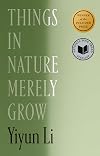
A uniquely horrific chronicle of loss that is also a presentation of the lived experience of an existentialist philosophy that is almost pure. Which made me reflect on how thoroughly the social aspect of our existence has been compromised in modernity (this may even be the reason existentialism emerged as a school of thought) - when family and society are toxic, as Li's were, when the once-supremely tight and communitarian web of human relationships is reduced to a few dispersed friendships show more and professional ties, and the vast web of the living world to a home garden, when the spiritual dimension is non-existent, the individual is left alone to bear the untenable burden of a kind of life that tosses all our ancient evolutionary strengths away. That this utter isolation and defeat of the soul should engender madness, even generational madness, seems profoundly sad but perfectly comprehensible. show less
Lists
To Read (1)
Five star books (1)
Awards


You May Also Like


Associated Authors
Statistics
- Works
- 29
- Also by
- 25
- Members
- 4,584
- Popularity
- #5,488
- Rating
- 3.7
- Reviews
- 202
- ISBNs
- 184
- Languages
- 18
- Favorited
- 10

