
Ha Jin
Author of Waiting
About the Author
Ha Jin left his native China in 1985 and is now a professor of English at Emory University. He is author of, among other works, two short-story collections: Ocean of Words, which won the PEN/Hemingway Award, and Under the Red Flag, which won the Flannery O'Connor Award for short fiction. His novel show more Waiting won the National Book Award for fiction in 1999. He lives in Atlanta. (Bowker Author Biography) show less
Works by Ha Jin
Associated Works
Hint Fiction: An Anthology of Stories in 25 Words or Fewer (2010) — Contributor — 149 copies, 26 reviews
Jesus Christ Superstar Live in Concert: Original Soundtrack of the NBC Television Event (2018) — Preformer — 18 copies
Tagged
Common Knowledge
- Legal name
- Xuefei Jin (金雪飞)
- Birthdate
- 1956-02-21
- Gender
- male
- Education
- Heilongjiang University
Shandong University
Brandeis University - Nationality
- China
USA - Birthplace
- Lioaning, China
- Associated Place (for map)
- Lioaning, China
Members
Reviews
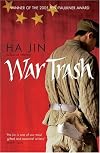
I am a big fan of Ha Jin's work, and this book does not disappoint.
The book covers a different side to life in the PRC, that of those soldiers who fought in the Korean War. Yuan is a young Nationalist cadet who is sent to Korea by the Communists to fight the South Koreans and their American allies. Woefully ill-equipped, many Chinese are taken prisoner, so most of the action takes place in the P.O.W. camps. The prisoners live on a precarious cliff as those higher up argue as to what is to show more be done with the P.O.W.'s on both sides. The atrocities of war are all too realistic, with young, inexperienced troops sent into battle lacking the necessary equipment. Victory at any cost.
The inner workings of camp life are well-described, especially the cultural and ideological clash between the Americans and the Chinese prisoners. This is clearest in the wake of the camp commandant, which his soldiers take as a personal attack on his beloved superior, but which Yuan remarks that if the tables were turned would be seen as an attack on China. The struggle between the individual and the collective is strong, Yuan is not an ideological man, but he knows that the only way to get back to his mother and fiancee is to fall in with the Communists. The prisoners, both the North Koreans and Chinese, are caught between the rival political factions. Many don't know want to go back, especially as their being captured will be seen as a total failure. This reminds me of my Grandfather telling us about prisoner negotiations at the end of WW2 - getting British boys back, but knowing that the fate of those being sent back to the East would be bleak.
As a reader, it was Yuan's openness that made me keep turning pages. He weighed up both sides, found both wanting, but didn't lose sight on his ultimate objective of getting home. show less
The book covers a different side to life in the PRC, that of those soldiers who fought in the Korean War. Yuan is a young Nationalist cadet who is sent to Korea by the Communists to fight the South Koreans and their American allies. Woefully ill-equipped, many Chinese are taken prisoner, so most of the action takes place in the P.O.W. camps. The prisoners live on a precarious cliff as those higher up argue as to what is to show more be done with the P.O.W.'s on both sides. The atrocities of war are all too realistic, with young, inexperienced troops sent into battle lacking the necessary equipment. Victory at any cost.
The inner workings of camp life are well-described, especially the cultural and ideological clash between the Americans and the Chinese prisoners. This is clearest in the wake of the camp commandant, which his soldiers take as a personal attack on his beloved superior, but which Yuan remarks that if the tables were turned would be seen as an attack on China. The struggle between the individual and the collective is strong, Yuan is not an ideological man, but he knows that the only way to get back to his mother and fiancee is to fall in with the Communists. The prisoners, both the North Koreans and Chinese, are caught between the rival political factions. Many don't know want to go back, especially as their being captured will be seen as a total failure. This reminds me of my Grandfather telling us about prisoner negotiations at the end of WW2 - getting British boys back, but knowing that the fate of those being sent back to the East would be bleak.
As a reader, it was Yuan's openness that made me keep turning pages. He weighed up both sides, found both wanting, but didn't lose sight on his ultimate objective of getting home. show less

Initially, I was not very engaged by Ha Jin's WAITING (1999), which won the National Book Award, but the deeper I got into it, the more compelling it became. A simple tale, set in the China of Mao's cultural revolution, the protagonist, Lin Kong, is a college educated medical doctor in the Army, trapped in an unhappy marriage that was arranged to have someone to look after his aged parents. He is posted at an urban military hospital, far from his home village where his wife, daughter and show more parents live, and only gets back there once a year for ten days. He falls in love with Manna, a nurse at his base, but they comply faithfully with all the rigid regulations that forbid any and all relationships outside of marriage. So every summer for the next eighteen years he goes home and takes his wife to the nearest courthouse and requests a divorce. It is never granted. Finally, after eighteen years of being separated, the divorce is granted and Lin and Manna are married. That's a lot of waiting. Lin is portrayed, however, as a kind, honorable and very patient man, mild-mannered, bookish and not particularly passionate. His new wife, who has changed and grown old waiting, is quite the opposite, nearly wearing Lin out in bed in the early days, weeks and months of their marriage. There's a lot more to the story, obviously, but to go into more detail might spoil the story for potential readers, so I won't. I learned much about commissars and political officers and the regimentation of life in Mao's China of the sixties and seventies but there wasn't so much of it that it became tedious or slowed the narrative.
WAITING is the second Ha Jin novel I've read. The other was WAR TRASH, which I did not enjoy nearly as much as this one. I'm twenty-five years late to the party, but this is a damn good book. Great characters and a compelling story that soon draws you in. Very highly recommended.
- Tim Bazzett, author of the memoir, BOOKLOVER show less
WAITING is the second Ha Jin novel I've read. The other was WAR TRASH, which I did not enjoy nearly as much as this one. I'm twenty-five years late to the party, but this is a damn good book. Great characters and a compelling story that soon draws you in. Very highly recommended.
- Tim Bazzett, author of the memoir, BOOKLOVER show less

A Chinese novel written in English by a man who decided to stay in the West after the Tiananmen Square events of 1989. Which does not make either the novel or the author less Chinese - but it makes the novel a bit more accessible than translated novels.
My library initially shelved this into its romance section but then re-shelved under General Fiction (and never covered the old label fully so it is still vaguely visible). And I am not surprised. On the surface it looks like a romance novel. show more In a way it is a romance novel - in the same way Anna Karenina is a romance novel for example.
Lin Kong is trying to find a way to be with the woman he loves. He is an army doctor, living in the city but married to a woman in a distant village who he sees once a year. He never chose his bride, Shuyu - his parents arranged his marriage and he meekly accepted. He even managed to produce a daughter with her - and while she took care of his dying parents one after the other, he built his life in the city. Shuyu is old-fashioned even for the village - she has bound feet (which she is the wrong generation for - her mother's generation was supposed to be the last one to suffer with that but she was not spared, she is uneducated and unsophisticated - the wrong woman for Lin Kong in all possible ways.
And there is Manna Wu, a nurse in the same hospital, Lin Kong's sweetheart who he cannot even hold hands with or go on a walk with outside of the hospital compound because of the rules that everyone lives with. China of the 1960s, 1970s and early 1980s is not exactly known for allowing a lot of freedom.
So when the novel opens, Lin Kong and Shuyu are in front of a judge, after 17 years of separation, in 1983, asking for a divorce. Until Shuyu changes her mind again and the judge denies the request again. That had been happening over and over for more than a decade and Lin Kong is getting disheartened. But that's not really where the story must start - because after this interlude, we go back to 1963 to see Lin Kong becoming a doctor and falling in love and then living through all the years until we can catch up with them in 1983.
And as much as it is the story of Manna Wu and Lin Kong, it is also the a glimpse into the history of China and the relationships in it in this era - restricted, monitored, always on the verge of becoming a disaster. And the two women represent the old and the new, the traditional and the modern and in places become more symbols than actual human beings. But underneath that they are people, with feelings and regrets and the symbolic person and the real one merge into a single entity. People are people - it does not matter what ideology you believe in, love is always going to be there. But at the same time the novel is also an exploration of what happens to love when it needs to wait and what happens when people try to hang to dreams from decades ago.
In a way the novel has a happy ending but not in the way one would expect. It makes one wonder what is worth fighting for and if dreams are worth getting realized at the end. In that triangle, the weakest link is always Lin Kong - his indecisiveness ends up costing decades of the lives of both women connected to him and at the end he is the one who gets to complain. There is a lot to be said about the female characters here and the place of women in the society - the "we are all the same" of communism was always a nice slogan but never really worked like that.
I ended up liking this novel a lot. It has a melancholy feeling that works in a way I did not expect it to work - underneath the seemingly easy novel sits a meditation on love and choices, on dreams coming true too late and on human nature. show less
My library initially shelved this into its romance section but then re-shelved under General Fiction (and never covered the old label fully so it is still vaguely visible). And I am not surprised. On the surface it looks like a romance novel. show more In a way it is a romance novel - in the same way Anna Karenina is a romance novel for example.
Lin Kong is trying to find a way to be with the woman he loves. He is an army doctor, living in the city but married to a woman in a distant village who he sees once a year. He never chose his bride, Shuyu - his parents arranged his marriage and he meekly accepted. He even managed to produce a daughter with her - and while she took care of his dying parents one after the other, he built his life in the city. Shuyu is old-fashioned even for the village - she has bound feet (which she is the wrong generation for - her mother's generation was supposed to be the last one to suffer with that but she was not spared, she is uneducated and unsophisticated - the wrong woman for Lin Kong in all possible ways.
And there is Manna Wu, a nurse in the same hospital, Lin Kong's sweetheart who he cannot even hold hands with or go on a walk with outside of the hospital compound because of the rules that everyone lives with. China of the 1960s, 1970s and early 1980s is not exactly known for allowing a lot of freedom.
So when the novel opens, Lin Kong and Shuyu are in front of a judge, after 17 years of separation, in 1983, asking for a divorce. Until Shuyu changes her mind again and the judge denies the request again. That had been happening over and over for more than a decade and Lin Kong is getting disheartened. But that's not really where the story must start - because after this interlude, we go back to 1963 to see Lin Kong becoming a doctor and falling in love and then living through all the years until we can catch up with them in 1983.
And as much as it is the story of Manna Wu and Lin Kong, it is also the a glimpse into the history of China and the relationships in it in this era - restricted, monitored, always on the verge of becoming a disaster. And the two women represent the old and the new, the traditional and the modern and in places become more symbols than actual human beings. But underneath that they are people, with feelings and regrets and the symbolic person and the real one merge into a single entity. People are people - it does not matter what ideology you believe in, love is always going to be there. But at the same time the novel is also an exploration of what happens to love when it needs to wait and what happens when people try to hang to dreams from decades ago.
In a way the novel has a happy ending but not in the way one would expect. It makes one wonder what is worth fighting for and if dreams are worth getting realized at the end. In that triangle, the weakest link is always Lin Kong - his indecisiveness ends up costing decades of the lives of both women connected to him and at the end he is the one who gets to complain. There is a lot to be said about the female characters here and the place of women in the society - the "we are all the same" of communism was always a nice slogan but never really worked like that.
I ended up liking this novel a lot. It has a melancholy feeling that works in a way I did not expect it to work - underneath the seemingly easy novel sits a meditation on love and choices, on dreams coming true too late and on human nature. show less
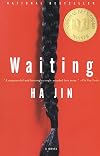
Is love a habit, a duty, a passion? How do you know when you are in love? These are difficult questions to answer if you live in a society like Maoist China, where the topic is never discussed.
Lin Kong married Shuyu in 1963. It was a marriage arranged by his parents. Lin worked as a physician at an army hospital in Muji City. Shuyu stayed back in their village and looked after Lin's parents until their deaths and then tended their farm. Although Shuyu was a model wife by village standards, show more Lin had been reluctant to bring her to the city, embarrassed by her bound feet, to him a symbol of what he perceived as her overall backwardness.
In Muji, Lin met Manna Wu, a nurse. Hospital rules forbade men and women to meet outside the compound. Despite this stricture, the two were drawn together and gradually their interaction at work led others to identify them as a couple, despite the platonic nature of their relationship.
Each year on his twelve day holiday, Lin would return to his village and seek a divorce from Shuyu. Each year she would agree, but once in front of a judge, she would say no. Each year Manna Wu grew older and more frustrated by her situation, while Lin felt more guilty for letting her wait for his divorce, rather than getting on with her life. He tried to arrange other marriages for her, but nothing came of it.
The work unit had a rule that a divorce could be granted without the other partner's consent after eighteen years of separation. In the eighteenth year, Lin returned to his village with high hopes.
[Waiting] is a far bleaker novel than [In the Pond]. The twenty odd years of Chinese history it spans provide a background and context to the story.
This may sound farfetched, but it is entirely plausible. It refers not only to a time of fuel and parts shortages, but also to an extremely tense period along the Sino-Soviet border.
Books by foreign authors, either in translation or in the original language were highly problematic. In an unguarded moment in 1972, a commissar explains to Manna Wu how he came across his translation of [Leaves of Grass]:
He goes on to explain that this translation has been out of print since the early fifties. This was not a book you would want to be found with during the Cultural Revolution and makes the commissar politically suspect and hints at his probable fate.
At approximately the same time, Lin was diagnosed with TB and put in the hospital's Infectious Diseases Unit. There were two wings there: one filled mainly with TB patients and one with hepatitis patients, both diseases more prevalent in the crowded dirty situations so many Chinese were living in. It is telling that even a physician working and living in a hospital should fall victim to such a disease.
Even without the background though, this is an excellent novel, for we all wait for something. Is waiting active or passive? What is the nature of the thing we wait for, and would we consider it worth waiting for if it was usually readily available? Despite the seemingly straightforward narration, the reader is left seeking the answers to these questions and the broader question, what is the impact of waiting on life in the here and now? show less
Lin Kong married Shuyu in 1963. It was a marriage arranged by his parents. Lin worked as a physician at an army hospital in Muji City. Shuyu stayed back in their village and looked after Lin's parents until their deaths and then tended their farm. Although Shuyu was a model wife by village standards, show more Lin had been reluctant to bring her to the city, embarrassed by her bound feet, to him a symbol of what he perceived as her overall backwardness.
In Muji, Lin met Manna Wu, a nurse. Hospital rules forbade men and women to meet outside the compound. Despite this stricture, the two were drawn together and gradually their interaction at work led others to identify them as a couple, despite the platonic nature of their relationship.
Each year on his twelve day holiday, Lin would return to his village and seek a divorce from Shuyu. Each year she would agree, but once in front of a judge, she would say no. Each year Manna Wu grew older and more frustrated by her situation, while Lin felt more guilty for letting her wait for his divorce, rather than getting on with her life. He tried to arrange other marriages for her, but nothing came of it.
The work unit had a rule that a divorce could be granted without the other partner's consent after eighteen years of separation. In the eighteenth year, Lin returned to his village with high hopes.
[Waiting] is a far bleaker novel than [In the Pond]. The twenty odd years of Chinese history it spans provide a background and context to the story.
In the winter of 1966 the hospital undertook camp-and-field training. For some reason a top general in Northeastern Military Command had issued orders in October that all the army had to be able to operate without modern vehicles, which not only were unreliable but also could soften the troops. The orders said "We must carry on the spirit of the Long March and restore the tradition of horses and mules."
For a month, a third of the hospital's staff would march four hundred miles through the countryside and camp at villages and small towns. Along the way, they would practice treating the wounded and rescuing the dying from the battlefield.
This may sound farfetched, but it is entirely plausible. It refers not only to a time of fuel and parts shortages, but also to an extremely tense period along the Sino-Soviet border.
Books by foreign authors, either in translation or in the original language were highly problematic. In an unguarded moment in 1972, a commissar explains to Manna Wu how he came across his translation of [Leaves of Grass]:
I got this copy twenty years ago from the translator himself...when I was a student...He was a well read man, a true scholar, but he died of pneumonia in 1957. Perhaps it was good for him to die young. With his problematic family background, he could hardly have escaped becoming a target for political movements.
He goes on to explain that this translation has been out of print since the early fifties. This was not a book you would want to be found with during the Cultural Revolution and makes the commissar politically suspect and hints at his probable fate.
At approximately the same time, Lin was diagnosed with TB and put in the hospital's Infectious Diseases Unit. There were two wings there: one filled mainly with TB patients and one with hepatitis patients, both diseases more prevalent in the crowded dirty situations so many Chinese were living in. It is telling that even a physician working and living in a hospital should fall victim to such a disease.
Even without the background though, this is an excellent novel, for we all wait for something. Is waiting active or passive? What is the nature of the thing we wait for, and would we consider it worth waiting for if it was usually readily available? Despite the seemingly straightforward narration, the reader is left seeking the answers to these questions and the broader question, what is the impact of waiting on life in the here and now? show less
Lists
A Novel Cure (1)
AP Lit (1)
Translingualism (1)
To Read (1)
Asia (1)
Best First Lines (1)
storage (1)
Bureaucracies (1)
Awards


You May Also Like


Associated Authors
Statistics
- Works
- 34
- Also by
- 15
- Members
- 10,455
- Popularity
- #2,278
- Rating
- 3.6
- Reviews
- 253
- ISBNs
- 233
- Languages
- 16
- Favorited
- 31

