
Anchee Min
Author of Empress Orchid
About the Author
Anchee Min was born in Shanghai in 1957. At seventeen she was sent to a labor collective, where after a number of years a talent scout recruited her for Madame Mao's Shanghai Film Studio. Her highly acclaimed memoir, "Red Azalea," was named a New York Times Notable Book and was an international show more bestseller, with rights sold in twenty countries. Min lives in California with her husband and daughter. She will be featured at the Ubud Writers and Readers Festival 2015 program. (Publisher Provided) show less
Image credit: Courtesy of Allison and Busby
Series
Works by Anchee Min
Associated Works
Lost Classics: Writers on Books Loved and Lost, Overlooked, Under-read, Unavailable, Stolen, Extinct, or Otherwise Out of Commission (2000) 319 copies, 6 reviews
This Is My Best: Great Writers Share Their Favorite Work (2004) — Contributor — 175 copies, 3 reviews
Tagged
Common Knowledge
- Canonical name
- Min, Anchee
- Legal name
- 閔安琪
- Other names
- Min Anqi
- Birthdate
- 1957-01-14
- Gender
- female
- Relationships
- Lofthouse, Lloyd (husband)
- Nationality
- China
- Birthplace
- Shanghai, China
- Places of residence
- Shanghai, China
San Francisco Bay Area, California, USA - Associated Place (for map)
- China
Members
Reviews
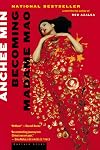
Anchee Min is an author to watch. She grew up in China's Cultural Revolution and wrote an astonishing memoir. She followed that with a novel, Katherine, about an American teaching English in China. So I was quick to pick up a copy of Becoming Madame Mao, but slow to read it. Generally, I prefer my historical novels to concern ordinary people.
Becoming Madame Mao tells the story of Jiang Chiang, Mao's wife and leader of the infamous "Group of Four", but not in the form of a straightforward show more historical account. Min moves back and forth from the first person to a very close third person and restricts herself to following Madame Mao. She's an interesting, but difficult woman to follow, constantly concerned with positioning herself and with getting the attention she feels she deserves.
The writing style worked perfectly with Min's subject. Told from the first person only, the book would have been too claustrophobic to read, in the third person, I would have missed out on who she was. An actress, Madame Mao was adept at projecting the face she wanted to towards the world. This book is a fascinating picture of a time, place and person I knew very little about. show less
Becoming Madame Mao tells the story of Jiang Chiang, Mao's wife and leader of the infamous "Group of Four", but not in the form of a straightforward show more historical account. Min moves back and forth from the first person to a very close third person and restricts herself to following Madame Mao. She's an interesting, but difficult woman to follow, constantly concerned with positioning herself and with getting the attention she feels she deserves.
The writing style worked perfectly with Min's subject. Told from the first person only, the book would have been too claustrophobic to read, in the third person, I would have missed out on who she was. An actress, Madame Mao was adept at projecting the face she wanted to towards the world. This book is a fascinating picture of a time, place and person I knew very little about. show less
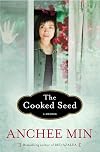
I received a copy of this book as part of Goodreads giveaway. Anchee Min doesn't spend an inordinate amount of time describing the earliest part of her life - but enough to show how little life was valued and how the government oppressed the people in the service of the Party. It is simply amazing that she survived the poverty and extremes of the labor camp.
As she emigrated to the US at age 27, life didn't get easier - she didn't speak the language, was unskilled and was poor. Despite being show more a nation of immigrants, we are not particularly welcoming of new waves of people. But she was not without resources: her enormous drive and focus. She learned something from every setback experienced and continued to move forward. When she realized her art was her writing, she truly began her journey to hone her craft.
Her writing style is a bit spare and unsentimental. She spares no one without being unnecessarily harsh whether its a family member, ex-husband or government. She criticizes the failures of Chinese Communism and the naivete of American Communists who wouldn't listen to her story after asking her opinion. She recognizes the strengths and pitfalls of America's liberties, consumerism and over-indulgent parenting.
I found it fascinating to read her analysis of her own loneliness and homesickness for a homeland which, in many ways, had given her very little and taken a great deal. I'm happy for her success.
Thank you China for giving us Anchee Min. I look forward to reading her other books. show less
As she emigrated to the US at age 27, life didn't get easier - she didn't speak the language, was unskilled and was poor. Despite being show more a nation of immigrants, we are not particularly welcoming of new waves of people. But she was not without resources: her enormous drive and focus. She learned something from every setback experienced and continued to move forward. When she realized her art was her writing, she truly began her journey to hone her craft.
Her writing style is a bit spare and unsentimental. She spares no one without being unnecessarily harsh whether its a family member, ex-husband or government. She criticizes the failures of Chinese Communism and the naivete of American Communists who wouldn't listen to her story after asking her opinion. She recognizes the strengths and pitfalls of America's liberties, consumerism and over-indulgent parenting.
I found it fascinating to read her analysis of her own loneliness and homesickness for a homeland which, in many ways, had given her very little and taken a great deal. I'm happy for her success.
Thank you China for giving us Anchee Min. I look forward to reading her other books. show less

I have read a few memoirs and novels of the Cultural Revolution but this one was very unique. She started as very much believing in the cause and then you see her faith chipped away as the cruelty of those involved takes away so much she finds dear. The writing is very powerful, even though it is quite simple at times. I think I was most struck by how absolutely horribly people can behave when in a situation either where they have a great deal of power or must not step outside the defined show more norms. It made me think alot about how quickly a society can fall apart. show less
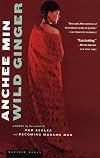
Wild Ginger, by Anchee Min, depicts the fanaticism and cruelty that swept China during the Cultural Revolution (1966-76). In the story, Hot Pepper, a teenage girl who leads Red Guards in Shanghai, bullies two other teenage girls, Wild Ginger and Maple (the narrator), for their non-proletarian backgrounds: Maple is a daughter of teachers. Her father “whispered once in a while that” Communist leader Mao Zedong did not singlehandedly liberate China. “The Japanese surrender in 1945 had a show more lot to do with their defeat in World War II. . . . Mao happened to harvest other people’s crops while working on his own.” (29) For views like that, Maple’s father spent 17 years in a forced labor camp.
Wild Ginger is even more suspect: her late father was a French diplomat. But Wild Ginger is determined to prove she is an ardent Maoist, even after her mother’s house is ransacked, her dog is killed and eaten, and her mother commits suicide.
As the story develops, Wild Ginger and Maple find themselves in a love triangle with a teenage boy named Evergreen. Wild Ginger and Evergreen compete in a Quotations of Chairman Mao contest, and prepare for the next contest in a friendly rivalry memorizing Mao’s writings. Min presents several pages of the sayings in translation. They seem balanced and wise, useful for resolving thorny issues, yet the real Chairman Mao in his old age was anything but balanced, wise and understanding. He violated his own precepts daily.
At a couple of points the narrative is puzzling. Wild Ginger reports corruption at a fish market to the police. The conspirators are arrested and Wild Ginger enjoys celebrity wildly disproportionate to the pettiness of the crimes she uncovered. She is even introduced to Chairman Mao. Then toward the end of the novel, Evergreen is sentenced to death for blacking out the lights in Shanghai’s main stadium, impossible for someone sitting in the upper deck with a pair of plyers and a screwdriver. The only plausible explanations for these developments: opportunism and coverups by Chinese Communist Party officials.
Wild Ginger reveals peculiarities of the Chinese language that Westerners who have studied Chinese will appreciate. Because identical or virtually identical sounds can have differing meanings, Wild Ginger must explain the characters that stand for her name. “Wild Ginger” is “Wu Jiang.” “Wu as ‘wild,’ a luxuriant growth of weeds. . . . Jiang is ‘Ginger’.” (6) But “Wu Jiang” can also mean “a wasteland,” (7) as Wild Ginger’s tormentor Hot Pepper points out. Similarly, Maple explains how her name is made up of “the character Wind with a Wood on the left-hand side.” (18). Ironically, Hot Pepper (“Là Jiāo”) has a name virtually the same as “xião làjiāo,” little hot pepper, which means an oversexed girl or woman.
Min is also the author of Becoming Madame Mao (Mariner Books, 2000). A fictional narrative, it accurately portrays the life of Mao Zedong’s wife, the radical Jiang Qing, as well as Mao’s ruthless, idiosyncratic rule culminating in the Cultural Revolution. Min lived through those times, joining the Red Guards, being sent to a labor camp, and eventually working for Jiang Qing as a film actress. show less
Wild Ginger is even more suspect: her late father was a French diplomat. But Wild Ginger is determined to prove she is an ardent Maoist, even after her mother’s house is ransacked, her dog is killed and eaten, and her mother commits suicide.
As the story develops, Wild Ginger and Maple find themselves in a love triangle with a teenage boy named Evergreen. Wild Ginger and Evergreen compete in a Quotations of Chairman Mao contest, and prepare for the next contest in a friendly rivalry memorizing Mao’s writings. Min presents several pages of the sayings in translation. They seem balanced and wise, useful for resolving thorny issues, yet the real Chairman Mao in his old age was anything but balanced, wise and understanding. He violated his own precepts daily.
At a couple of points the narrative is puzzling. Wild Ginger reports corruption at a fish market to the police. The conspirators are arrested and Wild Ginger enjoys celebrity wildly disproportionate to the pettiness of the crimes she uncovered. She is even introduced to Chairman Mao. Then toward the end of the novel, Evergreen is sentenced to death for blacking out the lights in Shanghai’s main stadium, impossible for someone sitting in the upper deck with a pair of plyers and a screwdriver. The only plausible explanations for these developments: opportunism and coverups by Chinese Communist Party officials.
Wild Ginger reveals peculiarities of the Chinese language that Westerners who have studied Chinese will appreciate. Because identical or virtually identical sounds can have differing meanings, Wild Ginger must explain the characters that stand for her name. “Wild Ginger” is “Wu Jiang.” “Wu as ‘wild,’ a luxuriant growth of weeds. . . . Jiang is ‘Ginger’.” (6) But “Wu Jiang” can also mean “a wasteland,” (7) as Wild Ginger’s tormentor Hot Pepper points out. Similarly, Maple explains how her name is made up of “the character Wind with a Wood on the left-hand side.” (18). Ironically, Hot Pepper (“Là Jiāo”) has a name virtually the same as “xião làjiāo,” little hot pepper, which means an oversexed girl or woman.
Min is also the author of Becoming Madame Mao (Mariner Books, 2000). A fictional narrative, it accurately portrays the life of Mao Zedong’s wife, the radical Jiang Qing, as well as Mao’s ruthless, idiosyncratic rule culminating in the Cultural Revolution. Min lived through those times, joining the Red Guards, being sent to a labor camp, and eventually working for Jiang Qing as a film actress. show less
Lists
Awards


You May Also Like


Associated Authors
Statistics
- Works
- 17
- Also by
- 6
- Members
- 7,712
- Popularity
- #3,157
- Rating
- 3.6
- Reviews
- 248
- ISBNs
- 284
- Languages
- 20
- Favorited
- 12
