
Gao Xingjian
Author of Soul Mountain
About the Author
Xingjian Gao was born on January 4, 1940 in Ganzhou, China. As a child, he was encouraged to paint, write and play the violin, and at the age of 17, he attended the Beijing Foreign languages Institute, majoring in French and Literature. He is known as being at the fore of Chinese/French Literature, show more attempting to revolutionize Chinese literature and art. At the height of the Cultural Revolution, Gao destroyed all of his early work after being sent to the country for "rehabilitation." His "Preliminary Explorations Into the Techniques of Modern Fiction" caused serious debate in the Chinese literary world by challenging the social realism that was at the core of Chinese literature and art. The authorities condemned his work and Gao was placed under surveillance. He left China for Paris in 1987 and was honored by the French with the title of Chevalier de L'Ordere des Artes et des Lettres. None of Gao's plays have been performed in China since 1987, when "The Other Shore" had been banned. In 1989, Gao left the Communist party. After the publication of "Fugitives," which was about the reason he left the communist party, Gao was declared "persona noon grata" by the Chinese regime and all of his works banned. On October 12, 2000, Gao won the Nobel Prize for Literature, becoming the first Chinese writer ever to do so. He is well known for his writing as well as his painting and has had exhibitions all over the world. (Bowker Author Biography) show less
Disambiguation Notice:
(yid) VIAF:102266649
Works by Gao Xingjian
Por otra estetica seguido de Reflexiones sobre la pintura (Pensamiento De La Diversidad) (2004) 5 copies, 1 review
La Montagne de l'Ame. Une canne à pêche pour mon grand-père. Le Livre d'un homme seul. L'Ami. Vingt-cinq ans après (2012) 2 copies
CUHK Series:Snow in August 1 copy
Kinh Thánh của một người 1 copy
A Collection of Short Stories by Gao Xingjian ('Gao xing jian duan pian xiao shuo ji', in traditional Chinese, NOT in English) (2001) 1 copy
O undiţă pentru bunicul meu 1 copy
La Montagne De L' Âme 1 copy
Góra duszy 1 copy
Associated Works
Tagged
Common Knowledge
- Canonical name
- Gao, Xingjian
- Legal name
- Xingjian, Gao
Gao Xingjian - Birthdate
- 1940-01-04
- Gender
- male
- Education
- Istituto di lingue straniere di Pechino
Nanjing Number 10 Middle School
Beijing Foreign Studies University - Occupations
- novelist
painter
playwright
critic
translator
director - Awards and honors
- Nobel Prize (Literature ∙ 2000)
Chevalier de l'Ordre des Arts et des Lettres (1992) - Short biography
- Aus China ins Exil gezwungen und zur Persona non Grata erklärt.
- Nationality
- China (birth)
France (naturalisation) - Birthplace
- Ganzhou, Jiangxi, China
- Places of residence
- Taizhou, Jiangsu, China
Nanjing, China
Bagnolet, France - Disambiguation notice
- VIAF:102266649
- Associated Place (for map)
- China
Members
Reviews

A writer who has been warned to leave Beijing to avoid trouble with the authorities sets out on a journey across China, heading for a place called Ling Shang, Soul Mountain, which might or might not exist, and whose location doesn’t seem to be clear. Travelogue chapters explore the country’s diversity of landscapes, ethnicities and religions, and look at the ways different communities have been shaped by China’s long history, both locally and nationally, in particular by the violent show more events and often misguided authoritarian government policies of the last 150 years, which have also had their effects on the narrator and his family.
But this isn’t a straight travel book — for one thing, the travel chapters hop about confusingly in time and space, and for another, as the book advances they are increasingly mixed with what seem to be dream sequences and/or standalone stories, and with the development of a tentative love affair between characters called ‘he’ and ‘she’. But these also get mixed up with the narrator’s life — the ‘I’ character seems to drift into and out of the ‘he’ character, whilst the ‘you’ character is sometimes the reader, sometimes a specific listener who might be the same as ‘she’, and sometimes the narrator addressing himself. It all gets very knotty!
Gao makes it clear (in a chapter where the narrator debates with an imagined critic) that he doesn’t want the book to be read as a single, consistent narrative. It seems to be rather a multifaceted meditation on the psychological costs of maintaining an independent point of view in a world — specifically in authoritarian China — where conformity is seen as a prime requirement of good citizenship. But it goes beyond that, also looking for example at the way authoritarianism has legitimised violence against women, or the ways central control is leading to reckless destruction of the natural environment. Like 1984, it posits (sexual) love as the most effectively liberating but also most fragile gesture of resistance available to humans living in oppressive societies.
Experimental and difficult to make sense of as a novel, but a very rewarding read if you try to take it as a fascinating slideshow of 1980s China and don’t let yourself get too sucked into analysing the rest in detail. show less
But this isn’t a straight travel book — for one thing, the travel chapters hop about confusingly in time and space, and for another, as the book advances they are increasingly mixed with what seem to be dream sequences and/or standalone stories, and with the development of a tentative love affair between characters called ‘he’ and ‘she’. But these also get mixed up with the narrator’s life — the ‘I’ character seems to drift into and out of the ‘he’ character, whilst the ‘you’ character is sometimes the reader, sometimes a specific listener who might be the same as ‘she’, and sometimes the narrator addressing himself. It all gets very knotty!
Gao makes it clear (in a chapter where the narrator debates with an imagined critic) that he doesn’t want the book to be read as a single, consistent narrative. It seems to be rather a multifaceted meditation on the psychological costs of maintaining an independent point of view in a world — specifically in authoritarian China — where conformity is seen as a prime requirement of good citizenship. But it goes beyond that, also looking for example at the way authoritarianism has legitimised violence against women, or the ways central control is leading to reckless destruction of the natural environment. Like 1984, it posits (sexual) love as the most effectively liberating but also most fragile gesture of resistance available to humans living in oppressive societies.
Experimental and difficult to make sense of as a novel, but a very rewarding read if you try to take it as a fascinating slideshow of 1980s China and don’t let yourself get too sucked into analysing the rest in detail. show less
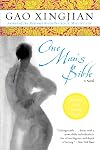
Imagine having lived a life so traumatic that you are unable to consider yourself in the first person. Yes, you have managed to leave the country where those terrible events happened, but you will never come to terms with the events, the country, or yourself at that time.
This means that now you refer to yourself in one of two ways. Recounting your life, you have to use either the second or the third person. The person you were when you endured so much is “he”. The person you are now is show more “you”. There is no “I”.
Now, in Hong Kong, just before the turnover, so much comes back. Friends there ask what will happen; will they be safe? How to explain? Your French travel documents give you refugee status, so you are relatively safe. Where should your friends go?
The protagonist tried to escape all this, as he had ever since leaving China, by losing himself in sexual encounters at every opportunity, often enhanced by recounting other encounters. Here in Hong Kong, however, he may have met his match. As he said when speaking with Margarethe about the Cultural Revolution, “ only a Jewish woman with a German mind, who has learned Chinese, could possibly be interested.”
Much of this semi-autobiographical novel is concerned with this struggle to free his former self. Gao writes of his self examination, While observing and examining him unmasked, you must turn him into fiction, a character that is unrelated to you and has qualities yet to be discovered. [[…]] You do not play the role of judge, and you should not regard him as a victim[[… ]] Of interest is not your judgement nor his righteous indignation, your sorrow or his suffering, but, rather, the process of this inquiry.
The Hong Kong period works well. There is enough uncertainty in the political situation to keep the protagonist active. That may sound like an odd description, but later in the book, we find him in Europe. Since leaving China he had become a well known author and playwright, and has invitations from many countries to appear in that role. Once back in Europe though, he seems to be less engaged, almost to the point of becoming a dilettante. His former self , his “he”, is never forgotten, but now he seems unable to decide what to do as his current self, his “you”. The process breaks down. In literature as in life, there is no resolution. show less
This means that now you refer to yourself in one of two ways. Recounting your life, you have to use either the second or the third person. The person you were when you endured so much is “he”. The person you are now is show more “you”. There is no “I”.
Now, in Hong Kong, just before the turnover, so much comes back. Friends there ask what will happen; will they be safe? How to explain? Your French travel documents give you refugee status, so you are relatively safe. Where should your friends go?
The protagonist tried to escape all this, as he had ever since leaving China, by losing himself in sexual encounters at every opportunity, often enhanced by recounting other encounters. Here in Hong Kong, however, he may have met his match. As he said when speaking with Margarethe about the Cultural Revolution, “ only a Jewish woman with a German mind, who has learned Chinese, could possibly be interested.”
Much of this semi-autobiographical novel is concerned with this struggle to free his former self. Gao writes of his self examination, While observing and examining him unmasked, you must turn him into fiction, a character that is unrelated to you and has qualities yet to be discovered. [[…]] You do not play the role of judge, and you should not regard him as a victim[[… ]] Of interest is not your judgement nor his righteous indignation, your sorrow or his suffering, but, rather, the process of this inquiry.
The Hong Kong period works well. There is enough uncertainty in the political situation to keep the protagonist active. That may sound like an odd description, but later in the book, we find him in Europe. Since leaving China he had become a well known author and playwright, and has invitations from many countries to appear in that role. Once back in Europe though, he seems to be less engaged, almost to the point of becoming a dilettante. His former self , his “he”, is never forgotten, but now he seems unable to decide what to do as his current self, his “you”. The process breaks down. In literature as in life, there is no resolution. show less

The Cultural Revolution was a 10-year long, horrific period in China's modern history. To Western readers of One man's bible by Gao Xingjian, a Chinese writer who has now settled in France, the almost incredible descriptions of the struggles during that period will impress them most. Details about, for instance, the Jinggangshan group at Tsinghua University are outragious and not usually known to the general readership, as they are largely omitted from films and history books. Historical show more landmark events mentioned throughout the book track the progress in time through this dark period.
It is tempting to assume that the unnamed main character is the book, who is also a writer, stands for the author, but this is not logical. The novel is a work of fiction, and the main character would be several years younger than the author would have been at that time. The sense of distance is enhanced by the use of the second and third person singular throughout the narrative.
Some readers have expressed discontent about the title of the novel, One man's bible. They suggest One Man's Testament would be more appropriate. However, by using the word "testament" would shift the focus to the events of the Cultural Revolution is the book, which is clearly not what the author has in mind. The Cultural Revolution should not be in the foreground of the story, but in the background: Chairman Mao's Cultural Revolution alone could not be blamed. He himself was also to blame, although this could not compensate her for her lost youth.. The context of this quote is his divorce from Qian -- the woman he took because she was available.
The Cultural Revolution in the background, what is in the foreground, and partly the blame of the CR, is the writer's yearning for the freedom to write, and the freedom to fuck around. Rationing and restrictions did not only apply to rights, food, goods, but also to social relations, access to women in particular.
The sexual freedom the main character experiences in the village, learning from the peasants, an unmoderated expression of vulgarities, incest and rape, is not exactly what he seeks, but it is "liberating." He marries Qian there, but is soon deserted by her, as his eyes and heart wander to other girls and women in the village.
Lin, Xu Qian, Maomei, Xiaoxiao, Martina, Silvie, Linda, Margarethe; they do not all have names, sometimes it is merely a French filly.
You are filled with gratitude to women, and it is not just lust. You seek them, but they do not necessarily want to give themselves to you. You are insatiable, but it's impossible for you to have them all. God did not give them to you, and you don't have to thank God, but, finally, you do feel a sort of universal gratitude. p.448
and
While he could not find a way out, by seizing these beautiful specks of feeling, he was able to avoid spiritual collapse. p.447
The words 圣经 (shengjing) in the original Chinese title, 一个人的圣经, may refer to the Bible or the Confucian Classics. They are not a testament, but guides to avoid spiritual collapse. show less
It is tempting to assume that the unnamed main character is the book, who is also a writer, stands for the author, but this is not logical. The novel is a work of fiction, and the main character would be several years younger than the author would have been at that time. The sense of distance is enhanced by the use of the second and third person singular throughout the narrative.
Some readers have expressed discontent about the title of the novel, One man's bible. They suggest One Man's Testament would be more appropriate. However, by using the word "testament" would shift the focus to the events of the Cultural Revolution is the book, which is clearly not what the author has in mind. The Cultural Revolution should not be in the foreground of the story, but in the background: Chairman Mao's Cultural Revolution alone could not be blamed. He himself was also to blame, although this could not compensate her for her lost youth.. The context of this quote is his divorce from Qian -- the woman he took because she was available.
The Cultural Revolution in the background, what is in the foreground, and partly the blame of the CR, is the writer's yearning for the freedom to write, and the freedom to fuck around. Rationing and restrictions did not only apply to rights, food, goods, but also to social relations, access to women in particular.
The sexual freedom the main character experiences in the village, learning from the peasants, an unmoderated expression of vulgarities, incest and rape, is not exactly what he seeks, but it is "liberating." He marries Qian there, but is soon deserted by her, as his eyes and heart wander to other girls and women in the village.
Lin, Xu Qian, Maomei, Xiaoxiao, Martina, Silvie, Linda, Margarethe; they do not all have names, sometimes it is merely a French filly.
You are filled with gratitude to women, and it is not just lust. You seek them, but they do not necessarily want to give themselves to you. You are insatiable, but it's impossible for you to have them all. God did not give them to you, and you don't have to thank God, but, finally, you do feel a sort of universal gratitude. p.448
and
While he could not find a way out, by seizing these beautiful specks of feeling, he was able to avoid spiritual collapse. p.447
The words 圣经 (shengjing) in the original Chinese title, 一个人的圣经, may refer to the Bible or the Confucian Classics. They are not a testament, but guides to avoid spiritual collapse. show less
One Man's Bible is a profound meditation on the excruciating effects of sordid political oppression on human spirit. The sobriety of writing bespeaks a dignity, which is an awareness of existence, and it is in this existence that the power of the frail individual lies. In a laudably detached voice, Gao Xinjian stipples a vivid picture of human frailty, repression and suffering under the totalitarian regime that exists only in memory, like a hidden spring of spring gushing forth a deluge of show more feelings that are difficult to articulate.
The book, unlike many of the contemporaries that expose austerity of life under Red Horror, is shockingly realistic and yet not a tale of suffering, at least that is not what Gao intends it to be. The delineation is so genuine and faithful to the reckless truth and excruciatingly painful purging that only men in Gao's generation can identify with. The reality is almost too heartrending to bear, even in words: the acrimonious politics, the class struggles, and a society that is riddled with paranoia and fear under such taut repression and miasma.
Gao reflected on his childhood and adolescence, cudgeled his memory of China's most obstreperous times, and yet found an incredulously detached voice as if he is an outsider to all the horror. His narrative in the book is almost a form of joy without any connotations of morality. He is indeed like an outsider who narrates transparently the events, who scrapes off the thick residue of resentment and anger deep in his heart and articulates his thoughts and impression with amazing equanimity, and audacity.
The result is a brand new voice in modern Chinese literature, a genre that deviates from post-modernism. It is a pure form of narration in which he contrives to describe in simple language the terrible contamination of life by politics, the tragic infringement of human rights, and at the same time manages to expunge the pervasive politics that penetrates every pore and sense. One can realize that Gao has carefully excised the insights that he possesses at the instant and in the place, as well as shoving aside his present thoughts.
The meaning of the title is at total loggerhead to any preoccupied speculation that readers might possess prior to reading the book. Gao contrives not to write about politics though he means to accent his memories during the dark period. The outcome is a stunning account of man person's fate is being miraculously and calumnously determined with surpassing accuracy than the prophecies of the bible, attributing to the policies and regulations that fluctuate so frequently, according to the bitter contention of Party members.
As accurate as it claims to be, the dossier, which exists for each individual, is generally inaccessible to the general public, does not necessarily reflect the truth (including mentality, thoughts, political stance, and affiliations) of individuals. People learn to wear a mask, to extinguish their voices, to hide their true feelings deep at the bottom of their heart in the midst of paranoia. Everyone seizes the opportunity to put on an act to score some good points for himself. Nobody dares to look one another in the eyes for fear of betraying any allegedly reactionary or counter-revolutionary thoughts.
The sense of time is warped as Margarethe, Gao Xinjian's Jewish lover, stirs up his memories of the embittered childhood under the shadow of Mao in a hotel room during pre-handover Hong Kong. Though a fictionalized account, Gao has engaged in a dialogue that produces a state of mind that allows him to endure the pain of articulating the painful events. To him the country doesn't exist but exists only in memory that the country is possessed by him alone, and is thus a one man's account. The book is an epistle of freedom that is obtainable only through seizing the moments in life and capturing instant-to-instant transformations. show less
The book, unlike many of the contemporaries that expose austerity of life under Red Horror, is shockingly realistic and yet not a tale of suffering, at least that is not what Gao intends it to be. The delineation is so genuine and faithful to the reckless truth and excruciatingly painful purging that only men in Gao's generation can identify with. The reality is almost too heartrending to bear, even in words: the acrimonious politics, the class struggles, and a society that is riddled with paranoia and fear under such taut repression and miasma.
Gao reflected on his childhood and adolescence, cudgeled his memory of China's most obstreperous times, and yet found an incredulously detached voice as if he is an outsider to all the horror. His narrative in the book is almost a form of joy without any connotations of morality. He is indeed like an outsider who narrates transparently the events, who scrapes off the thick residue of resentment and anger deep in his heart and articulates his thoughts and impression with amazing equanimity, and audacity.
The result is a brand new voice in modern Chinese literature, a genre that deviates from post-modernism. It is a pure form of narration in which he contrives to describe in simple language the terrible contamination of life by politics, the tragic infringement of human rights, and at the same time manages to expunge the pervasive politics that penetrates every pore and sense. One can realize that Gao has carefully excised the insights that he possesses at the instant and in the place, as well as shoving aside his present thoughts.
The meaning of the title is at total loggerhead to any preoccupied speculation that readers might possess prior to reading the book. Gao contrives not to write about politics though he means to accent his memories during the dark period. The outcome is a stunning account of man person's fate is being miraculously and calumnously determined with surpassing accuracy than the prophecies of the bible, attributing to the policies and regulations that fluctuate so frequently, according to the bitter contention of Party members.
As accurate as it claims to be, the dossier, which exists for each individual, is generally inaccessible to the general public, does not necessarily reflect the truth (including mentality, thoughts, political stance, and affiliations) of individuals. People learn to wear a mask, to extinguish their voices, to hide their true feelings deep at the bottom of their heart in the midst of paranoia. Everyone seizes the opportunity to put on an act to score some good points for himself. Nobody dares to look one another in the eyes for fear of betraying any allegedly reactionary or counter-revolutionary thoughts.
The sense of time is warped as Margarethe, Gao Xinjian's Jewish lover, stirs up his memories of the embittered childhood under the shadow of Mao in a hotel room during pre-handover Hong Kong. Though a fictionalized account, Gao has engaged in a dialogue that produces a state of mind that allows him to endure the pain of articulating the painful events. To him the country doesn't exist but exists only in memory that the country is possessed by him alone, and is thus a one man's account. The book is an epistle of freedom that is obtainable only through seizing the moments in life and capturing instant-to-instant transformations. show less
Lists
Metafiction (1)
Reading Globally (1)
Awards


You May Also Like


Associated Authors
Statistics
- Works
- 61
- Also by
- 1
- Members
- 4,372
- Popularity
- #5,734
- Rating
- 3.5
- Reviews
- 79
- ISBNs
- 230
- Languages
- 20
- Favorited
- 8


