
José Saramago (1922–2010)
Author of Blindness
About the Author
José Saramago was born on November 16, 1922. He spent most of his childhood on his parent's farm, except while attending school in Lisbon. Before devoting himself exclusively to writing novels in 1976, he worked as a draftsman, a publisher's reader, an editor, translator, and political commentator show more for Diario de Lisboa. He is indisputably Portugal's best-known literary figure and his books have been translated into more than 25 languages. Although he wrote his first novel in 1947, he waited some 35 years before winning critical acclaim for work such as the Memorial do Convento. His works include The Year of the Death of Ricardo Reis, The Stone Raft, Baltasar and Blimunda, The History of the Siege of Lisbon, The Gospel According to Jesus Christ, and Blindness. At age 75, he was awarded the Nobel Prize for Literature in 1998 for his work in which "parables sustained by imagination, compassion and irony, continually enables us to apprehend an elusory reality." He died from a prolonged illness that caused multiple organ failure on June 18, 2010 at the age of 87. (Bowker Author Biography) show less
Series
Works by José Saramago
Jose Saramago Three Novels (The Year of the Death of Ricardo Ries - The Gospel According to Jesus Christ - Blindness) (1999) 262 copies, 3 reviews
Ensaio sobre a Cegueira 83 copies
El nombre y la cosa (Cuadernos de la Catedra Alfonso Reyes del Tecnologico de Monterrey) (Spanish Edition) (2006) 16 copies, 1 review
El cuaderno del año del Nobel / The Nobel Year Notebook (Spanish Edition) (2014) 13 copies, 1 review
Körlük 7 copies
אי נעלם : שלושה סיפורים על איש ואשה 2 copies
Jerónimo e Josefa 2 copies
De este mundo y del otro - Las maletas del viajero / Of This World and the Next - The Travelers Luggage (Spanish Edition) (2023) 2 copies
Kr̲l k 2 copies
O poeta perguntador — Editor — 2 copies
Obras de José Saramago 2 copies
As opiniões que o DL teve 1 copy
SAR Ensayo sobre la ceguera 1 copy
L'aveuglement 1 copy
Conversaciones con Saramago 1 copy
De Andere Kant 1 copy
TJETRI SI UNË 1 copy
UDHETIMI I PERKRYER 1 copy
Colección Premios Novel 1 copy
Petites memories 2006 1 copy
מוות לסירוגין 1 copy
על הפיקחון 1 copy
An Unexpected Light 1 copy
מדריך לציור ולקליגרפיה 1 copy
Embargo i druge priče 1 copy
תולדות המצור על ליסבון 1 copy
שנת מותו של ריקרדו ריש 1 copy
Cuadernos de Lanzarote I 1 copy
Deste mundo e do outro 1 copy
1997 1 copy
Que farei com este livro? 1 copy
L'aveuglement 1 copy
Rivincita (in Oggetto quasi) 1 copy
Sedia (in Oggetto quasi) 1 copy
Embargo (in Oggetto quasi) 1 copy
Riflusso (in Oggetto quasi) 1 copy
H ιστορία της άγνωστης νήσου 1 copy
Raised from the Ground 1 copy
As Canções Possíveis 1 copy
℗L'℗ultimo quaderno 1 copy
ENSAIO SOBRE A CEGUEIRA 1 copy
Слепота 1 copy
todos los hombres 1 copy
Baltasar and Bilmunda 1 copy
piedra 1 copy
elefante 1 copy
Three Books by José Saramago: BLINDNESS, THE STONE RAFT, THE YEAR OF THE DEATH OF RICARDO REIS 1 copy
Staklena kupola 1 copy
O direito e os sinos 1 copy
NUIESTRO LIBRO DE CADA DÍA 1 copy
Istoria asediului Lisabonei 1 copy
Associated Works
Conferencias presidenciales de Humanidades — Contributor — 1 copy
Tagged
Common Knowledge
- Canonical name
- Saramago, José
- Legal name
- Saramago, José de Sousa
- Birthdate
- 1922-11-16
- Date of death
- 2010-06-18
- Gender
- male
- Occupations
- novelist
poet
playwright
journalist - Organizations
- Portuguese Communist Party (joined 1969)
- Awards and honors
- Nobel Prize (Literature ∙ 1998)
Camões Prize (1995)
America Award in Literature (2004) - Relationships
- Rio, Pilar del (echtg.)
- Nationality
- Portugal
- Birthplace
- Golegã, Azinhaga, Estremadura Province, Portugal
- Places of residence
- Lanzarote, Canary Islands, Spain
Azinhaga, Portugal (birth)
Lisbon, Portugal - Place of death
- Tías, Las Palmas, Spain
- Burial location
- cremated, ashes scattered
- Map Location
- Portugal
Members
Discussions
September 2025: José Saramago in Monthly Author Reads (October 2025)
Group Read, March 2019: The Double in 1001 Books to read before you die (March 2019)
Group Read, May 2015: The Year of the Death of Ricardo Reis in 1001 Books to read before you die (May 2015)
Group Read for July, 2013: Baltasar and Blimunda in 1001 Books to read before you die (July 2013)
Group Read "Blindness" by Jose Saramago in 75 Books Challenge for 2013 (April 2013)
MISSING by Jose Saramago in Book talk (June 2012)
The Double in Author Theme Reads (February 2011)
Who is Jose Saramago? in Author Theme Reads (December 2010)
Blindness Group Read: Week Two (Spoiler Thread) in 75 Books Challenge for 2010 (October 2010)
Blindness Group Read: Week One (Spoiler Thread) in 75 Books Challenge for 2010 (September 2010)
Blindness Group Read: General Discussion Thread in 75 Books Challenge for 2010 (September 2010)
Reviews
Y I K E S.
Spoonies beware!
This book is terribly exhausting to read, and if you have trouble keeping your place when reading or have trouble reading long paragraphs, spare yourself the spoons and don't read this book. It's not worth it, I promise!
Content warnings:
vicious and disgusting ableism
rape
sexual harassment
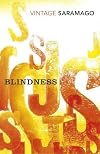
So this book begins with one man (with no name; nobody in this book has a name. They're referred to as "doctor", "the doctor's wife", "the boy with a squint", etc.) who suddenly sees show more only whiteness. This "blindness" spreads like a virus, and soon everybody has it. The Ministry tries to contain it at first, putting those affected into quarantine - in a mental asylum, no less.
Now, this book is written in an infuriating way that gets old after . . . say, 10 pages. There's almost no periods. Run-ons are everywhere. No quotation marks. No new paragraphs to differentiate who's saying what. No new sentences to differentiate who's saying what. I don't know about you, but that right there sounds like a dystopia. Again, spoonies beware! I have tired eyes and chronic fatigue, so I had to have a bookmark keep track of my reading line, or else there would be no way I could keep my place in this no-paragraph mess of meandering words.
It's also impossible to enjoy or at least become engaged by because it's so damn sexist and ableist!! The men had titles like "doctor", "the first blind man", etc., while the women had these: "first blind man's wife", "doctor's wife", etc. The narrator also had to tell the audience how surprising it was that the sex worker had good relations with her parents, given her career. ?? I don't even want to get into that right now.
There was also a scene that other reviewers here have talked about much more eloquently than I could - a scene so violently disgusting that I can't believe this book is so highly praised. It's a rape scene, where women line up and "volunteer" to be raped by some ruffians in exchange so that they and their husbands can get some food. Of course, this scene had to be described in such vivid detail that I'm 100% sure it was some sick thing the author put in to jack off to. I usually don't input such disgusting things into my reviews but in this case . . . it was that disgusting.
And the ableism! This man had to have hated blind people to such a degree I can't even fathom. Let this be a lesson to all: don't use disabilities as metaphors for whatever gross thing in humanity you want to point out! Just don't do it. Don't.
I can't even count the number of times the word "blind" was used to point out something terrible in humanity, or even so bluntly as just to point out how awful being blind was. That to be blind was to be dead, and vice versa. Let's find one quote though . . . here's one: "What is your name, Blind people do not need a name." Beautiful.
Not to mention, in the endeveryone regained their sight! Oh boy what an ending! This probably started the magical cure trope, I don't know. It's sure annoying in any case. The protagonists learned their lessons, so their "disability was cured"! Amazing, give the book a prize!
This book was an awful reading experience. And so ableist I can't recommend it to anyone. Please read something by an actually blind author. show less
Spoonies beware!
This book is terribly exhausting to read, and if you have trouble keeping your place when reading or have trouble reading long paragraphs, spare yourself the spoons and don't read this book. It's not worth it, I promise!
Content warnings:
vicious and disgusting ableism
rape
sexual harassment
So this book begins with one man (with no name; nobody in this book has a name. They're referred to as "doctor", "the doctor's wife", "the boy with a squint", etc.) who suddenly sees show more only whiteness. This "blindness" spreads like a virus, and soon everybody has it. The Ministry tries to contain it at first, putting those affected into quarantine - in a mental asylum, no less.
Now, this book is written in an infuriating way that gets old after . . . say, 10 pages. There's almost no periods. Run-ons are everywhere. No quotation marks. No new paragraphs to differentiate who's saying what. No new sentences to differentiate who's saying what. I don't know about you, but that right there sounds like a dystopia. Again, spoonies beware! I have tired eyes and chronic fatigue, so I had to have a bookmark keep track of my reading line, or else there would be no way I could keep my place in this no-paragraph mess of meandering words.
It's also impossible to enjoy or at least become engaged by because it's so damn sexist and ableist!! The men had titles like "doctor", "the first blind man", etc., while the women had these: "first blind man's wife", "doctor's wife", etc. The narrator also had to tell the audience how surprising it was that the sex worker had good relations with her parents, given her career. ?? I don't even want to get into that right now.
There was also a scene that other reviewers here have talked about much more eloquently than I could - a scene so violently disgusting that I can't believe this book is so highly praised. It's a rape scene, where women line up and "volunteer" to be raped by some ruffians in exchange so that they and their husbands can get some food. Of course, this scene had to be described in such vivid detail that I'm 100% sure it was some sick thing the author put in to jack off to. I usually don't input such disgusting things into my reviews but in this case . . . it was that disgusting.
And the ableism! This man had to have hated blind people to such a degree I can't even fathom. Let this be a lesson to all: don't use disabilities as metaphors for whatever gross thing in humanity you want to point out! Just don't do it. Don't.
I can't even count the number of times the word "blind" was used to point out something terrible in humanity, or even so bluntly as just to point out how awful being blind was. That to be blind was to be dead, and vice versa. Let's find one quote though . . . here's one: "What is your name, Blind people do not need a name." Beautiful.
Not to mention, in the end
This book was an awful reading experience. And so ableist I can't recommend it to anyone. Please read something by an actually blind author. show less
“I don’t think we did go blind, I believe we are blind, blind who can see” - the doctor
This was a tough read, and as others have pointed out, the middle section in the quarantine is particularly horrifying. One way to deal with a novel like this would be to relegate it to the pile of post-apocalyptic stories that expose the vulgar, inhuman side of our collective nature. We could then read and appreciate the novel as one may appreciate an episode of The Walking Dead. In it, the show more doctor’s wife is the hero, the one with grit, who pulls things togethers, suffers, and never loses her humanity. And the story works on this level, but I think there is more to think about here.
Saramago dramatizes the collapse of civilization into depravity and inhumanity and seems to attribute it to an epidemic of blindness. Early on, the narration creates the suggestion that losing the ability to see robs us of our ability to care for ourselves. The first man who goes blind, for example, is helped by a passerby who then steals his car, and this is the start of a series of escalating crimes and indignities that people inflict on each other. By the end of the novel, however, this perspective is flipped: it is not our inability to see that is the problem, but our inability to be seen by others. Dignity and humanity is not something we do for ourselves; it is relational.
The blindness that afflicts the population is a “white blindness” or what the military comes to call the “white sickness.” It is the deprivation of sight, but instead of seeing darkness, the blind see white, like their vision is overwhelmed. Perhaps they (or we, if we are to identify) see so much that we are not picking out the threads that mean something. We see but do not see. Our eyes are exposed to stimuli of the world but do not discern them. There are so many examples of the things that we see in this way, things that we are overwhelmed with seeing everyday that many of us pretend not to see or defensively overlook. There are big things like political turmoil, humanitarian crises, bigotry, racism, and poverty as well as simple things like everyday humiliations, indignities, rudenesses, and callousness. There is so much, and it is everywhere, and we can’t not see it, but at the same time we don’t see it, and we look right through it. It is not that we cannot see but that what we see is not seen. And things that are not seen do not rise to a level of basic importance that provokes a response.
Another way to see the white blindness is, perhaps, as an allegory for (some of) our western/global_north/white ways of seeing the world and simultaneously not seeing it at all. As the doctor said near the end of the book, quoted above, “I don’t think we did go blind, I believe we are blind, blind who can see.” But I also like a different impression of whiteness that we get when the first blindman and his wife return to their flat to find it occupied by another family that had been driven out of their home. One of those squatters, the man, is a writer. Despite being blind he has started to write again, turning the blank whiteness of a sheet of paper into art, a chronicle of their experience so that it may be, one day, seen again. show less
This was a tough read, and as others have pointed out, the middle section in the quarantine is particularly horrifying. One way to deal with a novel like this would be to relegate it to the pile of post-apocalyptic stories that expose the vulgar, inhuman side of our collective nature. We could then read and appreciate the novel as one may appreciate an episode of The Walking Dead. In it, the show more doctor’s wife is the hero, the one with grit, who pulls things togethers, suffers, and never loses her humanity. And the story works on this level, but I think there is more to think about here.
Saramago dramatizes the collapse of civilization into depravity and inhumanity and seems to attribute it to an epidemic of blindness. Early on, the narration creates the suggestion that losing the ability to see robs us of our ability to care for ourselves. The first man who goes blind, for example, is helped by a passerby who then steals his car, and this is the start of a series of escalating crimes and indignities that people inflict on each other. By the end of the novel, however, this perspective is flipped: it is not our inability to see that is the problem, but our inability to be seen by others. Dignity and humanity is not something we do for ourselves; it is relational.
The blindness that afflicts the population is a “white blindness” or what the military comes to call the “white sickness.” It is the deprivation of sight, but instead of seeing darkness, the blind see white, like their vision is overwhelmed. Perhaps they (or we, if we are to identify) see so much that we are not picking out the threads that mean something. We see but do not see. Our eyes are exposed to stimuli of the world but do not discern them. There are so many examples of the things that we see in this way, things that we are overwhelmed with seeing everyday that many of us pretend not to see or defensively overlook. There are big things like political turmoil, humanitarian crises, bigotry, racism, and poverty as well as simple things like everyday humiliations, indignities, rudenesses, and callousness. There is so much, and it is everywhere, and we can’t not see it, but at the same time we don’t see it, and we look right through it. It is not that we cannot see but that what we see is not seen. And things that are not seen do not rise to a level of basic importance that provokes a response.
Another way to see the white blindness is, perhaps, as an allegory for (some of) our western/global_north/white ways of seeing the world and simultaneously not seeing it at all. As the doctor said near the end of the book, quoted above, “I don’t think we did go blind, I believe we are blind, blind who can see.” But I also like a different impression of whiteness that we get when the first blindman and his wife return to their flat to find it occupied by another family that had been driven out of their home. One of those squatters, the man, is a writer. Despite being blind he has started to write again, turning the blank whiteness of a sheet of paper into art, a chronicle of their experience so that it may be, one day, seen again. show less
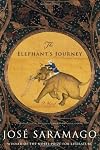
The elephant's journey was Saramago's penultimate novel - it's a superficially light and straightforward story, based on a real incident, the gift of an elephant from King João III of Portugal to Archduke Maximilian of Austria in 1551. The elephant Solomon (renamed Suleiman by the Archduke) has to travel on foot from Lisbon to Valladolid and then on to Vienna, accompanied by his mahout and a suitable military escort (Portuguese on the first stage; Maximilian's Austrian retinue thereafter). show more
Saramago treats this simple journey narrative with his usual irony and stubborn refusal to take the past on its own terms - there are plenty of witty swipes at royalty, clergy, the military, civil servants and the foibles of 16th century humanity in general, contrasted with the patient tolerance of the elephant, who remains determinedly just an elephant, whatever symbolic roles the people around it are trying to impose. And the mahout, an Indian a long way from home, whose straightforward relationship with the elephant is contrasted with his complex human worries about what is going to happen to them. Wonderful! show less
Saramago treats this simple journey narrative with his usual irony and stubborn refusal to take the past on its own terms - there are plenty of witty swipes at royalty, clergy, the military, civil servants and the foibles of 16th century humanity in general, contrasted with the patient tolerance of the elephant, who remains determinedly just an elephant, whatever symbolic roles the people around it are trying to impose. And the mahout, an Indian a long way from home, whose straightforward relationship with the elephant is contrasted with his complex human worries about what is going to happen to them. Wonderful! show less
0/10
Disclaimer
This review is riddled with spoilers, so if you're afraid of them, please move on. I know that this book will touch many a nerve, so if you wish to lob rotten tomatoes, please know that I've played baseball with my brother, who has the arm of Sandy Koufax, and I could catch them all.
-------------------------------------------------------
There is nothing here to see. Do yourself a favour and move on, ladies and gents. This is the advice that I wish had been offered me, upon show more picking up this book. Nothing. Here. To. See.
I mean it most ironically, most cynically, most cholerically.
Ostensibly, I was offered a dystopian society which promised to unnerve my last nerve, with the sheer horror of what I was about to read. In truth, I was offered a dys-optic society, in which my last nerve was trammelled into the ground, from sheer ennui -- for annoyance alone does not quite plumb the depths the way the French plumb it.
On a bright sunny day, a man is stricken with blindness. Before anyone can mutter Jumping-Jack-FLASH ... the rest of the world is stricken with a white blindess that catapults a normal society into a functioning pit-of-hell that sounds like a mash-up between Bruegel and Bosch. Yes, it happened just like this: from driving down the street, to being knee-deep in one's own feces, and face to face with the most heinous criminals in society in one easy step -- you don't even have to go through steps 2 and 3.
It didn't take me long to realize this is one pervert's nocturnal emission of a novel: for it bears not even a modicum of probability within its outrageous premise.
The dystopian novels that scare the hell out of me are those that build from likely premises and deteriorate into constructed hells. Novels that create hell out of thin air, on the other hand, deteriorate quickly into farce, and are utterly meaningless, except for the writer. This felt, very much, like Saramago's own little private entertainment.
In no possible universe can I imagine that a blind group of people will be dropped into a lunatic asylum, without food or water; where the perimeter will be surrounded by armed guards; where the inmates are left to fend for themselves in literal, and figurative, cesspools.
In no possible universe can I imagine a herd of blind people, playing blind man's buff/bluff, while swimming around in their own ordure, and abusing the hell out of each other, just for shits-and-giggles, if you'll pardon the too-apt pun.
Apart from the utter improbability of the general premise, has anyone wondered how anything of any consequence could have occurred in that asylum, without prior direction, superintendence. From a bird's eye view, I laughed myself sick.
I discussed this book with my blind brother. We had the laugh of our lives. We were almost vomiting from too much laughter: imagine herding women into a room to be raped -- all blind people -- in a vast, vast asylum ... blind criminals being able to corral the women and force them into unspeakable acts.
Blind people herding blind people is like herding cats. One should try the latter, before attempting the former to get even a gist of what is possible.
The terror and the violence, then, is gratuitous, unjustifiable, unessential. One simply cannot object to gratuitous violence and still find value in this book; for this book is not a parable of a dystopia, but merely an old man's perverse vision of a society he wishes to depredate. It is a morality play that's gone more than a little bit wrong. show less
Disclaimer
This review is riddled with spoilers, so if you're afraid of them, please move on. I know that this book will touch many a nerve, so if you wish to lob rotten tomatoes, please know that I've played baseball with my brother, who has the arm of Sandy Koufax, and I could catch them all.
-------------------------------------------------------
There is nothing here to see. Do yourself a favour and move on, ladies and gents. This is the advice that I wish had been offered me, upon show more picking up this book. Nothing. Here. To. See.
I mean it most ironically, most cynically, most cholerically.
Ostensibly, I was offered a dystopian society which promised to unnerve my last nerve, with the sheer horror of what I was about to read. In truth, I was offered a dys-optic society, in which my last nerve was trammelled into the ground, from sheer ennui -- for annoyance alone does not quite plumb the depths the way the French plumb it.
On a bright sunny day, a man is stricken with blindness. Before anyone can mutter Jumping-Jack-FLASH ... the rest of the world is stricken with a white blindess that catapults a normal society into a functioning pit-of-hell that sounds like a mash-up between Bruegel and Bosch. Yes, it happened just like this: from driving down the street, to being knee-deep in one's own feces, and face to face with the most heinous criminals in society in one easy step -- you don't even have to go through steps 2 and 3.
It didn't take me long to realize this is one pervert's nocturnal emission of a novel: for it bears not even a modicum of probability within its outrageous premise.
The dystopian novels that scare the hell out of me are those that build from likely premises and deteriorate into constructed hells. Novels that create hell out of thin air, on the other hand, deteriorate quickly into farce, and are utterly meaningless, except for the writer. This felt, very much, like Saramago's own little private entertainment.
In no possible universe can I imagine that a blind group of people will be dropped into a lunatic asylum, without food or water; where the perimeter will be surrounded by armed guards; where the inmates are left to fend for themselves in literal, and figurative, cesspools.
In no possible universe can I imagine a herd of blind people, playing blind man's buff/bluff, while swimming around in their own ordure, and abusing the hell out of each other, just for shits-and-giggles, if you'll pardon the too-apt pun.
Apart from the utter improbability of the general premise, has anyone wondered how anything of any consequence could have occurred in that asylum, without prior direction, superintendence. From a bird's eye view, I laughed myself sick.
I discussed this book with my blind brother. We had the laugh of our lives. We were almost vomiting from too much laughter: imagine herding women into a room to be raped -- all blind people -- in a vast, vast asylum ... blind criminals being able to corral the women and force them into unspeakable acts.
Blind people herding blind people is like herding cats. One should try the latter, before attempting the former to get even a gist of what is possible.
The terror and the violence, then, is gratuitous, unjustifiable, unessential. One simply cannot object to gratuitous violence and still find value in this book; for this book is not a parable of a dystopia, but merely an old man's perverse vision of a society he wishes to depredate. It is a morality play that's gone more than a little bit wrong. show less
Lists
Five star books (7)
To Read (1)
Best Dystopias (1)
100 New Classics (1)
wish list (1)
Elegant Prose (1)
Short and Sweet (1)
5 Best 5 Years (1)
Grim Reaper (1)
psychological (1)
Diarios (1)
Reading Globally (1)
Bureaucracies (1)
Best Satire (1)
Nineties (1)
Magic Realism (6)
1980s (2)
Existentialism (3)
Favourite Books (4)
A Novel Cure (2)
100 knjiga (1)
Mooie titels (1)
Para comprar (1)
Unread books (2)
1990s (2)
Awards


You May Also Like


Associated Authors
Statistics
- Works
- 236
- Also by
- 9
- Members
- 53,084
- Popularity
- #285
- Rating
- 3.9
- Reviews
- 1,385
- ISBNs
- 1,711
- Languages
- 39
- Favorited
- 262


