
Frank Chin
Author of Donald Duk
About the Author
Image credit: From http://aatheatre.web.unc.edu/2011/01/31/frank-chin-biography/
Works by Frank Chin
Associated Works
From Totems to Hip-Hop: A Multicultural Anthology of Poetry Across the Americas 1900-2002 (2002) — Contributor — 182 copies
Growing Up Ethnic in America: Contemporary Fiction About Learning to Be American (1999) — Contributor — 121 copies
The Heath Anthology of American Literature, Concise Edition (2003) — Contributor — 73 copies, 1 review
Tagged
Common Knowledge
- Canonical name
- Chin, Frank
- Birthdate
- 1940-02-25
- Gender
- male
- Education
- University of California, Berkeley
State University of Iowa
University of California, Santa Barbara - Occupations
- non-fiction author
playwright
editor
theatre director - Organizations
- Asian American Theater Company (Founder)
- Awards and honors
- Lannan Literary Award (Fiction, 1992)
American Book Award (1989) - Nationality
- USA
- Birthplace
- Berkeley, California, USA
- Places of residence
- Placerville, California, USA
Oakland, California, USA
San Francisco, California, USA
New York, New York, USA
Los Angeles, California, USA - Associated Place (for map)
- California, USA
Members
Reviews
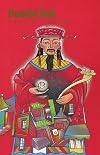
I picked this book up as a recommendation from "The Big Aiiieeeee! : an anthology of Chinese American and Japanese American Lterature" as a foundational book on first-generation experience in America. The editors sang the praises of the novel, and I had high expectations.
The book didn't quite meet those expectations - and yet, I was far from disappointed. Written in a diction that mirrors the inner dialogue of its young protagonist, Donald Duk, the book is fast paced and sometimes feels as show more though it's only skimming the surface - like most teenagers, Donald doesn't offer an indepth portrait of his parents' feelings or his sisters', and through much of the story, he simply looks down on them. This is frustrating, a bit, if you're used to a model of writing that offers rich interiority - but there is still enough complexity and thought in the book, it provides a different experience, rather than an eviscerated one
Throughout the book, Donald grapples not only with his name, which he feels is ridiculous, but also with his attitudes towards having Chinese family and ancestors, and his attitudes towards white teachers and friends. During the course of the novel, he learns more Chinese history and mythology, and his understanding of Chinese history deepens. He begins to develop an appreciation for the parts of him that are connected to China. And yet, like a teenager, that appreciation doesn't turn his entire life around. He still gets embarassed or angry at his family, his school, and his friends, and still fantasizes about escape through perfect assimilation and performance. This could make the book a frustrating read. But for me, it made it a very real read, and an engaging one. show less
The book didn't quite meet those expectations - and yet, I was far from disappointed. Written in a diction that mirrors the inner dialogue of its young protagonist, Donald Duk, the book is fast paced and sometimes feels as show more though it's only skimming the surface - like most teenagers, Donald doesn't offer an indepth portrait of his parents' feelings or his sisters', and through much of the story, he simply looks down on them. This is frustrating, a bit, if you're used to a model of writing that offers rich interiority - but there is still enough complexity and thought in the book, it provides a different experience, rather than an eviscerated one
Throughout the book, Donald grapples not only with his name, which he feels is ridiculous, but also with his attitudes towards having Chinese family and ancestors, and his attitudes towards white teachers and friends. During the course of the novel, he learns more Chinese history and mythology, and his understanding of Chinese history deepens. He begins to develop an appreciation for the parts of him that are connected to China. And yet, like a teenager, that appreciation doesn't turn his entire life around. He still gets embarassed or angry at his family, his school, and his friends, and still fantasizes about escape through perfect assimilation and performance. This could make the book a frustrating read. But for me, it made it a very real read, and an engaging one. show less
The Big Aiiieeeee! : an anthology of Chinese American and Japanese American Literature by Frank Chin
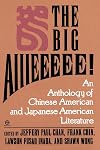
I initially read this anthology in college; I've picked it up several times since then for a revisit. Perhaps the first most important thing to know about it is the breadth of material. The Big Aiiieeeee contains translated poetry, sketchwork, fiction, autobiography/memoir and sociological materials, as well as commentary to help contextualize each piece. Some people may enjoy that diversity of sources - I do, very much, although I may not enjoy all pieces the same; but if you're looking for show more something like a short story collection, this is not your book.
The book takes on the challenge of beginning to present some of the history of Chinese and Japanese Americans and to articulate some of the contours of possible experiences for persons of those groups. Some of the material is now a bit out of date, but still presents a compelling snapshot of perspectives at the time the book was published. The diversity of sources, writers, and perspectives provides a rounded and complex picture - perhaps the best thing that readers can take away from it is that there is no one, single, definitive experience, and two persons with similarly non-white appearances and backgrounds can have markedly different feelings and experiences of being an American. There are many cautionary tales - experiences we should feel badly about - and can learn from, going forward.
This book is a great way to become acquainted with a diversity of source material, and good launching pad for further reading. It's probably not great for someone who wants a cohesive portrait or argument or an "easy read." show less
The book takes on the challenge of beginning to present some of the history of Chinese and Japanese Americans and to articulate some of the contours of possible experiences for persons of those groups. Some of the material is now a bit out of date, but still presents a compelling snapshot of perspectives at the time the book was published. The diversity of sources, writers, and perspectives provides a rounded and complex picture - perhaps the best thing that readers can take away from it is that there is no one, single, definitive experience, and two persons with similarly non-white appearances and backgrounds can have markedly different feelings and experiences of being an American. There are many cautionary tales - experiences we should feel badly about - and can learn from, going forward.
This book is a great way to become acquainted with a diversity of source material, and good launching pad for further reading. It's probably not great for someone who wants a cohesive portrait or argument or an "easy read." show less
After reading this "lighter" tale by Frank Chin, I suspect that his ongoing feud/criticism of author Maxine Kingston exhibits more "sour grapes" than any solid literary substance. She's the better writer and more accomplished word smith.
For a guy who was at the spearhead of the short-lived Asian American movement, his writing is surprisingly average.
Awards


You May Also Like


Associated Authors
Statistics
- Works
- 14
- Also by
- 12
- Members
- 678
- Popularity
- #37,271
- Rating
- 3.5
- Reviews
- 6
- ISBNs
- 27
- Languages
- 1