

Garrett Hongo
Author of Volcano: A Memoir of Hawai'i
About the Author
Garrett Hongo is Distinguished Professor of Creative Writing at the University of Oregon. He is the author Volcano: A Memoir of Hawai'i and the poetry collections Coal Road; Yellow Light; and The River of Heaven, winner of the Lamont Poetry Prize from the Academy of American Poets and a finalist show more for the Pulitzer Prize; he has edited or coedited several highly regarded collections of contemporary Asian American writing. Hongo has received fellowships from the Guggenheim Foundation and the National Endowment for the Arts, and was a Fulbright Visiting Scholar at the University of Florence. show less
Works by Garrett Hongo
Associated Works
The Making of a Poem: A Norton Anthology of Poetic Forms (2000) — Contributor — 1,471 copies, 9 reviews
Literature: An Introduction to Fiction, Poetry, and Drama (1995) — Contributor, some editions — 1,013 copies, 7 reviews
From Totems to Hip-Hop: A Multicultural Anthology of Poetry Across the Americas 1900-2002 (2002) — Contributor — 182 copies
Half and Half: Writers on Growing Up Biracial and Bicultural (1998) — Contributor — 153 copies, 1 review
Breaking Silence: An Anthology of Contemporary Asian-American Poets (1983) — Contributor — 30 copies, 1 review
The Gate of Memory: Poems by Descendants of Nikkei Wartime Incarceration (2025) — Contributor — 16 copies
Antaeus No. 35, Autumn 1979 — Contributor — 1 copy
Tagged
Common Knowledge
- Birthdate
- 1951
- Gender
- male
- Education
- Pomona College
University of Michigan
University of California, Irvine (MFA|English) - Occupations
- poet
- Nationality
- USA
- Birthplace
- Volcano, Hawaii, USA
- Places of residence
- Eugene, Oregon, USA
- Associated Place (for map)
- USA
Members
Reviews
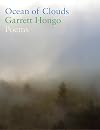
There is a joy in Garrett Hongo’s poems, and nostalgia, and sorrow, but most of all a love of the world’s beauty, natural and human. Music and people he loved haunt the poems, and memories of family and the places of his childhood, from “the sour cloth of poverty” where he was a barefoot boy in Hawaii.
Hidden within the sighing sugar cane, here
I first raised my voice in harmless praise.
I lifted my eyes to the moon’s white sphere
And sang a song I hoped would bless all my days.
from show more Ocean of Clouds by Garrett Hongo
The poems tell of moving to California, reading books that opened new vistas, the music of Motown and jazz. The inspiration of the Civil Rights movement. His mentors and teachers, and what they taught him. HIs daughter, his mother, his father.
There is a poem imagining the life of a Japanese immigrant and his picture bride, and of a fisherman held in an WWII Internment camp.
Scarlett Paintbrush retells a story he heard of how Internes used the flowers to make dye, and how Native Americans used the dye on rope they believed would make them invisible.
I read An Ode to Independence Day, Laguna Beach, 2007 three times. In the bustling crowd filled with a rainbow of people from many languages and cultures, Hongo recalls the 1984 primary in which he voted for Jesse Jackson, only to discover he was the lone vote in his district. He “realized I was alone/among the sand-footed citizens in this county of white flight,/my values islanding me in a wide sea of beliefs counter to mine.” But in 2007, “as gigantic dandelions of light billow then descend,/drooping downwards like silvered ganja-locks on a sparkling willow tree,” he glories in the “earnest faces and the charitable lights that lit them.” I love the hope of this poem, an image of a America I hope will prevail our current times.
The more time I spend with these poems, the more I love them.
Thanks to A. A. Knopf for a free book. show less
Hidden within the sighing sugar cane, here
I first raised my voice in harmless praise.
I lifted my eyes to the moon’s white sphere
And sang a song I hoped would bless all my days.
from show more Ocean of Clouds by Garrett Hongo
The poems tell of moving to California, reading books that opened new vistas, the music of Motown and jazz. The inspiration of the Civil Rights movement. His mentors and teachers, and what they taught him. HIs daughter, his mother, his father.
There is a poem imagining the life of a Japanese immigrant and his picture bride, and of a fisherman held in an WWII Internment camp.
Scarlett Paintbrush retells a story he heard of how Internes used the flowers to make dye, and how Native Americans used the dye on rope they believed would make them invisible.
I read An Ode to Independence Day, Laguna Beach, 2007 three times. In the bustling crowd filled with a rainbow of people from many languages and cultures, Hongo recalls the 1984 primary in which he voted for Jesse Jackson, only to discover he was the lone vote in his district. He “realized I was alone/among the sand-footed citizens in this county of white flight,/my values islanding me in a wide sea of beliefs counter to mine.” But in 2007, “as gigantic dandelions of light billow then descend,/drooping downwards like silvered ganja-locks on a sparkling willow tree,” he glories in the “earnest faces and the charitable lights that lit them.” I love the hope of this poem, an image of a America I hope will prevail our current times.
The more time I spend with these poems, the more I love them.
Thanks to A. A. Knopf for a free book. show less

Yes, I know Hongo is talented. Yes, I know I'm breaking the "literary canon" law when I say I'm rarely impressed and that he frankly bores the shit out of me. That said, I do admire his craft, and I met him at a reading on tour supporting this book, I believe, and definitely a nice guy, so I do have many friends and acquaintances who write stuff that's not really my thing (Ron Rash comes to mind) but I can still respect their craft, and besides, I doubt they like my stuff anyway. LOL! show more Cautiously recommended. show less
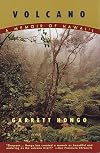
This is the perfect book to read if you're in or around the village of Volcano, Hawaii. And I am not being facetious. I took this book with me on a trip to the Islands, knowing I would be staying about 20 miles from Volcano. The author immerses you in the environment, and you can certainly appreciate his descriptions much more if you have some familiarity with the environment yourself, its ecology and dynamic geology.
That being said, what makes this book much more interesting than a simple show more guidebook or textbook is that it's actually the story of a family, of the author trying to reconnect with his ancestral roots as a Japanese-American born in Hawaii. As such, there is also much humanity here. And as a poet, Garrett Hongo is able to tie family, ecology, geology, and identity all together.
It's a journey and the last words are beautiful. show less
That being said, what makes this book much more interesting than a simple show more guidebook or textbook is that it's actually the story of a family, of the author trying to reconnect with his ancestral roots as a Japanese-American born in Hawaii. As such, there is also much humanity here. And as a poet, Garrett Hongo is able to tie family, ecology, geology, and identity all together.
It's a journey and the last words are beautiful. show less
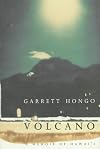
Like West of Then by Tara Bray Smith, Volcano is about the author's search for something. Interestingly enough, both authors suffer from abandonment issues and both return to Hawaii for resolution. While Smith's search is more tangible (she is looking for her actual mother), Hongo's is more spiritual. He has ghosts in the form of memories he must confront in the mists of Hilo. Like Smith's story, Hongo's is meandering and seemingly without plot or purpose. However, one of the magical show more elements to Hongo's book is it is obvious he is a poet. His writing is lyrical and fairly dances off the page. He doesn't have to have character, drama or even plot for his writing to be beautiful and entertaining. show less
Awards


You May Also Like


Associated Authors
Statistics
- Works
- 12
- Also by
- 21
- Members
- 343
- Popularity
- #69,542
- Rating
- 3.9
- Reviews
- 10
- ISBNs
- 21
- Favorited
- 1