
Edward Hirsch
Author of How to Read a Poem: And Fall in Love with Poetry
About the Author
Edward Hirsch, a MacArthur Fellow, has published nine previous books of poetry, including The Living Fire: New and Selected Poems and Gabriel: A Poem, a book-length elegy for his son. He has also published seven books of prose, among them How to Read a Poem and Fall in Love with Poetry, a national show more best seller, and The Heart of American Poetry. He has received numerous prizes, including the National Book Critics Circle Award. A longtime teacher at Wayne State University and in the Creative Writing Program at the University of Houston, Hirsch is now president of the John Simon Guggenheim Memorial Foundation. He lives in Brooklyn. show less
Image credit: Edward Hirsch [credit: Michael Lionstar]
Works by Edward Hirsch
Poet's Glossary 1 copy
Lay Back the Darkness 1 copy
Transforming Vision 1 copy
Gabriel A Poem 1 copy
Associated Works
The Making of a Poem: A Norton Anthology of Poetic Forms (2000) — Contributor — 1,476 copies, 9 reviews
Poetry Speaks Expanded: Hear Poets Read Their Own Work from Tennyson to Plath (2007) — Contributor — 158 copies, 2 reviews
The Sophisticated Cat: A Gathering of Stories, Poems, and Miscellaneous Writings About Cats (1992) — Contributor — 112 copies, 1 review
Genesis as It Is Written: Contemporary Writers on Our First Stories (1996) — Contributor — 69 copies
St. Peter's B-list: Contemporary Poems Inspired by the Saints (2014) — Contributor — 32 copies, 1 review
Sunlight on the River: Poems About Paintings, Paintings About Poems (2015) — Contributor — 11 copies, 2 reviews
Everything is Going to be All Right: Poems for When You Really Need Them (2021) — Contributor — 8 copies
Tagged
Common Knowledge
- Canonical name
- Hirsch, Edward
- Birthdate
- 1950-01-20
- Gender
- male
- Education
- Grinnell College (BA | 1972)
University of Pennsylvania (Ph.D | 1978 | Folklore) - Occupations
- poet
literary critic - Organizations
- John Simon Guggenheim Memorial Foundation (president)
Wayne State University (professor)
University of Houston (professor)
American Academy of Arts and Letters (2017) - Awards and honors
- Guggenheim Fellowship (1985)
MacArthur Fellowship (1998)
William Riley Parker Prize (1991)
Amy Lowell Travelling Fellowship in Poetry (1978-1979)
Peter I. B. Lavan Younger Poets Award (1983)
American Academy of Arts and Letters Academy Award (Literature, 1998) - Nationality
- USA
- Birthplace
- Chicago, Illinois, USA
- Places of residence
- New York, New York, USA
- Associated Place (for map)
- USA
Members
Reviews
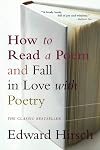
I don't know that anyone knows exactly "how to read a poem," including poet Edward Hirsch. Nevertheless, Hirsch undertakes the very difficult task of writing intelligently about poetry and does a fine job, resulting in this book that guides readers through about a dozen poems without ever becoming patronizing or heavy-handed. The book is all the more admirable for avoiding easy and obvious choices like "The Road Not Traveled" and tackling more challenging works. (And boy, am I glad that he show more didn't include any Billy Fucking Collins.)
This is a good book to pick up both for those who already love poetry and those who feel stymied or intimidated by it. (I hope all you goddamned philistines in New Haven are paying attention.) show less
This is a good book to pick up both for those who already love poetry and those who feel stymied or intimidated by it. (I hope all you goddamned philistines in New Haven are paying attention.) show less

The 10th collection from Hirsh, published 40 years after his first, has a very somber tone. It almost feels like a goodbye - half of the poems are about his friends dying (including Philip Levine, William Meredith and Mark Strand - his peers and friends in his craft), the other half are a walk down memory line to past times and past people and sometimes even past places.
The somber tone never really changes but some of the memory poems have a lighter tone - there is some lifting of the show more clouds. But the sun never really shows up - the overarching images are the ones of cemeteries and funerals, of loss and sorrow.
To all that is added the very personal loss of Hirsh - he started losing his eyesight. A set of poems towards the end of the book deals with that and they are as heart-breaking as anything else in this collection.
For a slim collection, it was a hard work reading it. The poems were sometimes too forceful and the darkness kept coming. Even the lighter ones had enough darkness in them to add to the overall gloominess. The collection makes you think of death and loss - and that is not always a comfortable feeling.
I've read a few of those poems before in various magazines and journals. They are dark but they almost seem to contain a ray of hope on their own. Assembled into a collection, read in the order selected by the author (and the editors), feeding each other, that hope is lost and it is all about the darkness in all its forms. And even the ones that do not work on their own for me add to the overall feeling.
And it is the very last poem that hits the hardest. On its face it is one of the lighter ones. But when a collection full of elegies ends with one called "Don't write elegies", it makes you pause. It is almost a denial of the whole collection. And at the same time it is also a closing chapter - all the elegies are now written, it is someone else's turn to write and mourn, it is time to move on. show less
The somber tone never really changes but some of the memory poems have a lighter tone - there is some lifting of the show more clouds. But the sun never really shows up - the overarching images are the ones of cemeteries and funerals, of loss and sorrow.
To all that is added the very personal loss of Hirsh - he started losing his eyesight. A set of poems towards the end of the book deals with that and they are as heart-breaking as anything else in this collection.
For a slim collection, it was a hard work reading it. The poems were sometimes too forceful and the darkness kept coming. Even the lighter ones had enough darkness in them to add to the overall gloominess. The collection makes you think of death and loss - and that is not always a comfortable feeling.
I've read a few of those poems before in various magazines and journals. They are dark but they almost seem to contain a ray of hope on their own. Assembled into a collection, read in the order selected by the author (and the editors), feeding each other, that hope is lost and it is all about the darkness in all its forms. And even the ones that do not work on their own for me add to the overall feeling.
And it is the very last poem that hits the hardest. On its face it is one of the lighter ones. But when a collection full of elegies ends with one called "Don't write elegies", it makes you pause. It is almost a denial of the whole collection. And at the same time it is also a closing chapter - all the elegies are now written, it is someone else's turn to write and mourn, it is time to move on. show less
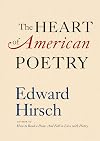
The Heart of American Poetry by Edward Hirsch is both an analysis of various poems that have spoken to Hirsch as well as a glimpse at how many different ways there are to read and understand poetry.
On the surface, this is an inclusive collection of forty poems, each accompanied by a brief essay on Hirsch's reading. Don't be mislead by any reviewer who only names those part of the traditional canon as being in this book. In the introduction and in his selection, Hirsch is far more inclusive. show more Maybe some readers only want to mention those usually included in such anthologies, but that says more about them than about this book.
I think what makes this volume so much more important, especially for those who like poetry but often feel they don't "read it right," is that these readings show many different ways into poetry. Yes, Hirsch is a poet himself and is very knowledgeable, but his approaches are very personal in nature. The ways he might approach a poem are ways we might also do so. Just because we have less knowledge in some areas doesn't mean the poem will speak to us any less. When we begin to trust our reading of poetry we can then look deeper, whether into the mechanics of poetry or the historical context of certain poems and poets. Our readings will be different from Hirsch's, but so what. We take from each poem what we can, and learning both method and specific information through this book will only enrich our future reading of poetry.
I am going to suggest another book that would make a great companion to this one. My intention is not to have it look like an either/or but as complementary volumes. The other book is The Difference is Spreading edited by Al Filreis and Anna Strong Safford. The similarity is that each book consists of a poet commenting on a specific poem. The contrast, and why I think they go so well together, is that while The Heart of American Poetry has one poet commenting on forty poems The Difference is Spreading has fifty different contemporary poets each commenting on a poem of their choosing. Between these books a reader can see many ways, both technical and personal, into a poem. I will also add that the Filreis/Safford book is based loosely on their wonderful ModPo MOOC.
Highly recommended for both those who read poetry often as well as those who like poetry but might not read it very often. Don't let Hirsch's knowledge of poetry intimidate you, appreciate what he offers as commentary and also look at how he approaches each poem and adapt that for your own level of knowledge.
Reviewed from a copy made available by the publisher via NetGalley. show less
On the surface, this is an inclusive collection of forty poems, each accompanied by a brief essay on Hirsch's reading. Don't be mislead by any reviewer who only names those part of the traditional canon as being in this book. In the introduction and in his selection, Hirsch is far more inclusive. show more Maybe some readers only want to mention those usually included in such anthologies, but that says more about them than about this book.
I think what makes this volume so much more important, especially for those who like poetry but often feel they don't "read it right," is that these readings show many different ways into poetry. Yes, Hirsch is a poet himself and is very knowledgeable, but his approaches are very personal in nature. The ways he might approach a poem are ways we might also do so. Just because we have less knowledge in some areas doesn't mean the poem will speak to us any less. When we begin to trust our reading of poetry we can then look deeper, whether into the mechanics of poetry or the historical context of certain poems and poets. Our readings will be different from Hirsch's, but so what. We take from each poem what we can, and learning both method and specific information through this book will only enrich our future reading of poetry.
I am going to suggest another book that would make a great companion to this one. My intention is not to have it look like an either/or but as complementary volumes. The other book is The Difference is Spreading edited by Al Filreis and Anna Strong Safford. The similarity is that each book consists of a poet commenting on a specific poem. The contrast, and why I think they go so well together, is that while The Heart of American Poetry has one poet commenting on forty poems The Difference is Spreading has fifty different contemporary poets each commenting on a poem of their choosing. Between these books a reader can see many ways, both technical and personal, into a poem. I will also add that the Filreis/Safford book is based loosely on their wonderful ModPo MOOC.
Highly recommended for both those who read poetry often as well as those who like poetry but might not read it very often. Don't let Hirsch's knowledge of poetry intimidate you, appreciate what he offers as commentary and also look at how he approaches each poem and adapt that for your own level of knowledge.
Reviewed from a copy made available by the publisher via NetGalley. show less
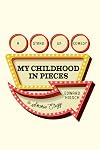
From the award-winning poet, dark comic microbursts of prose deliver a whole childhood, at the hands of an aspiring middle-class Jewish family whose hard-boiled American values and wit were the forge of a poet's coming-of-age.
Lists
Awards


You May Also Like


Associated Authors
Statistics
- Works
- 33
- Also by
- 27
- Members
- 3,094
- Popularity
- #8,252
- Rating
- 3.9
- Reviews
- 39
- ISBNs
- 71
- Languages
- 1
- Favorited
- 2

